
My Exclusive Interview With Killy Myne
Dive into the world of dream pop with this exciting up-and-coming artist.

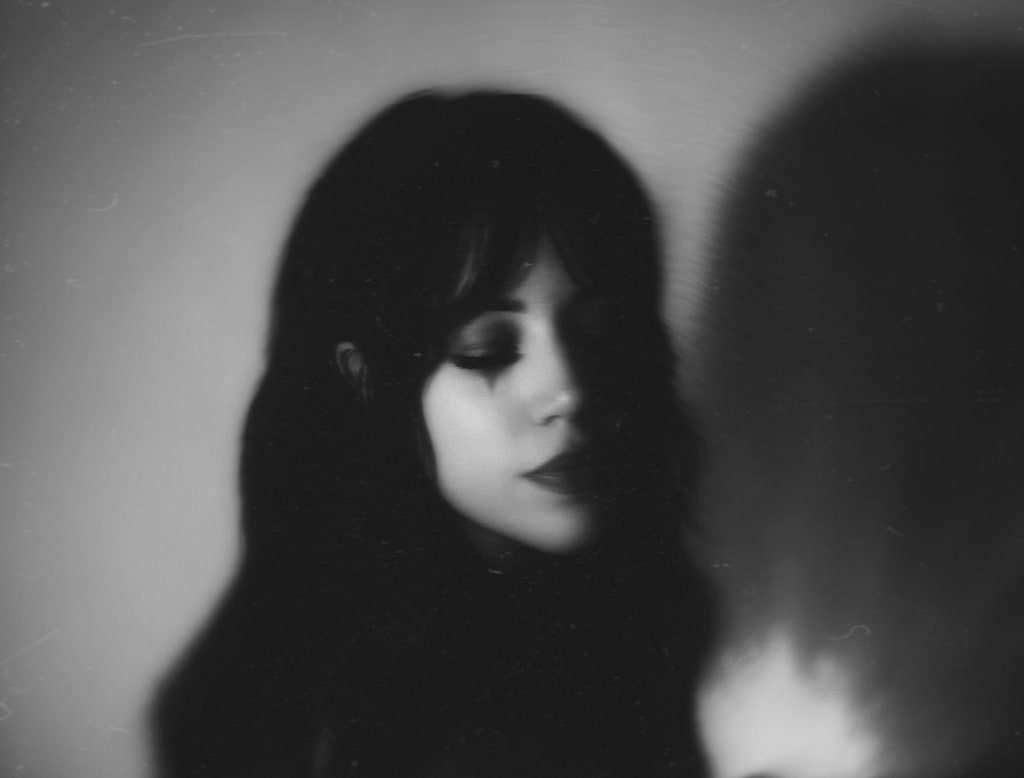
With over 3,000 Spotify streams on "Burn in Hell" alone, Killy Myne is a rising star in the dream pop genre. Her current discography is small, but she's already crafted a dark image and a haunting sound that mark her as an artist to watch. I reached out to her for an email interview, and if you're a fan of modern slowcore and dreamy bedroom pop, her responses provide an intriguing look at the process behind these soon-to-be-viral singles.
1. When I was searching for new music on Spotify, your dark, gothic aesthetic immediately grabbed my attention. Did you deliberately choose this aesthetic, or did it come to you naturally as you started making music? How does it influence the songwriting process?
Honestly, I’ve always been drawn to slightly darker imagery. I mean, as a child, my favourite episodes of kids’ shows were always the Halloween specials! I don’t think my preferences have ever changed much.
Extending that slightly darker vibe to sound, writing and some of my visuals feels very natural to me, so I don’t really think about it much.
Also, I don’t label myself goth, but I definitely appreciate many elements of it!
2. Your music tackles a lot of emotional subjects, including heartbreak, loss and longing. Do you base your songs on real events, fictional situations, or a combination of both? What do you want people to take away from your music?
I feel very inspired by my experiences, especially the ones that are emotionally confusing. However, I often like to think of it as a story or bigger pattern to reflect on, so you might hear a mix of different personal stories squished into one song with a sprinkle of melodrama. I really try to allow myself to be more vulnerable and messy than I would let myself be in real-life situations, which is very therapeutic. Music is such a beautiful and powerful place to explore yourself, different angles and the full range of human emotions freely and safely. The most beautiful thing that happens is to simply make someone else feel less alone while listening to my music because it makes them realise we’ve had a similar experience. I love the idea of being part of someone’s life soundtrack; how cool is that?
3. What does the songwriting and recording process look like? Do you have a strict schedule, or do you prefer a casual approach?
I write lyrics almost every single day, whether I want to or not. It feels like it’s turned into an automatic mechanism in my brain since I learned how to write.
I never try to force myself to come up with a song. The only small exception is when I still haven’t finished an idea from, let’s say, a year ago, so I’ll force myself to finish it out of respect for the fact that I had something to say back then, and that it was a decent idea even if I no longer feel the same way.
Melodies and phrases randomly pop into my brain at strange, inconvenient times. Quite often, it’s while I’m standing in the kitchen, trying to focus on not burning my food. I usually pause whatever I’m doing to capture the idea. Then I normally just start building a structure around it with some basic production and record, edit and mix my own vocals. If I feel like I want some help from someone who’s more specialised in the instrumental side, I happily collaborate with them.
There have also been times when I’ve fallen in love with an instrumental first and adjusted my writing around it, so I don’t really have a rigid way of doing things.
4. What do you do when you need inspiration? On a similar note, who are your biggest influences?
For some reason, it seems like I always have an abundance of ideas. I can feel inspired by all kinds of sounds, places, situations, dynamics and connections. It almost gets a bit overwhelming sometimes.
When I think of other artists that influence me, I have to say it’s probably still the same type of music that inspired me when I first started creating as a teenager. I don’t think I ever fully outgrew the whole mid-2010s Tumblr music era, although it’s been over a decade. I also never stopped listening to early 2000s rock music, so it probably still subtly influences some of my choices too.
5. How did you achieve the ghostly, eerie quality that makes "Burn in Hell" so haunting? Do you have any habits or rituals that help you get into the right mindset before recording?
What really matters to me, specifically before recording vocals, is creating a safe space for myself to be emotionally messy, without judging myself for it. I reject the idea that I have to be this perfectly evolved person who’s above all her “bad” emotions. Sometimes it includes singing a song that captures a similar emotion as a warm-up, dimming the lights, stretching and letting myself emotionally tap into the story or memory again.
6. Unlike "Burn in Hell," which I'd classify as dream pop, "Armour" has a more folksy, Southern Gothic vibe. What inspired you to write this song, and what do you want people to take away from it? Do you plan to experiment with other genres in the future?
“Armour” will always be special to me because it was my first release with this new artist name, and it was a pretty quick process that simply flowed. I wrote it as a way to capture my confusion, delusion and sweet memory because I knew it would all be so fleeting.
If I had to decide on a takeaway, it would probably be: don’t build an entire love story around what you hope is underneath someone’s walls.
I have a feeling that my style will remain dreamy with dark undertones, but other than that, I’m open to changing things up if it ever feels right.
7. Are you a self-taught artist, or do you have formal training? What inspired you to start recording and releasing your own music, and how did you get started?
By definition, I seem to fit into the self-taught category. I mostly followed the intuitive “experiment until something sounds right” path. I think that’s because I’ve always been the type of person who prefers to skip reading instructions and start assembling things randomly and chaotically.
I think the moment I knew I wanted to sing and create my own songs was the moment I saw the first episode of Hannah Montana premiere.
It was this quick realisation of “THIS IS IT!” in my little child brain, and then I never let it go. It was one of the only things I was very sure of. I was attempting to write songs in English when writing in my mother tongue was still a new-ish thing for me, and I vividly remember printing out my favourite song lyrics with a German translation just so I could learn the language and analyse the message beyond the melodies I loved.
In 2016, I finally convinced my parents that a MacBook was worth the price because you could use GarageBand on it. That was a very special Christmas gift. After a year or so, I kind of understood how to use it, so I upgraded to Logic Pro, which I use to this day.
8. What are your goals for the future? Ultimately, what do you want to achieve as an artist? While you're at it, what advice would you give other songwriters who want to break into the dream pop genre?
I would encourage anyone that has something they want to express artistically to just go for it and allow themselves to step into that vulnerable territory, no matter how scary it feels at first. The public sharing part can be super intimidating at first, but I honestly think that’s just us humans taking ourselves too seriously. Life is bizarre, and you’re not some unpopular song you created; it’s just something you created about one little moment in time, and it doesn’t have to be perfect or a hit for it to have value.
I like the idea of having a collection of lessons and memories that I can listen back to from different points in my life.
The idea of connecting with others who can relate to me is also very sweet.
Ultimately, for my personal music journey, I just hope I can keep creating and sharing without losing my passion for it, no matter where it ends up leading me.
To stay in touch with Killy Myne, you can follow her on Instagram and listen to her music on Spotify, YouTube, Apple Music and SoundCloud.
About the Creator
Kaitlin Shanks
Music journalist. To support my work, please send a tip (even $1 helps!) or shop from my Amazon storefront.
Last Living Girl (novel) • Instagram • TikTok • YouTube • Substack • Medium • Wattpad • Spotify Playlists • Linktree
Enjoyed the story? Support the Creator.
Subscribe for free to receive all their stories in your feed.
Comments
There are no comments for this story
Be the first to respond and start the conversation.