History
A Remarkable Discovery: The Book of Hours in Holbein's Portrait of Thomas Cromwell
A Remarkable Discovery: The Book of Hours in Holbein's Portrait of Thomas Cromwell In the world of historical discovery, few events capture the imagination like the unearthing of an object from the past that connects us to a famous figure. Recently, historians at Hever Castle have made an extraordinary find: the very Book of Hours featured in the iconic portrait of Thomas Cromwell by Hans Holbein the Younger. This remarkable discovery is not only significant for its link to one of Tudor England’s most influential figures, but it is also the only known object to survive from any Tudor portrait to this day. History enthusiasts around the world are thrilled by this astonishing revelation, which has prompted the production of a documentary that will bring the story of this incredible find to life. The Portrait of Thomas Cromwell: A Snapshot of Power To understand the significance of this discovery, we must first consider the portrait of Thomas Cromwell by Holbein. Painted in the mid-1530s, it is one of the most famous works by the German-Swiss artist, who is renowned for his depictions of the Tudor court. Cromwell, the powerful and controversial chief minister to Henry VIII, is shown in the portrait standing confidently, his gaze direct and assertive. His expression conveys the self-assurance of a man at the height of his power, serving as the king’s right hand during a period of religious upheaval and political maneuvering. One of the most fascinating aspects of this portrait is the object in Cromwell’s hand: a richly decorated Book of Hours. These prayer books, which were commonly used by the wealthy during the medieval and early Renaissance periods, often contained prayers, psalms, and religious imagery. The inclusion of this object in Holbein’s portrait is no mere artistic flourish. The Book of Hours speaks to Cromwell’s social standing, his piety, and perhaps even his desire to present himself as a man of intellect and spirituality. It is a symbol of his education and his role in the intellectual and political currents of the time. The Book of Hours: A Gateway to Tudor History For historians, the discovery of the actual Book of Hours that appeared in Holbein’s painting is nothing short of extraordinary. It is believed to be the only object from any Tudor portrait to have survived the passage of time. Most objects depicted in Renaissance paintings have long since disappeared, and to find one so intimately connected with a famous figure like Cromwell is an unprecedented stroke of luck. This particular Book of Hours was likely a highly valuable possession. The ornate decoration and the craftsmanship of such a book would have been beyond the reach of ordinary people. Its survival through centuries of upheaval—from the dissolution of the monasteries under Henry VIII to the English Civil War and the eventual decay of the Tudor monarchy—gives it an almost mythical status. The book has managed to outlive centuries of turmoil, including the eventual fall of Cromwell himself, who was executed in 1540 after falling out of favor with Henry VIII. But this discovery also offers a deeper understanding of Cromwell’s life. Known for his ruthless political maneuvering and instrumental role in the English Reformation, Cromwell is often viewed as a pragmatic and calculating figure, willing to abandon traditional religious practices to secure his political power. Yet, the Book of Hours in his hand suggests a side of him that is more aligned with religious devotion and personal belief. This item challenges the often one-dimensional perception of Cromwell, offering a more nuanced view of the man who helped engineer the split between the Church of England and the Roman Catholic Church. A Documentary Presentation: Professor Suzannah Lipscomb’s Exclusive Access The discovery of the Book of Hours has sparked excitement within the academic community and beyond. To share this extraordinary find with the public, History Hit, the popular historical documentary platform, has been granted exclusive access to film a documentary on the discovery. This special documentary will be presented by Professor Suzannah Lipscomb, a renowned historian and expert on Tudor history, who has played an integral role in unearthing the secrets of the Tudor court. Professor Lipscomb’s involvement in the documentary is particularly exciting, as she is known for her ability to bring history to life in an engaging and accessible way. Her deep knowledge of the period will be crucial in unraveling the story of the Book of Hours and exploring its significance within the context of Cromwell’s life and the turbulent times in which he lived. The documentary promises to be a fascinating exploration of Tudor history, blending expert analysis with the thrill of discovering a tangible link to the past. In addition to Professor Lipscomb’s expert insights, the documentary will feature behind-the-scenes footage of the research and restoration work being done on the Book of Hours. Viewers will get a glimpse into the painstaking process of preserving and studying this rare artifact, which will be an invaluable resource for future scholars of Tudor England. The Legacy of Cromwell’s Book of Hours As the documentary unfolds, viewers will also witness how this discovery fits into the broader narrative of Tudor history. Cromwell’s role in shaping the English Reformation, his relationships with key figures such as Thomas More and Anne Boleyn, and his eventual fall from grace will all be examined through the lens of this remarkable find. The Book of Hours offers a tangible connection to a period of history that continues to fascinate and intrigue. What makes this discovery so remarkable is not just the object itself, but the insights it provides into the life of a man who was instrumental in one of the most transformative eras in English history. The Book of Hours serves as a bridge between the past and the present, reminding us that even the most seemingly mundane objects can hold immense historical significance. For anyone with an interest in Tudor history, the opportunity to explore this discovery through the lens of Professor Lipscomb’s documentary is not to be missed. As we continue to uncover the mysteries of the past, we are reminded of the enduring power of history to connect us with the people who shaped our world.
By Deji Akomolafe2 years ago in Art
Lucky Irani Circus
Lucky Irani Circus: Getting to Know India’s Remarkable Tradition in Circus Fortunately, this is the name of an Irani Circus that originated in India and became an inseparable part of history in terms of owning a name that was priceless in the sphere of circuses in India with enigmatic performances. It has been loving India for decades now and has entertained generations of Indians with stunts, animals and colourful performances. In this article, the reader will come to know about the journey of Lucky Irani Circus, and the destiny of circus business in India along with the shortcomings that were strictly pulled down the Circus business in our country.
By Samir Kareem2 years ago in Art
Canaletto’s “View of the Ducal Palace in Venice”: A Masterpiece of Venetian Grandeur
Giovanni Antonio Canal, better known as Canaletto, is regarded as one of the most iconic Venetian painters of the 18th century. His skill in rendering architectural vistas, cityscapes, and landscapes with remarkable precision and clarity has earned him a prominent place in the art world. One of his most famous works, “View of the Ducal Palace in Venice”, painted during the 1750s, epitomizes Canaletto’s mastery in depicting Venice's majestic landmarks and its vibrant atmosphere. This masterpiece, which portrays one of the most famous buildings in Venice, offers a snapshot of the city’s grandeur, its political significance, and its role as a cultural hub during the 18th century.
By Deji Akomolafe2 years ago in Art
Unveiling the Mystique of Maricome Art Work Techniques
Art has the power to arouse feelings, narrate tales, and influence viewpoints. The maricome art work is a prime example of its transforming potential. In the field of modern art, Maricome Artist is well-known for their distinctive style, complex subjects, and provocative pieces. This article provides a better knowledge of what makes their artistic expression so engaging by examining their impact, critical works, style, and journey.
By Willow Stella2 years ago in Art
30 Creative Quotes About Life: Inspiring Wisdom in Every Word. AI-Generated.
Introduction Life is an incredible canvas, waiting for the strokes of creativity to turn it into a masterpiece. Creative quotes about life remind us to think outside the box, embrace new perspectives, and appreciate the beauty of the everyday. Whether you're seeking inspiration or a fresh outlook, these quotes are the perfect companions for your journey.
By Owais Ahmed2 years ago in Art
La Scapigliata: Leonardo da Vinci's Masterful Unfinished Portrait
Leonardo da Vinci, one of the most celebrated artists in history, left behind a legacy of remarkable works that forever changed the trajectory of art. While many of his masterpieces are finished and complete, some of his most captivating works remain unfinished, each carrying its own air of mystery. One such piece is La Scapigliata, an unfinished portrait of a woman, created around 1500. Known as "Head of a Woman" in English, this exquisite artwork is a testament to da Vinci's genius in capturing the subtleties of human emotion and form, despite being a work left incomplete. It offers an intriguing glimpse into the mind of the Renaissance master and stands as a remarkable example of his artistic prowess. --- The Mystery of La Scapigliata The title La Scapigliata translates to "the disheveled one" in Italian, referencing the loose, flowing curls of the woman's hair in the painting. This loose, natural hairstyle contrasts with the rigidly structured hairstyles often seen in portraits from that time, highlighting the woman's casual, unguarded beauty. The woman in the painting gazes downward with downcast eyes, exuding an air of tranquility and introspection. This serene expression, paired with the soft, flowing lines of her hair, creates an enigmatic, almost ethereal presence. Despite being incomplete, La Scapigliata remains a compelling and mysterious work. The figure, though incomplete in terms of its details and finish, seems to possess a natural beauty and grace that is striking, almost as if it is an unfinished study. This unfinished quality allows viewers to see not only the talent of the artist but also the work in progress, giving insight into Leonardo’s method of constructing a portrait. --- A Master of Sfumato Leonardo da Vinci is widely known for his groundbreaking use of the painting technique known as sfumato. This method involves blending the edges of forms and transitions in light and shadow to create soft, almost imperceptible outlines. In La Scapigliata, this technique is used with remarkable finesse, creating an almost lifelike effect in the rendering of the woman's face. Her skin glows softly, as though lit by a warm, natural light, and the subtle transitions between light and shadow on her face evoke a sense of volume and depth. In the unfinished state of the painting, the sfumato is particularly striking. The gradual and seamless transitions between the darker and lighter areas of her face allow her features to emerge softly, as if they are being illuminated from within. The viewer’s gaze is drawn to her face, which appears to float in space, offering an ethereal quality. The delicate shadows and smooth transitions lend a luminosity to the woman’s complexion, highlighting Leonardo’s extraordinary ability to capture the human form in a way that was unprecedented in his time. --- The Woman in the Portrait: Who Was She? Like many of Leonardo’s portraits, the identity of the woman in La Scapigliata remains unknown. Some art historians speculate that she could have been a member of Leonardo’s circle or possibly a model for a larger, unfinished composition. Given the gentle, serene expression on her face, she may have been intended as a depiction of an idealized woman, perhaps a divine or symbolic figure. In the absence of a definitive identity, La Scapigliata invites viewers to project their own interpretations of the subject. Her downcast gaze and tranquil demeanor suggest a woman lost in thought, contemplating something beyond the physical world. This sense of introspection and mystery adds to the allure of the painting, as it leaves much to the imagination of the observer. --- Unfinished Works and Their Significance Leonardo da Vinci was notorious for leaving many of his works incomplete. This trait is often attributed to his insatiable curiosity and desire for perfection, which sometimes led him to abandon projects when they no longer satisfied his high standards. La Scapigliata is one of several pieces that da Vinci did not fully complete, yet it remains one of his most admired works. The unfinished nature of La Scapigliata allows viewers to glimpse Leonardo's process as an artist. It is as much a study of technique and form as it is a portrait. The faint outlines, the lack of detail in some areas, and the gradual blending of light and shadow demonstrate how Leonardo worked to refine his compositions. It also highlights his focus on the emotional expression of his subjects, as the facial features in this work are rendered with great care, even in their unfinished state. --- The Legacy of La Scapigliata Today, La Scapigliata resides in the National Gallery of Parma in Italy, where it continues to captivate audiences with its quiet grace and enigmatic allure. The portrait is a reminder of Leonardo’s extraordinary ability to capture the soul of his subjects, even in the most incomplete form. It stands as a testament to his mastery of the human form and his pursuit of artistic innovation. Though La Scapigliata remains unfinished, it is complete in its ability to evoke emotion and intrigue. The serene expression of the woman, the delicate rendering of her features, and the soft interplay of light and shadow all demonstrate the brilliance of Leonardo’s technique and vision. Even in its unfinished state, the painting has an enduring power, drawing viewers in with its mystery and beauty. --- Conclusion La Scapigliata remains one of Leonardo da Vinci’s most captivating works, despite—or perhaps because of—its unfinished nature. Through this incomplete portrait, Leonardo captured not only the physical likeness of a woman but also a sense of her inner world, filled with mystery, grace, and introspection. The use of sfumato, the soft transitions of light and shadow, and the fluidity of her hair all reflect Leonardo’s genius in portraiture, while the mystery surrounding the subject’s identity only adds to the painting’s allure. As it resides in the National Gallery of Parma, La Scapigliata continues to inspire admiration and curiosity, offering a glimpse into the mind of one of history’s greatest artists. Through this masterpiece, we see that even unfinished works can carry immense power, leaving an indelible mark on the world of art and continuing to captivate the imaginations of generations to come.
By Deji Akomolafe2 years ago in Art
Cool Quotes About Life: 30 Inspiring Sayings to Live By. AI-Generated.
Introduction Life is full of beauty, challenges, and endless possibilities. Whether you’re looking for motivation, a new perspective, or just some words of wisdom, cool quotes about life can guide you through the ups and downs. These quotes are a perfect mix of inspiration and style, offering fresh insights to keep you grounded while dreaming big.
By Owais Ahmed2 years ago in Art
La Scapigliata: The Timeless Beauty of Leonardo da Vinci's Unfinished Masterpiece
Leonardo da Vinci, the quintessential Renaissance artist, scientist, and thinker, is celebrated for his ability to bridge the realms of art and science, creating works that continue to inspire awe centuries after his time. Among his many masterpieces, one stands out not just for its beauty but also for its enigmatic quality and unfinished state: La Scapigliata, or "The Disheveled One." Created around 1500, this small yet striking artwork is a study in grace, mystery, and introspection. Although it lacks the polish of a completed painting, its unfinished nature is part of its allure. The piece portrays the head of a serene and mysterious woman with soft, flowing curls and downcast eyes, evoking a sense of quiet contemplation. Currently housed in the National Gallery of Parma, Italy, La Scapigliata continues to captivate viewers with its simplicity and depth. The Meaning Behind the Title The title La Scapigliata translates to "The Disheveled One" in Italian, drawing attention to the woman's loosely flowing hair. Unlike the elaborate hairstyles typical of Renaissance portraiture, her hair is natural, unkempt, and seemingly windswept. This stylistic choice lends the work an air of spontaneity and raw beauty, emphasizing the natural over the ornamental. Leonardo’s fascination with nature is well-documented. He often sought to capture not just physical appearances but the inner life of his subjects, believing that beauty lies in simplicity and truth. In La Scapigliata, the disheveled hair becomes a metaphor for unrestrained, unpolished beauty—a reflection of Leonardo’s philosophy. A Masterpiece of Sfumato One of the most remarkable features of La Scapigliata is Leonardo’s use of sfumato, a technique he perfected. Sfumato involves the delicate blending of light and shadow to create soft transitions, avoiding harsh lines or contours. This technique gives the woman’s face a lifelike, almost ethereal quality, as if she might step out of the artwork at any moment. The play of light and shadow enhances her serene expression, while the slightly blurred edges create a sense of intimacy and mystery. Her downcast eyes suggest introspection or a private moment of thought, inviting viewers to ponder her story. The lack of sharp detail does not detract from her presence; instead, it heightens the viewer’s engagement, allowing each person to interpret her emotions and essence. The Unfinished Nature of the Work Leonardo da Vinci was notorious for leaving works unfinished, and La Scapigliata is no exception. While some areas of the artwork, such as the woman’s face, appear more refined, others—like her hair and neck—are rendered with loose, sketch-like strokes. This incomplete state offers a rare glimpse into Leonardo’s artistic process. The unfinished quality of La Scapigliata allows us to appreciate Leonardo not just as a master artist but as an experimenter. The loose, suggestive strokes reveal his exploratory approach to capturing movement and emotion. In some ways, the incomplete nature of the piece adds to its charm, as it leaves room for the imagination. It invites viewers to envision how Leonardo might have completed it or to appreciate it as it stands—a perfect union of spontaneity and skill. The Mystery of the Woman As with many of Leonardo’s works, the identity of the woman in La Scapigliata remains a mystery. Is she a real person, or is she an idealized figure born from Leonardo’s imagination? Unlike commissioned portraits that often depict identifiable individuals, this artwork feels more like a personal study or an exploration of feminine beauty and emotion. The woman’s downcast gaze and gentle expression suggest a moment of introspection, perhaps even melancholy. Some art historians speculate that she represents an allegorical figure, embodying purity, grace, or even the fleeting nature of beauty. Others see her as a reflection of Leonardo’s fascination with capturing the soul behind the physical form. A Legacy of Quiet Power Despite its small size and unfinished state, La Scapigliata has had an outsized impact on the art world. Its quiet elegance and enigmatic quality have inspired countless interpretations and continue to draw viewers into its world. The artwork exemplifies Leonardo’s ability to convey depth and emotion with minimal detail, demonstrating his unparalleled skill in capturing the essence of his subjects. Today, La Scapigliata is a cherished treasure of the National Gallery of Parma, Italy. Visitors from around the globe come to see this exquisite piece, marveling at its timeless beauty and meditating on its mystery. Conclusion La Scapigliata is much more than an unfinished artwork—it is a window into Leonardo da Vinci’s genius. Through its serene beauty, masterful technique, and enigmatic aura, it embodies the Renaissance ideals of art, emotion, and the human spirit. The unfinished quality of the piece invites viewers to become co-creators, filling in the gaps with their interpretations and emotions. In this way, La Scapigliata continues to transcend time, reminding us of the power of art to evoke wonder and connection. It is a testament to Leonardo’s enduring legacy and a symbol of the beauty that lies in imperfection. For those fortunate enough to stand before it, La Scapigliata is a silent yet powerful reminder of the extraordinary talent of one of history’s greatest artists—and of the timeless allure of the human soul.
By Deji Akomolafe2 years ago in Art
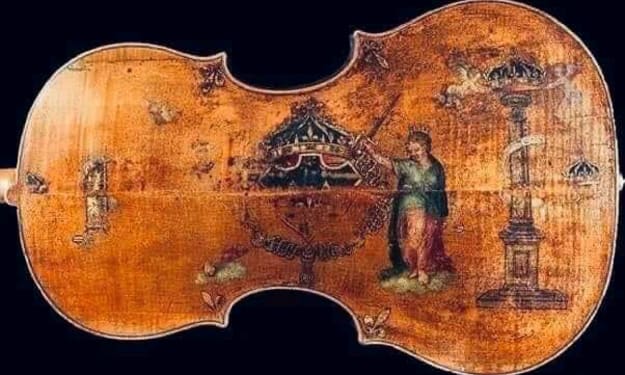
The King Cello: A Glimpse into the Past of Musical Mastery
Music has always been a powerful force, capable of moving hearts and shaping cultures across generations. Some of the most magnificent instruments in the world carry stories that span centuries, connecting us to the artistry and craftsmanship of long-gone eras. Among these legendary instruments, one stands out: the King Cello. Not only is it the oldest known cello in existence, but it also carries with it a history rich in royal patronage and remarkable craftsmanship. A Timeless Piece of History The King Cello was crafted by Andrea Amati, one of the most renowned luthiers of the 16th century. Amati is credited with the creation of the first modern violins, cellos, and violas, marking a pivotal moment in the history of stringed instruments. His work, particularly in the town of Cremona, Italy, where he established his workshop, laid the foundation for the violin family as we know it today. Made in the mid-16th century, the King Cello is a testament to Amati’s exceptional craftsmanship and innovative design. It was originally one of a set of 38 instruments created for the court of King Charles IX of France, a young monarch who reigned from 1560 to 1574. This set, often referred to as the “Amati set,” was crafted specifically for the royal court to provide music for the King’s entertainments and celebrations. The King Cello earned its name because it was part of this distinguished collection, which was presented to Charles IX. The set included a variety of instruments, from violins and violas to basses and cellos, each carefully crafted by Amati to deliver unparalleled sound and beauty. However, it was the cello that would become the most famous of them all—largely because it survived the test of time. The Transformation of the King Cello The King Cello was initially designed as a large basso, or bass violin. This original instrument was much larger than modern cellos, which would have made it more difficult to handle and play. Over the centuries, however, the cello underwent a process of resizing and modifications to make it more practical for modern use. Without this reduction in size, it’s likely that the King Cello would have been lost to time, as many other valuable instruments from this era were. The decision to resize the King Cello was a significant one. By reducing its size, the instrument transformed into a more manageable form that fit the evolving tastes and needs of musicians. The cello, as we know it today, is smaller, more agile, and better suited to modern performance than its ancient counterpart. This resizing ensured that the King Cello would survive for future generations to admire and enjoy. In fact, its survival in such pristine condition allows us to look back and appreciate the beauty and excellence of Andrea Amati's work. A Rare Surviving Example Today, the King Cello resides at the National Music Museum in Vermillion, South Dakota, part of the Witten-Rawlins Collection. It is a rare surviving example of the decorated set of instruments crafted by Amati for King Charles IX. The cello’s preservation offers a glimpse into the world of 16th-century royal courts, where music played a central role in entertainment and diplomacy. What makes the King Cello even more remarkable is its connection to the royal court of France. The 16th century was a time of political unrest and power struggles in Europe, and the court of King Charles IX was no exception. The instruments crafted by Amati were not just musical tools; they were also symbols of royal prestige and cultural sophistication. The set of instruments, including the King Cello, was designed to reflect the grandeur of the French monarchy, showcasing the power of music to unite, entertain, and inspire. The preservation of the King Cello also highlights the importance of historical instruments in understanding the evolution of music. It provides modern musicians, historians, and enthusiasts with a direct connection to the past, offering insight into the artistry and techniques of one of the most revered luthiers in history. The Lasting Legacy of Andrea Amati Andrea Amati’s influence on the development of stringed instruments cannot be overstated. His work revolutionized the construction of violins, violas, and cellos, and his instruments remain highly coveted by musicians and collectors alike. The King Cello is a direct link to Amati’s legacy, embodying the beauty, precision, and skill that defined his craftsmanship. Amati’s violins, violas, and cellos set the standard for generations of luthiers, and his influence continues to be felt in the world of classical music. While many of his instruments have been lost to history, the King Cello stands as a symbol of his genius, enduring through centuries of change. Conclusion The King Cello is much more than just a musical instrument; it is a piece of living history. Its survival, transformation, and preservation have allowed us to appreciate the genius of Andrea Amati and the cultural significance of music during the 16th century. Today, the King Cello serves as a reminder of the artistry and craftsmanship that shaped the evolution of stringed instruments, and it will continue to inspire future generations of musicians, historians, and music lovers for centuries to come. Its remarkable journey from the royal court of King Charles IX to the National Music Museum is a testament to the timeless power of music and the lasting legacy of one of the greatest luthiers in history.
By Deji Akomolafe2 years ago in Art