History
How Can Schools Help Students with Mental Health Issues?
In recent years, mental health has become a prominent concern for students worldwide. With the pressures of academic performance, social relationships, and personal issues, many students face mental challenges that can affect their overall well-being. The question on everyone's mind is: how can schools help with mental health?
By Esteem Behavroul2 years ago in Art
History of the Mughal Empire
The Mughal Empire is one of the most significant dynasties in Indian history, known for its contributions to culture, art, architecture, and governance. Spanning over three centuries, the Mughal period shaped the Indian subcontinent's social, political, and economic fabric. This article explores the rise, reign, and eventual decline of the Mughal Empire, delving into the lives of its rulers and the legacy they left behind.
By saif ullah2 years ago in Art
History of pakistan
akistan, a country in South Asia, has a complex and dynamic history that spans thousands of years, from ancient civilizations to its modern-day status as a key player in international geopolitics. The history of Pakistan is rich with cultural, political, and social developments that have shaped its identity and its role on the global stage.
By saif ullah2 years ago in Art
Tuk Tuk in Bangkok: A Cultural Icon on Three Wheels
Bangkok, the bustling capital of Thailand, is a city that never sleeps. Amidst the modern skyscrapers, ornate temples, and vibrant markets, there exists a quintessential symbol of Thai culture—the Tuk Tuk. Tuk Tuk in Bangkok is not just a mode of transportation; it’s an experience, a ride through the heart and soul of the city’s charm. These three-wheeled motorized rickshaws have become synonymous with Bangkok’s lively streets, offering tourists and locals alike an unforgettable way to navigate the city’s labyrinthine alleys and buzzing roads.
By Justxplore2 years ago in Art
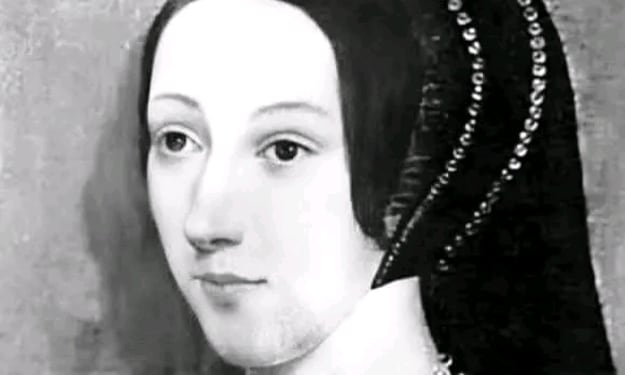
Anne Boleyn and the Mystery of the Lumley Portrait
Anne Boleyn, one of the most enigmatic figures in English history, continues to fascinate historians and enthusiasts alike. As the second wife of King Henry VIII and the mother of Elizabeth I, her story is marked by ambition, passion, and tragedy. Yet, while her life has been the subject of extensive study, the visual representation of Anne has long been shrouded in mystery. Most contemporary portraits of Anne Boleyn were destroyed after her dramatic fall from grace and execution in 1536, as Henry VIII sought to erase her legacy. This has led to a centuries-long debate over what Anne truly looked like. One of the most tantalizing pieces of this puzzle is the mysterious "Lumley Portrait," rumored to be a full-length painting of Anne from life. Though lost to history, hints of its existence have reemerged over the years, offering a glimmer of hope that the true likeness of Anne Boleyn may yet be uncovered. Anne Boleyn and Her Portraits: A History of Destruction Anne Boleyn’s rise to prominence at the English court in the early 16th century would have made her a subject of numerous portraits. As a noblewoman, a lady-in-waiting to Queen Catherine of Aragon, and later the queen herself, Anne was at the center of courtly life, where commissioning portraits was common practice. However, Anne's downfall was as swift as her rise. After failing to provide Henry VIII with a male heir and being accused of adultery, incest, and treason, she was executed on May 19, 1536. Following her death, Henry sought to obliterate her memory, ordering the destruction of her portraits and other likenesses. As a result, no verified contemporary image of Anne Boleyn is known to survive today. The popular depictions of Anne, such as the well-known 16th-century portrait showing her with a dark gown and "B" necklace, are believed to be later reconstructions based on oral tradition rather than direct observation. The Lumley Portrait: A Glimpse into the Past The Lumley Portrait takes its name from John Lumley, 1st Baron Lumley (c. 1533–1609), an English nobleman and collector of art. Lord Lumley owned an extensive collection of portraits, many of which were of historical figures and members of the Tudor court. Among his possessions, there was said to be a full-length portrait of Anne Boleyn, reportedly painted during her lifetime. Records suggest that the Lumley Portrait was a striking image, capturing Anne’s features with remarkable detail and precision. Some accounts describe her as having an oval face, dark eyes, and black hair, consistent with written descriptions of her appearance. Unfortunately, the portrait is believed to have disappeared in the late 18th century, leaving only rumors of its existence. Over time, it became a legend among historians and art enthusiasts, a tantalizing possibility that the true likeness of Anne Boleyn might one day be rediscovered. The 1920 Photograph: Clues to the Lumley Portrait The story of the Lumley Portrait took an intriguing turn in 1920, when a photograph of a portrait claimed to be of Anne Boleyn surfaced. The image, allegedly taken before the original painting was lost, reignited interest in the search for the Lumley Portrait. The photograph shows a woman in a richly embroidered gown, with a striking resemblance to the descriptions of Anne Boleyn. However, its authenticity has been hotly debated. Some experts argue that the painting depicted in the photograph could indeed be the lost Lumley Portrait, while others suggest it might be a misidentified or unrelated work. The photograph remains an enigma, with no definitive evidence linking it to Anne Boleyn or the Lumley collection. Still, its existence has fueled speculation and inspired ongoing research into the lost portrait. Why the Lumley Portrait Matters The rediscovery of a contemporary portrait of Anne Boleyn, particularly one as significant as the Lumley Portrait, would have profound implications for both art history and Tudor scholarship. 1. A Visual Connection to History: A verified image of Anne would provide a direct visual link to one of England’s most famous queens. It would help us better understand her presence and how she was perceived by her contemporaries. 2. Challenging Modern Perceptions: Many of the posthumous depictions of Anne have been influenced by the narratives of her enemies. A contemporary portrait could challenge these depictions and offer a more balanced view of her character and legacy. 3. Reclaiming Her Story: Anne Boleyn has often been remembered as a controversial figure. The rediscovery of her likeness would symbolize a reclamation of her story, allowing us to see her as more than just a tragic queen. The Ongoing Search for Anne’s Likeness The mystery of the Lumley Portrait is part of a broader effort to uncover Anne Boleyn’s true image. Advances in technology, such as facial recognition and art restoration, have made it possible to reevaluate existing portraits and artifacts for clues. Additionally, historians and researchers continue to comb archives and private collections for any trace of the lost painting. Conclusion Anne Boleyn’s story is one of power, ambition, and ultimate tragedy. The loss of her portraits after her fall from grace underscores the lengths to which her enemies went to erase her legacy. Yet, her enduring influence and the fascination she inspires have ensured that her memory lives on. The Lumley Portrait, whether lost or hidden, represents a tantalizing possibility: the chance to see Anne as she truly was, in the eyes of those who knew her. Until it is found—or definitively proven to be lost—the search for the Lumley Portrait remains a captivating chapter in the ongoing quest to unravel the mysteries of Anne Boleyn’s life and legacy.
By Deji Akomolafe2 years ago in Art
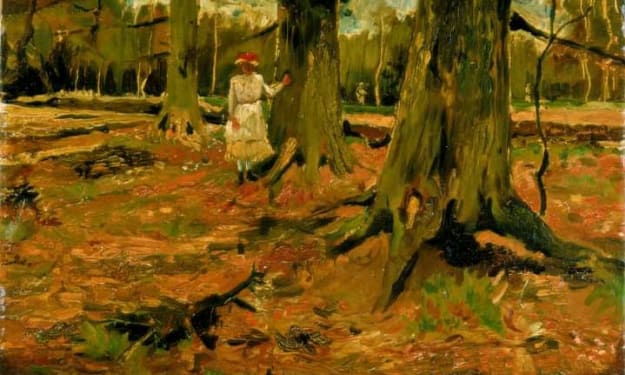
Van Gogh’s Forest Floor: A Masterpiece Born from the Earth
Vincent van Gogh, one of history's most celebrated artists, often found inspiration in nature, translating its raw beauty into vibrant works of art. Among his many masterpieces, one painting stands out for its unique perspective and connection to the earth itself. Believed to have been created while Van Gogh was kneeling, this painting captures the forest floor in stunning detail, offering a glimpse into his creative process and intimate relationship with nature. Research has revealed that Van Gogh’s low perspective and the physical traces of the forest embedded in the paint—tiny oak leaves from the ground—provide clues about how this masterpiece came to life. This connection between the painting and the natural world not only enhances its mystique but also deepens our understanding of Van Gogh as an artist. A Unique Perspective One of the most striking aspects of this painting is its perspective. Unlike traditional landscapes that focus on sweeping views of forests or skies, Van Gogh directs our attention downward, immersing us in the intricate details of the forest floor. Leaves, twigs, and soil dominate the composition, inviting viewers to explore a world often overlooked. This low perspective is believed to be the result of Van Gogh kneeling while painting. By positioning himself close to the ground, he was able to capture the textures, colors, and patterns of the forest floor with remarkable accuracy. The viewer feels as though they are kneeling alongside the artist, experiencing the forest from his unique vantage point. The Evidence in the Paint Scientific analysis has provided compelling evidence to support the idea that Van Gogh was kneeling when he created this work. Microscopic fragments of oak leaves were found embedded in the paint, suggesting that the artist worked directly on the forest floor. These tiny bits of nature became a permanent part of the painting, blurring the line between the artwork and its subject. Van Gogh was known for his immersive approach to painting, often working en plein air to capture the essence of his surroundings. The presence of organic material in this painting speaks to his dedication to authenticity and his willingness to embrace the imperfections and unpredictability of nature. Nature as Inspiration For Van Gogh, nature was more than just a subject; it was a source of solace and inspiration. During his time in the countryside, he frequently painted fields, gardens, and woodlands, using bold colors and dynamic brushstrokes to convey the vitality of the natural world. This painting of the forest floor exemplifies his ability to find beauty in the ordinary. By focusing on the ground beneath his feet, Van Gogh reminds us that even the most overlooked aspects of nature can be worthy of attention and admiration. His vibrant palette transforms the earthy tones of the forest into a celebration of life and color. The Emotional Connection Van Gogh’s work often reflects his emotional state, and this painting is no exception. The forest floor, with its layers of leaves and soil, can be seen as a metaphor for the cycles of life and renewal. The fallen leaves, decaying yet nourishing the earth, mirror the artist’s own struggles and his enduring hope for growth and transformation. Kneeling to create this work may also suggest a sense of humility and reverence for nature. Van Gogh’s deep connection to his surroundings is palpable in every brushstroke, as he captures not just the physical details of the forest but its essence and spirit. The Legacy of Van Gogh’s Perspective This painting of the forest floor is a testament to Van Gogh’s innovative approach to art. By shifting the viewer’s perspective and focusing on an unconventional subject, he challenges us to see the world differently. His ability to find beauty in the mundane and his commitment to authenticity continue to inspire artists and art lovers alike. The physical traces of the forest embedded in the painting serve as a reminder of the artist’s presence and his creative process. They connect us to a moment in time when Van Gogh knelt on the forest floor, fully immersed in his work, and remind us of the enduring power of art to capture and preserve the essence of the natural world. Conclusion Van Gogh’s forest floor painting is more than just an artwork; it is a window into the artist’s mind and his relationship with nature. The low perspective, the embedded oak leaves, and the vibrant depiction of the forest all speak to his unique vision and his ability to transform ordinary scenes into extraordinary works of art. This masterpiece invites us to kneel alongside Van Gogh, to see the world from his perspective, and to appreciate the beauty and complexity of the world beneath our feet. It is a celebration of nature, a reflection of the artist’s soul, and a timeless reminder of the interconnectedness of life and art.
By Deji Akomolafe2 years ago in Art
The Great Hall of Baddesley Clinton: A Journey Through Time
Nestled in the picturesque Warwickshire countryside, Baddesley Clinton is a historic gem, steeped in centuries of stories and secrets. Among its many treasures, the Great Hall stands out as a testament to the Tudor era, constructed in the 1570s and preserved with care by the National Trust. Dominated by a magnificent stone chimneypiece, this room captures the essence of a bygone age while continuing to evolve through the years. In comparing an old painting of the Great Hall from 1870 to its present-day appearance, we uncover a fascinating narrative of continuity and change, highlighting both the artistry of the past and the dedication to preserving history. The Great Hall: A Tudor Masterpiece Constructed in the 1570s by Henry Ferrers, Baddesley Clinton is a moated manor house that exemplifies Tudor architecture and design. The Great Hall, located at the heart of the house, served as a space for dining, entertainment, and gatherings—a hub of activity in the life of the Ferrers family and their guests. The hall’s most striking feature is the stone chimneypiece, an imposing structure carved with intricate details. Positioned prominently on the right-hand side of the room, it not only provided warmth but also served as a symbol of the family’s status and taste. The room’s high timber ceiling, leaded windows, and wooden paneling further enhance its Tudor character, creating an atmosphere of grandeur and intimacy. The 1870 Painting: A Glimpse into the Past An old painting of the Great Hall from 1870 offers a unique window into its appearance during the 19th century. Created at a time when Baddesley Clinton was inhabited by the eccentric Ferrers and their Catholic associates, the painting captures the hall in a period of romanticized antiquity. The chimneypiece remains a focal point, its elaborate carvings clearly depicted. The furniture, including long wooden tables and chairs, reflects the Victorian fascination with medieval revivalism. Tapestries and decorative objects adorn the walls, adding layers of texture and color to the scene. This image conveys the hall as a lived-in space, blending Tudor authenticity with 19th-century tastes. It hints at the enduring charm of the room, cherished by generations who sought to preserve its historic essence while making it their own. The Great Hall Today Fast forward to today, and the Great Hall continues to exude its timeless appeal, carefully maintained by the National Trust. While the room retains many of its original features, subtle differences reflect the passage of time and the evolution of conservation practices. The stone chimneypiece remains the centerpiece, its intricate carvings as striking as ever. Modern lighting now illuminates its details, allowing visitors to appreciate the craftsmanship more clearly. The timber ceiling, still in excellent condition, tells a story of longevity and skilled construction. Furnishings in the hall today are curated to reflect its Tudor origins. Simple wooden tables and benches evoke the room’s historical purpose, while decorative elements, such as textiles and portraits, enhance the atmosphere without overwhelming the space. Unlike in the 1870 painting, the Victorian embellishments have been pared back, aligning with the National Trust’s commitment to historical accuracy. Continuity and Change The comparison between the 1870 painting and the modern-day Great Hall reveals a delicate balance between continuity and change. While the core features of the room remain intact, subtle shifts in decoration and presentation highlight the evolving approach to heritage preservation. 1. Fidelity to History The removal of some Victorian elements reflects a broader trend in conservation to prioritize historical authenticity. By focusing on the room’s Tudor origins, the National Trust ensures that visitors can experience the space as it might have appeared in the 16th century. 2. Modern Enhancements Advances in lighting and climate control have allowed for better preservation of the room’s features. These modern interventions are discreet yet vital, protecting the hall’s woodwork, stonework, and furnishings for future generations. 3. Visitor Experience Today’s Great Hall is designed to be both educational and immersive. Interpretation panels and guided tours provide historical context, enriching the experience for visitors who step into this remarkable space. The Legacy of the Great Hall The Great Hall of Baddesley Clinton is more than just a room; it is a living testament to the people who built, inhabited, and preserved it over the centuries. From its Tudor origins under Henry Ferrers to its 19th-century revival under the eccentric Ferrers family, the hall has been a constant presence, adapting to the changing needs and tastes of its occupants. Its survival is a credit to the dedication of the National Trust, which has worked tirelessly to maintain the house and its treasures. Through careful conservation and thoughtful curation, the Great Hall continues to inspire and educate, offering a tangible connection to England’s past. Conclusion The Great Hall at Baddesley Clinton is a space where history comes alive. The old painting from 1870, with its Victorian charm, captures a moment in the room’s long story, while its present-day appearance reflects a commitment to authenticity and preservation. For visitors to Baddesley Clinton, the Great Hall offers an opportunity to step back in time, marvel at Tudor craftsmanship, and imagine the lives of those who walked its floors centuries ago. Whether viewed through the lens of art or experienced firsthand, the hall remains a masterpiece of heritage, bridging the past and the present with grace and elegance.
By Deji Akomolafe2 years ago in Art
Exploring The Census at Bethlehem: A Bruegel Masterpiece
Among the rich tapestry of Renaissance art, The Census at Bethlehem by Pieter Brueghel the Younger stands out as a work of remarkable depth and storytelling. Created between 1579 and 1638, this painting is one of several versions attributed to Brueghel and his workshop. It is modeled on an earlier work by his father, Pieter Bruegel the Elder, a luminary of Netherlandish art. The painting in question, housed in the Palais des Beaux-Arts de Lille, is a striking oil on canvas that measures 111.5 cm by 164 cm. Versions of this masterpiece are also found in Brussels, Caen, and Maastricht, each offering subtle variations. The Census at Bethlehem captures the timeless biblical story of Mary and Joseph traveling to Bethlehem for a census decreed by Caesar Augustus, but it does so in a uniquely Bruegelian manner. Set against the backdrop of a 16th-century Flemish village, the painting blends sacred history with contemporary life, providing a window into both the artist’s era and his genius. The Artistic Legacy of Pieter Bruegel the Elder To fully appreciate The Census at Bethlehem, one must understand its origins. Pieter Bruegel the Elder, often called "Peasant Bruegel," was renowned for his detailed, vibrant depictions of everyday life. He had a rare ability to weave moral and religious narratives into scenes of ordinary people, making profound statements through seemingly mundane activities. This painting’s original composition belongs to Bruegel the Elder, whose works frequently critiqued the social and political realities of his time. His son, Pieter Brueghel the Younger, became an accomplished painter in his own right, often reproducing and adapting his father’s compositions. Through these reinterpretations, Brueghel the Younger preserved and extended his father’s legacy, ensuring that masterpieces like The Census at Bethlehem continued to resonate with audiences. A Biblical Scene in a Flemish Setting At first glance, The Census at Bethlehem appears to depict a bustling winter day in a Flemish village. Children play on the ice, peasants trudge through snow-laden streets, and traders gather in the town square. Yet, nestled within this everyday scene is the poignant story of Mary and Joseph. In the foreground, Joseph leads a donkey carrying the heavily pregnant Mary, who is wrapped in a blue cloak. The couple’s humble appearance contrasts sharply with the lively crowd around them, symbolizing their isolation and the modesty of their divine mission. They are shown arriving to register for the census, a pivotal moment in the biblical narrative leading to the birth of Christ. By situating the Holy Family in a contemporary Flemish village, Brueghel bridges the sacred and the secular. This technique makes the biblical story relatable to his audience, allowing them to see themselves in the characters and setting. Themes and Symbolism The Census at Bethlehem is rich in symbolism, reflecting both the spiritual and social concerns of its time. 1. The Census and Taxation The central act of the census—a requirement of imperial governance—can be interpreted as a commentary on the bureaucratic burdens faced by ordinary people. In Brueghel’s time, the Netherlands was under Spanish rule, and heavy taxation was a source of widespread resentment. The painting subtly critiques these economic pressures by highlighting the hardships of the villagers. 2. Community and Division The painting juxtaposes scenes of community, such as children skating and villagers gathered at the inn, with the isolation of Mary and Joseph. This contrast underscores the challenges faced by the Holy Family and invites viewers to reflect on themes of inclusion and exclusion in their own lives. 3. Winter Landscape as a Metaphor The cold, snow-covered landscape symbolizes both the harshness of life and the spiritual warmth offered by faith. The frozen river and barren trees evoke a sense of desolation, but the presence of Mary and Joseph hints at hope and renewal. The Composition The painting’s composition is meticulously crafted to draw the viewer’s eye across the scene. Brueghel employs a diagonal perspective, leading from the crowded village in the background to the Holy Family in the foreground. This technique creates a sense of depth and movement, immersing viewers in the bustling activity of the village. The use of color further enhances the painting’s narrative. While the palette is dominated by muted winter tones, Brueghel uses touches of red and blue to draw attention to key figures and details. For example, Mary’s blue cloak subtly distinguishes her from the crowd, emphasizing her importance without disrupting the overall harmony of the scene. The Variations and Reproductions As with many of Pieter Brueghel the Younger’s works, multiple versions of The Census at Bethlehem exist. Each reflects the collaborative nature of Brueghel’s workshop and the high demand for his paintings among collectors. While the version in the Palais des Beaux-Arts de Lille is considered a standout example, those in Brussels, Caen, and Maastricht offer their own nuances, showcasing slight differences in color, detail, and execution. These variations highlight the adaptability of Brueghel’s compositions. By tailoring his works to different patrons and settings, Brueghel ensured their enduring appeal across Europe. Legacy and Impact The Census at Bethlehem endures as a masterpiece of storytelling and artistic skill. Its ability to blend biblical narrative with the realities of 16th-century life makes it both timeless and deeply rooted in its historical context. For contemporary viewers, the painting offers a glimpse into the world of Renaissance Flanders, where art served as both a reflection of daily life and a vehicle for spiritual contemplation. It reminds us of the power of art to connect the sacred and the secular, the past and the present. As one of Pieter Brueghel the Younger’s finest works, The Census at Bethlehem stands as a tribute to the enduring legacy of the Bruegel family—a legacy of artistry, innovation, and profound humanity.
By Deji Akomolafe2 years ago in Art
Titian’s Ecce Homo: A Renaissance Treasure in Romania
Hidden within the Municipal Museum in Romania lies a masterpiece of immense artistic and historical value—Titian’s Ecce Homo, created in 1543. This remarkable painting, the only known work of the Venetian master in Romania and Eastern Europe, is a cultural treasure that transcends its artistic merits. A beacon of the Italian Renaissance, it enriches local heritage and draws the attention of art lovers and experts from around the globe. --- Titian: The Venetian Master of the Renaissance Tiziano Vecelli, known as Titian, was one of the most influential painters of the High Renaissance. Born in Pieve di Cadore, Italy, around 1488, he became a leading figure in Venetian art, celebrated for his mastery of color, innovative compositions, and emotional depth. His works spanned religious themes, mythological subjects, and portraiture, making him a versatile artist whose influence shaped European art for centuries. Titian’s Ecce Homo is a quintessential example of his ability to convey profound emotion and spiritual intensity. The phrase ecce homo translates to “Behold the Man,” referring to the moment in the New Testament when Pontius Pilate presents Jesus to the crowd before his crucifixion. This dramatic scene has been a favorite subject in Western art, but Titian’s interpretation stands out for its depth and humanity. --- The Journey of Ecce Homo Titian painted Ecce Homo in 1543 during the height of his career. The work was likely commissioned by a wealthy patron, as many of his religious pieces were, and it embodies the richness and complexity of Renaissance art. How this particular painting found its way to Romania is a story shrouded in mystery. Some speculate that it may have been acquired by Romanian nobility during the late Renaissance or through the extensive cultural exchanges between Eastern Europe and the Venetian Republic. Regardless of its exact journey, the painting has become a cornerstone of Romania’s artistic heritage. --- Artistic Elements of Ecce Homo Composition and Color In Ecce Homo, Titian captures the pivotal moment of Christ’s humiliation with a masterful use of composition and color. The central figure of Christ is portrayed with a subdued dignity, standing in stark contrast to the chaotic crowd surrounding him. His calm demeanor amidst the jeering faces creates a powerful emotional tension. Titian’s trademark use of color is evident in the rich, earthy tones and vibrant reds that draw the viewer’s eye to the central figure. The interplay of light and shadow, a hallmark of his style, adds depth and drama, emphasizing the physical and emotional suffering of Christ. Emotional Resonance What sets Titian apart from many of his contemporaries is his ability to evoke deep emotion. In Ecce Homo, the expressions of the figures—ranging from mockery to sorrow—create a spectrum of human responses to the divine. The painting invites viewers to reflect on themes of suffering, compassion, and redemption, making it a deeply personal and spiritual experience. --- Cultural and Historical Significance A Symbol of the Italian Renaissance Titian’s Ecce Homo is more than a painting; it is a symbol of the cultural and intellectual revival that defined the Renaissance. The Renaissance was a period of profound transformation in Europe, marked by a renewed interest in classical antiquity, humanism, and artistic innovation. As the only known work by Titian in Romania and Eastern Europe, Ecce Homo serves as a bridge between the cultural achievements of the Italian Renaissance and the rich history of Eastern Europe. It highlights the interconnectedness of European art and the enduring influence of Renaissance ideals. A Romanian Treasure The painting’s presence in the Municipal Museum elevates Romania’s cultural landscape, showcasing its ability to preserve and celebrate world-class art. It also serves as a point of pride for the region, attracting scholars, historians, and art enthusiasts from around the world. The museum’s careful preservation of Ecce Homo, including strict surveillance measures, underscores the painting’s irreplaceable value. By safeguarding this masterpiece, Romania not only honors its own heritage but also contributes to the global appreciation of Renaissance art. --- A Magnet for International Attention Titian’s Ecce Homo has become a focal point for international experts and visitors. Art historians study the painting to gain insights into Titian’s techniques and the broader context of Renaissance art. Its presence in Romania also highlights the country’s role in preserving cultural treasures, enhancing its reputation on the global stage. For visitors, the opportunity to see a genuine Titian masterpiece is an unforgettable experience. The painting’s emotional power and artistic brilliance resonate across time and space, reminding viewers of the enduring relevance of art. --- Conclusion: A Timeless Masterpiece Titian’s Ecce Homo is not just a painting—it is a testament to the power of art to transcend borders, eras, and cultures. As the only work of its kind in Romania and Eastern Europe, it holds a unique place in the region’s cultural landscape. Its presence in the Municipal Museum enriches local heritage, fosters international connections, and serves as a source of inspiration for generations to come. For those fortunate enough to stand before it, Ecce Homo offers a rare glimpse into the genius of Titian and the profound beauty of the Renaissance. It is a reminder of art’s ability to capture the complexity of the human experience, making it a treasure not only for Romania but for the entire world.
By Deji Akomolafe2 years ago in Art