History
Lip Seal vs. Mechanical Seal: A Comprehensive Guide to Choosing the Right Seal
**Lip Seal vs. Mechanical Seal: Understanding the Key Differences** When it comes to sealing applications, choosing the right seal can be crucial to the performance and longevity of your machinery. Two common types of seals are **lip seals** and **mechanical seals**. Although both are intended to prevent leaks, their design, function, and application are very different. Let's learn about the main differences between these two seals.
By Muhammad Rashid2 years ago in Art
Nativity, Neapolitan style
If your childhood Christmases were anything like mine, sometime round about now you’d be trying to make a nativity scene. And, if your craft skills were anything like mine, you’d have ended up with an oddly sticky holy family attended by a wonky donkey.
By Andy Potts2 years ago in Art
The Hidden Art of Fore-Edge Paintings: A Glimpse into Bookish Secrets
Books have long been vessels of knowledge, art, and culture, preserving the treasures of human history for generations to come. But within the world of books, there is an often-overlooked form of art that blends literature with visual creativity in an incredibly unique way—fore-edge paintings. These miniature works of art, painted on the edges of book pages, offer a hidden glimpse into a secret world of design and decoration. While they are rarely seen by the casual reader, fore-edge paintings have a fascinating history, one that spans centuries and even includes royal intrigue.
By Deji Akomolafe2 years ago in Art
10 Artists with Distinct Side Projects
Rock and metal musicians, who are typically seen as legendary individuals, often turn their enthusiasm into a succesful profession. However, success might be short-lived because the music industry is famously erratic. A good illustration of how quickly things may change is the sharp fall in popularity of hair metal bands following the emergence of grunge in the early 1990s. Many musicians develop other skills or seek backup employment outside of music as a result of this uncertainty. Additionally, the wealth and recognition that come with success might provide artists the chance to pursue interests they might not have otherwise. The 10 rock and metal musicians who have pursued unusual jobs outside of music are examined here.
By Brian Wright2 years ago in Art
Faithful Unto Death: The Power of Duty and Resolve in Sir Edward Poynter’s Painting
History is often filled with stories of heroism, but few resonate as deeply as the tale of the Roman soldier who perished during the eruption of Mount Vesuvius in 79 AD. His remains, uncovered in the ruins of Pompeii in the early 19th century, spoke volumes about duty, loyalty, and the unyielding human spirit in the face of impending doom. Clad in full armor and gripping his weapon to the end, he became a symbol of steadfastness, a man whose last moments stood as a testament to his commitment to duty, even in the face of death. This poignant moment of history was immortalized in Sir Edward Poynter’s 1865 painting, Faithful Unto Death, a work that continues to stir emotions with its raw portrayal of fear, courage, and loyalty. The Archaeological Discovery: A Soldier’s Final Stand In the years following the eruption of Mount Vesuvius, the once-thriving Roman cities of Pompeii and Herculaneum were buried under layers of ash and pumice. For centuries, these cities remained forgotten, their secrets entombed beneath the earth. But in the 18th century, excavations began to reveal the haunting remains of their inhabitants, offering glimpses into the lives of the people who had perished in the disaster. Among the many discoveries, one in particular stood out: the remains of a soldier found at the gates of Pompeii. This soldier was not just another victim of the eruption. He was found in full armor, still holding his weapon, seemingly frozen in place as the volcanic disaster unfolded around him. The final image of his death conveyed not just a tragic loss of life, but also an unwavering commitment to his duty. Here was a man who knew that death was imminent, yet he chose to remain at his post, refusing to abandon his responsibility. The soldier's posture, his rigid stance, his weapon still clutched tightly in his hand—all of these elements told a story of defiance, of loyalty to a cause greater than himself. The remains of the soldier were not just a historical artifact; they were a symbol of dedication, courage, and sacrifice. This discovery would go on to inspire countless individuals throughout history, including artists who saw in this tragic moment a powerful narrative of human resilience. Sir Edward Poynter’s Masterpiece: A Reflection of Human Nature In 1865, the British artist Sir Edward Poynter took up the task of capturing this poignant scene, rendering it into a painting titled Faithful Unto Death. The painting depicts the soldier standing at his post, spear in hand, as the fiery eruption of Vesuvius looms in the background. His gaze is one of profound emotion—a mixture of fear, defiance, and acceptance of his fate. Poynter’s approach to the soldier is not one of glorification, but rather one of humanization. The soldier is not depicted as an invincible hero, but as a man overwhelmed by the terrifying reality of his situation. What makes Poynter’s painting so powerful is its refusal to depict the soldier as fearless or superhuman. The soldier’s expression is not one of stoic indifference, but of palpable fear. His eyes, wide with terror, reflect the same fear that any of us would feel when faced with certain death. This is not a god-like figure standing tall against the odds; it is a mortal man, gripped by the same emotions that define the human experience. Yet, despite his fear, the soldier remains steadfast in his resolve. He does not run or retreat; instead, he holds his ground, honoring his duty until the very end. Poynter’s brilliance lies in his ability to capture this complex emotional state. He does not present the soldier as a one-dimensional figure of bravery or glory. Rather, he shows us a man who, though deeply afraid, chooses to face his destiny with dignity. It is this human element—this vulnerability—that makes the soldier's action so heroic. His courage lies not in the absence of fear, but in his decision to stand firm despite it. The Symbolism of Duty and Loyalty The soldier’s unwavering commitment to his post in the face of certain death speaks to a larger theme: the nature of duty. In an age when the concept of duty was central to Victorian ideals, Poynter’s painting resonated deeply with viewers. In the context of Victorian society, where loyalty to one’s country, to one’s family, and to one’s beliefs was highly valued, the soldier in Faithful Unto Death became a symbol of the highest form of devotion. His actions exemplify the notion that duty transcends personal safety or survival, and that loyalty to one’s cause, whether in battle or in life, can lead to the ultimate sacrifice. This theme of loyalty is especially poignant when viewed in the context of the soldier's final moments. He is not merely a soldier; he is a symbol of unwavering dedication. His loyalty to his duty is more important to him than his own life. In a world increasingly concerned with individualism, Poynter’s painting presents an idealized vision of selflessness—an ideal that still resonates today, even as society grapples with questions of duty, loyalty, and sacrifice. The Legacy of Faithful Unto Death Faithful Unto Death continues to captivate viewers with its emotional depth and timeless themes. The painting transcends the specific historical moment it depicts and speaks to universal truths about human nature, courage, and the cost of loyalty. In a world where we are constantly faced with choices that test our resolve, the soldier’s decision to stand firm in the face of doom serves as a powerful reminder of the nobility of duty. His act of faithfulness is not just an ancient relic of the past; it is a message that continues to inspire us today. In the end, Sir Edward Poynter’s Faithful Unto Death is not just a portrait of a soldier. It is a testament to the power of duty, the complexity of human emotion, and the strength that can be found in even the most dire of circumstances. The soldier may have perished, but his act of loyalty endures, immortalized in art for generations to come.
By Deji Akomolafe2 years ago in Art
Monitored Alarm Systems with CCTV: The Ultimate Guide to Modern Security
In today’s fast-paced world, ensuring the safety of your home or business is a top priority. Monitored alarm systems with CCTV are becoming a cornerstone of modern security, offering a robust solution for real-time surveillance and immediate threat response. This blog explores the intricacies of these systems and why they are essential for your safety.
By Securemyshop2 years ago in Art
A 2,000-Year-Old Roman Gold Ring Reveals Ancient Craftsmanship and Innovation
In the heart of ancient Rome, where art and culture flourished, a stunning artifact has been unearthed, providing a glimpse into the ingenuity and skill of Roman artisans. A nearly 2,000-year-old Roman gold ring, recently discovered in the tomb of Aebutia Quarta near Rome, has stunned archaeologists and historians alike. What makes this discovery so remarkable is not just the age or the material of the ring, but the technique used to create a striking illusion of lifelike, three-dimensional imagery that would be considered cutting-edge even by today’s standards. The Discovery The ring was found in the tomb of Aebutia Quarta, a woman whose life remains a mystery, but who appears to have been part of the Roman elite based on the nature of the burial. The tomb, dating back to the early centuries of the Roman Empire, provided a rich treasure trove of artifacts, but none so fascinating as the gold ring. What sets this piece apart is the meticulous craftsmanship and the innovative use of materials that seem to defy the limitations of the time. The ring features a rock crystal that has been expertly carved with a portrait of Titus Carvilius Gemello, the son of Aebutia Quarta. The image of Gemello is strikingly lifelike, making the viewer feel as though they are looking at a miniature version of him. The portrait was not engraved on the surface of the crystal but instead on the reverse side, a technique that would later prove to be an essential element in achieving the three-dimensional effect. The Illusion of Movement What makes the ring particularly remarkable is the effect it produces when light passes through it. The engraving, done on the reverse of the crystal, bends and refracts light in such a way that it creates an illusion of depth and movement. The portrait of Titus Carvilius Gemello appears to shift slightly depending on the angle of light, giving the illusion of a holographic image. This optical effect is a stunning example of the advanced techniques that Roman craftsmen employed, even in a time when the scientific understanding of optics was in its infancy. The effect is reminiscent of modern holography, where light is manipulated to create images that appear three-dimensional to the viewer. The craftsmanship involved in creating this effect must have been extraordinary, considering that the Romans had no access to the technological advancements that would enable the creation of holograms as we understand them today. Instead, they relied on their deep understanding of materials, light, and optics to create this strikingly modern illusion. The Role of Rock Crystal in Roman Jewelry Rock crystal, a type of clear quartz, was highly prized in ancient Rome for its clarity and beauty. It was often used in jewelry, amulets, and other decorative items, and its value was only rivaled by materials such as gold and gemstones. The use of rock crystal in this particular ring demonstrates the sophistication of Roman artisans, who were able to carve such a delicate and intricate design into a material that could be both fragile and difficult to work with. Carving on the reverse side of a crystal is a particularly challenging technique. It requires immense precision and skill, as the carver has to work in reverse and ensure that the image appears lifelike and accurate when viewed from the front. The portrait of Titus Carvilius Gemello, with its realistic detail and lifelike quality, is a testament to the talent and ingenuity of the Roman craftsmen who created it. Advanced Roman Techniques Roman artisans were known for their ability to blend artistic beauty with technical innovation. This ring, with its unique three-dimensional effect, provides a glimpse into the advanced techniques that the Romans employed in their art and jewelry. The use of light manipulation, combined with the delicate engraving of the crystal, showcases the Roman's deep understanding of optical principles—well before the advent of modern science. It is also worth noting that the Roman elite, such as Aebutia Quarta, often had access to the finest craftsmanship available at the time. Jewelry like this gold ring was not only a symbol of wealth and status but also a reflection of the high level of sophistication that was characteristic of the Roman Empire. The ability to commission such a finely crafted piece would have been a significant part of the elite's identity, making this artifact not just a personal treasure but a symbol of Roman society's values and aspirations. Preservation and Display Today, this extraordinary ring is housed in the Museo Archeologico Nazionale di Palestrina, where it continues to awe visitors with its elegance and innovation. The museum, located near Rome, is dedicated to preserving the rich cultural heritage of the region, and the discovery of this gold ring only adds to its prestige as a center of historical significance. The ring offers not only a glimpse into the artistry of ancient Rome but also a reminder of the timeless human desire to innovate and create beauty. The discovery of this Roman gold ring is a testament to the brilliance of ancient Roman craftsmen. It is a reminder that, even in an era long before the advent of modern technology, ancient civilizations possessed the ingenuity and vision to create works of art that still captivate us today. The ring serves as both a piece of history and a lasting symbol of the advanced techniques that shaped the Roman Empire’s rich cultural legacy.
By Deji Akomolafe2 years ago in Art
The Last Defender: A Portrait of Courage and Sacrifice
In the world of art, few images can capture the depth of human emotion and resilience quite like Andrey Shishkin’s painting The Last Defender. This evocative and powerful work tells a story not just of a young boy, but of an entire community, struggling against overwhelming odds. In a world filled with complex narratives and fleeting moments, The Last Defender stands out as a haunting reminder of the universal themes of sacrifice, courage, and the brutal cost of war.
By Deji Akomolafe2 years ago in Art
Best Glutathione IV Drip Dubai – Effective Skin Brightening
Glutathione IV drip in Dubai therapy has taken the skincare world by storm, offering a quick and effective way to brighten the skin and improve overall health. In Dubai, a city known for its luxury and cutting-edge medical treatments, Glutathione IV drips are becoming a go-to treatment for those seeking glowing, youthful skin. But what exactly makes this treatment so popular, and why should you consider it for your skincare routine? In this article, we’ll explore the benefits of Glutathione IV drip therapy, how it works, and where to find the best clinics in Dubai.
By Dilawarkhan2 years ago in Art
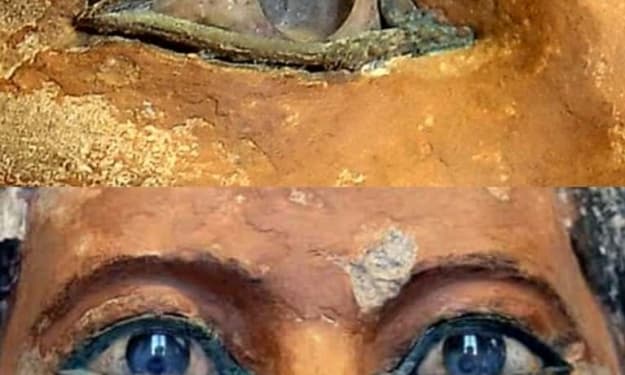
The Inlaid Eye of the Seated Scribe: A Marvel of Ancient Egyptian Craftsmanship
The Seated Scribe, an iconic piece of ancient Egyptian art dating back to the Old Kingdom (circa 2600-2350 BCE), stands as one of the finest examples of Egyptian sculpture. While much of its allure lies in its realistic portrayal of a scribe in mid-action, one of its most remarkable features is the inlaid eye. Crafted from red-veined white magnesite and rock crystal, the eye is an extraordinary example of the intricate artistry and technical prowess achieved by ancient Egyptian craftsmen. This detailed feature not only enhances the lifelike quality of the figure but also offers a glimpse into the sophisticated artistic methods employed by ancient Egyptian sculptors. The Seated Scribe: A Snapshot of Ancient Egyptian Society The Seated Scribe is a portrayal of a middle-aged man, likely a government official or a private scribe, engaged in the act of writing. Unlike the idealized figures of pharaohs and gods seen in many Egyptian artworks, the Seated Scribe is refreshingly realistic. His body is plump, his face marked by wrinkles and a slightly tired expression. This attention to realism reflects the importance of the scribe's role in Egyptian society. Scribes were vital to the administration, responsible for recording laws, religious texts, and the deeds of the pharaohs. They were often depicted in a more humanized manner, embodying the wisdom, intelligence, and practical skill that they were admired for, rather than the divine or heroic traits typically assigned to the upper echelons of society. The Eye: An Inlaid Work of Art What truly sets the Seated Scribe apart, however, is the detail of his eyes. The eyes of the sculpture are not simple carvings; they are inlaid with materials that would have been precious and difficult to obtain at the time, demonstrating the technical skill of the artist. The inlaid eyes are composed of two primary materials: red-veined white magnesite for the sclera (the white part of the eye) and rock crystal for the cornea. These materials, particularly magnesite, were not native to Egypt, suggesting that they were imported, highlighting the trade networks that the ancient Egyptians maintained. The use of such materials would have been a sign of wealth and status, indicating that the scribe was a person of considerable importance. The rock crystal was finely polished to create a smooth, translucent surface that mimicked the natural appearance of an eyeball. The magnesite, with its distinctive red veins, was carefully selected to give the sclera an appearance of life and depth. The eyes were further detailed by adding a colored material to represent the iris, which was fixed behind the polished crystal. This artistic technique enhanced the lifelike quality of the sculpture and contributed to the overall sense of realism that the piece exudes. The irises were likely created using a combination of natural pigments and resins, materials readily available in Egypt. This intricate level of detail in the eyes, where even the iris is carefully represented, would have made the sculpture appear almost alive. Symbolism of the Eyes in Ancient Egyptian Art In ancient Egyptian culture, the eyes were a symbol of perception, wisdom, and clarity. The concept of “seeing” was deeply symbolic, representing not only physical vision but also the ability to discern spiritual truths. The use of inlaid eyes in sculptures was not limited to realism; it also conveyed an important symbolic message. The eye was seen as a conduit to the soul, and the act of giving an image or statue eyes was thought to animate the figure. This belief stemmed from the idea that a person’s soul could continue to exist in the afterlife, and the eyes would allow the spirit to see and interact with the world. Therefore, the meticulous crafting of the eyes in the Seated Scribe may have been an effort to ensure that the figure would possess the necessary faculties to “see” into the afterlife, making the scribe’s soul capable of enduring beyond death. Moreover, the eyes were not only symbolic of the spirit’s perception but also served as a reflection of the vitality of the individual depicted. In the case of the Seated Scribe, the eyes could be interpreted as reinforcing the active, engaged nature of the figure, who is immersed in his work and in the practice of recording knowledge. By adding such lifelike eyes, the sculptor ensured that the scribe was portrayed as a vibrant, thinking individual, contributing to the broader theme of the artwork: the importance of intellect, wisdom, and the written word in Egyptian society. A Reflection of Egyptian Craftsmanship and Trade The skill required to create the inlaid eyes of the Seated Scribe speaks volumes about the level of craftsmanship in ancient Egypt. Not only was the artist proficient in the use of stone and crystal, but the choice of materials indicates a deep understanding of texture, color, and the ability to manipulate different substances to achieve a desired effect. The polished crystal, in particular, would have required great precision to avoid cracking or damaging the delicate material. Similarly, the red-veined magnesite, with its subtle hues, was carefully chosen to add a layer of depth to the figure, drawing attention to the realism of the face. The use of imported materials such as magnesite also reflects the interconnected nature of the ancient Egyptian world. Egypt was part of a complex network of trade routes that spanned Africa and the Near East, providing access to rare materials that could not be found locally. The existence of such trade, evident in the Seated Scribe’s eyes, underscores the Egyptian Empire’s economic and cultural reach during the Old Kingdom. Conclusion The inlaid eyes of the Seated Scribe are a stunning testament to the artistry, symbolism, and technical skill of ancient Egyptian craftsmen. Through the use of red-veined white magnesite, rock crystal, and other materials, the artist imbued the sculpture with a lifelike presence that transcends the boundaries of time. The eyes are not just a marvel of ancient craftsmanship but also a powerful symbol of perception, wisdom, and the eternal connection between life and the afterlife. As we look at the Seated Scribe today, we are reminded of the enduring legacy of ancient Egyptian culture and the extraordinary skill of its artists, who were able to capture the essence of life in stone and crystal.
By Deji Akomolafe2 years ago in Art
Short Positive Life Quotes: 30 Inspiring Sayings for Everyday Motivation
Introduction In life’s hustle and bustle, a few short positive life quotes can go a long way in sparking motivation and lifting spirits. These concise yet powerful sayings remind us to focus on the good, appreciate the present, and embrace challenges with optimism. Whether you're looking for daily affirmations or uplifting words to share, these quotes are perfect for spreading positivity.
By Owais Ahmed2 years ago in Art