
Former President Bill Clinton, Painted From Life by Elijah McKenzie-Jackson, Unveiled in Solo Exhibition
Elijah McKenzie-Jackson worked the way Gilbert Stuart did with Washington: in person, without a photograph.
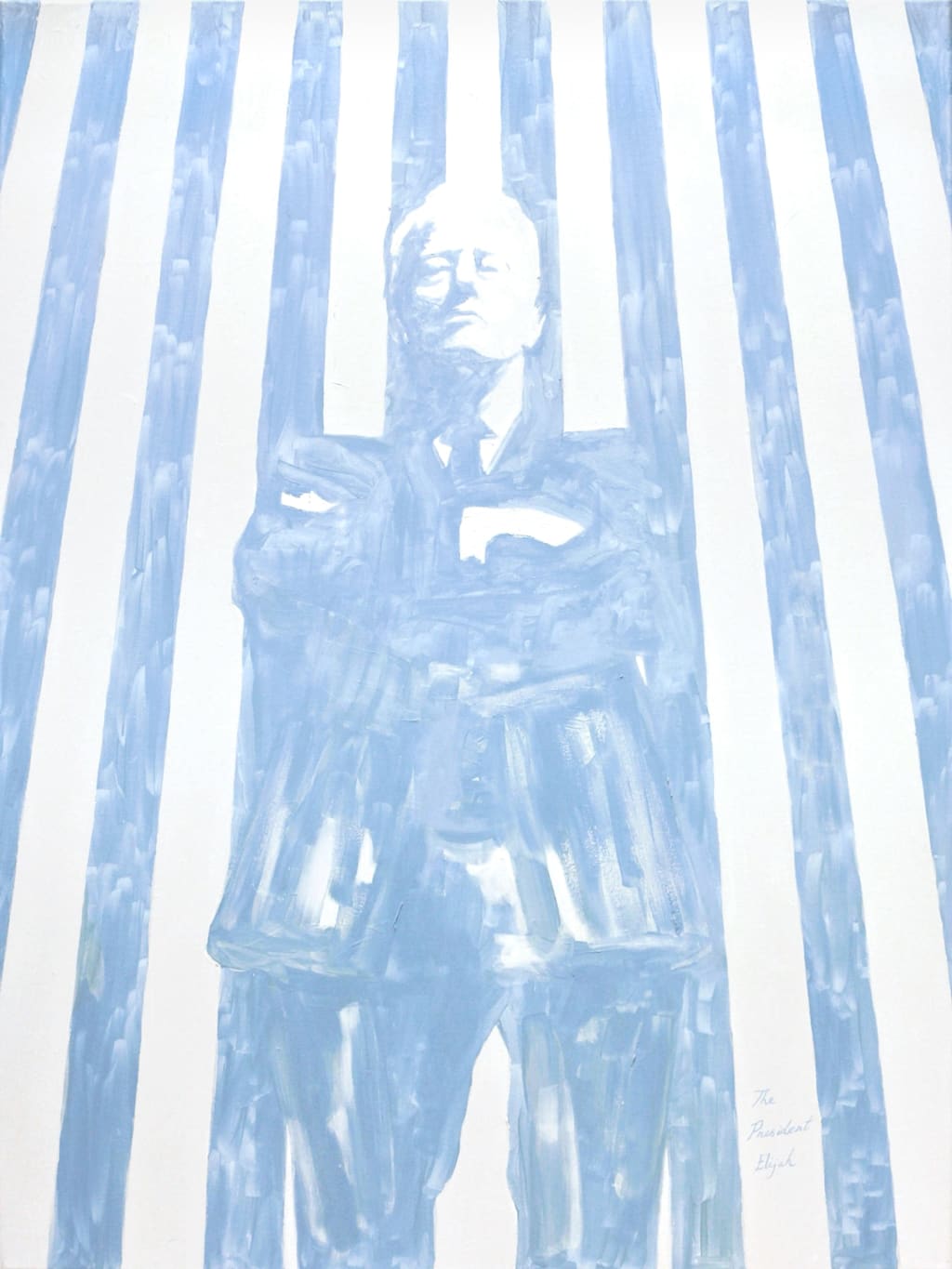
Very few artists have painted an American president from life. Gilbert Stuart painted George Washington from sittings. Elaine de Kooning sketched John F. Kennedy in Palm Beach as he moved, talked and read. London-born painter Elijah McKenzie-Jackson has now painted former President Bill Clinton the same way.
McKenzie-Jackson was 21 when he painted Clinton at the Clinton Global Initiative's 20th anniversary summit in September 2025. He had no formal sitting and used no photograph as reference. He followed the 42nd president from the stage through meeting rooms over roughly twenty-four hours and painted what he saw. The result looks like a screen print but was made the slowest way possible: by hand, in person, from life.
Painting a president from life is rare at any age. McKenzie-Jackson did it at 21.
A rare tradition
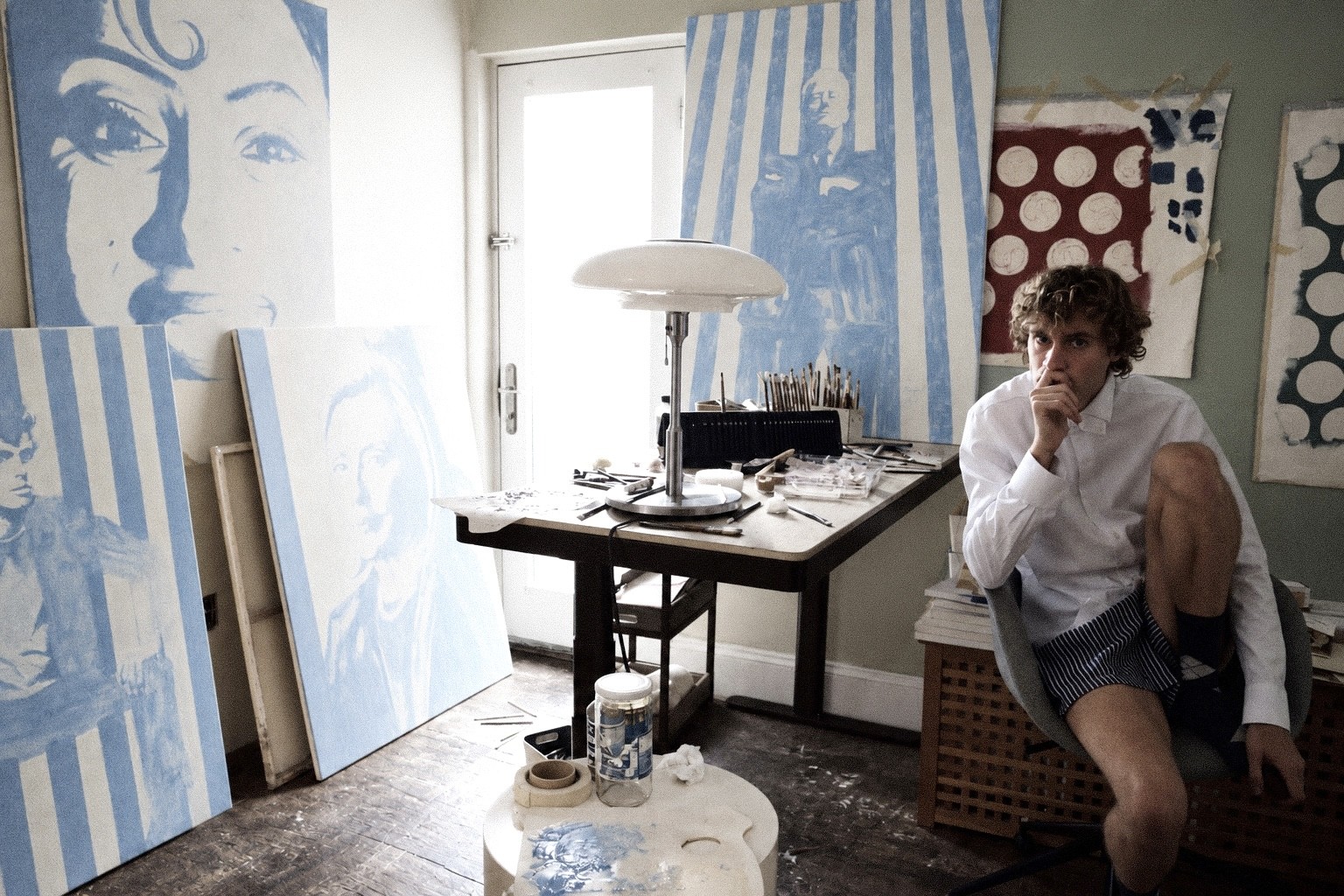
It is an old method used to make something that looks new, and that tension is what makes the portrait worth looking at twice.
Most presidential portraits today are made from photographs, in staged sessions, and approved before the public sees them. Painting from life is slower and less controlled. The subject doesn't hold still, and there's no reference to fall back on. It is also why so few presidents have been painted that way.
McKenzie-Jackson worked from observation as the summit unfolded around him. He watched how Clinton held a room and the posture he kept returning to, and built the portrait from that.
"Portraiture, done honestly, is never really about the subject," McKenzie-Jackson said. "It's about what the subject is made to carry."
The portrait
The President is a 36 by 40 inch oil painting. It is flat and pared back, built from a single blue and cut by vertical bands, closer to a screen print than a state portrait. McKenzie-Jackson began it at the summit and completed it this year in his studio. The interpretation is entirely his own.
A closer look
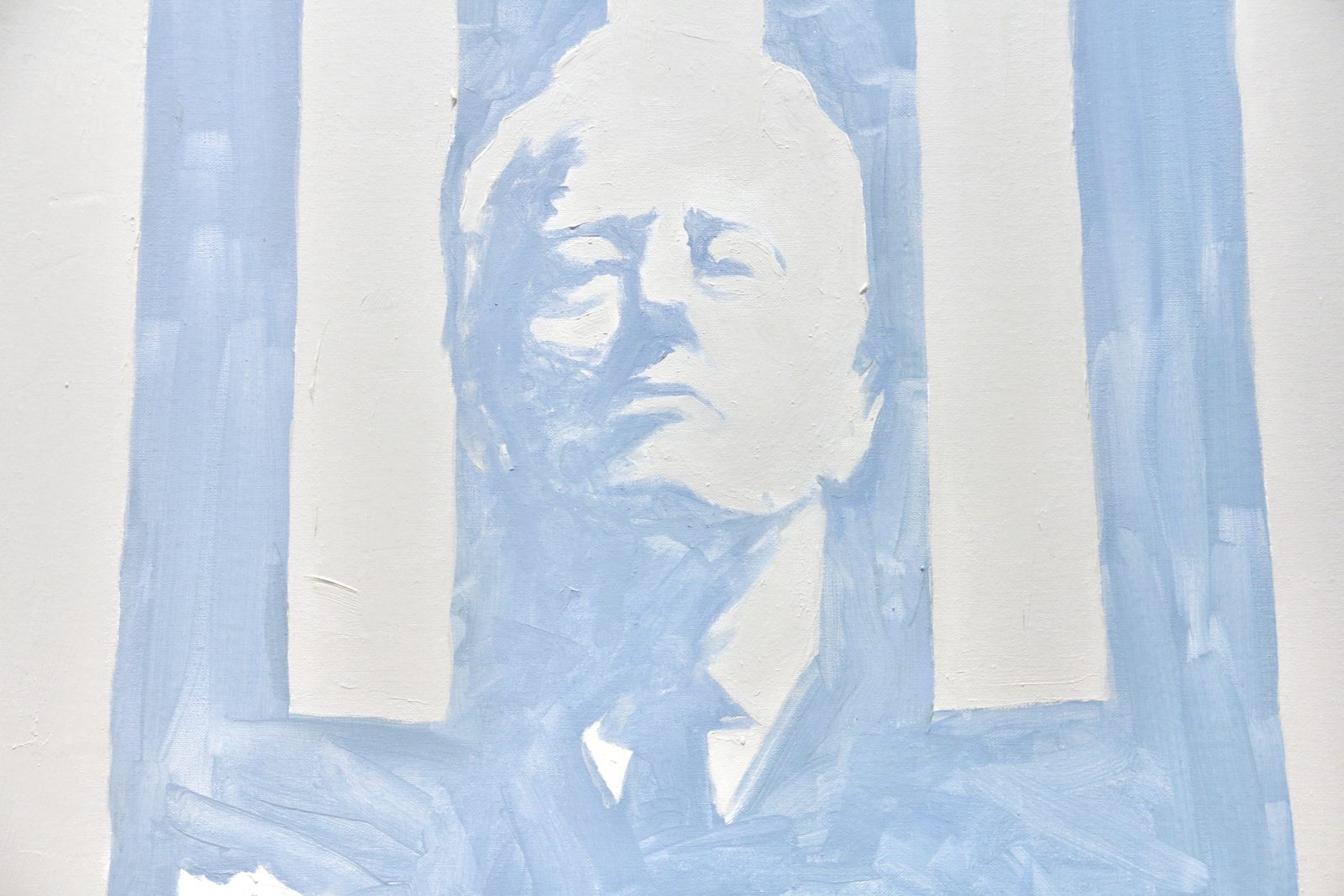
Up close, The President is built almost entirely from what isn't painted. Clinton's face is the bare white of the canvas, shaped only by pale blue shadow under the brow and along the jaw. The face seems to glow out of the canvas rather than sit on it.
His chin is raised, his eyes are almost closed and his arms are folded. It is the posture of a man listening, or remembering. It is not the pose he would give a camera.
The vertical bands could be stage curtains, flag stripes or a curtain about to open or bars about to close. The painting leaves that to the viewer. Below the shoulders, the suit dissolves into the same blue, so the man and the room become one surface.
At first glance it reads like a screen print, the visual language Warhol used for Mao and Jackie Kennedy. But Warhol worked from photographs. McKenzie-Jackson makes that look by hand, once, from a living person in the room, and the visible brushwork gives it away. There are echoes of Luc Tuymans' pale political portraits, Alex Katz's flat figures and Elaine de Kooning's restless sketches of Kennedy. Like Kehinde Wiley and Amy Sherald's Obama portraits, it brings an artist's own language to a presidential portrait.
It also sets a clear direction for his work: be in the room, paint from life, and give power and the people around it the same treatment. Few painters his age have claimed ground that specific. The risk with a style this pared back is that it becomes a formula. Here it holds, because each face is handled differently. Clinton dissolves into the room, while others in the series are drawn closer and more directly.
The series
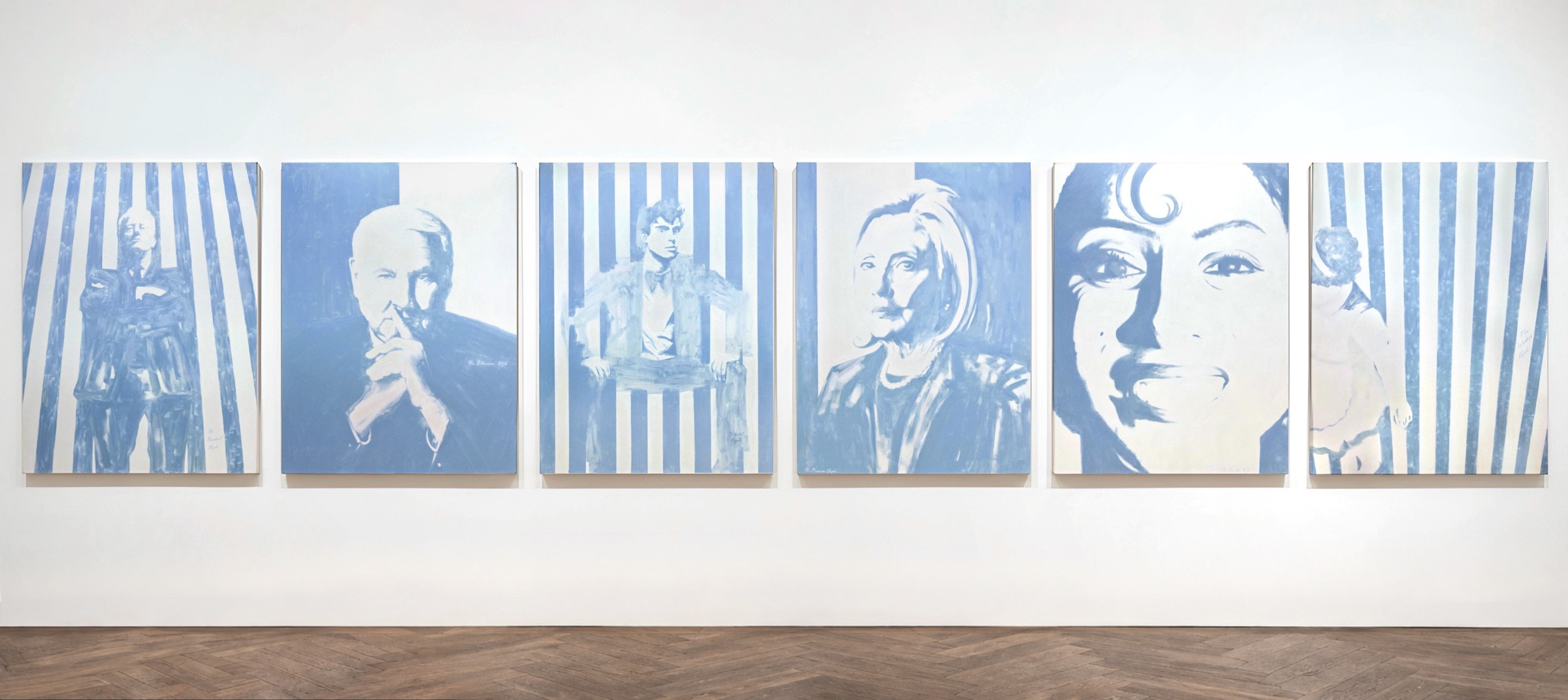
The portrait anchors The Ballroom Across 6th Avenue, Two Floors Up, 10:30 Sharp, a series of six paintings from the same room at the same scale:
The President (Bill Clinton)
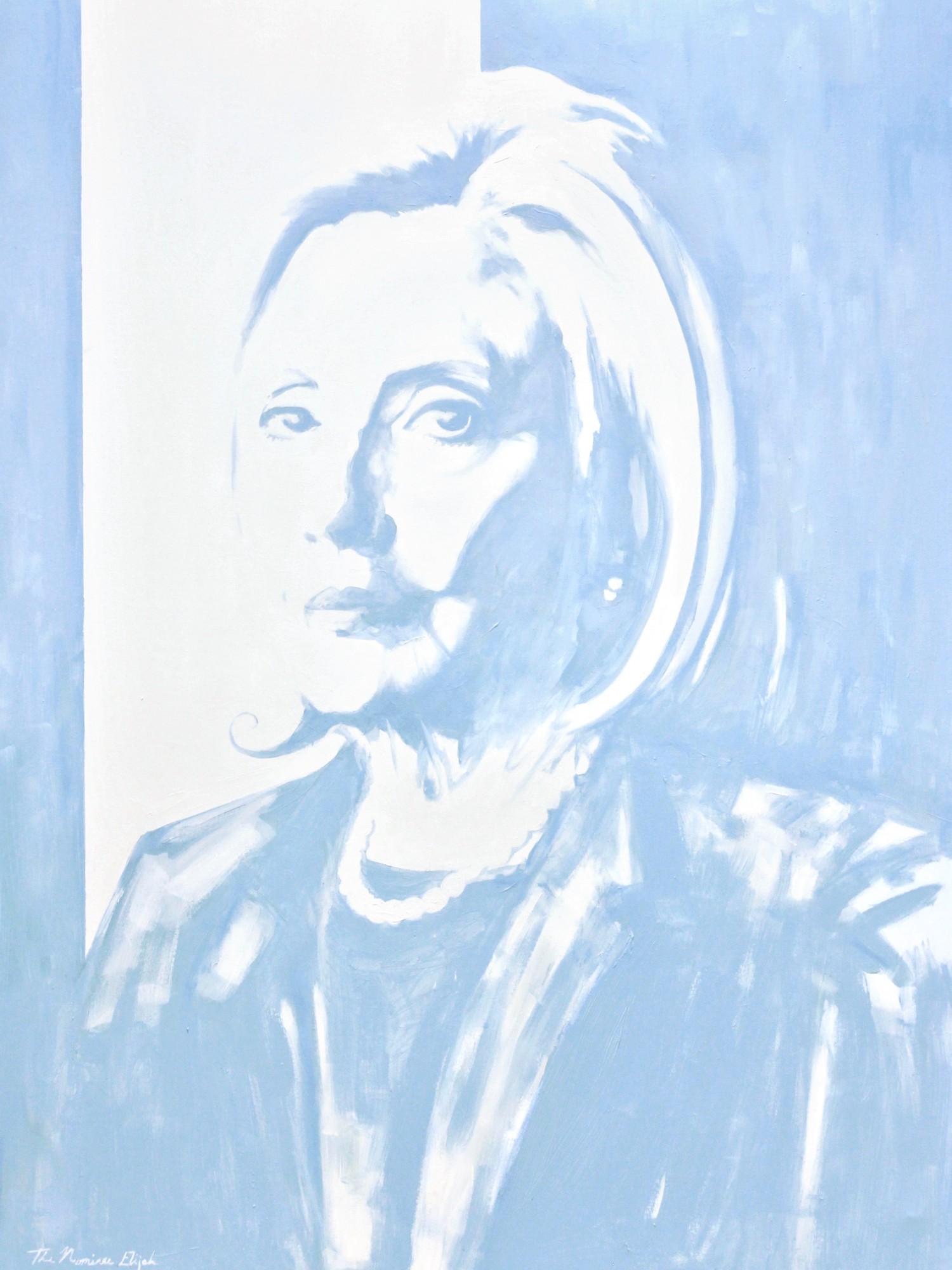
The Nominee (Hillary Clinton)
The Billionaire (Tom Golisano)
The Founder (Elaine Welteroth)
The Worker (a server at the summit)
The Artist (self-portrait)
Hung together, the contrast is the strongest argument for the series. Hillary Clinton is painted close and direct, looking out at the viewer, while her husband is half absorbed into the stripes. Six people from one room, and no two given the same kind of presence.
McKenzie-Jackson, now 22, opens the series as an online solo exhibition with BTA Gallery on 10 October.
About the artist
Elijah McKenzie-Jackson is a London-born painter and climate activist based in Washington, DC. His work has been exhibited at the United Nations COP28 Youth & Culture Pavilion in Dubai and above Times Square on New Year's Eve. The New York Times named him among its "8 Global Youth Protest Leaders," and he won a Shorty Award in 2024. He is the author of the artist book BLUE (Olympia Publishers, 2025) and co-founder of the climate nonprofit WaicUp.
More on the artist: www.elijahmckenziejackson.com
Media contact: Alex Young, [email protected]
About the Creator
Alex Young
I'm Alex Young, a London-based journalist and photographer telling stories at the intersection of youth, protest, and culture — mostly on 35mm. I document what moves people, and what they move toward.
Enjoyed the story? Support the Creator.
Subscribe for free to receive all their stories in your feed.
Comments
There are no comments for this story
Be the first to respond and start the conversation.