
The Hilsa Horizon: Inside Bangladesh’s Multi-Million Dollar Fish Economy
Discover how Bangladesh is transforming its historic delta river traditions into a multi-million dollar global seafood empire, dominating exports through 2026.

This unique geography is shaped by the meeting of three massive river systems—the Padma, the Meghna, and the Jamuna—which create the largest delta network on earth.
Every monsoon season, these rivers overflow, covering vast floodplains in nutrient-rich waters that act as natural nurseries for hundreds of native fish species.
For the people living along these banks, fishing isn't a job or an industry strategy; it is woven into the fabric of daily life.
The seasonal rhythms of the water dictate when communities plant crops and when fleets push out into the rivers, creating an unbroken chain of generational knowledge that keeps the country's multi-million-dollar supply flowing.
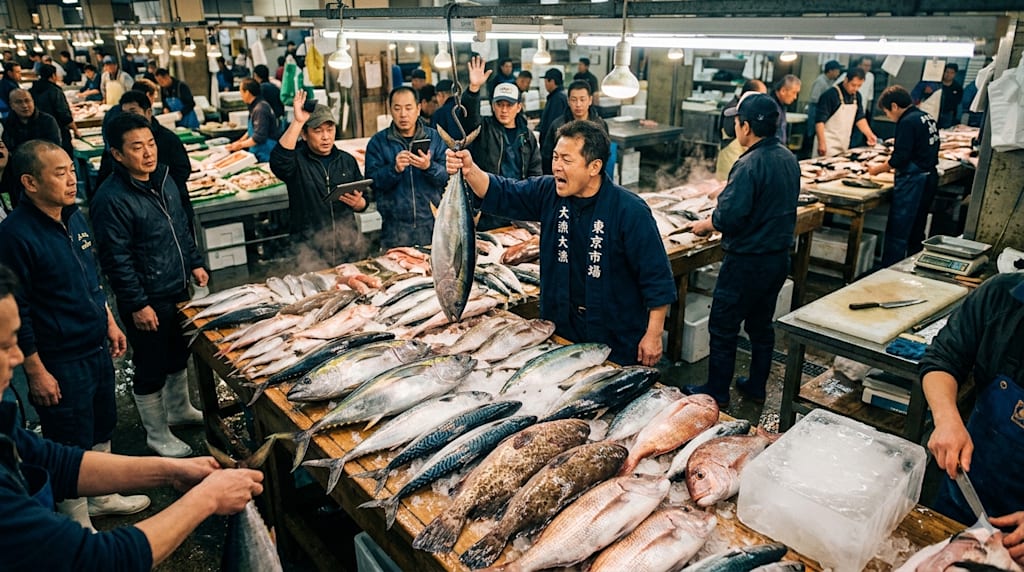
If you have ever stood in a bustling fish bazar in Dhaka, Khulna, or Chittagong as the morning sun cuts through the fog, you know it is a sensory blitz.
The wet concrete floors glow under low-hanging bulbs, the air smells intensely of the delta, and the loud, rapid-fire auctioning of silver-bright Ilish (Hilsa) rivals any stock exchange floor.
But this local chaos hides a massive, highly structured economic engine.
In Bangladesh, fish is more than a cultural staple wrapped up in the old proverb "Machhe Bhate Bangali" (Rice and fish make a Bengali).
It is a vital pillar of national survival, contributing 2.53% to the country's total GDP and accounting for over 22% of the agricultural sector.
The aquaculture market alone reached a massive 2.9 million tons in 2025, and as we push through 2026, the country is consistently securing its rank as the world's 3rd largest producer of inland open-water catches.
The Massive Scale of the Export Engines While millions of tons feed the domestic market, Bangladesh has built an aggressive global footprint by converting its vast network of rivers, floodplains, and coastal belts into commercial goldmines.
In the 2024-25 fiscal year, Bangladesh exported roughly 91,000 tons of fish and seafood products, hauling in a staggering Taka 6,145 crore (approximately 296 million USD) in foreign earnings.
The international trade is driven by key heavyweights:The Black Tiger Royalty: Farmed shrimp—specifically the premium Black Tiger prawns (Bagda) and giant river prawns (Galda)—rules the export sheets.
The heart of this shrimp empire lies in the southwestern coastal regions of Satkhira, Khulna, and Bagerhat.
Here, the unique brackish water conditions are perfectly suited for Gher farming—a traditional method where low-lying agricultural fields are converted into seasonal aquaculture enclosures.
These farms rely heavily on the natural tidal flow of the sea, blending ancient wetland management with strict modern export safety guidelines.
Small-scale farmers carefully monitor salinity levels and feed cycles to ensure that the prawns meet the incredibly precise sizing and visual standards required by high-end global distributors.
Shrimp alone pulls in roughly 80% of Bangladesh’s total seafood export value, with the European Union serving as the primary buyer.
The Hilsa Monopoly: Bangladesh owns the global crown for Hilsa catch, commanding the vast majority of the world's supply.
The silver fish isn't just local comfort food; it's high-value economic leverage, commanding massive demand and premium pricing across international borders.
The Processing Hubs: To maintain strict global compliance, the country operates 76 EU-approved state-of-the-art fish processing plants, primarily clustered around the coastal trading veins of Khulna.
Facing the Crossroads: Post-2026 ShiftThe business is hitting an era of massive transformation.
Supporting this entire massive pipeline is an intricate, fast-moving domestic transport network.
Furthermore, traditional fish open markets present an intimidating hurdle for the younger generation of city dwellers.
The sheer physical exhaustion of waking up before dawn, navigating dark, narrow alleyways, and bartering for hours over a single piece of fish simply doesn't fit into the demanding schedules of modern corporate life.
Younger consumers also demand total transparency; they want to know exactly where their food was harvested and ensure it hasn't been treated with harsh chemical shelf-life extenders.
This cultural gap has left a massive open space for a cleaner, more structured alternative to step in and modernize the entire dinner routine.
Long before any product makes it onto an international shipping container or a processing line, a massive army of middle-tier logistics workers coordinates the raw catch.
Overnight, local distributors move tons of ice from local block factories to remote loading docks, packing insulated wooden crates by hand to ensure the delicate fish stay fresh in the tropical humidity.
Fleet logistics operators run timed routes along the rivers and highways, racing against the sun to deliver the catch from rural wetlands to major city centers while it is still prime.
With Bangladesh transitioning out of Least Developed Country (LDC) status, the industry is moving away from old-school reliance on easy tariff exemptions and shifting focus toward strict quality control, cold-chain automation, and premium value-added products like ready-to-cook fillets.
To scale successfully, international traders and local suppliers are moving away from word-of-mouth logistics. Digital supply networks are bridging the gap from rural wetlands directly to global markets.
Navigating a physical fish market at the crack of dawn to find reliable, chemical-free catch can be exhausting.
Instead of bartering over price or guessing at freshness, everyday families and urban food lovers are skipping the crowded docks entirely and letting digital platforms handle the sourcing.
To get fresh water varieties, premium sea fish, or clean dry fish delivered straight to their kitchen doors, household buyers are shifting to dedicated online platforms like The Fish Bazar to secure high-quality meals without the hassle.
When centuries-old river traditions adopt data-driven logistics, a local bazar evolves into an unstoppable global market force.
Resources for Further Reading External Resource FAO Bangladesh Fisheries Country
https://www.fao.org/fishery/facp/BGD/en
https://lightcastlepartners.com/insights/2026/01/seafood-exports-bangladesh-ldc-graduation/
https://www.imarcgroup.com/bangladesh-aquaculture-market
https://vocal.media/feast/what-are-the-top-fish-markets-in-tokyo
https://vocal.media/01/japan-fin-fish-market-size-growth-trends-and-demand-report-2026-2034
About the Creator
Juliana Ericson Tan
Blogger and internet geek. Ten years in Japan. Came from Singapore, stayed for reasons I'm still trying to explain to my family. I write about life in Japan the way it actually feels — not the cherry blossom version
Enjoyed the story? Support the Creator.
Subscribe for free to receive all their stories in your feed.
Comments
There are no comments for this story
Be the first to respond and start the conversation.