
Japan Fin Fish Market Size, Growth, Trends and Demand Report 2026–2034
How Seafood Consumption Trends, Sustainable Aquaculture, and Supply Chain Modernization Are Driving Japan Fin Fish Industry

Market Overview
Fin fish remain a vital component of Japan’s food culture and seafood industry, contributing significantly to the country’s nutritional consumption and food supply chain. The market encompasses a wide variety of species sourced through both aquaculture and wild-catch fisheries, catering to growing consumer demand for high-quality, nutritious, and sustainably sourced seafood products. As health consciousness increases and seafood remains a staple of Japanese diets, the fin fish industry continues to evolve through advancements in farming techniques, processing technologies, and distribution networks.
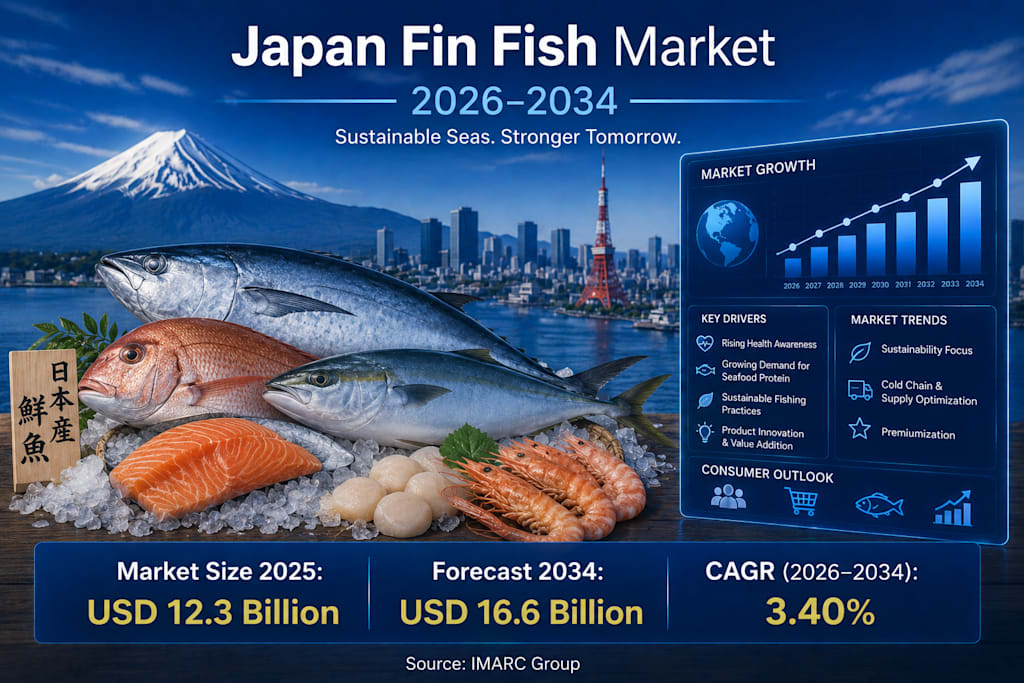
The Japan fin fish market size reached USD 12.3 Billion in 2025. Looking forward, IMARC Group expects the market to reach USD 16.6 Billion by 2034, exhibiting a growth rate (CAGR) of 3.40% during 2026-2034. Market growth is being driven by rising demand for protein-rich food products, increasing investments in sustainable aquaculture, and improvements in cold chain logistics and seafood distribution systems.
Request PDF Sample for more detailed market insights:
Role of Innovation in Market Development
- Advancements in Sustainable Aquaculture
Aquaculture technologies are playing a crucial role in supporting the growth of Japan’s fin fish market. Modern fish farming practices utilize advanced water management systems, disease monitoring technologies, and sustainable feed solutions to improve production efficiency and fish health. These innovations help meet growing seafood demand while reducing pressure on natural fish stocks.
- Improved Cold Chain and Distribution Infrastructure
The development of advanced cold storage and transportation systems is enhancing seafood quality and shelf life throughout the supply chain. Efficient cold chain infrastructure ensures that fin fish products maintain freshness from production facilities to retail outlets, supporting consumer confidence and reducing food waste.
- Digitalization of Fisheries and Supply Chains
Digital technologies are increasingly being integrated into fisheries management and seafood distribution. Data analytics, traceability systems, and automated monitoring solutions help improve operational efficiency, product quality, and supply chain transparency. These technologies also support sustainable fishing practices and regulatory compliance.
Japan Fin Fish Industry Trends and Drivers
- Growing Demand for Healthy Protein Sources
Consumers are increasingly prioritizing nutritious and protein-rich food products as part of healthy lifestyles. Fin fish are recognized for their high-quality protein content, omega-3 fatty acids, and essential nutrients, making them an attractive dietary choice for health-conscious consumers throughout Japan.
- Rising Focus on Sustainable Seafood Production
Sustainability is becoming an important factor influencing purchasing decisions within the seafood sector. Consumers, retailers, and food service operators are increasingly seeking responsibly sourced seafood products. This trend is encouraging investments in sustainable aquaculture practices and environmentally responsible fisheries management.
- Expansion of Retail and Online Distribution Channels
The growing availability of seafood products through supermarkets, specialty stores, and online retail platforms is supporting market growth. E-commerce channels are enabling consumers to access a broader selection of fresh and processed seafood products, while improved logistics networks ensure timely delivery and product quality.
Japan Fin Fish Market Segmentation
Fish Type Insights
Tropical Fin Fish
• Pompano
• Snappers
• Groupers
Other Fish Types
• Salmon
• Milkfish
• Tuna
• Tilapia
• Catfish
• Seabass
• Others
Environment Insights
• Freshwater
• Marine Water
• Brackish Water
Distribution Channel Insights
• Supermarkets and Hypermarkets
• Convenience Stores
• Specialty Stores
• Online Stores
• Others
Regional Insights
• Kanto Region
• Kinki Region
• Central/Chubu Region
• Kyushu-Okinawa Region
• Tohoku Region
• Chugoku Region
• Hokkaido Region
• Shikoku Region
The segmentation highlights the diverse fish species, production environments, and distribution channels contributing to the growth of Japan’s fin fish industry.
Competitive Landscape
The Japan fin fish market includes aquaculture operators, seafood processing companies, fisheries organizations, distributors, and retail suppliers. Competition is driven by product quality, sustainability practices, supply chain efficiency, and brand reputation. Companies are investing in advanced aquaculture technologies, traceability systems, and value-added seafood products to strengthen their market position and meet evolving consumer expectations.
Market Outlook
The Japan fin fish market is expected to witness steady growth over the coming years, supported by increasing demand for healthy seafood products, expanding sustainable aquaculture operations, and improvements in seafood logistics infrastructure. Technological advancements in fish farming, processing, and supply chain management will continue to enhance productivity and product quality. As consumers increasingly prioritize nutrition, sustainability, and food safety, the fin fish industry is expected to remain an essential part of Japan’s food and agriculture sector.
About IMARC Group
IMARC Group is a leading market research and consulting company that provides management strategy and market research services worldwide. The company offers industry analysis, market forecasting, feasibility studies, business consulting, and data-driven intelligence solutions across a wide range of industries and international markets.
About the Creator
David Michel
David Michel brings precision and depth to the world of market research. By uncovering trends, analyzing data, and delivering meaningful insights, he helps businesses navigate opportunities with confidence.
Enjoyed the story? Support the Creator.
Subscribe for free to receive all their stories in your feed.
Comments
There are no comments for this story
Be the first to respond and start the conversation.