
Philippines Fish & Seafood Market 2026: Aquaculture Growth, Export Expansion & Healthy Consumption Trends
How rising demand, sustainable fishing practices and export opportunities are shaping the Philippines’ fish and seafood industry

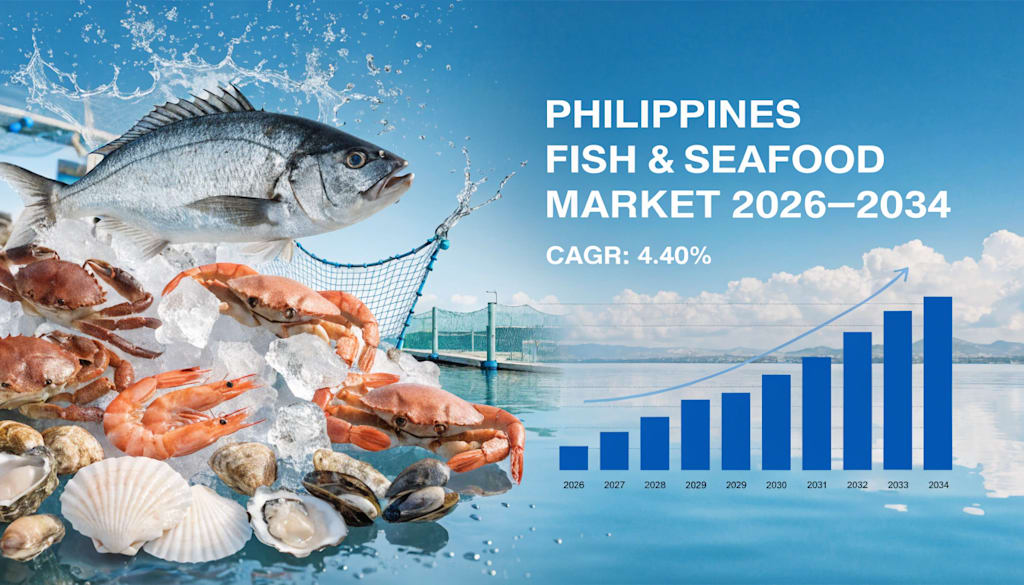
Philippines Fish & Seafood Market Overview
The Philippines fish and seafood market is a vital component of the country’s food and agriculture sector, encompassing the production, processing and distribution of fish, crustaceans and other marine products. The market plays a crucial role in food security, nutrition and export earnings, supported by the country’s rich marine biodiversity.
According to IMARC Group, the Philippines fish & seafood market size reached USD 9.1 Billion in 2025 and is projected to reach USD 13.4 Billion by 2034, exhibiting a compound annual growth rate (CAGR) of 4.40% during 2026–2034.
The market is experiencing steady growth, driven by increasing domestic consumption, rising export demand and the expansion of aquaculture. Improvements in cold chain infrastructure and growing awareness of the health benefits of seafood are further supporting market expansion.
Key Market Drivers
Growth in Aquaculture and Sustainable Fishing
Expansion of aquaculture, including the farming of tilapia, milkfish and shrimp, is helping meet rising demand while promoting sustainable fishing practices.
Rising Seafood Exports and Global Demand
Strong international demand from markets such as the United States, Japan and Europe is boosting exports of tuna, shrimp and processed seafood products.
Increasing Health Awareness and Protein Consumption
Consumers are shifting toward seafood as a healthier protein source rich in omega-3 fatty acids, supporting consistent demand across income groups.
Growing Demand for Value-Added and Ready-to-Eat Products
Urbanization and busy lifestyles are driving demand for processed seafood such as frozen, canned and ready-to-cook products.
Improvements in Cold Chain and Distribution Infrastructure
Investments in cold storage, transportation and logistics are reducing post-harvest losses and ensuring product quality across markets.
Request a Sample Report with the Latest 2026 Data & Forecasts
What the Opportunities Are
The Philippines fish & seafood market presents strong growth opportunities as demand and sustainability efforts increase.
Expansion of Sustainable and Certified Seafood
Growing adoption of international certifications and eco-friendly fishing practices is enhancing export competitiveness and consumer trust.
Growth of Aquaculture Technologies
Advanced farming techniques, automated feeding systems and disease management solutions are improving productivity and efficiency.
Rising Demand for Premium and Organic Seafood
Global and domestic consumers are increasingly seeking high-quality, traceable and sustainably sourced seafood products.
Expansion of Online and Modern Retail Channels
E-commerce platforms and supermarkets are improving accessibility to fresh and processed seafood products nationwide.
Increasing Investment in Processing and Packaging
Modern processing facilities and improved packaging technologies are enabling longer shelf life and higher-value exports.
Recent News and Developments
March 2026 – The Philippines fish & seafood market reached approximately USD 9.1 billion in 2025, reflecting strong domestic consumption and export demand across key species such as tuna, tilapia, milkfish, and shrimp.
March 2026 – Consumption remains structurally high, with Filipinos consuming around 93.9 grams of seafood per day, accounting for ~11.68% of total food intake, highlighting seafood as a core dietary protein source.
February 2026 – Aquaculture expansion continues to support supply, with the sector producing approximately 387.5 thousand tons in 2025, driven by increased farming of tilapia, milkfish, and shrimp.
February 2026 – Feed economics remain critical, with the aquafeed market reaching USD 3.9 billion in 2025, where feed costs account for ~70% of aquaculture production expenses, influencing overall seafood pricing and margins.
January 2026 – Demand for value-added and ready-to-eat seafood products (e.g., marinated fish, breaded shrimp, packaged seafood) is rising, driven by urbanization and changing consumer lifestyles.
December 2025 – Cold chain and logistics improvements are reducing post-harvest losses and expanding market reach, enabling consistent supply of fresh seafood across urban and inland regions.
November–December 2025 – Export activity remains strong, with key markets including the U.S., Japan, South Korea, and the EU, supporting growth in high-value seafood segments such as processed tuna and shrimp.
Why You Should Know About the Philippines Fish & Seafood Market?
The Philippines fish & seafood market plays a crucial role in ensuring food security, supporting livelihoods and driving export revenues.
With projected growth from USD 9.1 Billion in 2025 to USD 13.4 Billion by 2034, the market demonstrates steady expansion potential driven by health trends, sustainability initiatives and global demand.
As the country continues to invest in aquaculture, infrastructure and sustainable practices, the Philippines fish & seafood market is expected to remain a key contributor to the nation’s economy and food system in the years ahead.
About the Creator
Enjoyed the story? Support the Creator.
Subscribe for free to receive all their stories in your feed.
Comments
There are no comments for this story
Be the first to respond and start the conversation.