
Philippines Fish & Seafood Market 2026: Aquaculture Expansion, Seafood Exports & Health-Conscious Consumption Driving Growth
How sustainable fishing initiatives, rising seafood demand, export growth, and cold-chain modernization are transforming the Philippines fish & seafood industry

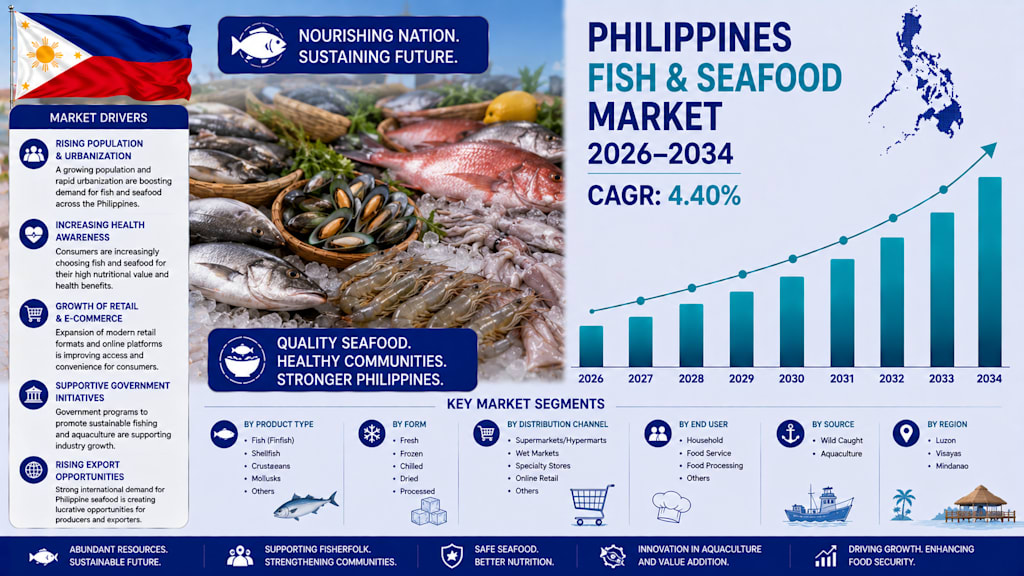
Philippines Fish & Seafood Market Overview
The Philippines fish & seafood market is a vital component of the country's food, agriculture, aquaculture, and export economy, encompassing fresh fish, seafood products, frozen seafood, canned products, and value-added seafood offerings.
According to IMARC Group, the Philippines fish & seafood market size reached USD 9.1 Billion in 2025 and is projected to reach USD 13.4 Billion by 2034, exhibiting a compound annual growth rate (CAGR) of 4.40% during 2026–2034. The market is witnessing steady expansion driven by growing domestic seafood consumption, increasing health awareness, aquaculture development, rising export opportunities, improved cold-chain logistics, and government support for sustainable fisheries.
Key Market Drivers
Growth in Aquaculture and Sustainable Fishing Practices
The Philippines continues to expand aquaculture production to meet growing seafood demand while supporting sustainability objectives. Increased production of tilapia, milkfish, and shrimp, combined with government-backed aquaculture programs and mariculture investments, is strengthening market growth.
Rising Seafood Exports and International Market Expansion
Growing global demand for Filipino seafood products, particularly tuna, shrimp, and processed seafood, is supporting export growth. Expanding trade partnerships and compliance with international food safety standards are helping local producers strengthen their global market presence.
Increasing Consumer Demand for Value-Added and Ready-to-Eat Seafood
Urbanization and changing lifestyles are boosting demand for convenient seafood products such as marinated fish, breaded seafood, pre-packaged meals, and ready-to-cook offerings. Retailers and digital channels continue expanding seafood availability nationwide.
Growing Domestic Consumption and Health Awareness
Consumers are increasingly choosing seafood due to its nutritional benefits, including protein and omega-3 content. Rising awareness of healthy eating habits is encouraging higher seafood consumption across various demographic groups.
Development of Cold Chain and Distribution Infrastructure
Investments in refrigeration facilities, fish ports, transportation networks, and cold storage systems are reducing post-harvest losses, improving product quality, and expanding seafood accessibility throughout the country.
Request a Sample Report with the Latest 2026 Data & Forecasts
What the Opportunities Are
Expansion of Sustainable and Certified Seafood Products
Growing demand for responsibly sourced seafood is encouraging producers to adopt sustainable fishing practices and pursue international certifications that improve competitiveness in export markets.
Growth of Processed and Value-Added Seafood Products
Rising consumer preference for convenience foods is creating opportunities for manufacturers to expand offerings in frozen, canned, ready-to-cook, and ready-to-eat seafood categories.
Increasing Online Seafood Retail and Digital Commerce
The growth of e-commerce platforms, online grocery channels, and direct-to-consumer seafood delivery services is creating new sales opportunities and improving consumer access to seafood products.
Investments in Aquaculture Technology
Advanced feeding systems, disease management solutions, and modern aquaculture technologies are helping improve production efficiency and output while supporting sustainable growth.
Expansion into Premium Export Markets
Growing international demand for high-quality and sustainably sourced seafood products presents opportunities for Philippine exporters to strengthen their presence in key global markets.
Recent News and Developments
June 2026 : The Philippine crab processing industry faced challenges after restrictions affecting exports of Philippine blue swimming crab products to the United States market. Industry stakeholders highlighted the importance of maintaining compliance with international fisheries and marine conservation requirements to support export competitiveness.
May 2026 : Food inflation pressures across the Philippines continued influencing consumer purchasing behavior and food supply chains. Rising food prices increased focus on efficient seafood distribution, affordability, and supply stability across domestic markets.
February 2026 : Industry stakeholders continued promoting seafood trade expansion and export competitiveness through improved trade cooperation initiatives, food safety compliance, and stronger international market access for Philippine seafood products.
January 2026 : Government agencies and industry participants continued supporting fisheries modernization, sustainable resource management, and investments in seafood production infrastructure to improve long-term industry resilience and productivity.
December 2025 : The Philippine government emphasized strengthening international trade relationships and export opportunities through upcoming trade agreements, creating potential benefits for seafood exporters seeking broader market access.
December 2025 : Growing consumer interest in fresh and high-quality food products continued supporting demand across wet markets, supermarkets, and modern retail channels, reinforcing the importance of efficient seafood supply and distribution networks.
Why You Should Know About the Philippines Fish & Seafood Market?
The Philippines fish & seafood market is becoming an increasingly important pillar of the country's food security, aquaculture sector, fisheries industry, and export economy.
With projected growth from USD 9.1 Billion in 2025 to USD 13.4 Billion by 2034, the market demonstrates strong long-term potential supported by aquaculture expansion, rising seafood consumption, export opportunities, health-conscious consumer behavior, and improvements in cold-chain infrastructure.
As industry participants continue investing in sustainable fishing practices, value-added seafood products, advanced aquaculture technologies, and modern distribution systems, the sector is expected to play a critical role in supporting economic development, food supply stability, and export growth across the Philippines.
About the Creator
Enjoyed the story? Support the Creator.
Subscribe for free to receive all their stories in your feed.
Comments
There are no comments for this story
Be the first to respond and start the conversation.