
very cyber, needs more punk
or why we should take this more seriously



Perhaps the best way to talk about cyberpunk is through a meme.
The one featuring the pirate Barbossa from the movie Pirates of the Caribbean: “You better start believing in ghost stories, Miss Turner. You’re in one.”
The same goes for cyberpunk. Yeah, the term was coined way back in the ’80s, but also about how some of Philip K. Dick’s books (such as Do Androids Dream of Electric Sheep?, later adapted into the famous Blade Runner) foreshadowed all the elements of the genre. Yeah, it's going hot in the video game world (with titles such as the hugely popular Cyberpunk 2077, Citizen Sleeper, System Shock, VA-11 Hall-A, Deus Ex, and, in its own way, the Shadowrun series). We could do all of this, and we’d still only end up with a pseudo-historical overview.
Cyberpunk deals with distopian futures where rampant technological progress corresponds to a progressive devaluation of human life. Like all -punk genres, the fantastical-technological element should be accompanied by social criticism. Like all -punk genres, it is remembered for its aesthetics rather than its content.
Picture crowded metropolises, gratuitous violence, mythologizing of the “street” hero, artificial prosthetics and overabundant neon signs.
From its inception to the present day, cyberpunk has already risen and set.
As I writer I must admit to a certain embarrassment, ever since I realised that every cyberpunk idea I’ve ever had already exists in the real world.
In 2023, I was a finalist for the Urania Short Story Award with the story “The Silent Tenant”: a tale about technology and the export of war. But neural implants already exist (with Musk's disastrous experiments), war is nothing new, the use of drones against civilians is widespread (glaring examples include Ukraine, Gaza, and the Mediterranean in general), and corporations speculating on new technologies of extermination and surveillance are almost a cliché.
Other fundamental elements of the genre include multinational corporations gaining ever more power at the expense of governments (and human rights), the progressive deterioration of the welfare state and all public services (enshittification, to borrow the term from Cory Doctorow) , and the emergence of artificial intelligence or alternative spaces on the internet. We may not yet have true AI, let alone a true cyberspace, but the other points in this list are plain to see.
We’ve stopped writing cyberpunk because it’s coming true.
- my humble self
The first wave of cyberpunk emerged in the U.S. during the Japanese economic boom: Gibson and Sterling have infused the genre’s aesthetic with a sort of reverse orientalism.
On the one hand, there’s a fascination with the aesthetic of a metropolis like Tokyo; on the other, there’s the fear that Japanese corporations (the historical post-WWII enemy) might economically strangle their American counterparts. These are purely American and America-centric anxieties.
Worse still: cyberpunk has become, almost by definition, a dog-eat-dog genre: the corporation-issued violence is met with a counter-violence from the streets—from common criminals, cops, protagonists, and freelance anarchists.
Cyberpunk is tied to noir (another fundamentally bleak and disillusioned genre), but it also indulges in escapism. Pages upon pages can be filled with the adventures of disoriented hackers and street vigilantes whose rash, liberal use of force is meant to entertain. Violence, when presented in its most pop-culture-driven form, risks being fascinating: even when a cyberpunk work goes to great lengths to demonstrate its protagonist’s tragic arc (I’m thinking of David Martinez in Cyberpunk: Edgerunners).
At its best, the genre exists to point the finger and cry scandal, not to offer solutions. His successors took care of that (for example, and not without issues, solarpunk and hopepunk).
The temptation, then, would be to dismiss cyberpunk along with its failures—if it weren’t for the fact that it’s still so damn relevant.
I'm writing all this from the perspective of a lover of the genre. I've written my fair share of it. You can read maybe the best examples in 'Consultancy Blues' (available under a pay-what-you-want deal on gumroad).
In 'Candido Reloaded', the main character is plagued by the fear of becoming homeless, and is willing to be a middle manager in a bullshit corporate job to placate this fear. Even if said job has left him purposeless. If it seems familiar, it's because, again, cyberpunk speaks to the modern times. In 'Fuck you, nightly millionaires' working class people have to live during the day, when the sunlight gives you cancer, while the upper class live in tomb-like skyscrapers and come out at night to party. No Kardashians included, but you're free to picture them if you'd like.
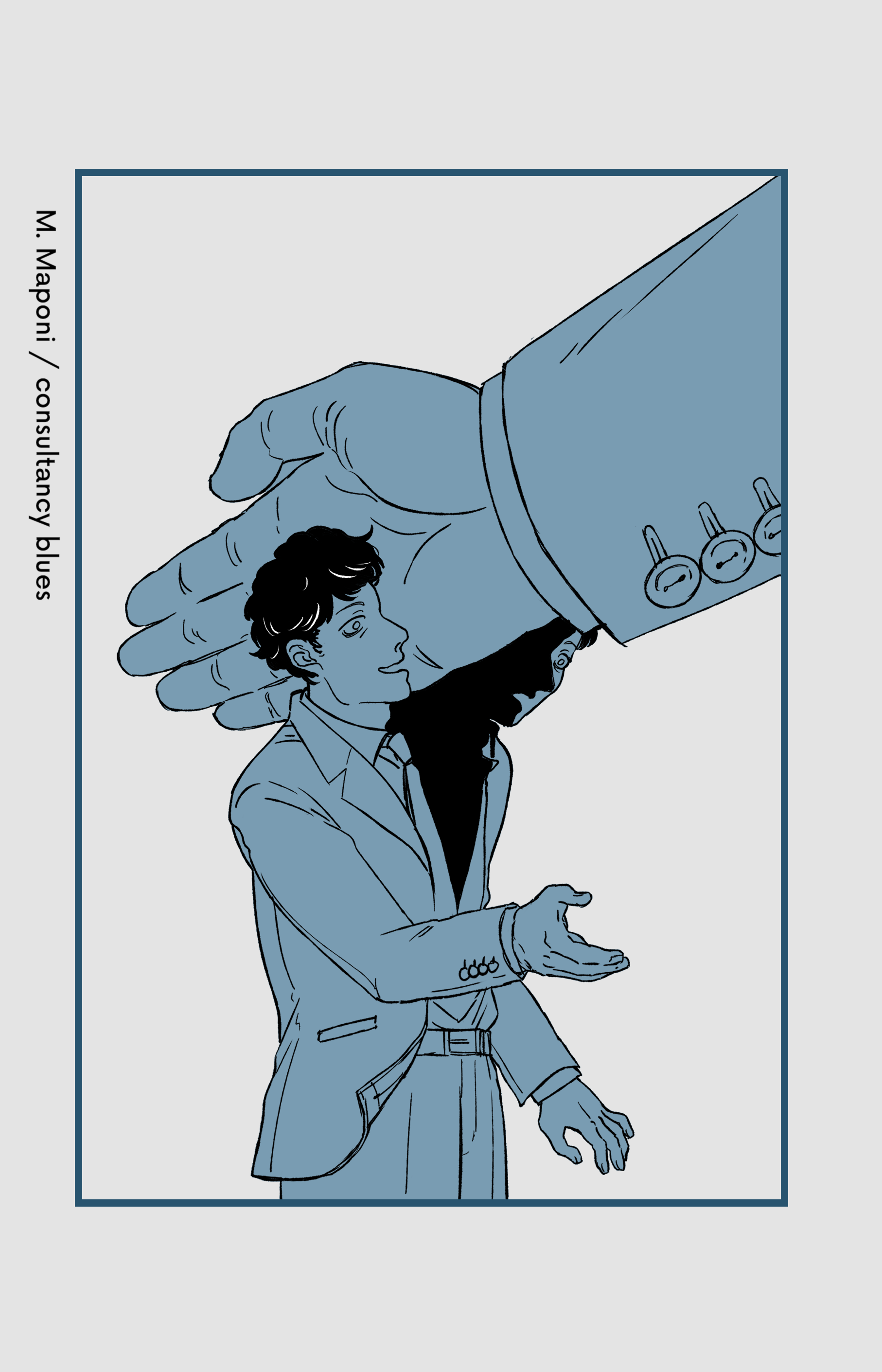
Precisely because it’s so relevant today, we need to talk about cyberpunk now more than ever, emphasizing its ethical nature rather than its aesthetics.
Aesthetics are easy. If you're not convinced yet, go on Amazon and fill your cart with anything that has 'cyber' in its name. You can decorate your room with a bunch of neon lights and get dressed like a real street warrior, all by buying from one of the companies that consistently spies on us and pollutes our air. Food for thought, uh!
We need a second wave of cyberpunk, one that is, above all, a form of social critique.
Perhaps the best way to talk about cyberpunk is through a meme. Do you like cyberpunk stories? You’re living in one.
About the Creator
M.
Half-time writer, all time joker. M. Maponi specializes in speculative fiction, and speculates on the best way to get his shit together.
Author of "Reality and Contagion" and "Consultancy Blues"
Enjoyed the story? Support the Creator.
Subscribe for free to receive all their stories in your feed. You could also become a paid subscriber, letting them know you appreciate their work.
Comments
There are no comments for this story
Be the first to respond and start the conversation.