
TRACE-NCR: An Evidence-Gated Framework for Construction Nonconformance Control, Register Integrity, and Organizational Learning
Track–Respond–Analyze–Correct–Evaluate–Nonconformance Resolution

Domingo Gaces Samontina, Jr.
Independent Researcher, Construction Information Management
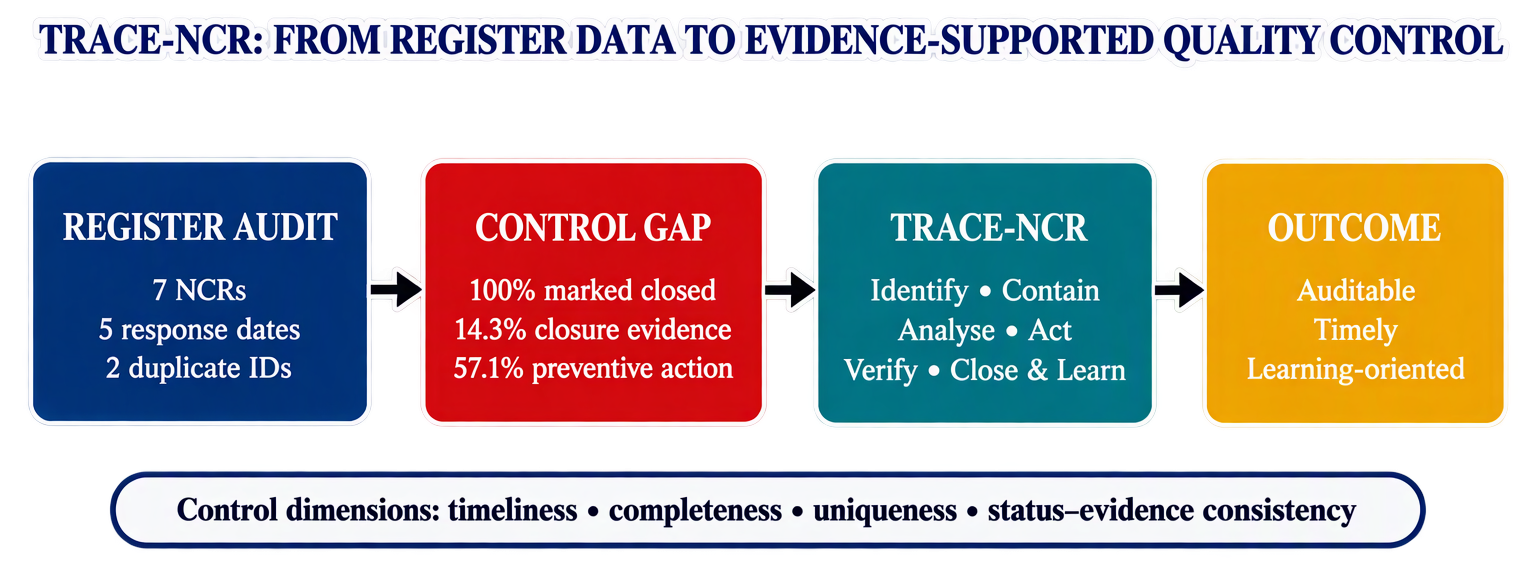
Abstract—Nonconformance report (NCR) systems frequently record deviations without ensuring that response, causal analysis, corrective action, verification, and closure evidence are complete. This paper develops TRACE-NCR, an evidence-gated framework that makes register integrity the control surface for nonconformance management. A retrospective audit of seven construction NCR observations was used as a bounded diagnostic case. Five records had calculable response dates, with intervals of 0, 1, 2, 3, and 9 calendar days (median 2; mean 3.0). Root cause, corrective action, and preventive action were documented in 85.7%, 71.4%, and 57.1% of records. Although all records were marked closed, only one contained a closeout acceptance date. Two identifiers were reused, and the elapsed-time formula was reversed. TRACE-NCR organizes six gated stages—Identify, Contain, Analyse, Act, Verify, and Close and Learn—around four information-quality dimensions: timeliness, completeness, uniqueness, and status–evidence consistency. A conceptual model, five-level maturity model, audit checklist, and managerial roadmap are proposed. The contribution is not population inference from a small case; it is a transferable control architecture for converting passive registers into auditable quality intelligence.
Index Terms—construction quality, nonconformance report, document control, root-cause analysis, corrective action, traceability, maturity model.
I. INTRODUCTION
Construction NCRs should convert a deviation from a requirement into a controlled sequence of detection, containment, causal analysis, correction, verification, and learning. In practice, the register may be treated as an administrative list: status is updated, yet response timestamps, preventive actions, acceptance evidence, or unique references remain incomplete. When that occurs, dashboards can report closure without demonstrating conformity, and later analytics inherit the register’s defects.
This study makes the TRACE-NCR Framework the central contribution. The empirical register is used as a diagnostic case to expose control weaknesses and to motivate a transferable framework. The paper asks: (1) what weaknesses are visible in response timeliness, field completeness, identifier uniqueness, and closure evidence; (2) how can these dimensions be integrated into an evidence-gated NCR lifecycle; and (3) what maturity path and managerial roadmap can support implementation?
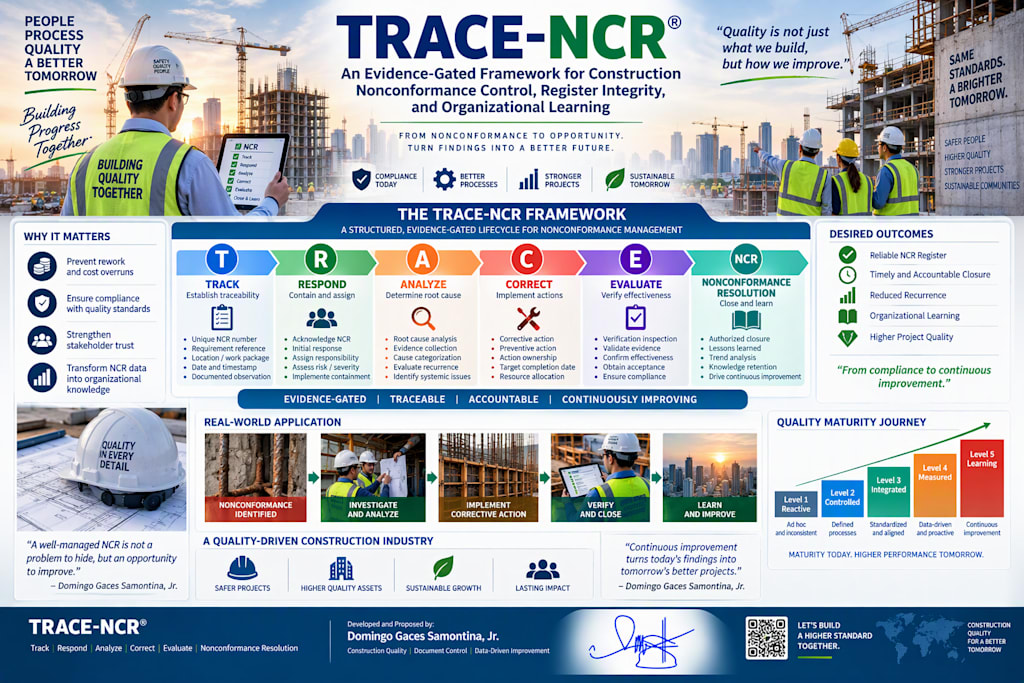
TRACE-NCR means Track–Respond–Analyze–Correct–Evaluate–Nonconformance Resolution. It is an evidence-gated quality assurance framework developed by Domingo Gaces Samontina, Jr. to improve the integrity, traceability, timeliness, completeness, and closure effectiveness of construction nonconformance reports.
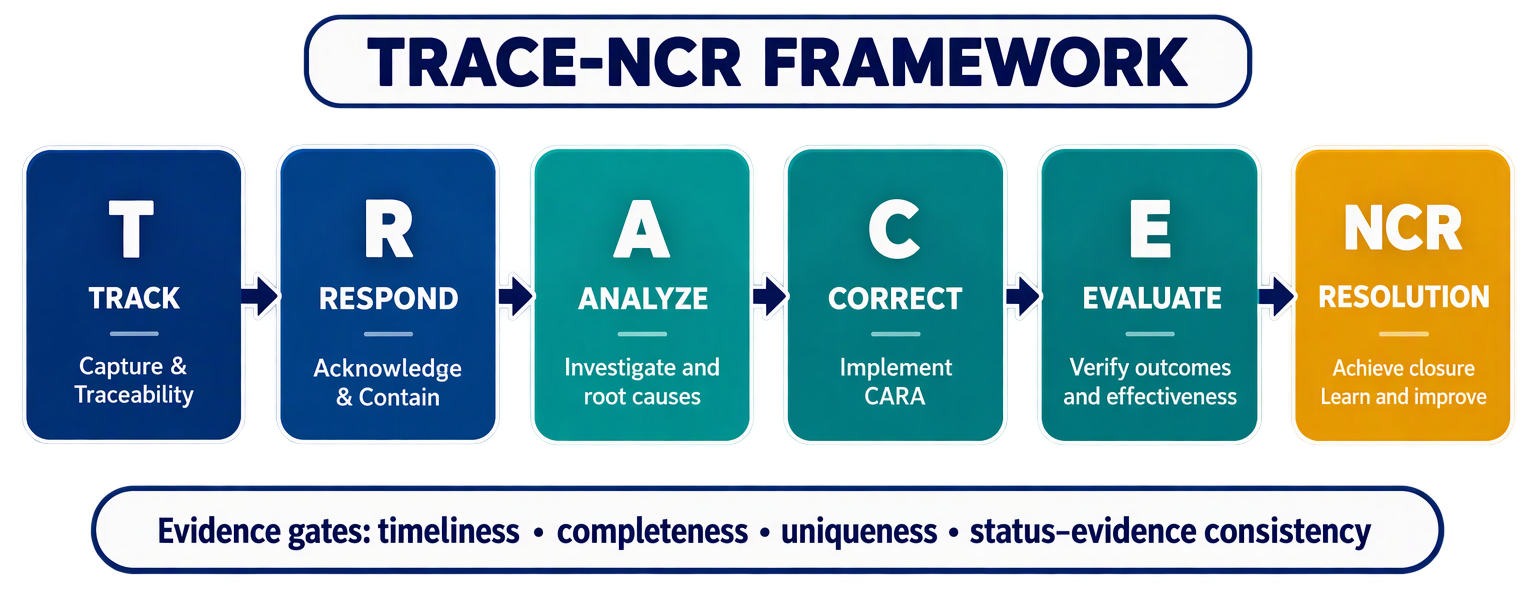
Concise framework description—Track establishes unique identification and end-to-end traceability; Respond records acknowledgement, containment, severity, and accountability; Analyze determines and substantiates immediate and root causes; Correct implements correction, corrective action, and preventive action with owners and due dates; Evaluate verifies objective evidence and action effectiveness; and Nonconformance Resolution completes authorized closeout, retains evidence, captures lessons learned, and supports recurrence and trend review.
The contribution is threefold. First, the study defines register integrity as a quality-management construct comprising timeliness, completeness, uniqueness, and status–evidence consistency. Second, it proposes TRACE-NCR as a six-stage control cycle. Third, it operationalizes the framework through an audit checklist, maturity model, metrics, and implementation roadmap. The small case is not offered as representative evidence; rather, it illustrates why a control architecture is needed.
II. THEORETICAL FOUNDATION AND RELATED WORK
A. Quality Control and Cost of Nonquality
Quality-management theory treats defects as symptoms of processes rather than isolated failures. Deming’s process orientation [1], Juran’s quality trilogy [2], and Crosby’s prevention principle [3] collectively support moving from inspection after the fact toward planned controls, ownership, and prevention. Construction research has quantified the consequences of defects and rework across design and production settings [4]–[7]. These studies establish the business case for NCR systems but do not, by themselves, guarantee that registers preserve reliable evidence.
B. Organizational Learning and Knowledge Conversion
TRACE-NCR also draws on organizational learning. Argyris and Schön distinguish correction within existing rules from learning that questions the rules themselves [8]. Nonaka’s knowledge-creation model explains how tacit and explicit knowledge interact [9]. For NCRs, this means that closure should not terminate learning: causal evidence and verified actions should be coded, compared, and fed back into methods, training, design, and supplier controls.
C. NCR Analytics, RCA, and Right-First-Time Delivery
Recent construction research increasingly treats NCRs as analytical assets. Ford et al. analyzed 1,260 records and identified materials management, workmanship, and supervision as dominant themes [10]. Ford’s later doctoral work combined NCR analytics and practitioner evidence into a right-first-time improvement agenda [11]. Srinath and Varghese used document review, interviews, root-cause analysis, and Delphi validation to examine schedule nonconformance [12]. These studies support structured causal coding and triangulation rather than accepting narrative fields at face value.
D. Digital Traceability and Predictive Quality
ISO 9001 requires control of nonconforming outputs and retention of documented information on the nonconformity, actions, concessions, and authority [13]. ISO 10005 strengthens planned responsibilities [14]. Araya-Santelices et al. showed that an ISO-aligned BIM–GIS workflow can improve inspection traceability [15]. Love et al. subsequently demonstrated that structured nonconformance data can support rework propensity and cost modeling when classification and validation are disciplined [16]. Digitalization therefore creates value only when underlying identifiers, dates, categories, and evidence are trustworthy.
E. Construction Information Quality
Information quality is not identical to data availability. Wang and Strong conceptualized data quality as fitness for use, including intrinsic, contextual, representational, and accessibility dimensions [17]. In construction document control, Samontina proposed automated metadata and dashboard controls [18], transformed work inspection request logs into workflow intelligence [19], and separated completeness, timeliness, and reporting continuity for daily reports [20]. TRACE-NCR extends this line by making evidence-supported progression the governing principle.
F. Research Gap
Prior work emphasizes rework cost, causal frequency, digital workflows, or prediction. Less attention is paid to whether an NCR register is sufficiently reliable to support those analyses. TRACE-NCR addresses this gap by joining quality management, organizational learning, and information-quality theory in an auditable lifecycle model.
III. METHODOLOGY
A. Design, Case, and Unit of Analysis
A retrospective embedded single-case audit was conducted on the latest QA/QC NCR register. The project was the case and each populated NCR row was an embedded unit. Rows were included when they contained a numeric register ID and NCR type; headings, decorative rows, blanks, and formula-only rows were excluded. Seven observations met the rule. Source values were retained; derived variables were created separately; no missing value was imputed.
B. Measures and Analytical Rules
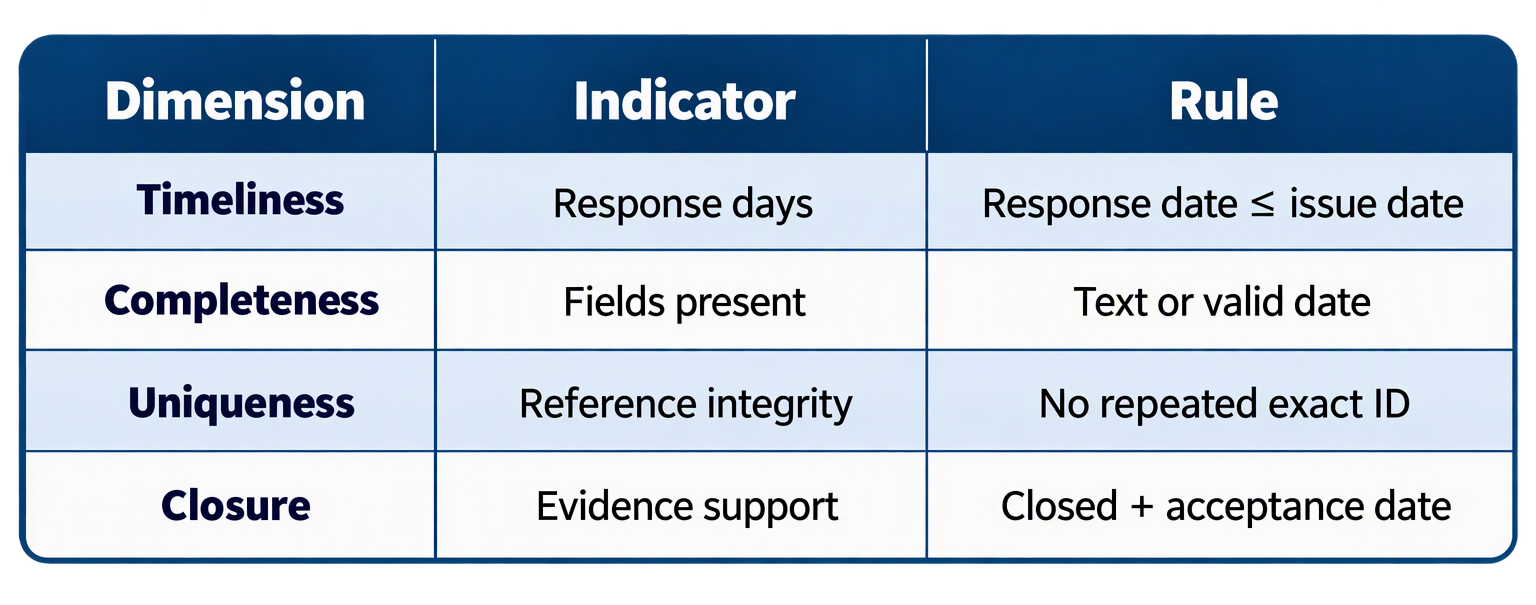
Response interval equaled initial-response date minus issue date in calendar days. An interval of zero or one was classified as within a one-calendar-day proxy; this does not establish literal 24-hour compliance because timestamps were absent. Completeness was binary for substantive text or valid dates. Evidence-supported closure required both a closed status and a closeout acceptance date. Duplicate references were exact normalized matches. Reversed spreadsheet durations were recalculated rather than accepted.
TABLE I. OPERATIONAL DEFINITIONS
C. Analysis and Validity
Counts and percentages used all seven observations unless stated. Response statistics used the five records with both dates. No inferential tests were performed. Reliability was strengthened through deterministic rules, explicit denominators, preservation of source values, and record-level cross-checks. Construct validity was improved by separating correction from prevention and status from evidence. External validity is limited; organizational approval and confidentiality clearance remain necessary before publication.
IV. EMPIRICAL DIAGNOSTIC RESULTS
A. Response Timeliness
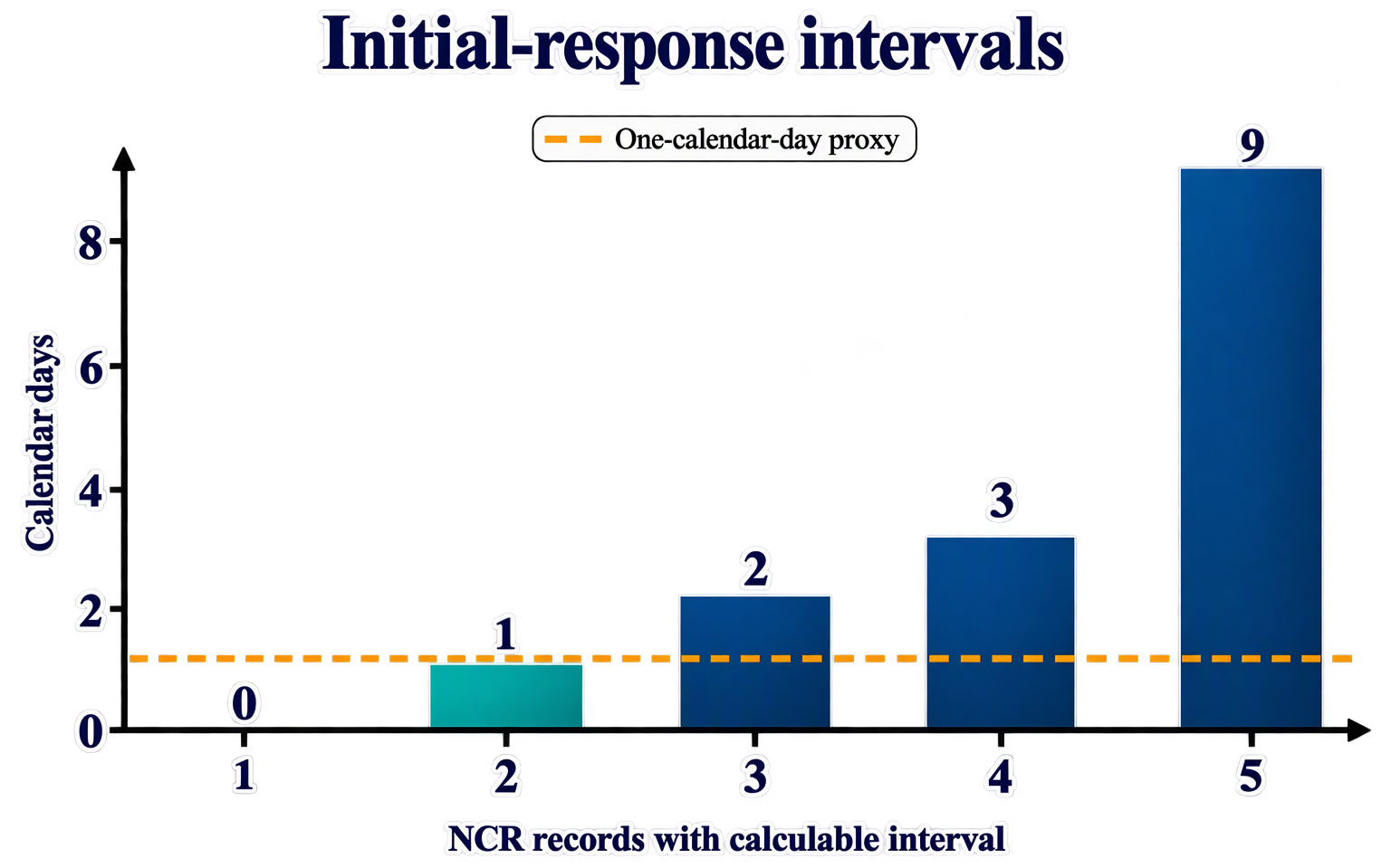
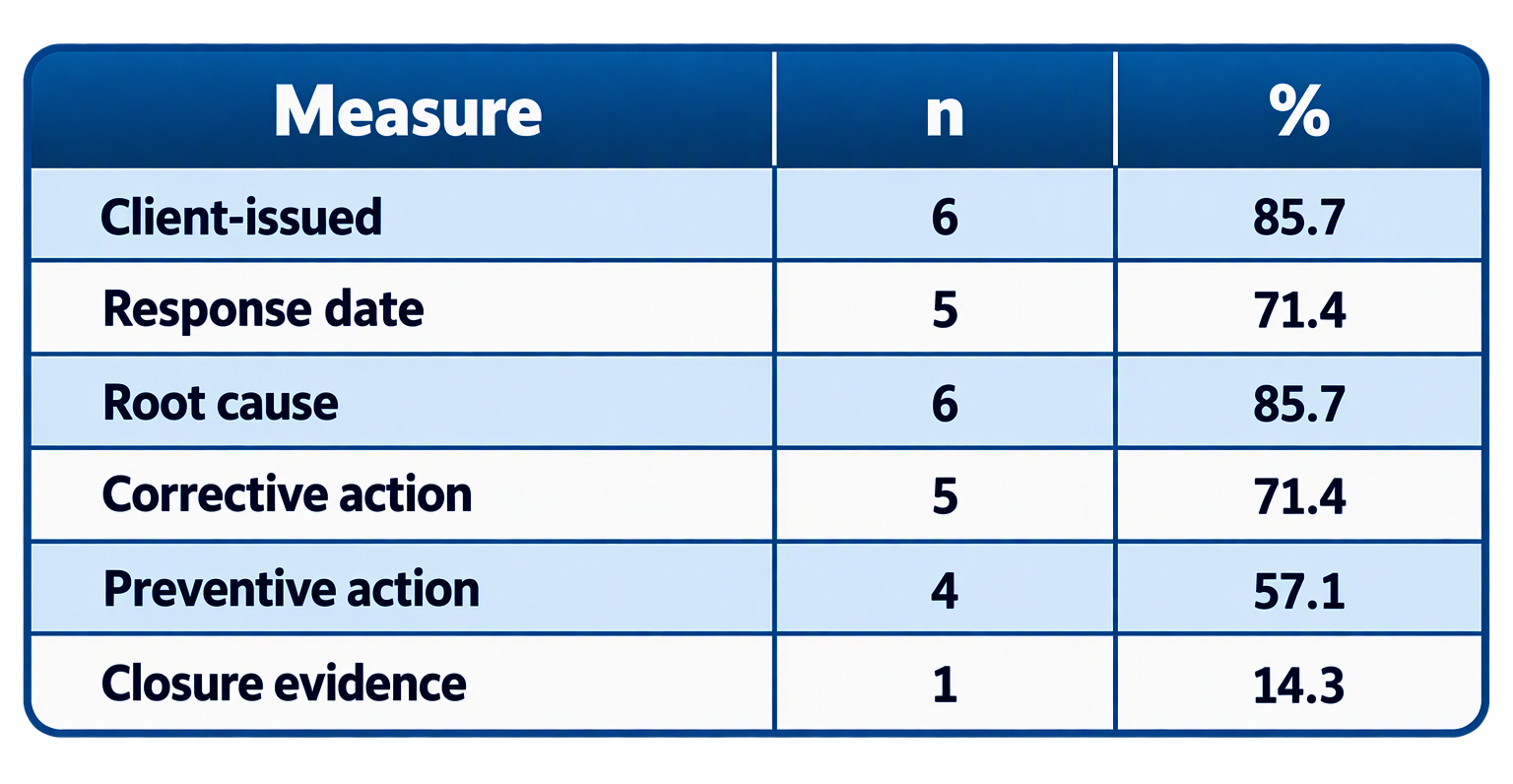
Five records had calculable intervals: 0, 1, 2, 3, and 9 days. The median was 2 days, mean 3.0, and range 0–9. Two of five documented responses met the one-day proxy; using all records, two of seven had a documented response within one day. The result is a register-performance indicator, not a contractual compliance determination.
B. Completeness and Closure Integrity
Root cause was present in six records (85.7%), corrective action in five (71.4%), and preventive action in four (57.1%). No committed closeout date was recorded. All seven observations were marked closed, yet only one contained a closeout acceptance date, creating an 85.7 percentage-point status–evidence gap.
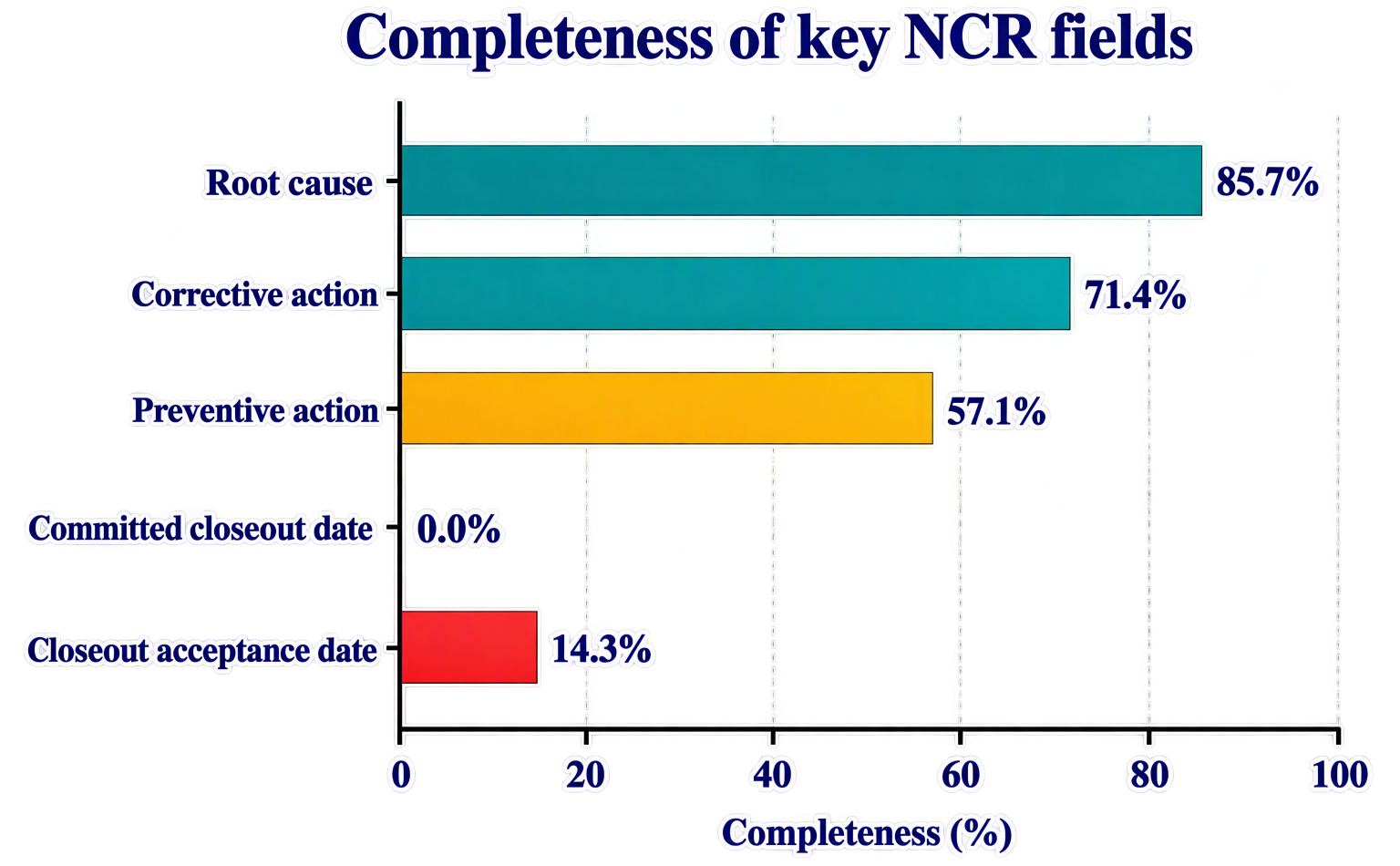
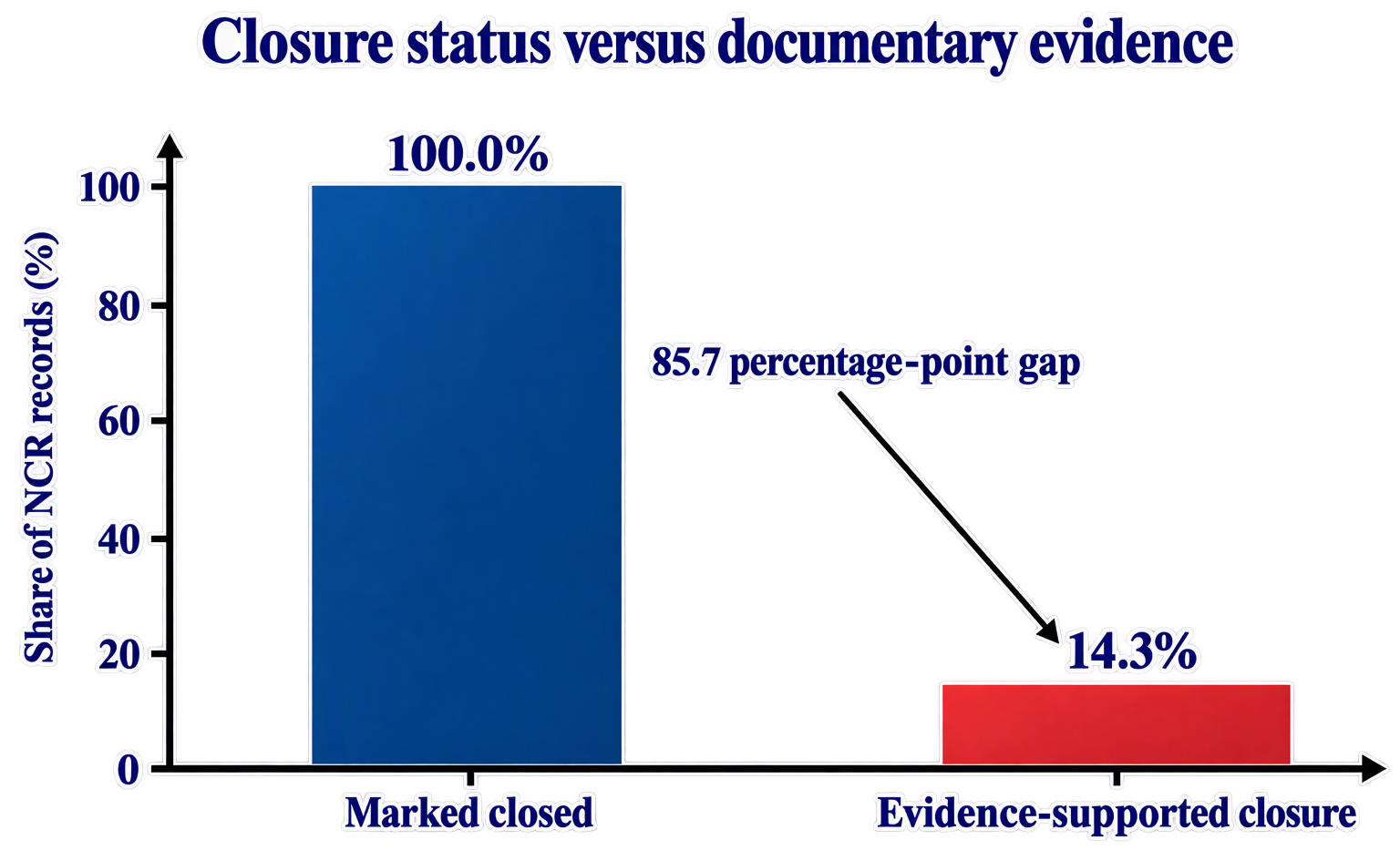
TABLE II. EMPIRICAL PROFILE
C. Traceability and Formula Integrity
Two distinct reference identifiers were reused across four rows. The register could not distinguish duplicate entry from revisions or sub-observations. Populated elapsed-time cells were negative because the workbook subtracted response date from issue date. These defects demonstrate why register controls must precede advanced analytics.
V. TRACE-NCR AS THE CENTERPIECE
A. Conceptual Model
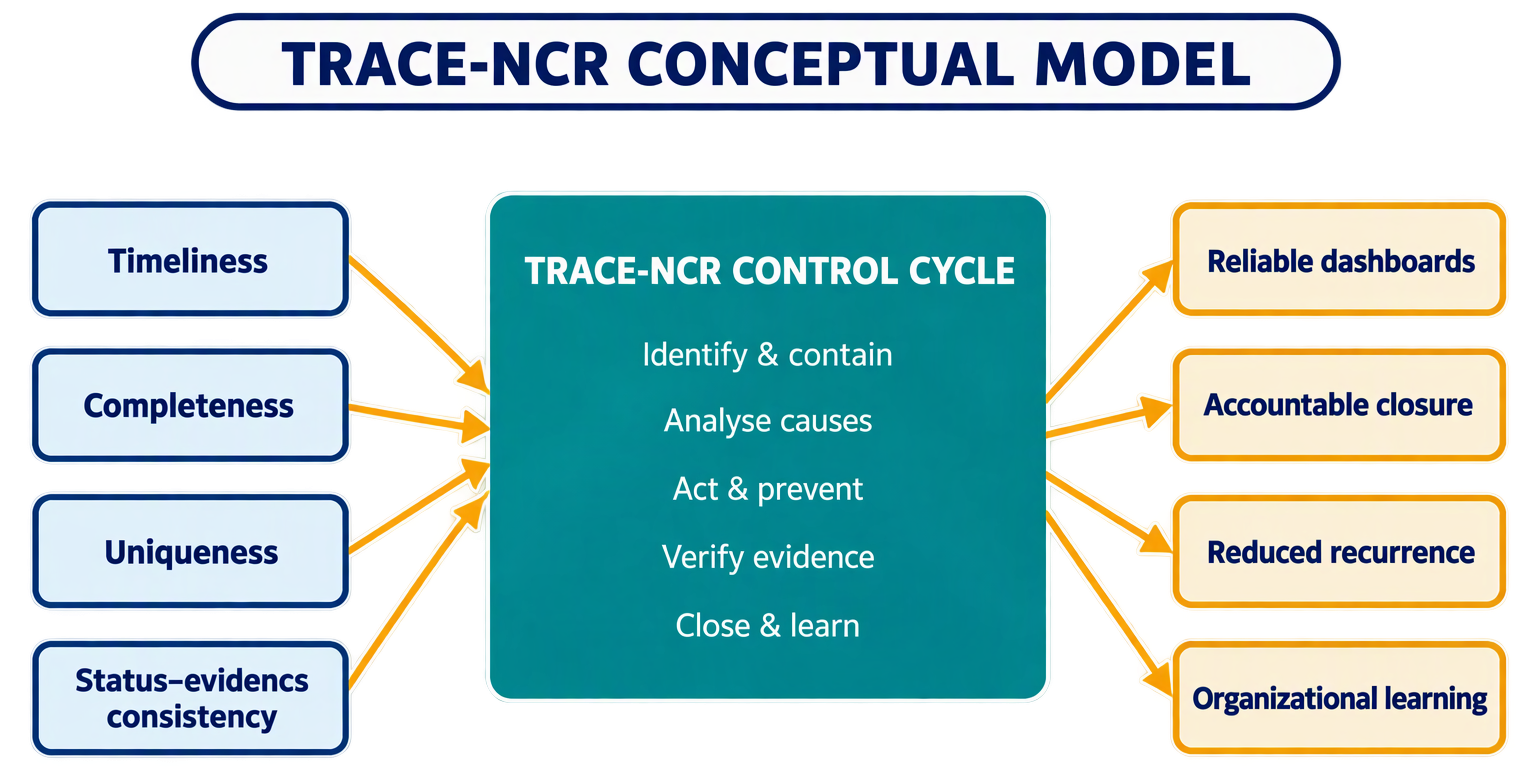
Figure 6 positions TRACE-NCR between four input controls and four management outcomes. Timeliness, completeness, uniqueness, and status–evidence consistency determine whether the lifecycle can produce reliable dashboards, accountable closure, reduced recurrence, and organizational learning. The model treats the register not as a passive archive but as the operational control surface of nonconformance management.
B. Six Evidence-Gated Stages
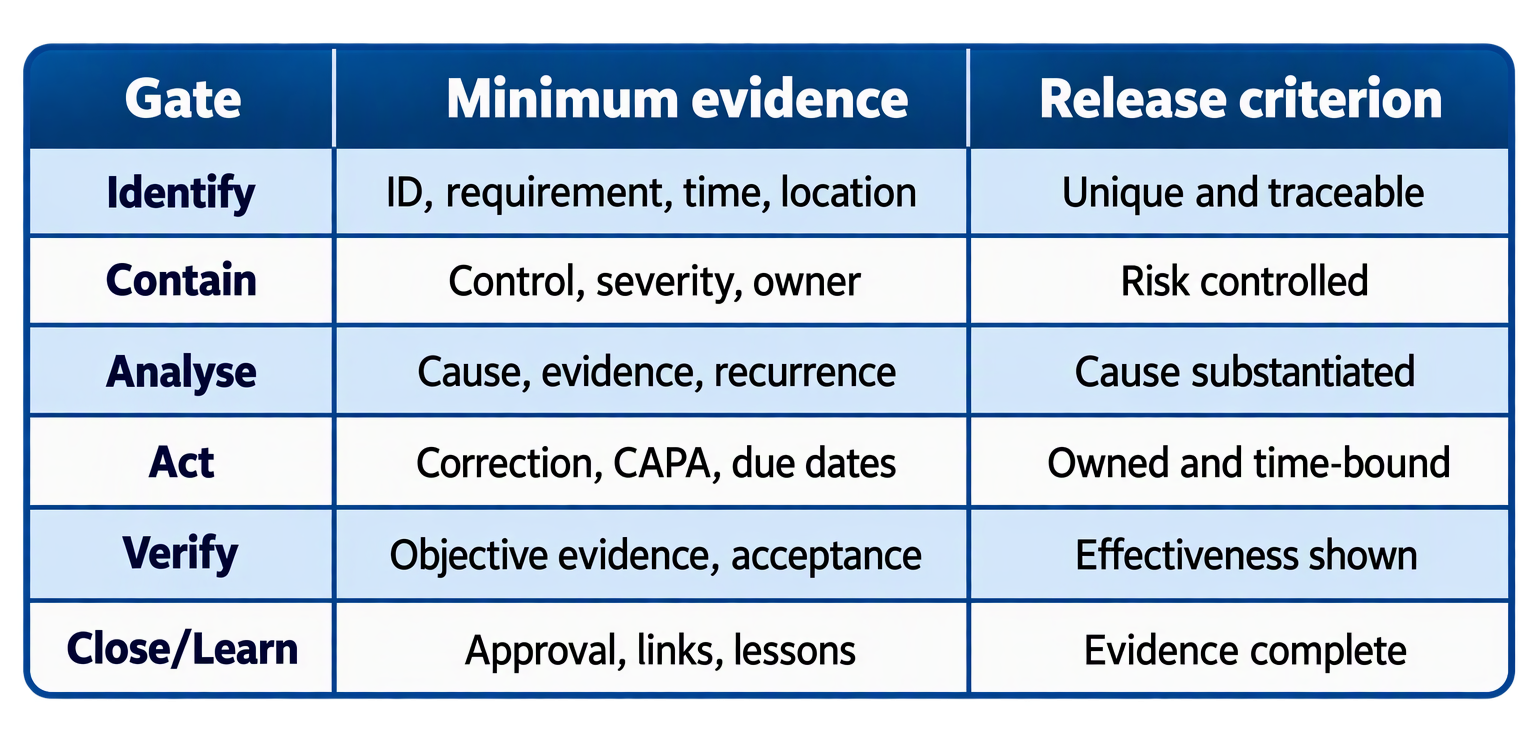
Identify requires a unique immutable reference, requirement, location, event timestamp, and originator. Contain records immediate controls, severity, and accountable ownership. Analyse distinguishes immediate cause from root cause and searches for recurrence. Act records disposition, correction, corrective and preventive actions, owners, and due dates. Verify requires objective evidence and, where appropriate, independent acceptance. Close and Learn records approver, date, linked evidence, coding, and transfer of lessons. Passage between stages is conditional on evidence, not merely a status change.
TABLE III. TRACE-NCR GATE CHECKLIST
C. Decision Logic and Metrics
A record should be blocked from closure if any mandatory evidence field is absent, if an action is overdue without approved extension, or if verification is performed by the same role where independent acceptance is required. Core metrics are response completeness, median response time, service-window attainment, cause/action completeness, overdue-action rate, duplicate-ID rate, evidence-supported closure, recurrence by coded cause, and closure aging. Targets must use project-defined calendar or working-time rules.
VI. QUALITY MATURITY MODEL
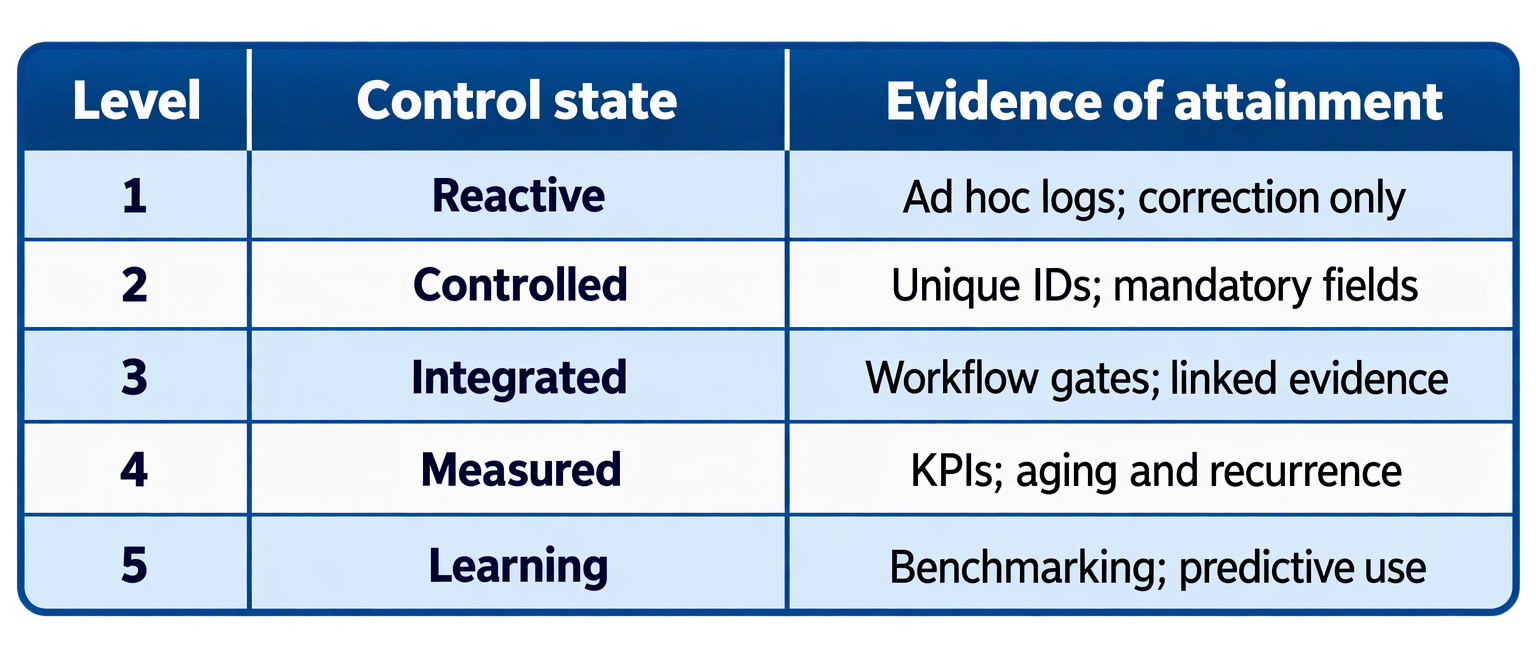
The five-level model in Figure 7 separates genuine process maturity from the mere presence of software. Level 1 is reactive: logs are unstructured and correction dominates. Level 2 controls identifiers and mandatory fields. Level 3 integrates workflow gates and linked evidence. Level 4 measures aging, recurrence, and performance. Level 5 institutionalizes cross-project learning and cautiously introduces predictive analytics. Advancement should require demonstrated control performance, not self-declaration.
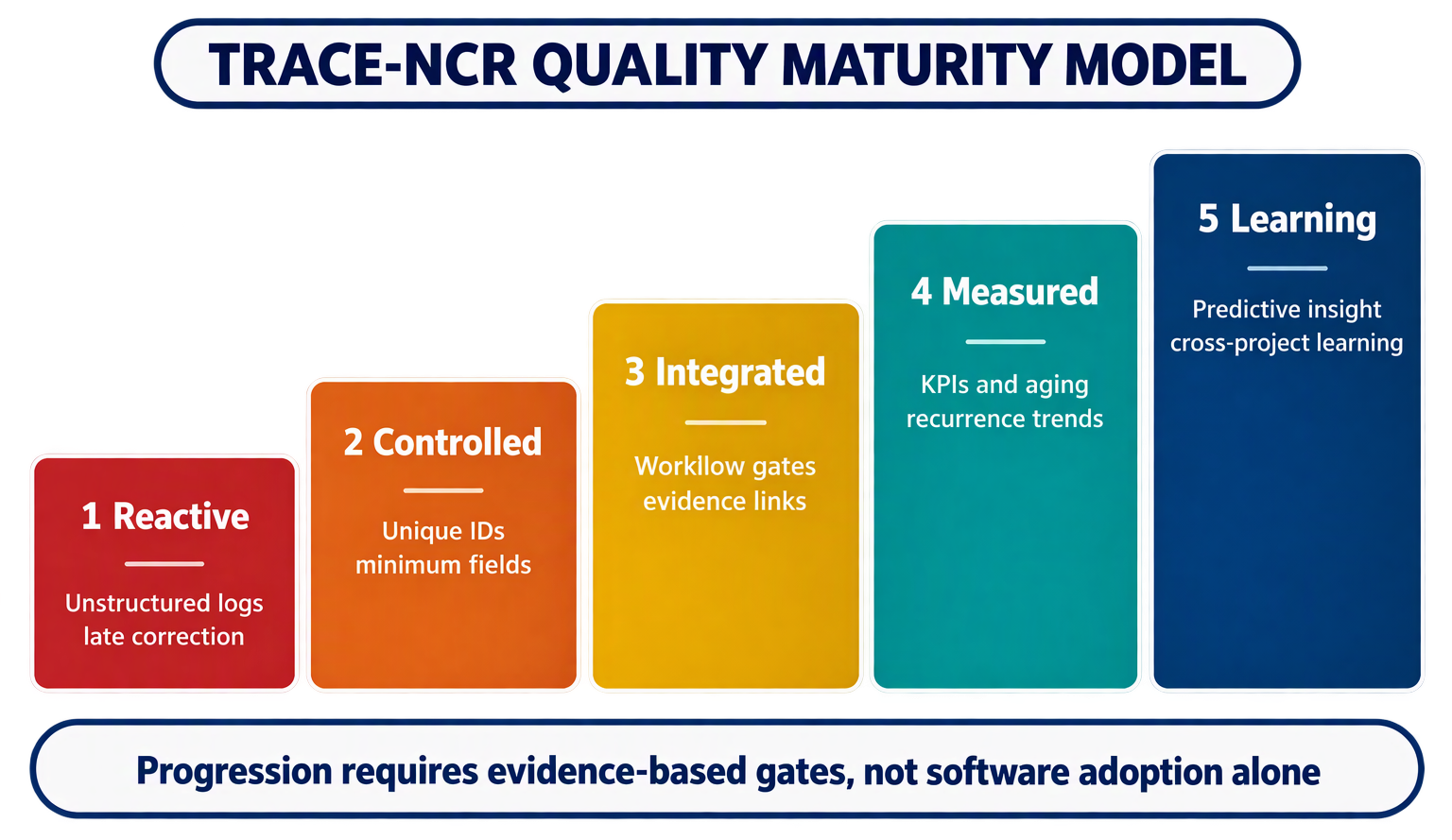
TABLE IV. MATURITY ASSESSMENT
VII. MANAGERIAL ROADMAP
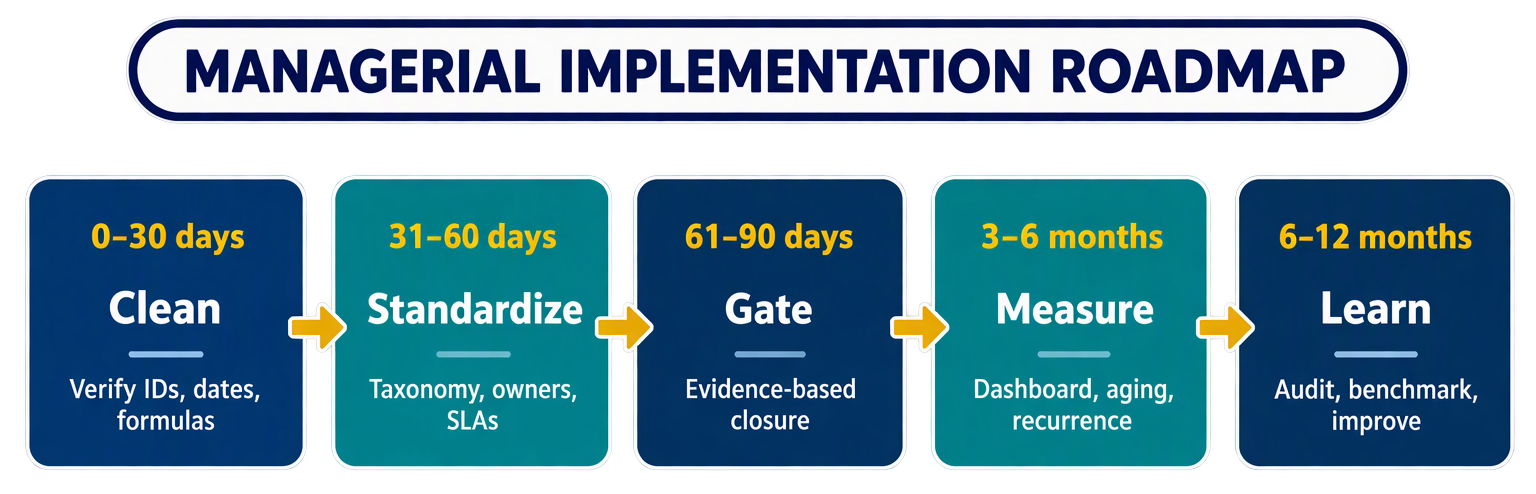
Implementation should be phased. During the first 30 days, managers should cleanse identifiers, verify dates, correct formulas, and reconcile status against evidence. By day 60, they should approve controlled taxonomies, roles, and service rules. By day 90, evidence-based workflow gates should be configured. Over three to six months, dashboards should track aging and recurrence. Over six to twelve months, internal audits, supplier comparisons, and lessons-learned reviews should refine the system.
VIII. DISCUSSION
A. Comparison With Prior Research
The case’s high root-cause-field completeness but weaker preventive-action completeness echoes the difference between recording a problem and changing the system. Ford et al. [10] and Ford [11] emphasized materials, workmanship, supervision, and right-first-time learning across much larger datasets. The present study cannot compare causal frequencies, but it shows that such analysis depends on reliable coding and closure evidence. Similarly, Srinath and Varghese [12] used interviews and Delphi validation because records alone may not confirm causality; TRACE-NCR therefore requires evidence and recurrence checks rather than a narrative root-cause label alone.
The closure gap is also consistent with the logic of ISO 9001 [13]: control requires documented action and authority, not a status field. Araya-Santelices et al. [15] showed that integrated digital workflows improve traceability, whereas this case shows what happens when a spreadsheet permits duplicate references, missing acceptance dates, and reversed formulas. Love et al. [16] demonstrate the analytical value of NCR data; TRACE-NCR identifies the minimum governance needed before such predictive use is credible.
Compared with classic rework studies [4]–[7], the paper shifts the unit of concern from the physical defect to the information system managing the defect. This does not replace engineering investigation. Instead, it recognizes that organizational learning and managerial decisions are mediated through the register. The information-quality perspective of Wang and Strong [17] strengthens this argument: data are valuable only if fit for use.
B. Theoretical Contribution
TRACE-NCR integrates process quality, organizational learning, and information quality. It adds the proposition that NCR effectiveness is jointly constrained by lifecycle discipline and register integrity. A technically correct corrective action can be organizationally invisible if evidence is not linked; conversely, a complete record does not guarantee that the engineering action is effective. The framework therefore couples documentary gates with technical verification.
C. Practical Contribution
The framework is intentionally implementable in spreadsheets, electronic document management systems, common data environments, or dedicated quality platforms. Its novelty lies less in software than in explicit gates, release criteria, maturity expectations, and a roadmap. Managers can begin with data cleansing and evidence-supported closure before investing in advanced analytics.
IX. LIMITATIONS AND FUTURE RESEARCH
The diagnostic case includes only seven observations from one project and a short period. Missing register entries may represent logging gaps rather than absent operational action. Date-only fields prevent literal 24-hour assessment. No exposure denominator was available, and source NCR packages, interviews, or site verification were not reviewed. Future research should validate TRACE-NCR across projects, test inter-rater reliability of causal coding, measure adoption burdens, examine whether gates reduce closure delay or recurrence, and evaluate the maturity model using longitudinal evidence.
X. CONCLUSION
The case revealed five calculable response intervals, a median response time of two calendar days, incomplete preventive and closure fields, duplicate identifiers, and reversed duration formulas. Its most consequential finding was the difference between 100% status-labelled closure and 14.3% evidence-supported closure. TRACE-NCR responds by placing evidence gates around six stages and by connecting register integrity to reliable management outcomes. The framework, maturity model, checklist, and roadmap together offer a practical pathway from passive logs to auditable quality intelligence. Broader claims require larger and source-verified datasets, but stronger control need not wait for larger data.
AUTHORSHIP AND FRAMEWORK PROVENANCE
TRACE-NCR—including the acronym expansion, six-stage lifecycle, evidence-gate logic, conceptual model, maturity model, audit checklist, managerial roadmap, and associated visualizations—is presented in this manuscript as the original framework developed and solely authored by Domingo Gaces Samontina, Jr. Third-party theories, standards, and prior studies are separately cited. This statement documents scholarly authorship and provenance; legal ownership remains subject to applicable law, employment or consultancy agreements, institutional policies, prior disclosures, and publisher terms.
Author contributions—Domingo Gaces Samontina, Jr.: conceptualization; TRACE-NCR framework development; methodology; data curation; formal analysis; visualization; writing—original draft; writing—review and editing.
REFERENCES
[1] W. E. Deming, Out of the Crisis. Cambridge, MA, USA: MIT Press, 1986.
[2] J. M. Juran, Juran on Planning for Quality. New York, NY, USA: Free Press, 1988.
[3] P. B. Crosby, Quality Is Free. New York, NY, USA: McGraw-Hill, 1979.
[4] P.-E. Josephson and Y. Hammarlund, “The causes and costs of defects in construction,” Automation in Construction, vol. 8, no. 6, pp. 681–687, 1999.
[5] P. E. D. Love and H. Li, “Quantifying the causes and costs of rework in construction,” Construction Management and Economics, vol. 18, no. 4, pp. 479–490, 2000.
[6] B.-G. Hwang, S. R. Thomas, C. T. Haas, and C. H. Caldas, “Measuring the impact of rework on construction cost performance,” Journal of Construction Engineering and Management, vol. 135, no. 3, pp. 187–198, 2009.
[7] Y. Rosenfeld, “Cost of quality versus cost of non-quality in construction,” Construction Management and Economics, vol. 27, no. 2, pp. 107–117, 2009.
[8] C. Argyris and D. A. Schön, Organizational Learning: A Theory of Action Perspective. Reading, MA, USA: Addison-Wesley, 1978.
[9] I. Nonaka, “A dynamic theory of organizational knowledge creation,” Organization Science, vol. 5, no. 1, pp. 14–37, 1994.
[10] G. Ford, J. Gosling, and M. Naim, “On quality and complexity: non-conformance failures, management perspectives and learning outcomes on a highways megaproject,” International Journal of Quality & Reliability Management, vol. 40, no. 10, pp. 2539–2558, 2023.
[11] G. Ford, Non-conformance and Rework in Construction: A Quality Management Improvement Initiative for Change, Ph.D. dissertation, Cardiff Univ., Cardiff, U.K., 2024.
[12] P. Srinath and K. Varghese, “Identifying and analysing the root causes of quality non-conformance in construction project baseline schedules,” Journal of The Institution of Engineers (India): Series A, vol. 104, no. 2, pp. 397–416, 2023.
[13] International Organization for Standardization, ISO 9001:2015 Quality Management Systems—Requirements. Geneva, Switzerland: ISO, 2015.
[14] International Organization for Standardization, ISO 10005:2018 Quality Management—Guidelines for Quality Plans. Geneva, Switzerland: ISO, 2018.
[15] P. Araya-Santelices et al., “BIM-GIS-based approach for quality management aligned with ISO 9001,” Applied Sciences, vol. 15, no. 11, Art. no. 6107, 2025.
[16] P. E. D. Love, J. Matthews, and W. Fang, “Predicting rework propensity and cost impact from non-conformances under heterogeneous classification regimes,” Production Planning & Control, 2026, doi: 10.1080/09537287.2026.2665128.
[17] R. Y. Wang and D. M. Strong, “Beyond accuracy: What data quality means to data consumers,” Journal of Management Information Systems, vol. 12, no. 4, pp. 5–33, 1996.
[18] D. G. Samontina, Jr., “Development and evaluation of an automated master document register for enhanced traceability, workflow control, and information governance in construction projects,” Academia.edu, 2026.
[19] D. G. Samontina, Jr., “From inspection logs to quality intelligence: A data-driven work inspection request analytics framework for infrastructure project assurance,” LinkedIn, Nov. 5, 2026.
[20] D. G. Samontina, Jr., “A completeness-based framework for assessing construction daily activity reports: Information quality, timeliness, and traceability,” LinkedIn, Nov. 17, 2026.
About the Creator
Domingo Añasco-Gaces Samontina, Jr.
.Professional Member of the Mechatronics and Robotics Society of the Philippines
.Certified Documented Information Controller with TUV Rheinland Qualifications
.Master of Science in Engineering (on-going) with Professional Teacher Certificate
Enjoyed the story? Support the Creator.
Subscribe for free to receive all their stories in your feed.
Comments
There are no comments for this story
Be the first to respond and start the conversation.