
The Suffering Theory of Art Is a Lie Writers Need to Stop Telling
Pain does not make literature. Craft does. And the myth that suffering is a prerequisite has silenced more writers than it has inspired.
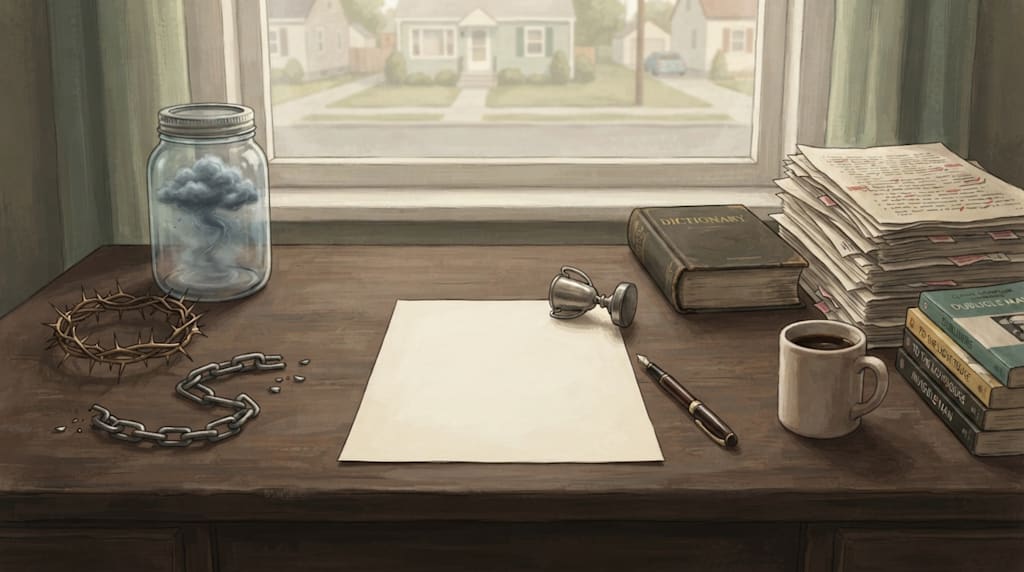
“Suffering is the fertile soil of literature.”
The line sounds like law. It is not. Fertile soil does not grow crops by itself. It needs seed, rain, season, and hands. Suffering is the same. It can feed a writer. It can crush one.
Victor Hugo did not like the emperor the French voted for. He went into exile. On Guernsey he lived in Hauteville House. He ate well. He kept his mistress. He wrote Les Misérables. His pain was not hunger. It was disdain.
Goethe served a small court. He studied color. He fell in love. He wrote Faust. He lived into his eighties. He had no great tragedy. He wrote anyway.
Pushkin’s only major suffering was the last twenty-four hours of his life: a duel, a bullet, heavy-metal poisoning. He finished his work before that. Suffering did not make him. It ended him.
Tolstoy gambled away his estate. He went to war hoping to die. He wrote fiction. He became famous. The tsar moved him to the rear. His pain was not the books.
Henry James was a gay man in a macho America. He hid his letters. He watched his pronouns. He hurt his back helping a fire brigade. Proust lay in bed in a wealthy house, cared for by a maid. Thomas Mann fled an Austrian painter and lived in a California mansion. Updike could not find a job after Harvard.
These are compressed. They are not full biographies. They break the myth.
Other writers suffered more. Dostoevsky faced a mock execution, exile, epilepsy, and gambling. Kafka lived under his father and in illness. Du Fu wandered. Xiao Hong fled. Their suffering was documented. But suffering did not write Crime and Punishment. Language did. Structure did. Thought did. Revision did. Suffering is ore. Steel needs a furnace.
If suffering were necessary, the most suffering people would be the greatest writers. If it were sufficient, every sufferer would be a writer. Neither is true. The most suffering groups often have no time, no paper, no books, no publishing, and no readers. Writing is a luxury of time. A person who labors sixteen hours a day may feel the deepest things. Feeling is not expression. Expression needs leisure, education, tradition, revision, and luck.
We remember the few who turned pain into masterpieces. We forget the many who were destroyed. This is survivorship bias. Romanticism added the martyr. The artist must bleed. But bleeding is not craft. Trauma is not a ticket.
Why does the suffering theory keep selling?
Because people have suffered in vain. If creation and suffering are not linked, their pain was not an investment. Sunk cost. They crown pain and call it a ticket. Then the suffering has meaning. The endurance has interest.
It is also moral capital. I suffered, so I can speak. But moral capital does not become sentences. A tortured person may write nothing. A comfortable person may write a masterpiece.
It is also discipline. Aestheticize suffering, and the poor accept pain. Do not ask where it comes from. Call it spiritual exercise. Call injustice the price of inspiration. Then the suffering stop being angry. They think they are collecting material.
It is also laziness. Trauma sells. “I read for ten years, revised twenty times, studied rhythm” does not sell. Fate sells. Structure does not.
What does literature need? It needs a mind that notices, eyes that remember, imagination that transforms, language that names, and structure that arranges. It needs reading, time, leisure, publishing, luck, and courage. Pain can be medicine. It cannot be food. It can be material. It cannot be a ticket.
Happiness, boredom, love, travel, reading, gossip: all can be material. Jane Austen wrote storms in teacups. Borges wrote labyrinths in libraries. Proust wrote memory from bed. Depth comes from staring at existence, not from the length of pain.
Do not ask whether only suffering makes literature. Ask whether you can turn life, bitter or sweet, into language.
The page is still blank. Write the sentence.
About the Creator
Jin
Writer of reamstories
https://reamstories.com/jin
Enjoyed the story? Support the Creator.
Subscribe for free to receive all their stories in your feed. You could also become a paid subscriber, letting them know you appreciate their work.
Comments
There are no comments for this story
Be the first to respond and start the conversation.