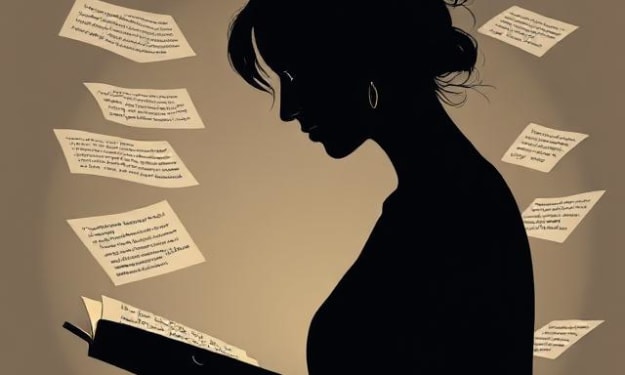
Writer's Block
Why I Almost Quit Writing—and Why I Didn’t”
**Why I Almost Quit Writing—and Why I Didn’t** For as long as I can remember, writing has been a part of my life—not just a hobby, but a heartbeat. I wrote my first story when I was eight. It was a tale about a dragon who ran a bakery, and though it was filled with spelling errors and questionable logic, my parents taped it to the fridge like it was the next great novel. That sense of validation carried me through many years, until the world’s voice grew louder than my own. By the time I turned thirty, writing no longer felt magical. It felt burdensome. I had a full-time job, bills to pay, and a creeping anxiety that maybe I wasn’t good enough. I submitted short stories to magazines and literary journals, only to be met with silence or impersonal rejections. “Unfortunately, this piece does not suit our needs at this time.” After a while, all I could hear in those emails was, “You’re wasting your time.” The final straw came after I poured myself into a manuscript for a novel. Two years of writing, revising, rewriting chapters I thought were already done. I sent queries to agents with hopeful, trembling hands. And one by one, the rejections came. Some were encouraging—“You have a great voice, but it’s not quite right for us”—but most were curt and dismissive. After the twentieth rejection, I remember closing my laptop and saying out loud, “Maybe this isn’t for me.” It was one of those quiet moments where the air feels heavy, and you start to believe your own doubts. I let the story sit on my hard drive, unopened. I didn’t write another word for months. During that break, I noticed a shift in myself. At first, it felt like freedom. I wasn’t chasing ideas in my head at 3 a.m. or worrying about plot holes. But slowly, I started to feel hollow. I would see something beautiful—a child chasing pigeons in the park, the way raindrops clung to a café window—and instead of turning it into a sentence or a scene, I just let it pass. And that hurt in a way I didn’t expect. Writing had always been how I made sense of the world. Without it, I felt disconnected from myself. That’s when I realized: I didn’t need publishing deals or bestsellers to be a writer. I just needed to write. Still, coming back to it wasn’t easy. I had to rebuild my relationship with writing from the ground up. I started small—journaling in the mornings, writing character sketches with no intention of using them, revisiting my old stories without judgment. I stopped measuring my worth by how many people said “yes” and started asking a different question: *Did this piece of writing make me feel something?* That was the beginning of healing. And then something unexpected happened. I wrote an essay about failure—about how I had almost quit writing and what it taught me—and shared it on a small blog I used to update once in a blue moon. I didn’t think anyone would read it. But a few days later, I received an email from a stranger. She was a high school English teacher who had been struggling with self-doubt in her own writing. “Your words made me cry in the best way,” she said. “I wrote again today. Thank you.” That single message did something no acceptance letter ever could. It reminded me that writing doesn’t need an audience of thousands. Sometimes, reaching *one* person is enough. Since then, I’ve continued to write—not for approval or recognition, but because it’s the only way I know how to breathe fully. And interestingly, the less I chase validation, the more authentic my writing becomes. I even started submitting again—not with the same desperation, but with a kind of peace. Some pieces get accepted, others don’t. But the rejection no longer defines me. Looking back, I’m glad I almost quit. That moment forced me to ask the hard questions: *Why do I write? Who am I without it?* In answering them, I found a deeper truth—one I had missed in the noise of external expectations. I write because stories are my way of listening to life. I write because there are things inside me that only take shape on the page. I write because I love the quiet alchemy of turning thought into language, emotion into narrative. So, why didn’t I quit? Because even when the world went silent, writing still spoke to me. And I’ve finally learned to listen. And perhaps, that’s all any writer really needs.
By Ubaid Khanabout a year ago in Writers
Unlock Your Voice: A Complete Guide to Publishing and Earning on Vocal Media
A Guide to Publishing and Earning on Vocal Media: Vocal Media stands as a unique online platform empowering writers and content creators to share their stories, insights, and creativity with a global audience. More than just a blogging site, it offers a structured environment for publishing, engaging with readers, and even earning income from your passion for writing. If you're looking to expand your reach, explore new topics, and potentially monetize your words, Vocal Media might be the perfect space for you.
By Hamad Javedabout a year ago in Writers
The Silent Takeover: How AI is Reshaping the Global Marketplace
In the last decade, artificial intelligence has evolved from a promising technology into the silent architect of the modern global economy. From predictive algorithms that dictate what products we see online, to robotic arms assembling vehicles in record time, AI is no longer just a supporting actor — it is taking center stage. And it is doing so quietly, yet powerfully, transforming industries, disrupting traditional jobs, and creating entirely new markets in the process.
By Owais Ahmadabout a year ago in Writers
I Lost My Writing Mojo — But I Found My Way Back
I Lost My Writing Mojo — But I Found My Way Back For a while, it felt like my words had packed their bags and left. I’d sit at my laptop, fingers hovering over the keys, waiting for inspiration to hit. But all I got was silence. Not the peaceful kind—no, this was the uncomfortable, heavy kind. The kind that makes you question yourself. Am I still a writer? Was I ever?
By Wings of Time about a year ago in Writers
AI Chatbot Trends Transforming Tech in 2025 and Beyond
AI chatbots have become a cornerstone of innovation, reshaping how we interact with digital systems and each other. As we navigate 2025, AI chatbot trends are transforming tech in ways that are both exciting and profound, impacting industries from customer service to healthcare, education, and beyond. These trends are not just about making chatbots smarter; they’re about redefining our relationship with technology, making it more intuitive, personalized, and integrated into our daily lives.
By Sunil Kumar Sethiabout a year ago in Writers