Life
Never Eat The "Clean" Part Of Moldy Bread
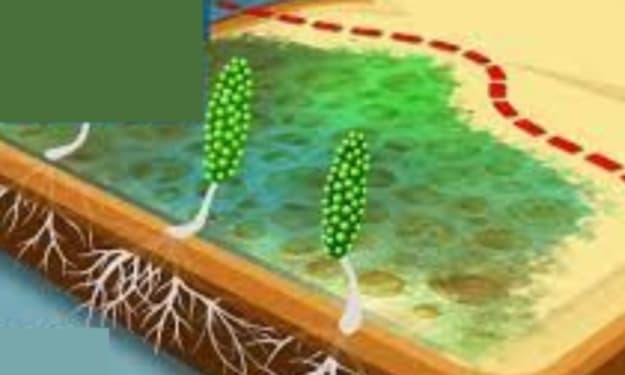
Imagine that you are prepared to create the ideal sandwich. Imagine a sandwich made with tender turkey, ripe tomatoes, and creamy Swiss cheese, all lavishly encircled by two pieces of fragrant sourdough bread and served on a bed of fresh romaine lettuce. It's a time-honored joy and a future masterpiece. Oh no, however! This is what? You see mold as you reach for the bread, which is unattractive. Ugh! The puzzling issue is now, can you save your sandwich by just chopping off the rotten piece and eating the rest? Prepare yourself, because the solution may not be as obvious as you believe. Mold is a living thing, a fungus, similar to the mushrooms that appear in your yard; therefore, it's not just a typical annoyance. Although the fuzzy caps on top are very obvious, there is a massive network of underground roots known as hyphae that lie underneath. These are the stealthy builders of the mold's pernicious realm. Let's examine that apparently innocuous bread of yours in more detail. It's not a nice sight, I assure you. Cutting off the surface mold won't be enough since the mold is already in its reproductive stage by the time those fuzzy sporangiums develop. Tens of thousands of spores are released from each sporangium, hiding in your loaf's hidden crevices and waiting to spread. You could believe that taking another slice of the same bread is a viable option. The real problem, however, is that once mold appears, it may spread throughout the whole loaf. It's like a clandestine army waiting to attack your dinner. You may now be asking whether it's indeed common practice for individuals to purposely consume mold in foods like cheese, soy sauce, and medications like penicillin. So it can't be that horrible if your bread has a little mold on it, can it? The truth is that it's a risk, and that's really what matters. Many molds are safe to eat, similar to eating wild mushrooms, but others are downright dangerous. There are hundreds of different species of mold around the globe. While some are safe for us, others are harmful to our health. Penicillium crustosum is one example. Mycotoxins, which are harmful substances, are produced by this mold. After ingesting mold-contaminated soup in 2005, an elderly couple ended up in the hospital with severe muscular spasms. Fortunately, they made a complete recovery, but things might have been worse. The mold Rhizopus stolonifer is another common addition to bread. With its blue-green color and black spots, not to mention the fuzzy texture, it is easily identifiable. Rarely, it may result in zygomycosis, a fatal infection that stops your cells from getting enough oxygen, which kills them. What can we learn from all this rotten mayhem, then? Is the risk worthwhile? In actuality, we are not always able to identify the mold that is present in our meals. Cooking won't help you since mycotoxins are not degraded by high heat. The question at hand is whether or not compromising your health and wellbeing for that sandwich is worthwhile. There are several more options to think about if you don't want to play Russian roulette with your bread. 1. Purchase Smaller Loaves: If you often find yourself unable to consume a bigger loaf before it begins to mold, consider purchasing smaller loaves of bread. By doing this, you'll reduce waste and eat fresher bread. 2. Store bread properly: This is important. To avoid exposure to moisture and airborne mold spores, store your bread in a cool, dry location and think about using an airtight container or resealable bags. 3. Freeze Your Bread: Freezing bread may significantly increase its shelf life. You can simply thaw out individual pieces as required if you slice them before freezing. Therefore, even if certain culinary explorations are worthwhile, the predicament of the stale bread may not be one of them. It's preferable to throw anything away when in doubt. Remember that mold may grow its roots under the surface like a stealthy ninja, making your bread potentially dangerous to consume. Therefore, the next time you see that ugly mold on your favorite bread, think to yourself: Is that sandwich worth taking a chance on something new? Your physical and mental well-being are too important to take for granted.
By Cyril Lord3 years ago in Writers
Engineering just killed my passion . Content Warning.
Once upon a time in a small village in Nepal, there lived a young boy named Raj. From a very young age, Raj had always been a free spirit, full of dreams and aspirations. But fate had a different plan for him, one that he couldn't quite control.
By sagar dhital3 years ago in Writers
Travel Hacks: Making the Most of Your Matheran Hotel Stay at Adamo Resorts
Introduction The distinctive hospitality treasures Adamo the Resort and Adamo the Village are located in Matheran, a picturesque hill town in Maharashtra, India. These outstanding Matheran hotels provide exquisite lodging as well as the chance to completely savor the tranquility and solitude of this breathtaking location. To help you get the most out of your hotel stay, we’ll show you the beauty of Matheran and Adamo Resorts in our blog and provide you with some helpful travel information
By Sofia Benjamin3 years ago in Writers
What is Hippocampus?
The hippocampus is one of the most studied parts of the brain (the cerebral cortex) in the central nervous system of mammals. Because the shape is similar to the hippocampus, it is called the hippocampus. In the human brain, the hippocampus is mainly responsible for learning and memory. The short-term memory in daily life is stored in the hippocampus. If a memory segment, such as a phone number or a person is repeatedly mentioned in a short time, the hippocampus will be transferred to the cerebral cortex and become a permanent memory.
By Creative Diagnostics3 years ago in Writers
When I Decided to Become a Writer
At times, I envision the short life of the writer who inhabits my mind as that of a superhero, a fool in tights chasing a dream. And, like any self-respecting masked buffoon, he also has a captivating origin story. I have often found myself recounting it because I believe it explains how words began to matter in my life.
By Alessandro La Martina3 years ago in Writers
Sandy
The first story I ever wrote: I was in the 4th grade. I was not the type of kid that would take an assignment just the way it was given. I would always like to go 2 or 3 steps beyond what was said. For example, when asked to draw a picture of a house, in 3rd grade, I drew the floor plan and what the house would look like from different sides.
By David E. Perry3 years ago in Writers
My First Book Could Have Saved A Life
I found myself burnt out this morning when I went to write. I haven't written in days, and I know I need to keep it up or I'll lapse into another 5-month hiatus. And that can't happen because it'll prevent me from reaching my goals. So I stuck some music in my ears and contemplated why I'm feeling this way.
By Hope Martin3 years ago in Writers
Beneath the surface
In the bustling city of Lahore, Pakistan, lived a man named Ahmed. He was a hardworking laborer who toiled tirelessly beneath the scorching sun, his hands calloused and his back bowed from years of laboring on construction sites. He earned just enough to put food on the table for his family of four, but there was one dream that seemed perpetually out of reach: sending his children to school again.
By Sikandar Ali3 years ago in Writers
My Careless Mistake
In the bustling heart of New York City, where the rhythm of life beats with unforgiving intensity, I found myself caught in the whirlwind of a routine day. The city's energy was infectious, but it could also be overwhelming, pushing even the most vigilant individuals to make careless mistakes. Little did I know that one such error would soon set off a chain of events that would teach me a valuable lesson about the price of carelessness.
By Ayomide Richard3 years ago in Writers