
Being Good at Something the World Ignores
Competence, Obscurity, and the Discipline of Faithful Stewardship - How to Live Faithfully When Your Strength Is Not Rewarded

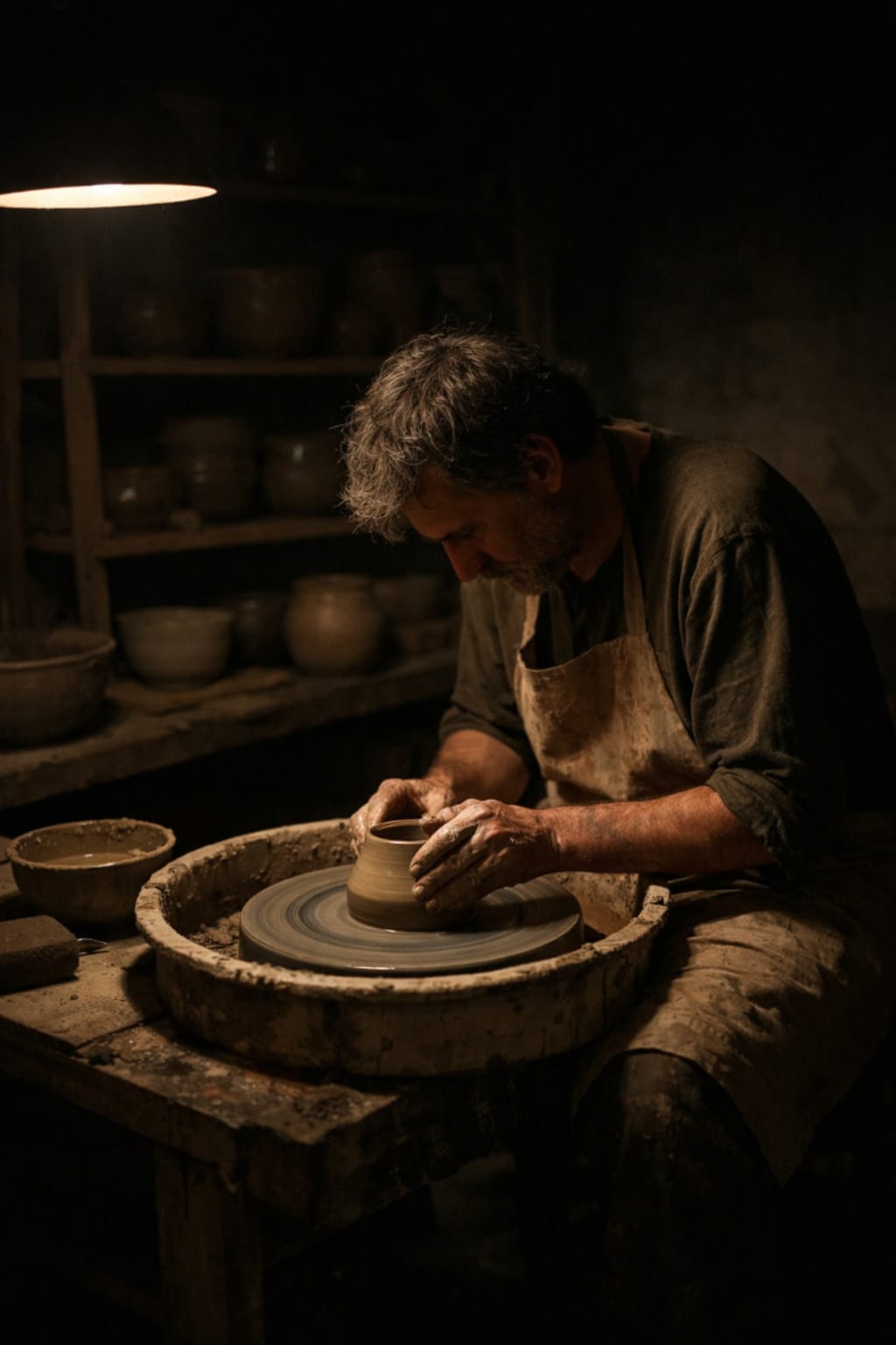
There is a particular kind of loneliness that comes from competence without recognition. It emerges when someone discovers that they are genuinely good at something that matters deeply to them, only to realize that the surrounding culture has little use for it. The skill is real. The effort is real. The contribution is real. Yet it exists largely outside the systems that reward, amplify, or even notice such things.
That tension does not resolve on its own. It creates a quiet but persistent conflict between identity and environment. A person may know internally that something valuable is present, but the surrounding world may offer little confirmation that the value matters. Over time, that gap can become difficult to carry. The problem is not merely being unseen. The problem is knowing that something real exists and still having almost no external place for it to land.
Recognition Is a Poor Measure of Worth
Being good at something the world ignores often leads to confusion about worth. When feedback is absent, shallow, or dismissive, it becomes difficult to tell whether the skill itself lacks value or whether the context simply lacks the capacity to receive it. That distinction matters. A gift can be real even when the environment is not built to recognize it.
Over time, this ambiguity can erode confidence. The person may begin to doubt their own perception, not because the ability diminished, but because it was never mirrored back. Human beings calibrate themselves relationally, and when the mirror stays blank, disorientation follows. A lack of recognition can start to feel like evidence, even when it is only absence.
This is one of the deeper costs of ignored competence. It can make a person question something that was clear before the silence became prolonged. The skill did not disappear. The value did not vanish. But without meaningful feedback, the person may begin to confuse invisibility with insignificance.
Some Gifts Do Not Fit the Reward System
The world tends to reward what is scalable, marketable, and immediately legible. It favors what can be measured quickly, packaged easily, distributed widely, and converted into visible proof. This makes certain kinds of competence easier to reward because they fit neatly into the systems already built to recognize them.
Other skills do not fit that frame as easily. Discernment, synthesis, moral clarity, pattern recognition, and truth-telling across complexity do not compress well into metrics. They often operate slowly, inwardly, relationally, or over long periods of time. They may shape judgment, strengthen understanding, protect people from error, or reveal hidden patterns, but their fruit is not always instant or easily counted.
That does not make these gifts less necessary. It makes them harder to place. A world trained to reward speed, simplicity, visibility, and performance will often overlook the very strengths that require patience, depth, and moral seriousness. The failure of the system to reward a gift is not the same thing as proof that the gift lacks value.
Ignored Strength Can Distort the Person Carrying It
The danger in this situation is internal distortion. When an ignored strength remains unintegrated, it can turn inward and become a source of resentment, bitterness, or self-contempt. A person may start to carry the gift like a burden instead of stewarding it as a responsibility. What once felt like purpose can begin to feel like evidence of displacement.
Some people respond by abandoning the skill entirely. They conclude that if it is not rewarded, it must not matter. Others cling to it defensively, measuring their worth against a world they secretly despise. One response buries the gift. The other weaponizes it. Neither response is healthy because both surrender agency in different ways.
The better path begins by refusing to let neglect define the gift. Something valuable can be ignored without becoming meaningless. Something difficult to place can still be worth preserving. The task is not to pretend the lack of recognition does not hurt. The task is to keep that hurt from becoming the interpreter of the gift itself.
Value Must Be Separated From Visibility
A faithful response begins by separating value from visibility. Being good at something is not validated by applause. It is validated by alignment between the skill and the good it produces, even if that good unfolds quietly, locally, or indirectly. Recognition may confirm usefulness in some cases, but it cannot be the foundation of worth.
This requires redefining success away from attention and toward faithfulness. Faithfulness does not mean stubborn persistence without discernment. It does not mean forcing a gift into every room or demanding that the world reorganize itself around it. It means continuing to steward a gift responsibly without surrendering its value to the presence or absence of applause.
That distinction matters because visibility can easily become a false master. Once recognition becomes the standard, the gift starts being reshaped around response instead of truth. But when faithfulness becomes the standard, the gift can remain ordered toward what is good, even when the audience is small, delayed, or absent.
Small Contexts Can Still Carry Real Impact
Practically, this means choosing contexts where the strength can be exercised without distortion, even if those contexts are small. Not every gift belongs on a stage. Some belong in conversations, mentorship, writing, study, counsel, service, family life, or quiet work that never scales beyond a handful of people.
That does not diminish the impact. It localizes it. Influence measured in lives rather than numbers often runs deeper, even if it remains unseen. A person may never reach a broad audience and still become deeply formative in the lives they touch. The scale may be smaller, but the effect can be more personal, more durable, and more morally serious.
This is difficult in a culture that treats reach as proof of value. But reach and depth are not the same thing. A gift may be misused if it is forced into a scale it was never meant to occupy. Some forms of competence are most faithful when they are placed where they can actually be received, not merely where they can be displayed.
Relevance Should Not Be Forced at the Cost of Truth
It also means resisting the urge to force relevance. When a strength is ignored, the temptation is to reshape it into something more acceptable, more marketable, more entertaining, or more palatable. Sometimes adaptation is wise. A gift may need better language, clearer structure, or a more fitting context. Refinement is not betrayal when it serves the truth of the thing.
Other times, adaptation hollows out the very thing that made the skill valuable in the first place. A person can make a gift more marketable while making it less true. They can make it easier to consume while stripping away the depth, conviction, or precision that gave it substance. Discernment here is critical because not every opportunity is a faithful opportunity.
The better question is not simply, “How do I make this pay?” The better question is, “How do I preserve what is true while seeking provision elsewhere if necessary?” That question keeps the gift from being crushed under financial pressure while also refusing to idolize the gift as though it must solve every practical need.
Patience Must Be Active, Not Passive
Another practical posture is patience without passivity. Being good at something the world ignores does not mean the situation will never change. Contexts shift. Needs emerge. Seasons turn. What seems irrelevant in one moment may become necessary in another, especially when cultural conditions expose the limits of louder, simpler, and more performative strengths.
Preparation done in obscurity often becomes visible later, but only if the work was done honestly and without bitterness. If neglect turns the person cynical, the gift may still exist, but it becomes harder to offer cleanly. Bitterness corrupts delivery. Resentment distorts judgment. The work must continue without allowing obscurity to poison the heart.
Patience here is active. It involves continued refinement, humility, readiness, and disciplined attention. It does not mean stagnation or withdrawal. It means continuing to build skill, sharpen perception, seek fitting contexts, and remain prepared without demanding immediate proof that the preparation will be rewarded.
Comparison Makes the Burden Heavier
There is also a moral discipline involved in refusing comparison. Measuring one’s worth against rewarded skills breeds envy and despair. It places the soul under a standard it was not assigned to carry. The person begins asking why someone else’s gift is visible while theirs remains hidden, and that question rarely produces clarity.
Measuring responsibility against actual capacity restores order. The task is not to outcompete others for attention. The task is to be faithful with what has been entrusted, even when the return is not obvious. That does not remove the ache of being overlooked, but it prevents the ache from becoming the governing authority.
Comparison also tempts a person to despise their own assignment. It suggests that hidden work is lesser work, local influence is lesser influence, and slow formation is lesser fruit. Those assumptions are false. Some of the most important work in a human life happens where no public reward system can properly see it.
The Gift Should Be Stewarded Without Becoming an Idol
The clear takeaway is this: do not abandon what you are good at simply because it is ignored, but do not demand that it carry burdens it was never meant to bear. Let it remain what it is. Seek provision where provision is available. Offer value where it can actually be received. Preserve the gift without forcing it to become the entire structure of your life.
This balance matters because a gift can become distorted in more than one direction. It can be neglected until it disappears from use, or it can be inflated until it becomes an idol. Stewardship avoids both errors. It honors the gift without worshiping it. It protects the value without demanding that the world validate it on command.
Faithfulness, even when unseen, is not wasted. It forms the person carrying the gift. It shapes the people who are able to receive it. It keeps truth alive in places where performance would be easier. The return may not always be visible, but visibility is not the only kind of fruit.
Integrity Remains When Recognition Does Not
Being good at something the world ignores is not a sentence to insignificance. It is an invitation to clarity. It forces a person to ask whether value will be measured by attention, by payment, by applause, or by faithfulness to what is actually good. That question is painful, but it can also become freeing.
When worth is no longer negotiated with attention, a person becomes free to act without distortion. They no longer have to reshape every strength around visibility. They no longer have to despise the gift because it is overlooked. They no longer have to perform bitterness as proof that the neglect mattered. They can simply steward what is real.
That freedom does not guarantee recognition. It guarantees integrity. And integrity, sustained over time, is the kind of value that does not disappear just because it is overlooked. A gift may remain hidden from the systems that reward visibility, but it is not hidden from reality. What is true, well-stewarded, and faithfully offered still matters, even when the world has not learned how to notice it.
About the Creator
Peter Thwing - Host of the FST Podcast
Peter unites intellect, wisdom, curiosity, and empathy —
Writing at the crossroads of faith, philosophy, and freedom —
Confronting confusion with clarity —
Guiding readers toward courage, conviction, and renewal —
With love, grace, and truth.
Enjoyed the story? Support the Creator.
Subscribe for free to receive all their stories in your feed.
Comments
There are no comments for this story
Be the first to respond and start the conversation.