
After Violet
How Critics Reconstructed a Life Meant to Outlive Its Author

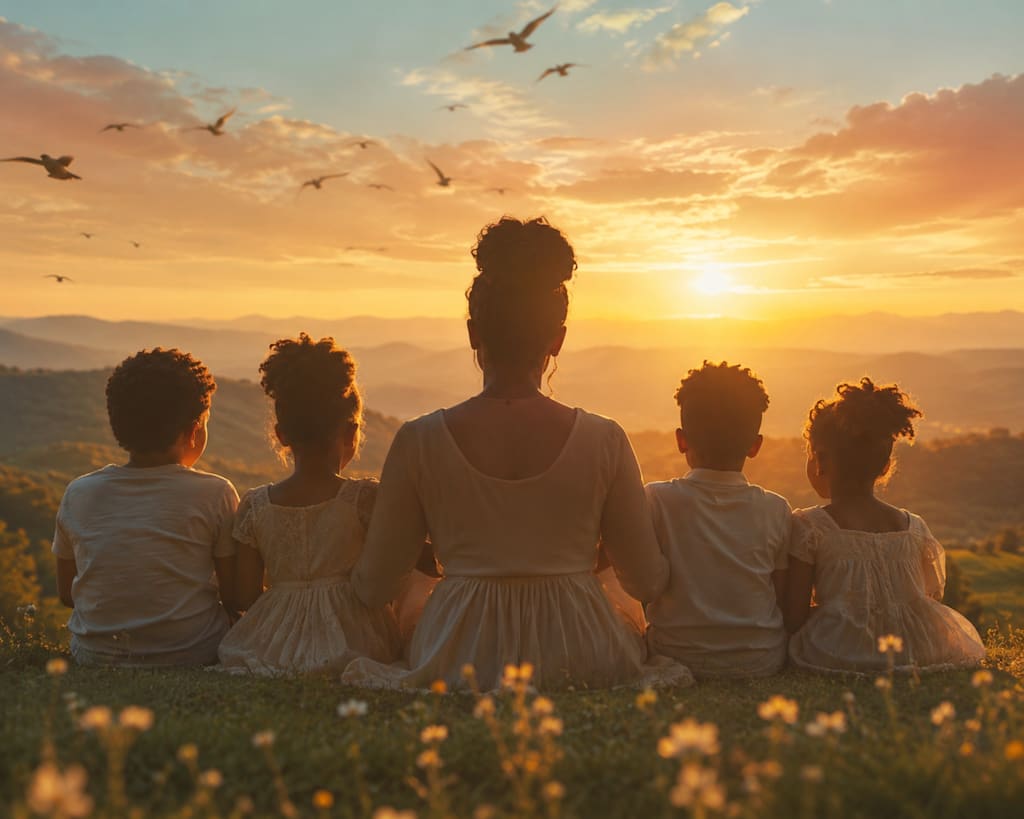
There is a peculiar irony surrounding the life of Violet Hamilton. During her lifetime, she spent years convincing publishers, producers, educators, and readers that stories possessed the power to change people. Only after her death did the world begin to understand that she had been writing the story of her own life all along.
Critics initially categorized Hamilton as difficult to define. Some insisted she belonged among children's authors because of *Shark Weak*, the deceptively simple novel that encouraged young readers to replace fear with empathy. Others argued that she was a documentarian first, citing her relentless pursuit of forgotten history and her refusal to allow overlooked voices to disappear into silence. Business journals admired her entrepreneurial instincts. Educators praised her commitment to social-emotional learning. Faith communities embraced the moral clarity woven quietly through her work.
They were all correct.
And all incomplete.
Hamilton's greatest subject was never sharks, documentaries, business, or even storytelling itself.
It was legacy.
Throughout her career she returned to one persistent question: *What survives us?*
The answer, she believed, was never money.
Not awards.
Not fame.
Only character.
Friends often recalled that Hamilton spoke less about becoming famous than about becoming worthy of being remembered. She believed that excellence was not an achievement but an obligation. Whether she was writing, directing, studying, working, or serving others, she approached each task with an intensity that bordered on obsession. Critics sometimes misunderstood this discipline as ambition.
History has interpreted it differently.
She wasn't trying to prove she was extraordinary.
She was trying to become someone her future children could admire.
Among the most revealing discoveries made after her death were journals describing a dream that many initially found surprising. Hamilton hoped to become the mother of four children—some born to her, others welcomed through adoption. The distinction, she repeatedly insisted, would never matter inside her home.
Love, she wrote, should never require proof of biology.
To later scholars, this became one of the defining principles of her philosophy. Family, to Hamilton, was not something inherited. It was something built intentionally, every single day.
She imagined a household where no child questioned whether they belonged because every child belonged equally.
Those children, she believed, deserved more than affection.
They deserved history.
She wanted them to know who their grandfather had been. She wanted them to understand their great-grandfather's sacrifices, the struggles that preceded them, and the quiet courage of ordinary people who rarely appeared in history books. Every film she created, every manuscript she completed, every business she pursued, and every obstacle she overcame became another page in the inheritance she hoped to leave behind.
It is tempting to interpret this as sentimentality.
It was not.
Hamilton understood that memories disappear unless someone fights to preserve them.
She intended to be that person.
The irony, of course, is that she eventually became one of the stories someone else had to preserve.
Her critics continue to debate her finest work. Some argue for *Shark Weak*. Others champion her documentaries. Others still point toward projects that remained unfinished at the time of her death, suggesting that her greatest masterpiece may never have been completed.
Perhaps they are asking the wrong question.
Because Hamilton herself left clues throughout her writing.
Again and again, her characters discovered that greatness rarely belonged to the strongest individual. It belonged to those willing to protect, teach, forgive, and sacrifice for someone else.
That philosophy became the architecture of her own life.
Even those who challenged her ideas acknowledged the consistency of her convictions. She refused to separate professional success from personal integrity. She measured achievement less by applause than by usefulness. If a story entertained but failed to improve someone, she questioned whether it had fulfilled its purpose.
This explains why so much of her work feels strangely prophetic today.
Readers searching for spectacle found compassion instead.
Readers expecting heroes found ordinary people choosing courage.
Readers looking for villains often discovered damaged souls capable of redemption.
Hamilton seemed uninterested in winning arguments.
She wanted to change hearts.
The children she dreamed of raising would never know every rejection she endured, every manuscript that was declined, every proposal that failed, or every opportunity that disappeared.
That omission would have pleased her.
She never wanted them to inherit her disappointments.
She wanted them to inherit her perseverance.
Today, literary scholars frequently compare Violet Hamilton's body of work to a family archive disguised as literature. Every novel, screenplay, documentary, and journal entry appears to point toward the same enduring conviction:
A person's greatest creation is not the work they leave on shelves.
It is the people they leave behind.
Years after her passing, visitors continue to discover her books in classrooms, libraries, and homes. Some encounter her documentaries. Others know only her name.
Yet those closest to her would likely say that none of these accomplishments represented her proudest dream.
She wanted four children to grow into compassionate adults who understood that kindness requires courage, truth requires sacrifice, and excellence is a daily choice rather than a destination.
If they accomplished that, then every page she ever wrote had already fulfilled its purpose.
History will continue debating whether Violet Hamilton was a remarkable author.
Her family, readers, and students settled the question long ago.
She did not merely write stories worth remembering.
She lived one.
About the Creator
Violet Hamilton
Harlem born. Author of Shark Weak. Wrote multiple Award-Winning Cast and Crew screenplay "What If" and "Trickster." Educated. World traveler. I now reside in Long Island, New York. I adore writing. It's the only time I get to play God.
Enjoyed the story? Support the Creator.
Subscribe for free to receive all their stories in your feed.
Comments
There are no comments for this story
Be the first to respond and start the conversation.