
The Great Battery Breakup: Why China’s Automakers Are Turning Against CATL
One company made more profit than 15 carmakers combined. Now those carmakers are building their own batteries, and the balance of power is shifting.
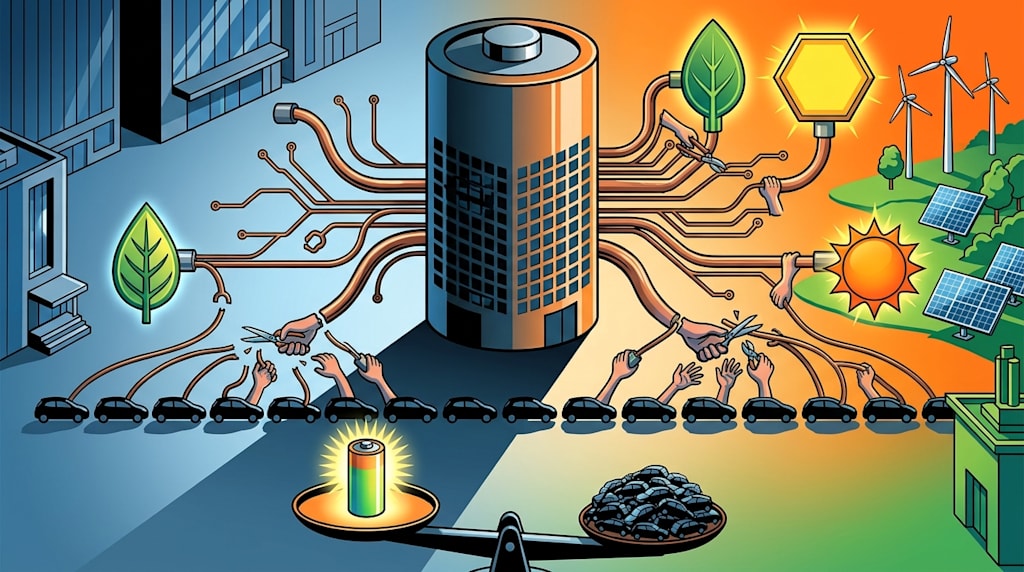
De-CATLization: A Systemic Restructuring of Power in the Power Battery Industry
I. Two Sets of Numbers, One Imbalanced Industry
Two financial reports from the first half of 2026 made plain the deepest structural contradiction in China's new energy vehicle supply chain.
CATL: revenue of 276.917 billion yuan, up 54.80% year on year; net profit attributable to shareholders of 43.284 billion yuan, up 41.98%, equivalent to about 239 million yuan in daily profit. Over the same period, 15 major A-share and Hong Kong-listed automakers: combined net profit of about 21.048 billion yuan, down 14 billion yuan year on year, with 11 reporting profit declines or continued losses.
The profit of one battery maker was twice the combined profit of 15 automakers.
Chen Shihua, deputy secretary-general of the China Association of Automobile Manufacturers, disclosed that in the first half of 2026, the average net margin of domestic vehicle manufacturing fell to 1.5%, a near-decade low. Based on an average vehicle price of about 202,000 yuan, an automaker retained only about 3,000 yuan in net profit per vehicle sold.
This is not a complaint about "working for CATL." When power batteries account for 30% to 40% of a vehicle's BOM cost, and more than half for some high-end models, while the auto industry's profit margin has fallen from 5.71% in 2022 to 3.4%, automakers' supply chain adjustments have shifted from scattered experiments to systemic action. In 2026, Li Auto announced that all its models would begin using self-developed batteries; Xiaomi launched the Dragon Armor battery and brought in CALB and Sunwoda; Leapmotor disclosed as many as eight battery suppliers; and HarmonyOS Smart Mobility introduced multiple second-tier battery makers for its mainstream models.
The market has labeled this wave: De-CATLization.
II. Profit Inversion: Structural Revolt Triggered by Chain-Leader Premium
The most direct driver of De-CATLization is the extreme imbalance in profit distribution across the industrial chain.
CATL's net margin in the first half of 2026 was 16.9%, more than four times the 3.8% average profit margin of the automobile manufacturing industry. Behind this margin lies CATL's quasi-monopoly in power batteries: a global market share of 39.9%, a share of more than 75% in ternary lithium batteries, and a single company's share exceeding the combined shares of the second through fourth players. With this position, CATL has strong pricing power and, through raw material price linkage clauses, passes 80% to 90% of cost pressure downstream to automakers. Automakers are mired in domestic price wars and cannot pass costs on to consumers.
From a game theory perspective, CATL is at the critical point of sliding from a Stackelberg equilibrium to a non-cooperative equilibrium. CATL occupies the leader position through technological leadership and production scale, with gross margins long maintained above 20%, while downstream automakers generally sit between 10% and 15%. This profit imbalance is rent extraction by the chain leader from downstream players. When the chain leader's profit share exceeds a certain threshold, downstream players' motivation to break away shifts from a weak signal to strong action.
For automakers, the expected return from continuing to depend on CATL is now lower than the expected return from self-development or bringing in alternative suppliers, even if the latter is more costly in the short term. Li Auto's decision to develop its own batteries reflects this logic: huge investment in the short term, but once successful in the long term, it will completely escape the fate of working for the battery maker. When automakers invest enormous sunk costs by introducing second suppliers, taking stakes in battery makers, or building their own battery lines, this itself is a credible commitment. It sends CATL the signal that "I am no longer your only choice." When that signal becomes strong enough, CATL's bargaining power is systematically weakened.
III. Capacity Game and Supply Chain Security Anxiety
Beyond profit contradictions, capacity allocation power is another key trigger for De-CATLization.
In the first half of 2026, CATL's capacity utilization rate reached 94.86%, close to full production, with in-construction capacity as high as 764 GWh. Tight capacity gave CATL enormous say over customer selection, supply priority, and pricing. After Li Auto's MEGA received a surge of orders and the company sought to increase orders, CATL imposed conditions on capacity allocation, which became the trigger for Li Auto's eventual full switch to self-developed batteries. An earlier case was XPeng. During the 2021 battery shortage, He Xiaopeng personally traveled to CATL to secure capacity without success. Trust broke down, and XPeng subsequently accelerated the introduction of suppliers such as CALB and EVE Energy.
Behind tight capacity is a self-reinforcing cycle in CATL's business model. CATL has more than 10 sales teams competing internally, with KPIs based on the customer's CATL share and gross profit. Sales teams do everything possible to get customers to increase CATL's share and raise prices, while tight capacity further strengthens the sales team's bargaining chips. Since 2023, CATL has promoted its CATL Inside consumer marketing strategy, with annual investment reaching nearly 1 billion yuan at its peak. By building a "no CATL, no buy" perception in consumers' minds, it indirectly pressures automakers to increase CATL's share. This strategy works, but it also intensifies automakers' sense of insecurity. When consumers' purchasing decisions are hijacked by the battery brand, the space for automakers' product differentiation is further compressed.
From the automaker's perspective, supply chain security is not merely a cost issue. In previous years, when batteries were in short supply, automakers had to queue for capacity even after paying deposits. Once the production schedule was disrupted, the entire vehicle line could be forced to stop. Introducing second and third suppliers splits and shares the chokepoint risk. This is not a denial of CATL's technological strength, but a rational choice by automakers for supply chain resilience.
IV. Technology Definition Rights: From Black-Box Procurement to Self-Developed Contract Manufacturing
The deepest driver of De-CATLization is automakers' struggle for the right to define battery technology.
Under the traditional model, CATL provided automakers with a complete "black box" solution including cells, BMS, and thermal management. When an automaker wanted to adjust its BMS strategy, it had to go through a long process of battery maker evaluation, quotation, negotiation, and validation, severely constraining OTA iteration efficiency and product differentiation. As competition in new energy vehicles enters the second half of intelligentization, batteries have evolved from standardized components into core variables that determine the overall vehicle experience. Automakers cannot long outsource the right to define this core capability.
Li Auto's path is the clearest example. The 5C ultra-fast charging cells used in the 2026 Li Auto i6 are self-developed by Li Auto and contract-manufactured by two partners, Sunwoda and CALB; the self-developed battery pack is produced by Li Auto. Li Auto's battery R&D team has about 270 to 280 people, including more than 30 PhDs. Over the past five years, fixed asset investment in its battery R&D platform has exceeded 500 million yuan. It also collaborates with top research institutions such as Tsinghua University, Shanghai Jiao Tong University, Beijing Institute of Technology, and the Chinese Academy of Sciences. Li Auto chose a light-asset path: self-developing key technologies and key processes, then contracting mature processes to partners. It masters cell product definition, material formulation, BMS algorithms, and pack integration, while leaving manufacturing to partners.
The core logic of this model is: an automaker does not need to own a battery factory, but it must have the ability to define a battery. When an automaker masters the core technology definition rights for batteries, supplier choice becomes a purely commercial decision rather than technological dependence.
Xiaomi's Dragon Armor battery follows a similar approach. Xiaomi and CALB jointly conduct product definition, battery design and development, mass production manufacturing, and full-process quality control through "full-chain collaboration," while cells are manufactured by Sunwoda. The automaker is responsible for product definition, leading the battery pack's mechanical structure, electrical and electronic architecture, thermal management, and BMS algorithms, while the battery maker is responsible for manufacturing execution. This new division of labor, where the automaker defines and the battery maker manufactures, is becoming the industry's mainstream path.
V. Reshaping the Industry: Multipolar Competition and Power Transfer
The impact of De-CATLization on the industry must be examined from two dimensions: existing share and incremental trends.
On the existing share level, CATL's absolute dominance is difficult to shake in the short term. From January to July 2026, CATL's domestic power battery installation share reached 47.8%, nearly half the market; its global share was 39.9%, ranking first for nine consecutive years. JPMorgan estimates show that Xiaomi and Li Auto each account for only 7% to 8% of CATL's domestic power battery shipments, while the domestic market accounts for less than 35% of CATL's total shipments, leaving very limited risk exposure to any single customer. In the first half of 2026, CATL's share in the third-party market (excluding BYD and Tesla) rose to more than 48%. Even as customers bring in second suppliers, CATL's share has risen rather than fallen, indicating that its technological leadership and scale advantages remain solid.
On the incremental level, second-tier battery makers and automakers' self-developed systems are competing for newly released orders. CALB ranks third domestically with a 5.5% share, followed closely by Sunwoda at 4.4%. Both are accelerating capacity expansion. CALB's Shandong base plans total capacity of 160 GWh, while Sunwoda's Beijing Shunyi project involves investment of 5.367 billion yuan. CALB has become the biggest winner of the automaker "second supplier era," successively taking orders from leading automakers such as Li Auto and Xiaomi that previously went to CATL.
The rise of automakers' self-developed camp is a variable with greater long-term impact. In 2025, aside from BYD, which produces and uses its own batteries, only Geely's Jiyang and GAC's Yinpai Battery made it into the domestic top 15 installation rankings, with a combined share of only 2.78%; including SVOLT, the figure was only 5.48%. But this number is changing rapidly. Geely's Jiyang plans to form 70 GWh of capacity by 2027; GAC's Yinpai Battery plans total capacity of more than 60 GWh and has already built an 18 GWh mass production line; SVOLT targets shipments of 61 GWh in 2026. Automakers' self-developed batteries are growing from a marginal force into a competition pole that matters.
BYD's external supply strategy is another key variable that could break the existing pattern. BYD's second-generation Blade Battery has been nominated for FAW Hongqi's next-generation pure electric platform, and its megawatt flash charging technology is about to be externally supplied for the first time. BYD's customers now include Xiaomi, JAC, NIO, XPeng, Mercedes-Benz, Audi, and others. Xiaomi Auto, with a procurement share of 17.9%, has become FinDreams Battery's largest external customer. BYD's combination of lower price than CATL's high-end batteries plus a flash charging ecosystem gives automakers another high-end option besides CATL. If BYD's external supply scale expands further, the power battery industry will accelerate from "one superpower, multiple strong players" to "two giants contending."
From a broader view, the top ten companies together hold 96.0% of the market, a highly concentrated structure. But within the leading camp, power is being redistributed. CATL is shifting from an "irreplaceable supplier" to "one of many choices that must continuously prove its value." This role change itself is a sign that the industry is transitioning from a seller's market to a buyer's market.
VI. CATL's Prisoner's Dilemma
Faced with automakers' collective exit, CATL has fallen into a classic prisoner's dilemma.
If it cuts prices, it can preserve share in the short term, but profits will inevitably decline, and it will send the market a signal that "I can be bargained down," possibly accelerating imitation by other automakers. If it does not cut prices, share may be lost, but profit levels can be maintained; however, once alternative suppliers mature, it will face a double hit on volume and price. Either way, the De-CATLization trend among automakers is difficult to reverse, because automakers' decision logic has shifted from cost optimization to supply chain security and bargaining power balance.
The capital market's reaction confirms this judgment. Since its May 2026 high, CATL's stock price has fallen by nearly 28%, with market value evaporating by close to 600 billion yuan. On July 24, CATL announced the largest buyback plan in A-share history: no less than 20 billion yuan and no more than 40 billion yuan, with a buyback price ceiling of 573 yuan per share, nearly 50% above the stock price at the time of the announcement. But as of August 31, the company confirmed in an announcement that it had "not yet implemented the share buyback," which the market interpreted as a lack of confidence. It was not until September 11 that CATL made its first buyback through centralized bidding of 604,300 shares, with total transaction value of about 200 million yuan, tiny relative to the 40 billion yuan buyback ceiling.
CATL's management sees the problem. In November 2025, CATL signed a five-year broad strategic cooperation agreement with Li Auto, but less than a year after the agreement was signed, Li Auto fully switched to self-developed batteries. This situation of "cooperation on one side, diversion on the other" shows CATL's dilemma between maintaining customer relationships and preserving bargaining power.
To escape the prisoner's dilemma, CATL needs to move from a zero-sum game to a positive-sum game. Possible paths include upgrading from a product supplier to a technology partner, borrowing from ARM's IP licensing model to open its battery technology platform to automakers for secondary development; or through joint ventures and other means, transforming automakers from "customers" into "communities of interest." But whichever path it chooses, CATL will need to give up part of its chain-leader premium and accept a more equal industrial relationship.
Conclusion: The Decentralization Moment for Power Batteries
The essence of the De-CATLization wave is the transfer of power in the power battery industry from a seller's market to a buyer's market. The driving force behind this transfer is not a single technological breakthrough, but the internal contradiction of the industrial structure. When the upstream chain leader's profit share exceeds downstream players' tolerance threshold, downstream breakaway actions shift from "option" to "necessity."
CATL will not lose its leading position because of this. Its more than 75% share in ternary lithium batteries, capacity utilization rate of nearly 95%, and sustained high-intensity R&D investment remain competitive barriers that are difficult to replace in the short term. Even under its most conservative assumptions, JPMorgan still expects CATL's net profit in 2027 to reach 96 to 106 billion yuan. But its role is undergoing a fundamental change: from an irreplaceable supplier to one of many choices that must continuously prove its value.
For automakers, whoever can build autonomous and controllable battery capabilities in this round of supply chain restructuring will gain both cost and technology initiative in the next stage of competition. Li Auto's self-developed contract manufacturing, Xiaomi's full-chain collaboration, Geely's full industrial chain self-building, and BYD's vertical integration and external supply represent differentiated paths for automakers of different scales toward battery autonomy. The common direction of these paths is that the decentralization moment for the power battery industry is here. In the future, no single company will be able to simultaneously possess technology definition rights, capacity allocation rights, and profit distribution rights in the way CATL did over the past few years.
The field is being rewritten. And the direction of that rewrite is a more balanced, more diverse, and more uncertain new industrial order.
About the Creator
Jin
Writer of reamstories
https://reamstories.com/jin
Enjoyed the story? Support the Creator.
Subscribe for free to receive all their stories in your feed. You could also become a paid subscriber, letting them know you appreciate their work.
Comments
There are no comments for this story
Be the first to respond and start the conversation.