
Qianli Put a 10 TOPS Brain Inside a Radar. Here’s What Changes.
Self-driving cars spent two years fighting over models. The next fight is over who gets to make the first judgment.
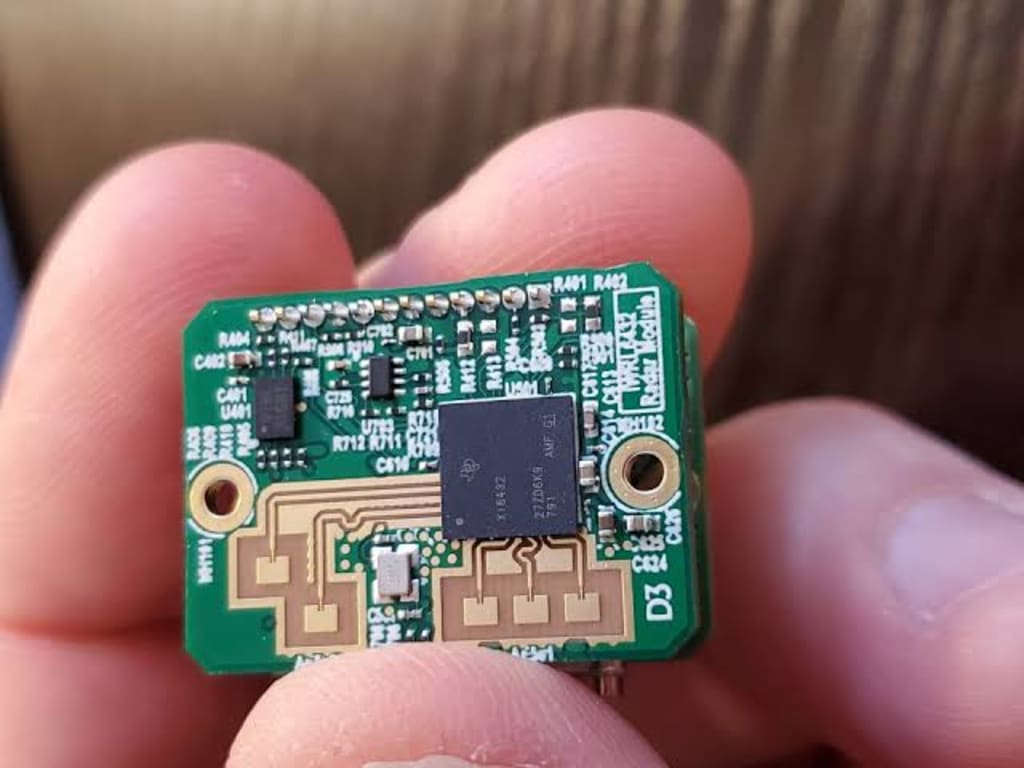
On October 23, Qianli Technology released an AI millimeter-wave radar. In public information, this is the first solution to integrate a 10 TOPS NPU inside a radar. The radar itself performs target detection and classification. It supports three operating modes: edge-side, satellite, and compatible.
Those three parameters point to more than a product-line expansion. They change who makes the judgment in the perception chain.
1. The problem with traditional 4D radar is not link length. It is the ceiling of rules.
Two directions are advancing in intelligent driving at the same time. High-level intelligent driving is moving down into the mainstream market priced around RMB 100,000 to 200,000. L3 autonomous driving is preparing for mass production. The two directions place different demands on the system, but they converge on one word: safety. Scale requires safety to convince users to pay. L3 raises the safety requirement by another order of magnitude.
Under this demand, 4D millimeter-wave radar becomes important. It is cheaper than lidar and more stable in rain and fog. It is one of the few sensors that can balance cost and reliability.
The trouble lies in how traditional 4D radar works.
Take obstacle recognition. Traditional 3D radar can only tell that something is ahead. 4D radar adds a height dimension and can see a target’s contour, but the point-cloud data still has to travel to the central domain controller before the system can decide what it is. Link length determines response time.
Putting a computing unit inside the radar shortens that segment. Detection and classification happen right after point-cloud acquisition, and the radar outputs structured results directly.
But link length is not the real bottleneck. Traditional millimeter-wave radar signal processing relies on classical algorithms such as CFAR. The rules are fixed at the architecture design stage. For scenarios the designers did not anticipate, the algorithm handles them conservatively. The result is multipath ghosting, clutter interference, weak-target loss, and poor separation of multiple targets.
The root cause is that rules have a coverage ceiling. Lower the threshold, and missed detections fall but false detections rise. Raise the threshold, and false detections fall but weak targets disappear. Tuning moves the system along a fixed curve. It does not produce new capability.
Replacing rules with models changes the curve itself. Antenna array and waveform design can use algorithms to find the best solution under manufacturing, size, and performance constraints. Point-cloud detection, angle measurement, point-cloud enhancement, target tracking, and classification can all use data-driven models. Qianli’s radar does not patch a single scenario. It targets the defects of the traditional architecture from the front of the perception chain.
A chip alone does not solve this. In the current division of labor, millimeter-wave radar is a finished product delivered by a supplier. Algorithm teams receive results that have already been processed. To run models inside the radar, a company has to participate from RF design. Without that, AI stays at the end as post-processing.
2. The model has to be yours, and the hardware has to be defined with you.
To run models inside a radar, the model has to be yours.
That sounds obvious. In practice, it is a concrete barrier. What features the radar outputs, in what format, and how it divides work with the domain controller all matter. Once an external supplier sets those parameters by generic logic, an algorithm team can only optimize inside the established interface. Qianli has a foundation model. That lets it define those parameters around the model instead of making the model fit the hardware.
This fits what Qianli has done over the past two years. Among the three outcomes of Qianli 2.0, the installation count is the result. The loop is the cause. The model sets the product ceiling. The engineering system sets delivery speed. Data from vehicles trains the model. With that loop, the extra raw information from the radar has somewhere to go. It can enter training, be validated, and reach the vehicle. It does not stop inside the hardware.
Others can imagine this path. The hard part is having several pieces at once. Qianli built its layout in algorithms, computing power, and whole-vehicle applications within two years. At its AI strategy launch in April this year, Yin Qi called the model “chain collaboration.” The phrase emphasizes deep cooperation with clear boundaries, not putting every link inside one company. The combination gives Qianli three things: large-model capability, an understanding of the chip side, and engineering experience in deploying algorithms to vehicles.
That division of labor has already gone through one round of validation. In the first half of 2026, Qianli Technology’s intelligent assisted driving business revenue reached RMB 1.235 billion, 24.3% of main business revenue. Qianli Haohan has exceeded one million installations, covering dozens of models from Zeekr, Lynk & Co, smart, Galaxy, and other brands. User activation reached 93.9%.
The sensor link was filled this year. According to public announcements, on June 11, 2026, Chongqing Qianli Intelligent Driving Technology, a controlled subsidiary of Qianli Technology, acquired 100% of Ningbo Ronggan Technology for RMB 25.908 million. Ronggan Technology was founded in June 2023 and focuses on vision and millimeter-wave fusion radar. According to the company, its 4D imaging millimeter-wave radar has already passed designated validation and small-batch delivery with several mainstream OEMs. The announcement described the deal as closing the loop on hardware-software integration and full-stack delivery, enabling joint optimization and synchronized iteration of self-developed algorithms and hardware.
RMB 25.908 million is not a large acquisition in intelligent driving. What it buys is a position. It moves Qianli from writing algorithms for other people’s radars to participating in definition from the radar design stage. That difference is invisible in traditional radar. In AI radar, it decides whether the model can enter RF design.
Yin Qi is chairman of Qianli Technology. Since January 2026, he has also served as chairman of StepFun. His AI work has consistently centered on hardware-software integration. During the Megvii period, the product system covered vision sensors, industrial robots, and intelligent vehicles. In 2024, Yin Qi took the helm of Lifan. In February of the following year, the company was renamed Qianli Technology and began an “AI + vehicle” transformation.
3. The three modes are more specific than “redundancy.”
The radar supports three operating modes.
In edge-side mode, the NPU runs models such as AI Detector, AI-assisted angle measurement, and AI point-cloud enhancement inside the radar. It outputs structured perception results directly. The link is short, response is fast, and the domain controller carries less work.
In satellite architecture mode, the radar only collects and transmits data. It sends intermediate-frequency data that has not undergone target detection to the central domain controller, where a larger model performs multi-source front fusion. The upside is more complete information, unified algorithms, and easier upgrades.
The third is compatible mode, which does both jobs simultaneously. The radar’s rawest RAW data goes directly to the SOC for processing and fusion. At the same time, the edge-side processor on the radar independently completes a pass of processing. RAW data enters the central model and can capture more scene information. The independent edge-side result is a ready-made perception conclusion.
In the past, when the industry spoke of dual modes, it usually landed on “safety redundancy.” The idea was that if the central system failed, the radar could cover for it. Compatible mode does more. At the same moment, it produces two perception results with different levels of detail. One carries more information but needs central computing power. One carries less information but is ready immediately. For the model, these two results can check each other and can also be chosen by scenario.
It does not force a perception architecture on the OEM. On platforms with abundant domain-controller computing power, RAW data goes through central front fusion for higher information utilization. On platforms with limited computing power or a need for low latency, edge-side results are directly usable. Compatible mode lets both approaches exist on the same radar without a binary choice at the architecture design stage. The radar returns that choice to whole-vehicle system design.
4. What the performance numbers mean in real scenarios
The radar can stably detect child targets at 100 to 150 meters. Child crossing is one of the hardest scenarios on urban roads. The target is small, appears suddenly, and is often blocked. The system has very little reaction time. Extending detection range moves the judgment window forward, so AEB can intervene earlier instead of being triggered at the limit distance.
Compared with Qianli’s previous-generation 4D radar, which used DSP-side computing, this radar increases point-cloud density by 10x, extends detection range by 40%, improves ghosting elimination to 95%, and increases spatial angular resolution by 12x.
A 10x increase in point-cloud density means richer target contours and details. The model gets more information for classification and tracking. A 40% increase in detection range means the system sees risk earlier and has a longer decision window. Ghosting elimination at 95% means fewer false targets from multipath reflection, which lowers the chance of false braking and misjudgment. A 12x increase in spatial angular resolution means two nearby targets are easier to separate, which makes judgment more stable in multi-target scenarios.
Together, these numbers point to one change. The radar moves from detecting to judging.
5. Where the limits are
This radar is not a universal solution.
10 TOPS on the edge is a breakthrough inside a radar, but it is still an order of magnitude below the computing power of a central domain controller. It fits relatively focused tasks such as target detection, classification, and point-cloud enhancement. It cannot replace the central model for full-domain fusion and complex-scenario reasoning.
The three modes give OEMs a choice, but they also make system design more complex. How edge-side, satellite, and compatible modes switch, verify, and stay consistent requires coordination between the whole-vehicle system and the domain controller. The radar returns the choice. The OEM has to be able to catch it.
AI radar depends on the data loop. Models run inside the radar and need continuous data feedback and iteration. If data return, labeling, training, and deployment are slow, the edge-side model will stop improving at the level it had at launch.
Cost remains the key to scaling into the mainstream market. 4D millimeter-wave radar is cheaper than lidar, but integrating an NPU, adding computing power, and running edge-side models all change the cost. Whether this radar can scale across the mainstream market priced around RMB 100,000 to 200,000 depends on cost, reliability, and engineering consistency.
6. Competition has moved one layer upstream
Over the past two years, competition in intelligent driving has centered on models. Whoever has a stronger end-to-end system and a faster data loop can lead by half a step in experience.
When model capability begins to hit the limit of the raw information sensors provide, competition moves one layer upstream, to hardware. Qianli’s radar changes the “who makes the judgment” segment of the perception chain. It moves detection and classification from the central domain controller into the radar, leaves raw point clouds to the center for front fusion, and returns the architecture choice to the OEM.
Whether this can hold at scale still depends on cost, engineering, mass production, and OEM acceptance. But it has at least proven one path: models can enter the radar, the radar can output structured results, raw data can enter the training loop, and hardware and algorithms can be defined jointly.
The next things to watch are how the domain-controller architecture is chosen for the next designated vehicle model, and the false-alarm rate of the radar in mass-produced cars.
About the Creator
Jin
Writer of reamstories
https://reamstories.com/jin
Enjoyed the story? Support the Creator.
Subscribe for free to receive all their stories in your feed. You could also become a paid subscriber, letting them know you appreciate their work.
Comments
There are no comments for this story
Be the first to respond and start the conversation.