
Why England Doesn’t Want Independence
Scotland, Wales, and Northern Ireland have separatist movements. England has the Parliament, the capital, and the flag. Leaving would mean walking away from a union it already runs.
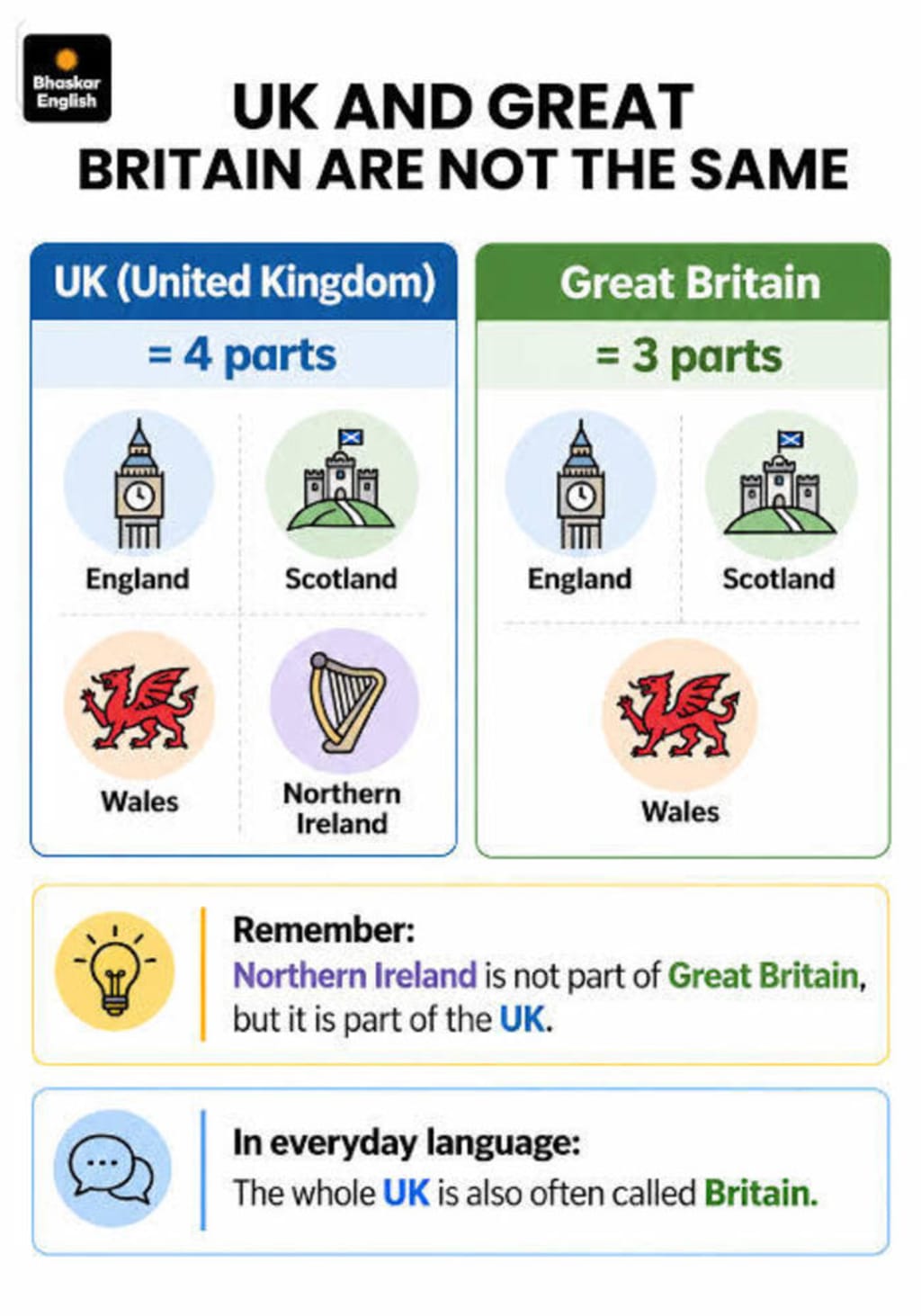
Why England Does Not Seek Independence
In the House of Commons, English MPs hold the majority. After the Acts of Union in 1707, the English Parliament and the Scottish Parliament were both dissolved and merged into a new Parliament of Great Britain. It sat at Westminster. England and Wales received 513 seats. Scotland received 45. Another 16 Scottish peers entered the House of Lords. From the first day, the union's parliamentary majority was English.
The Chinese word for Britain, "英国," takes its "英" from England. The Union Jack's core is the St George's Cross of England. The St Andrew's Cross of Scotland and the St Patrick's Cross of Ireland are layered over it. The capital is London. Parliament, the government, the Prime Minister's office, the central bank, and the Supreme Court are all at Westminster. Scotland, Wales, and Northern Ireland can distinguish between "local" and "London." England cannot. London is its capital. Westminster is its parliament.
In 1997, Tony Blair's Labour government began devolving central power. On 11 September 1997, Scotland held a devolution referendum. About 74% of voters supported establishing a Scottish Parliament. In 1998, the UK Parliament passed the Scotland Act. On 6 May 1999, the first Scottish Parliament election was held. On 1 July 1999, the Scottish Parliament opened and took over most domestic legislative power from Westminster. The parliament was nominally new, but it was also treated as a restoration of the historical Scottish Parliament. It became a symbol of Scottish independence.
The same day, the Welsh assembly began operating. The Welsh referendum on 18 September 1997 passed by only 50.3%. The body was first called the National Assembly for Wales. It had no primary legislative power. It could only make secondary regulations, mainly managing health, education, and local government. Later, through acts in 2006, 2014, and 2017, it gradually gained powers similar to Scotland's. In 2020, it was renamed Senedd Cymru / Welsh Parliament. Wales was conquered by England in 1284 and was long not considered an independent political entity. This parliament was the first modern representative body in Welsh history.
Northern Ireland's parliament had a more difficult path. In 1920, the UK passed the Government of Ireland Act, dividing Ireland into Southern Ireland and Northern Ireland, each with its own parliament. In 1921, the Northern Ireland Parliament was established in Belfast with substantial autonomy. In 1972, as conflict escalated, the UK government suspended the Northern Ireland Parliament on the grounds that Northern Ireland could not be governed normally. London imposed direct rule. After a ceasefire in 1998, power was transferred back from London to a restored Northern Ireland Assembly. It was suspended twice in 2000 and 2001. In 2002, London again stopped the assembly and restored direct rule. Only in 2007 did the Northern Ireland Assembly begin to function stably.
Scotland, Wales, and Northern Ireland all received their own devolved parliaments. England did not. England was not shortchanged. The UK Parliament is England's parliament. If a separate English parliament were created, it would collide with Westminster. English domestic affairs have been legislated by the UK Parliament. Directives come from London. For England, the UK government is not a foreign ruler. The UK Parliament is not a foreign parliament. London is not an imperial capital. Westminster is not a colonial governor's house. They are its own.
Some English people do complain. They argue that the UK government keeps bringing foreign migrants into England while continuously subsidising Scotland, Wales, and Northern Ireland, so those "member regions" end up with higher living standards than England itself. They argue that the UK spends resources that could be used for the English people on so-called overseas interests, such as military aid to Ukraine. These people say England should leave the United Kingdom and run its own affairs.
The English Democrats, led by lawyer Robin Tilbrook, are an organised version of that voice. Founded in 2002, the party advocates English national identity, English independence, and Christian supremacy. It opposes the United Kingdom, Jews, international organisations, immigration, halal meat, conscription, and aid to Ukraine. It supports ending the war on Russian terms. It opposes Labour, the Conservatives, Reform, and all other parties. It calls for an English parliament and eventually a sovereign England outside the United Kingdom.
Election results have been poor. The English Democrats have never won a seat in the House of Commons. They won local council seats only in Doncaster and Salford between 2009 and 2012. After the 2014 Scottish independence referendum, the English Democrats called for an English independence referendum. The mainstream ignored them. The 2016 Brexit referendum was seen by some English nationalists as a victory. The English Democrats were barely visible during the campaign. After Brexit was completed, English nationalists had no further plan. Today, the English Democrats are a low-activity party with little local traction.
Support for English independence is around 1% to 5% among English people. Support for Scottish independence is close to 45%. The two are not on the same scale. An English independence movement exists, but it is a fringe activity, not a serious political agenda.
Dominant ethnic groups do not always oppose independence. Russia's independence from the Soviet Union led to the Soviet collapse. The Central Asian republics had little independence drive. Taiwan in the 1990s and 2000s saw a similar shift. The group's position within the union explains the difference. Russia felt it was bearing costs while being dragged down, so it turned toward independence. England is the dominant power in the United Kingdom. It holds the parliamentary majority, the capital, the core of the flag, and the central government. Independence would bring small gains and large costs. Currency, debt, military, diplomacy, borders, nuclear submarine bases, North Sea oil, and Northern Ireland would all have to be renegotiated. The United Kingdom gives England global status, the benefits of a London financial centre, and a single market. For most English people, subsidies to Scotland or Wales are a policy disagreement, not a reason to break up the state.
England does not seek independence because independence would cost more than it would gain. The lack of a separate English national identity is not the reason. Scotland, Wales, and Northern Ireland have a narrative of being ruled by London. England does not. London is it. Westminster is it. The United Kingdom is an England-led union. For the ruling class to leave its own state would be self-dismantling. The English Democrats have no Commons seats and 1% to 5% support. They are not a serious force. England rules through the United Kingdom. English MPs hold the Commons majority. The Union Jack carries the St George's Cross at its core. The capital is London. The English Democrats have no seats.
About the Creator
Jin
Writer of reamstories
https://reamstories.com/jin
Enjoyed the story? Support the Creator.
Subscribe for free to receive all their stories in your feed. You could also become a paid subscriber, letting them know you appreciate their work.
Comments
There are no comments for this story
Be the first to respond and start the conversation.