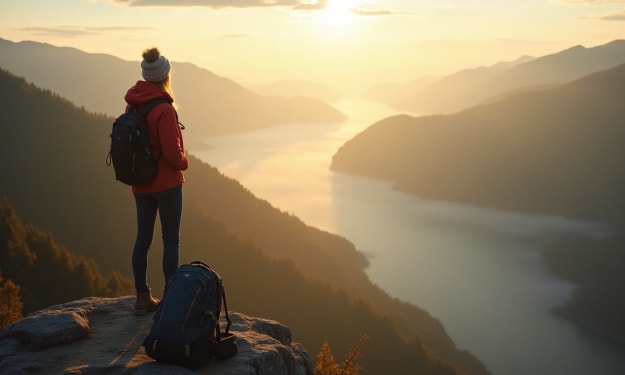
travel gear
The best travel gear to meet your mountain trekking, beach hopping or city dwelling needs.
I Sold Everything to Work From a Beach in Bali — Here's What No One Tells You About Becoming a Digital Nomad
“Freedom” Looked Better in My Head I was stuck in a gray office cubicle, surrounded by buzzwords and blinking cursors. Every day was copy, paste, coffee, repeat. I used to look at Instagram photos of people working from hammocks, sipping coconuts in Thailand or surfing between meetings.
By Sohanur Rahmanabout a year ago in Wander
Traveling to Accra? – 7 Best Things to Do in Accra, Ghana
Introduction to Accra, Ghana. Accra, the lively capital of Ghana, is a city filled with history, vibrancy, and a rich cultural heritage. A blend of modernity and tradition, the city is buzzing with energy as it offers something for everyone — from bustling markets and historical sites to beautiful beaches and fine dining. As a center of advancement in West Africa, Accra is witnessing an increase in environmentally friendly initiatives designed to protect its natural beauty and encourage sustainability.
By Uchenna Cosmas Nwokafor about a year ago in Wander
Traveling to Ghana: Why Choose Accra in Your Next Visit to Ghana
Choosing a leisure trip to West Africa from outside the ECOWAS is often met with a polar interest. Most adventure travelers who travel for leisure trips are excited to choose West Africa because of its richness in culture, gifts of nature and a reminiscence of rustic life. But over time, West Africa has not been free from bad governments, consequently reflecting on the state of insecurity. To still feel the taste of Negro African land, most leisure trips to West Africa point to Accra in Ghana.
By Uchenna Cosmas Nwokafor about a year ago in Wander
"Places Around the World Where Time Stands Still"
Introduction There are places in the world where the relentless ticking of the clock seems to hush — where the air carries stories of centuries past, and every stone path feels like a portal into history. These are not your typical vacation spots; they are timeless travel destinations, havens for those who yearn to disconnect from modern chaos and reconnect with something older, deeper, and profoundly still.
By Shamshair Khan Hasan Zaiabout a year ago in Wander
Visiting Ukraine During Wartime
When I decided to visit Ukraine in mid-2025, people often asked me, “Is it even safe?” I get it — the country is still at war, and that affects everything. But there are parts of Ukraine where daily life continues relatively normally, and with the right preparation, you can travel there fairly safely. In this blog, I’ll share my personal experience of visiting Ukraine in 2025: from insurance and the air raid alert app to which areas to avoid — and which are more accessible.
By Hidden World Journeyabout a year ago in Wander
The Leaning Tower of Pisa: A Timeless Tilt That Defies Gravity
The Leaning Tower of Pisa: Italy’s Iconic Architectural Marvel In the heart of Italy lies one of the world’s most fascinating architectural wonders — the Leaning Tower of Pisa. Every year, millions of tourists from around the world flock to this extraordinary structure, not just to admire its beauty, but to marvel at one very peculiar and captivating detail — its famous lean. Despite being centuries old, the Leaning Tower of Pisa stands strong, tilted to one side, defying both gravity and architectural norms. This unique feature has made it a global symbol of curiosity, engineering, and resilience. --- Why is the Tower Leaning? The tower’s most famous characteristic — its lean — is not intentional. Construction of the tower began in 1173 AD as part of a larger architectural project that included a cathedral and a baptistery in the city of Pisa. The tower was designed to be a freestanding bell tower for the nearby cathedral. However, shortly after construction began, the builders noticed something unusual. The foundation was laid on soft, unstable soil, a mixture of clay, fine sand, and shells. As the structure rose and more weight was added, one side of the foundation began to sink, causing the entire tower to tilt. Fearing collapse, construction was halted multiple times over the course of almost 200 years. These pauses, surprisingly, allowed the soil to settle and may have contributed to the tower's eventual survival. --- Engineering Efforts and Preservation Over the centuries, the lean of the tower became more pronounced, raising concerns about its structural integrity. At its worst, the tower tilted at an alarming 5.5 degrees, threatening to fall over. Engineers and architects from around the world came together to devise ways to prevent its collapse without losing the iconic tilt that made the tower so famous. Efforts included: Soil extraction techniques to slightly reduce the tilt. Reinforcements to the base. Anchoring the structure with strong cables. Adding counterweights on the north side. These preservation efforts paid off. Today, the Leaning Tower of Pisa leans at a safer 3.97 degrees, and experts believe it will remain stable for at least the next few hundred years. The structure continues to stand not just as a monument to the past, but also as a testament to modern engineering brilliance. --- A Symbol of Cultural and Historical Importance The Leaning Tower is located in Piazza dei Miracoli (Square of Miracles) in Pisa, Tuscany. It is part of a larger ensemble that includes: The Pisa Cathedral (Duomo) The Baptistery The Camposanto Monumentale (Monumental Cemetery) This entire complex has been designated a UNESCO World Heritage Site, due to its historical, cultural, and architectural significance. The tower itself is an example of Romanesque architecture, characterized by its white marble construction, arched arcades, and exquisite carvings. It stands at 56 meters (183 feet) high, with eight stories, including the chamber for the bells at the top. --- Tourist Attraction and Global Fame One of the most photographed monuments in the world, the Leaning Tower of Pisa has become a must-visit destination for tourists. People from every corner of the globe come to: Admire its unusual structure Climb the 294 steps to the top for a panoramic view of the city Pose for playful photos, pretending to hold up or push the tower — a tradition that has become a viral internet trend Its popularity has made it one of Italy’s top tourist destinations and a source of national pride. It’s more than just a tower — it’s an icon, representing creativity, imperfection, endurance, and historical beauty. --- Why It’s Considered an Architectural Wonder Although the Leaning Tower of Pisa is not one of the Seven Wonders of the Ancient World, it is often featured in lists of the modern wonders of architecture due to: Its unintended design flaw that became its most celebrated feature. The complexity of preserving a flawed structure for nearly a thousand years. The tower's global recognition and cultural symbolism. In the world of architecture, it's rare for a mistake to become a masterpiece. Yet, the Leaning Tower of Pisa has done just that — transforming an error in engineering into a legacy of beauty and innovation. --- Final Thoughts: More Than Just a Leaning Tower The Leaning Tower of Pisa teaches us something deeper. It reminds us that imperfection can become iconic, that challenges can be overcome with creativity and collaboration, and that heritage is worth preserving — no matter how flawed it may seem. Whether you’re an architect, historian, tourist, or simply someone in awe of Earth’s many wonders, the Leaning Tower of Pisa stands as a timeless symbol of endurance, curiosity, and wonder. So, next time you see a photo of someone “holding up” the tower, remember — they’re not just posing for a picture. They’re participating in a story that spans over 850 years, blending art, science, and human persistence in one glorious lean.
By Ikram Ullahabout a year ago in Wander
Michelin - Starred Restaurants : A Culinary Symphony of Excellence and Emotion. AI-Generated.
Michelin-starred restaurants have long been a symbol of supremacy in the culinary world—places where food is not merely a meal, but an emotional journey filled with stories and sensory experiences that stir the soul. Awarded by the legendary Michelin Guide, originally created in France as a travel guide for motorists, the Michelin star has evolved into the highest benchmark in the global restaurant industry. Evaluations are conducted by highly trained anonymous inspectors, based on rigorous standards that include the quality of ingredients, cooking techniques, flavor harmony, the personality of the cuisine, and consistency over time.
By Vocalmedia Adeadifaabout a year ago in Wander
Beyond the Alps: Discovering the Ultimate Adventure Playground in Switzerland
Beyond the Alps: Discovering the Ultimate Adventure Playground in Switzerland Switzerland, often romanticized for its postcard-perfect villages and precision-engineered watches, is far more than a tranquil destination of chocolates and cowbells. For the adventure seeker, it is a thrilling playground sculpted by nature and refined by centuries of outdoor tradition. From snow-draped summits to emerald valleys, Switzerland offers adrenaline-packed experiences year-round, inviting explorers to test their limits in one of the most spectacular settings on Earth.
By Md Muij Ahmedabout a year ago in Wander
The Majestic Allure of the Burj Khalifa: A Symphony of History and Height. AI-Generated.
In the once-silent expanse of the desert, an idea emerged: to erect an icon that would redefine skylines and testify to the boundless nature of human ambition. The story of the Burj Khalifa began with the dream of Sheikh Mohammed bin Rashid Al Maktoum, the ruler of Dubai, to create a global landmark that would capture the world's attention. Inspired by the geometric elegance of the Hymenocallis flower and driven by the desire to surpass the height of any man-made structure before it, this ambitious project commenced in 2004.
By Vocalmedia Adeadifaabout a year ago in Wander
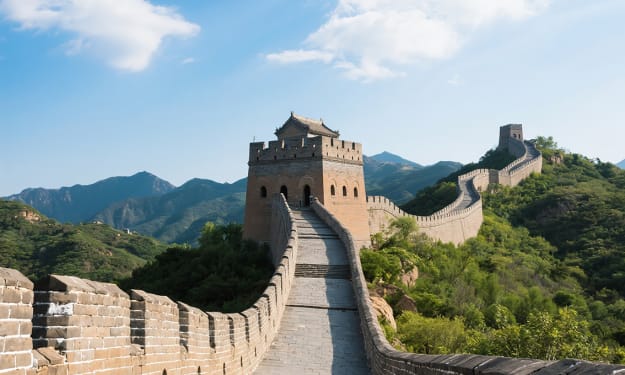
The Great Wall of China: A Stone Epic Spanning History and Captivating the World. AI-Generated.
The Great Wall of China, a colossal dragon stretching across the mountain ridges and valleys of northern China, is a monument that transcends its military function as a defensive fortress. It is an epic etched in stone and earth, narrating a tale of imperial ambition, countless human sacrifices, and the resilience of a civilization spanning millennia. Its construction, commencing in the 7th century BCE under various kingdoms and culminating during the Ming Dynasty (1368-1644), was a colossal project involving millions of laborers from all walks of life, including soldiers, political prisoners, and peasants forced to work in often brutal and deadly conditions. Each section of the wall stands as a silent witness to the sweat, tears, and even lives sacrificed to realize the vision of rulers to protect their territories from external threats, particularly from the nomadic tribes of the north. The architecture of the Great Wall is not a single, uniform design, but rather an evolution reflecting the diverse topography and the advancements in construction technology across different eras. In steep mountainous regions, the wall was built following the natural contours, winding dramatically up and down, utilizing local stone as the primary material.
By Vocalmedia Adeadifaabout a year ago in Wander
How Solo Travel Taught Me More Than School Ever Did
✈️ The Journey Begins: Stepping into the Unknown Solo travel in Japan is often romanticized—sunsets, discovery, freedom. But what most people don’t talk about is the fear that creeps in the moment you’re truly on your own.
By F. M. Rayaanabout a year ago in Wander