travel gear
The best travel gear to meet your mountain trekking, beach hopping or city dwelling needs.
🇰🇮 Kiribati – The Hidden Gem of the Pacific Ocean
🇰🇮 Kiribati – The Hidden Gem of the Pacific Ocean Kiribati, also known as Christmas Island (locally referred to as Kiritimati), holds a unique and fascinating position on the world map. It is the largest coral atoll in the world by land area, covering approximately 388 square kilometers. A coral atoll is a ring-shaped island formed from coral reefs that encircle a lagoon partially or completely. What makes Kiritimati exceptional is not only its geological features but also its historical, ecological, and cultural significance. Located in the central Pacific Ocean, Kiribati is part of the Republic of Kiribati, a sovereign nation composed of 33 atolls and reef islands. Kiritimati lies roughly 2,150 kilometers south of Hawaii, positioning it in one of the most isolated areas of the world. Its remote location contributes to both its environmental purity and its significance in terms of global biodiversity and climate studies. --- 🧭 Historical Discovery and Colonial Past The island’s historical journey dates back to Christmas Eve in 1777, when the famous British explorer Captain James Cook first set eyes on it. He named it "Christmas Island" in reference to the date of its discovery. Over time, the name was locally adapted to "Kiritimati" — a stylized spelling using the Gilbertese language, which lacks the letter 's'. Hence, "ti" is pronounced as "s", rendering it "Kirismas". During the Cold War era, specifically between the 1950s and 1960s, Kiritimati played a controversial and highly significant role in global military history. It was used as a testing ground for nuclear weapons — initially by the United Kingdom, and later by the United States. Massive hydrogen bomb tests were conducted here under operations such as "Grapple" and "Dominic". These experiments left a lasting legacy, both environmentally and geopolitically. Despite this dark chapter, the island gradually transformed into a site of peace, conservation, and natural beauty. --- 🐦 A Sanctuary for Wildlife One of the most striking features of Kiritimati today is its rich biodiversity, especially in terms of marine life and seabirds. The island is recognized globally as a critical habitat for millions of seabirds, including frigatebirds, petrels, terns, boobies, and noddy birds. It is considered one of the most important seabird breeding grounds in the Pacific. The coral reefs surrounding the atoll support a vast array of marine species, including endangered fish, turtles, and even some species of dolphins. Environmental organizations and conservationists have identified Kiritimati as a priority site for biodiversity protection. Efforts are ongoing to maintain the fragile ecosystem, monitor the impact of climate change, and prevent human encroachment. Because of its minimal industrial activity and low human density, Kiritimati provides a nearly pristine natural environment — a rarity in today’s world. --- 👥 People and Population Despite its large land area compared to other atolls, Kiritimati is sparsely populated, with around 6,500 residents spread across several small villages. The main settlements include London, Banana, Tabwakea, and Poland — interestingly named during the colonial era. These villages are small, close-knit communities, where people live a simple life, deeply connected with nature and local traditions. The people of Kiritimati are part of the Micronesian cultural sphere, and their traditional lifestyle includes fishing, farming, and copra (dried coconut kernel) production. The local economy depends heavily on subsistence fishing and natural resource utilization. Over time, there has been a push toward introducing sustainable eco-tourism as a way to provide income while preserving the environment. --- 🌴 Economy: Fishing, Coconuts, and Tourism The economy of Kiritimati is based on three main pillars: 1. Fishing – Both for local consumption and export. Tuna fishing, in particular, is important, and international fishing licenses generate revenue for the national government. 2. Coconut Production – Coconuts are abundant on the island and are used for producing copra, which is processed into coconut oil and sold both locally and internationally. 3. Eco-Tourism – In recent years, eco-tourism has gained momentum. Tourists from around the world, especially those interested in bird watching, deep-sea fishing, snorkeling, and scuba diving, are drawn to Kiritimati’s untouched beaches, lagoons, and reefs. Accommodations are modest, and the tourism industry remains in its early stages, but the ecological uniqueness of Kiritimati makes it an ideal location for researchers, photographers, and adventurers. --- 🌍 Environmental Importance and Climate Impact Kiritimati plays a crucial role in global marine conservation. Its vast lagoon systems, coral reefs, and natural marine reserves act as key indicators in the study of climate change, sea level rise, and ocean acidification. Because of its low elevation, Kiribati as a whole — and Kiritimati in particular — is at high risk from rising sea levels. The threat is so significant that the government of Kiribati has taken unprecedented steps, such as purchasing land in Fiji to potentially relocate populations in the future if needed. Nevertheless, local and international scientists are working together on sustainable development and environmental resilience programs to protect this irreplaceable ecosystem. --- 🕊️ A Symbol of Peace and Natural Beauty From its discovery on a quiet Christmas Eve to being used for nuclear bomb tests, and finally transforming into a sanctuary for birds and marine life — Kiritimati represents resilience. Its story is one of transformation — from a battleground of superpowers to a peaceful natural haven. Its geographic location also gives it a special status: Kiritimati is one of the first places on Earth to see the sunrise every day, being located just west of the International Date Line. This has made it a symbolic place during the new millennium celebrations, as the year 2000 was first celebrated here. --- 🧭 The Global Significance of a Remote Island Although far from global urban centers and often overlooked, Kiritimati is a living museum of natural history and a classroom of environmental science. It teaches the world about: Coral reef ecosystems Seabird ecology Human impact on isolated environments Climate change vulnerabilities It also offers lessons in how communities can thrive in harmony with nature through sustainability, conservation, and local empowerment. --- ✨ Conclusion: A Jewel in the Pacific Kiritimati (Kiribati) is not just a dot on the map — it is a symbol of natural beauty, resilience, and global ecological importance. Its coral reefs and lagoons shelter thousands of species. Its people live in harmony with the land and sea. And its history — from Captain Cook’s discovery to the shadows of nuclear testing — adds layers of human experience to its rich ecological narrative. As more attention is drawn to climate change, rising oceans, and biodiversity loss, islands like Kiritimati become not only case studies but also beacons of hope for a more sustainable future. If you ever dream of visiting a place where time begins, birds sing undisturbed, and nature flourishes unspoiled — Kiritimati awaits you.
By Ikram Ullahabout a year ago in Wander
What to Pack for Manaslu Circuit Trek?
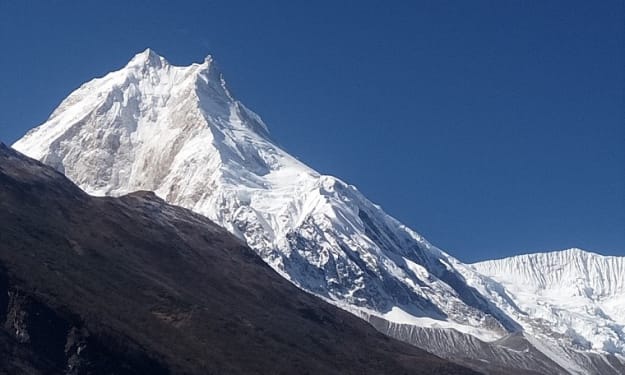
Manaslu Circuit Trek: Overview Manaslu Circuit Trek is surrounded by mount Manaslu that has an altitude of 8163 meters.It starts from Soti Khola/Machhakhola(930m) that goes up in altitude to result in finishing at Dharapani. You will take either jeep or bus from Kathmandu to Machhakhola. Actually, it takes 7-8 hours to get Machhakhola from Kathmandu.
By Haven Holidaysabout a year ago in Wander
What to pack when climbing Mount Kilimanjaro.
Climbing Mount Kilimanjaro is one of the most satisfying and memorable adventures in Tanzania. Climbing mount Kilimanjaro is also a surprise to many first time climbers because they find that they are passing through different climatic zones in just a few days. As you climb Mount Kilimanjaro you will pass through lush rainforests, alpine deserts, and glacial summits. And also Climbing mount Kilimanjaro does not occur in just a single day, for acclimatization purposes, comfortable climbing this giant mount of Africa will take a minimum of five days.
By Jaynevy Toursabout a year ago in Wander
Perfect 9-Day Morocco Itinerary | Expert Route for First-Timers
This isn’t just a list of places to visit in Morocco. it’s a carefully curated journey that balances authentic cultural immersion, adventure, and relaxation, ensuring you experience the very best of you 9 day morocco tour.
By Said Ounirabout a year ago in Wander