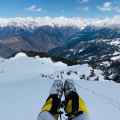
asia
All Asia-bound travelers need some guidance before tackling the largest and most populous continent on Earth.
The Compass of No Direction
M Mehran The first time I left home without a destination, my friends thought I was reckless. “What if you get lost?” they asked. I smiled, because that was exactly the point. I carried only a small backpack: a notebook, a pen, a water bottle, and enough clothes to last a few days. No GPS, no guidebook, no reservations. The world had become too planned, too predictable. I wanted to know what it felt like to let the road itself decide. The bus dropped me off in a town I couldn’t even pronounce. The station was crowded with people rushing toward somewhere. I, on the other hand, stepped out with no direction. It felt like floating in a river without trying to swim upstream. I wandered through markets where vendors shouted in a language I didn’t understand. The colors overwhelmed me—spices in pyramids of red, gold, and green; fabrics glowing like captured sunsets. A woman offered me fruit I had never seen before. Its skin was rough, its taste sweet with a hint of something wild. She laughed when I made a face, and in that moment we were friends. Later that day, I found myself at the edge of the town where hills rolled out like waves frozen in time. I started climbing. The path was uneven, but each step revealed more of the valley: rivers curling like silver threads, villages like toy models in the distance. When I reached the top, the wind roared against my face, as if congratulating me for daring to stand there. That night I stayed in a guesthouse run by an old couple. Their home smelled of wood smoke and fresh bread. They didn’t speak my language, but kindness doesn’t need translation. We ate together in silence, breaking bread and laughing at gestures. I scribbled in my notebook: The world is full of strangers who feel like family, if only we wander far enough to meet them. The days blurred after that. Each one became an improvisation. I hitchhiked with farmers on tractors, slept under skies heavy with stars, and followed dirt paths that ended at waterfalls hidden from maps. Sometimes, I walked for hours without meeting a soul. At first, that loneliness stung. But soon, it became a strange sort of companionship. When there’s no one else around, you begin to hear your own thoughts more clearly. One evening, as I wandered along a coastal road, the ocean spread out before me like a mirror cracked by waves. I met a fisherman repairing his nets. He spoke softly, his words broken by the sea breeze. “The fish don’t always come,” he said, “but the waiting teaches patience.” I thought about that long after I left. Maybe wandering was like fishing—uncertain, but always teaching. But wandering is not always romantic. There were mornings when my feet ached, when rain soaked through my clothes, when I longed for the comfort of knowing where I would sleep. I missed home-cooked meals. I missed warm showers. Yet, even in discomfort, I felt alive. Because every challenge was proof that I was still moving. One of the most memorable moments came in a forest where trees arched overhead like cathedral ceilings. Sunlight filtered through leaves, painting the ground in shifting mosaics. I walked until I stumbled on a clearing where a group of travelers had built a fire. They invited me to join. We shared stories that night—tales of love, heartbreak, and dreams. None of us knew if we’d ever meet again, but for those hours, we belonged to the same tribe: the tribe of wanderers. Eventually, I returned home. My friends asked, “What did you find?” I laughed, because the answer wasn’t something I could pack in a bag or show in a photo. I found that wandering is not about reaching places—it’s about stretching yourself. About learning that the world is bigger than your worries, wider than your fears, and kinder than the news will ever tell you. Now, I wander even in small ways. I take a different street on my walk home. I try food I can’t pronounce. I let conversations with strangers unfold. Because wandering doesn’t always mean leaving your country; sometimes it just means leaving your comfort zone. What I’ve learned is this: maps will tell you where to go, but wandering will tell you who you are. And every step into the unknown is a reminder that life is not meant to be traced like a blueprint—it is meant to be lived like an adventure. So pack light. Leave the itinerary behind. Let curiosity be your compass, and wonder be your guide. The world is waiting for your footprints in places you’ve never dreamed of.
By Muhammad Mehranabout a year ago in Wander
The Call of the Unknown
M Mehran There is a moment, somewhere between the first step away from the familiar and the second step into the unknown, when the heart learns how to beat differently. It is not the fast rhythm of fear, nor the steady pulse of routine. It is something else—a rhythm born of possibility, of roads untaken, of skies uncharted. That moment is the essence of wandering. I first discovered it when I found myself lost, not in a forest or a city, but in life. My days had grown predictable, looped like a song on repeat. Wake, work, sleep. Everything measured, everything planned. Yet inside me was a restlessness I could not silence, a whisper that said: What if there is more? One morning, I listened. I packed a bag without much thought—just enough to keep me moving—and left my small apartment behind. I had no destination, no carefully mapped route. My only goal was to wander. The first hours were intoxicating. The city I thought I knew unfolded in unexpected ways when I stopped rushing. Streets I had walked a hundred times suddenly glowed with details: the painted shutters of a bakery I had never noticed, the mural hidden down a narrow alley, the way sunlight gathered like spilled gold on the cobblestones. By afternoon, I reached the edge of the city where the concrete thinned into fields. The air shifted. It was quieter, scented with grass and earth. I kept walking. And walking. At some point, the mind begins to loosen when the body moves without aim. Thoughts unravel like old knots, and what felt heavy inside becomes lighter. By evening, I reached a small village I had never seen before. Children played cricket in the street, their laughter chasing the ball farther than their feet could. A woman sitting on her porch waved at me as if I were expected. There was no question of belonging—I was simply another soul passing through. That night, I slept in a modest inn with peeling wallpaper and sheets that smelled faintly of lavender. I listened to the hum of crickets outside my window and thought: This is it. This is the life I wanted to feel. Days melted into weeks. I wandered through markets alive with spices and chatter, across bridges arched like the backs of old cats, and into forests that seemed to breathe. I shared bread with strangers who became friends for the length of a meal. I learned that conversations don’t need a common language, only patience and warmth. Once, while hiking through hills, I came across an old shepherd. His face was weathered like bark, his eyes the color of storm clouds. He offered me tea from a dented kettle, and we sat together in silence, watching sheep graze. Finally, he spoke: “The earth is wide, but the heart is wider when you walk it.” His words struck deep. Perhaps wandering wasn’t about escaping life—it was about expanding it. But not all days were romantic. Some were exhausting, marked by blisters and hunger, by rain that soaked through my clothes and left me shivering. There were moments I longed for the comfort of my bed, the certainty of hot showers, the predictability of routine. Yet even then, I felt alive. Because every discomfort meant I was moving, not standing still. One afternoon, in a seaside town, I found myself sitting on a pier, watching fishermen mend their nets. The sea was restless, throwing itself against the rocks with wild insistence. I thought of the life I had left behind—the clock ticking on my desk, the endless emails, the sameness of it all. For the first time, I didn’t feel guilty about leaving. I understood now: to wander is not to run away. It is to run toward something you didn’t know you needed. Months later, when I finally returned, my apartment felt smaller, though it hadn’t changed. My shoes were worn, my bag frayed, and my heart fuller than it had ever been. Friends asked me, “So, where did you go?” I never knew how to answer. I could list the places, the villages, the roads—but none of that captured the truth. Where did I go? I went outside myself. I went into the wide open. I went into the unknown, and came back with pieces of it stitched into my soul. Now, whenever life begins to feel heavy, I remind myself that wandering doesn’t always mean packing a bag. Sometimes it means taking the long way home, letting curiosity lead instead of obligation. It means saying yes to the unexpected, letting detours become destinations. Because the world is not a map to be checked off; it is a story to be lived. And the best chapters are written not when we plan every word, but when we surrender to the wild rhythm of wonder. So wander. Not because you are lost, but because the world is waiting for you to find it—one step, one story, one heartbeat at a time.
By Muhammad Mehranabout a year ago in Wander
Flavors on the Road
The Road That Tastes Different Travel has a way of changing us, but food has a way of rooting us. Every new city, village, or roadside stop I’ve ever stumbled into had its own flavor—sometimes literal, sometimes figurative. The meals I’ve shared, the aromas that clung to my clothes, and the laughter that filled kitchens have all become bookmarks in my memory. When I set out to wander, I thought I was chasing landmarks. But what I found instead was kitchens full of stories and conversations that tasted like home—even when I was far from it.
By Sahir E Shafqatabout a year ago in Wander
A Complete Guide to Mobile Payments in China for Foreign Travelers
Living in China today is incredibly convenient. With just one smartphone, you can handle nearly everything—from transportation to dining to shopping. Mobile payments dominate daily life, and while Chinese law requires merchants to accept cash, many small vendors don’t keep much change on hand. After all, why carry a wallet full of bills or a foreign Visa card when one QR code scan does the job?
By Linda Yuleabout a year ago in Wander
How to Plan a Motorcycle Tour in India?
There are few travel experiences as liberating as riding a motorcycle across India. From the snow-capped passes of the Himalayas to the deserts of Rajasthan and the lush coastal routes of Kerala, every journey on two wheels offers a sense of freedom, adventure, and connection with the land. But India is vast and diverse, which means proper planning is essential to enjoy a safe and memorable motorcycle tour.
By Brahmand Tourabout a year ago in Wander
Scared of Heights but Craving Adventure? Kakani Canyoning Has You Covered. AI-Generated.
I always thought adventure sports were only for people who climb mountains without fear. Then I tried kakani canyoning, and it changed my mind. Imagine sliding down waterfalls, jumping into clear pools, and laughing so hard you forget you were ever scared. If you can survive your boss’s Monday meeting, you can handle sliding down a waterfall.
By Sofia Jacksonabout a year ago in Wander
The Man Who Refused to Give Up
In a small dusty town, surrounded by fields and half-finished buildings, there lived a man named Kareem. He was not born into wealth or privilege. His family had always struggled to make ends meet. His father was a farmer who earned just enough to feed the household, and his mother stitched clothes for neighbors to add a little extra income. From an early age, Kareem understood what it meant to live with less—less money, less comfort, fewer chances.
By Hania khanabout a year ago in Wander
Leh-Ladakh Travel Guide: A Journey of Adventure, Culture, and Breathtaking Landscapes
Leh-Ladakh, perched high in the mighty Himalayas, is one of those rare places in India that feels like a different world altogether. From the turquoise waters of Pangong Lake to the cold desert of Nubra Valley and the thrill of crossing Khardung La Pass, every corner of Ladakh has a story to tell. I still remember the first time I planned my Ladakh trip – scrolling through photos of Pangong Lake and wondering if the water really looked that blue in real life. Spoiler: it’s even better! If you’re planning a Leh-Ladakh tour, this guide will help you with itineraries, weather tips, attractions, and even adventure activities so that you make the most out of your journey.
By Ajay Singh Rawat about a year ago in Wander