asia
All Asia-bound travelers need some guidance before tackling the largest and most populous continent on Earth.
Where Do We Get to Enjoy Elephant Safaris in India?
India, known for its rich cultural tapestry and diverse wildlife, is one of the few destinations in the world where travelers can still experience the thrill of elephant safaris. Whether you call it an elephant back safari in India, elephant trekking in India, or simply an elephant ride in India, these unique journeys allow you to see wildlife from an elevated perspective and connect deeply with nature.
By India Safarisabout a year ago in Wander
Amazing Castles in Asia
Cambodia The Royal Palace is notable for its gold, white, and yellow motif. It was first built in 1866 by His Majesty Preah Bat Norodom, the king’s great-grandfather. The palace is the royal residence and houses the most revered symbol in Cambodia, the sacred white elephant. Other highlights include the Royal Treasury, the Napoleon III Villa, and the Royal Throne Hall, which has a 59-meter-tall tower and flooring made from 500 solid blocks of silver.The Silver Pagoda is home to the 17th-century emerald Buddha statue.
By Rasma Raistersabout a year ago in Wander
Life Lessons from Poonhill: Hiking, Laughing, and Loving the Mountains. AI-Generated.
When I first set out on the Poonhill Trek, I thought I was just going for a nice walk in the mountains. Little did I know, I was about to learn some of the most valuable life lessons while laughing at myself and occasionally cursing my backpack.
By Sofia Jacksonabout a year ago in Wander
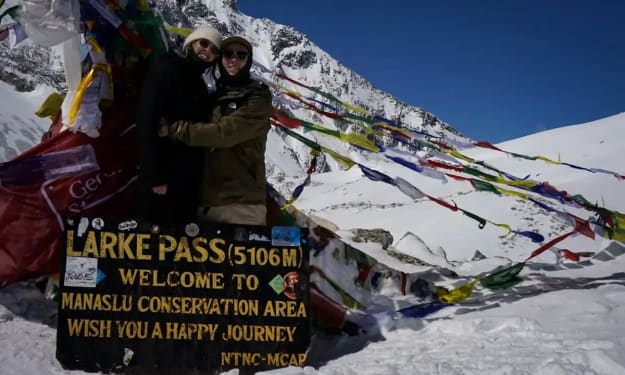
Worried About Time or Fitness? The Short Manaslu Circuit Trek is For You
When I first thought about trekking in Nepal, the full Manaslu Circuit felt too long and too tough. That’s when I learned about the short Manaslu circuit trek. It’s a shorter version of the classic trail, made for people like me who want the mountain views, the culture, and the adventure but without spending three weeks on the trail. Think of it as Manaslu Lite: same flavor, fewer calories on your legs.
By Sofia Jacksonabout a year ago in Wander
Getting Lost in Lisbon: The Magic of Wandering Without a Map
M Mehran The first rule of traveling, they say, is to always know where you’re going. Book your tickets early, plan your itinerary, mark every must-see on the map. But the best memories I’ve made while traveling didn’t come from careful planning. They came from getting lost. I learned that lesson in Lisbon. --- It was my second morning in the city, and I was supposed to meet a group tour near Rossio Square. I had every intention of being punctual, but a wrong turn led me down a narrow street, one of those cobblestoned lanes where laundry hung between pastel-colored buildings and the smell of bread drifted out from hidden bakeries. For a moment, I panicked. My phone battery was low, my Portuguese was nonexistent, and my tour group was probably already gathering without me. But then something shifted. I looked around and realized: this is why I travel. Not to check boxes on a list, but to stumble into streets that make me feel like I’ve stepped into someone else’s story. So I kept walking. --- Lisbon is a city that rewards wanderers. The sidewalks are mosaics of black and white stone, designed centuries ago by artisans who turned even ordinary pavements into works of art. The streets curve and climb unpredictably, each corner revealing something unexpected: a splash of street art, a hidden chapel, a doorway painted the color of saffron. I climbed one hill and found myself at a viewpoint I hadn’t read about in any guidebook. Below me, red-tiled rooftops spilled down toward the Tagus River, and in the distance, the Ponte 25 de Abril bridge arched across the water like a crimson ribbon. An old man stood nearby, strumming a guitar. A small group of locals had gathered to listen. No tour bus could have delivered me here at that exact moment. I felt like the city was letting me in on a secret. --- That day, I wandered for hours. I ducked into a bakery where the woman behind the counter insisted I try a pastel de nata still warm from the oven. I walked through an antique shop cluttered with forgotten treasures: maps with edges frayed, porcelain teacups that once belonged to someone’s grandmother, letters written in looping cursive. I even stumbled upon a tiny bookstore where the owner pressed a translated book of Portuguese poetry into my hands, saying, “For your journey.” By the time I finally checked my phone, the tour had long since ended. But I didn’t feel like I had missed out. Quite the opposite. I felt like I had traveled in the purest sense—immersed in a place, not just moving through it. --- There’s a freedom in traveling without a script. Of course, there are risks: you might get lost, you might waste time, you might never make it to the “must-see” attractions. But sometimes the risk is the reward. When you don’t know what’s coming next, you’re more open to noticing small details: the way sunlight spills across a tiled wall, the laughter of children chasing pigeons in a square, the quiet rhythm of a city going about its ordinary day. Wandering reminds us that travel isn’t only about places. It’s about presence. --- A few days later, I did make it to Rossio Square, this time on purpose. The group tour was fine—informative, organized, filled with postcard-perfect stops. But when the guide paused to give us free time, I slipped away again, choosing instead to follow the echo of fado music down a side street. I ended up in a small bar where a woman sang with such raw emotion that the entire room went silent. I didn’t understand the lyrics, but I understood the feeling—longing, joy, heartbreak, all tangled together. I ordered a glass of vinho verde, let the music wash over me, and thought: this is the Lisbon I will remember. --- Since that trip, I’ve carried the lesson of Lisbon with me wherever I go: leave room for wandering. In Tokyo, it led me to a family-owned noodle shop tucked beneath the train tracks, where the owner treated me like a regular. In Marrakech, it took me through a maze of alleys until I found a rooftop café overlooking the medina, where mint tea tasted sweeter because I hadn’t been looking for it. In Mexico City, it guided me into a courtyard filled with paper lanterns, where strangers invited me to dance. These moments never make it into the travel brochures. But they are the soul of travel. --- Wandering doesn’t mean being careless. It means being open. Open to wrong turns, to unexpected conversations, to the possibility that the best stories begin where the guidebook ends. When I think back on Lisbon now, I don’t remember the names of all the monuments. I remember the guitar music, the taste of that pastry, the kindness of a bookseller, the sound of fado on a quiet evening. I remember how it felt to be lost, and yet completely at home. And maybe that’s the real magic of travel: not just finding new places, but finding new versions of ourselves—ones that are braver, freer, and a little more willing to get lost.
By Muhammad Mehranabout a year ago in Wander
When the Road Became My Teacher
M Mehran Wandering began for me not as a choice, but as an accident. One train missed, one connection lost, and suddenly I was stranded in a town whose name I couldn’t pronounce. I could have panicked. Instead, I walked. That decision changed everything. The streets were narrow, cobblestones uneven under my shoes. A light rain had fallen, and the air smelled of wet earth and fresh bread drifting from a nearby bakery. I had no map, no plan—just time. For the first time in years, time belonged to me and me alone. As I wandered, I realized how much of life I had been rushing through. Normally, I would count the minutes, check my phone, calculate the fastest route. That day, I simply followed where the streets curved. Every turn revealed a surprise: an old fountain cracked with moss, a child chasing pigeons, an artist painting doorways in colors too bright for the gray sky. I stayed in that town until evening. No grand attractions, no famous monuments. Just life, ordinary and extraordinary, unfolding quietly. It was then I understood: to wander is to discover the beauty that doesn’t make it into guidebooks. From that day forward, I gave myself permission to get lost. And the more I wandered, the more the world opened itself. In the mountains, wandering meant surrendering to silence. The trail twisted endlessly upward, each step a negotiation between body and breath. When I finally stopped, lungs burning, I looked out over valleys spilling into infinity. The wind howled through the peaks like a hymn. There was no audience, no applause—only the raw reminder that nature is both vast and intimate, welcoming and humbling. By the sea, wandering meant listening. Waves thundered and retreated, a rhythm older than language. I walked barefoot along the shore until the horizon swallowed the sun. My footprints disappeared with each tide, teaching me that nothing we leave behind is permanent. And yet, the act of walking still mattered. In villages, wandering meant connection. An old man selling tea on a street corner told me his entire life story with just a smile and a handful of gestures. Children ran up to ask me where I came from, their laughter echoing long after they disappeared into alleyways. I learned that kindness travels farther than any currency, and that sometimes, being a stranger is the best way to feel at home. But wandering also taught me discomfort. Nights when the only shelter was a bench under flickering streetlights. Days when blisters throbbed with every step. Mornings when hunger gnawed louder than birdsong. Yet, those moments shaped me as much as the beauty did. Wander long enough, and you realize: the road is not here to serve you comfort. It is here to teach you resilience. One memory lingers most. I was in a remote town, walking aimlessly when I stumbled upon a festival. Lanterns floated into the sky, hundreds of tiny stars joining the night. Strangers handed me food, invited me into their dance. I didn’t know their songs, but I clapped and moved anyway. That night, surrounded by people I couldn’t understand yet somehow belonged to, I felt the essence of wandering: to lose yourself and find yourself at the same time. When I eventually returned home, friends asked me what I had gained. Souvenirs? Photos? Checkmarks on a list? I shook my head. Wandering had given me something subtler: a new way of seeing. Now, even in my own city, I wander. I take detours. I pause to notice the graffiti on a wall, the way shadows bend at dusk, the unexpected smile of a stranger. The world hasn’t changed—but I have. Because wandering isn’t about distance. It’s about presence. It’s about stepping off the straight line of expectations and allowing yourself to zigzag, to drift, to follow the pull of curiosity. It is less about where your feet go and more about what your heart discovers. And so, whenever life feels heavy or predictable, I lace up my shoes and walk—not toward a destination, but toward possibility. The road is still my teacher, reminding me that every step is both a question and an answer. To wander is to live twice: once in the body, and once in the soul.
By Muhammad Mehranabout a year ago in Wander