art
Be it Old Masters or local craftsmen, where there's art, there's travel.
Why is Paris so Popular for Art Lovers
Paris is known as the Art capital of the world, with a rich history and a wide range of arts and movements. The city was home to many artists such as Picasso, Degas, and Monet. Paris has consistently had a standing as a city of human expression because it has the most attractive things to see. Here we take a gander at why it has that standing, and on the off chance that it truly is a city worth visiting for craftsmanship sweethearts. The "city of affection" is one of the most famous puts to visit on The planet. In fact, Guest Posting contends every year, typically with Bangkok, for the main spot. Many individuals who visit the city do as such for its specialty scene, yet would it be that makes Paris so famous for workmanship sweethearts?
By Lakshmi Heaven4 years ago in Wander
Exploring Undiscovered Worlds
Exploring undiscovered worlds: From the jungles of Latin America to the Far East, and Everywhere in Between For many, the thought of embarking on journey across the world, to some of its most remote destinations, is an exciting and intimidating one. From the frigid, snowy expanses of the arctic tundra to the remote terrains of Latin America, exploring undiscovered worlds can be a thrilling, rewarding experience. With the right preparation, guidance, and appreciation for the cultures and landscapes unique to each location, there's no limit to the once-in-a-lifetime experiences awaiting the intrepid traveler.
By Mohammad Hammash4 years ago in Wander
Top 3 Uniquely Japanese Arts
Ikebana, also known as kado or the way of flowers, is a traditional Japanese art form that involves the arrangement of flowers, branches, leaves, and other natural materials in a vase or other container. The practice of ikebana dates back to the 7th century and has evolved over time to include various styles and techniques. Ikebana emphasizes balance and harmony in the arrangement, with each element chosen and placed to create a sense of movement and flow. The basic elements of an ikebana arrangement are the shin (formal or spiritual), the soe (informal or natural), and the hikae (line or accent). Shin is the central element, and it is usually the tallest and most prominent in the arrangement. Soe is the secondary element, and it is usually shorter and more naturalistic. The hikae is the accent, and it is usually smaller and used to add interest or contrast to the arrangement. Ikebana also has various schools of styles, The Sogetsu school, Ikenobo, Ohara, and Misho are some popular styles. Each style has its own techniques and principles, but all share the same goal of creating beauty and harmony through the arrangement of flowers. Ikebana is often associated with Zen Buddhism and is believed to help practitioners achieve a sense of inner peace and tranquility. Many Japanese homes have an ikebana vase or tokonoma (alcove) where seasonal flowers and branches are arranged for display. Ikebana is also a popular form of entertainment, with competitions and demonstrations held regularly throughout Japan and around the world.Sumi-e, also known as ink painting or brush painting, is a traditional Japanese art form that involves the use of black ink and various brushes to create illustrations and calligraphy. Sumi-e paintings often feature landscapes, nature, and other subjects that are inspired by Chinese and Japanese art and culture. The basic techniques of sumi-e involve the use of a brush to apply ink to paper in a controlled and expressive manner. The brushstrokes used in sumi-e are often bold and dramatic, with a focus on capturing the essence of the subject rather than its detailed appearance. One of the key principles of sumi-e is the use of minimalism and simplicity to convey the maximum amount of meaning and emotion. Many sumi-e paintings have a stark and unadorned quality that is meant to reflect the natural and spiritual essence of the subject. Sumi-e is closely related to calligraphy, and the two art forms often share similar tools and techniques. Many sumi-e artists also practice calligraphy and use the same brush and ink to create both written characters and illustrations. The origins of Sumi-e can be traced back to China, but it's believed to have been introduced to Japan in the 7th century by Chinese monks. It evolved in Japan over time and became an important form of expression in the Zen Buddhism. Sumi-e is a meditative and spiritual practice that is believed to help practitioners achieve a sense of inner peace and balance. Sumi-e painting is still practised today by many artists and enthusiasts, both in Japan and around the world.Ukiyo-e is a traditional Japanese art form that involves the use of woodblock prints to create illustrations and artwork. The word "ukiyo-e" literally means "pictures of the floating world," and refers to the urban lifestyle and culture of Edo-period Japan (1603-1868). Ukiyo-e prints were popular among the middle and lower classes of society and often depicted scenes from everyday life, such as actors, courtesans, and landscapes. The artists who created these prints were often considered to be part of the ukiyo, or "floating world," which was a term used to describe the transient and pleasure-seeking aspects of Edo-period culture. The process of creating ukiyo-e prints is complex and requires several steps. First, an artist creates a detailed sketch or painting of the desired image. Next, a professional carver cuts the design into a wooden block, which is then used to print the image onto paper. The block can be used to print multiple copies of the same image, and each print will be slightly different due to the nature of the printing process. Ukiyo-e prints are known for their bold, flat colors and dynamic compositions. Artists often used a limited color palette and bold black lines to create a sense of movement and energy in the image. The technique of using multiple blocks to print different colors is also a characteristic feature of Ukiyo-e prints. Ukiyo-e prints were particularly popular during the Edo period, but the tradition continued even after the Meiji restoration of 1868. However, after the Meiji period, Ukiyo-e went into decline and eventually became a historical art form. Today, Ukiyo-e prints are highly valued by collectors and art enthusiasts around the world, and are considered an important part of Japanese cultural heritage.
By Dipayan Biswas4 years ago in Wander
Kantara
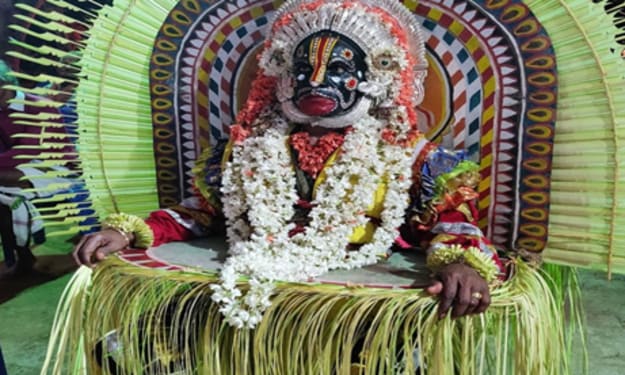
Kantara is a recent movie in 2022, that is nominated for the Oscars and took the cinema fraternity by storm. Kantara means mystic forest. The interior part of Karnataka is filled with such lush and thick forest surrounded by the Western Ghats. But, this article is not about the movie. It is more about the references and traditions around the movie and how this movie has sparked new interest in an age old tradition.
By Sankaran Somasundaram4 years ago in Wander
Discovering Brothels, Bordellos and Burdels
Some years ago I spent a couple of winters in Sicily, living on my boat in the dock at Marina de Ragusa. It’s a wonderful Island with great wine and pizzas to die for. Just up the road is the old city of Ragusa which is a World Heritage Site. There’s plenty of other history too with amazing Roman ruins, at Agrigento for example. Then there’s an active volcano, Mt. Etna if you fancy visiting a boiling crater.
By James Marinero4 years ago in Wander
The Art of Revolution
My introduction to Cuban art was a surprise. The first mate and I were in Havana on a flying three-day visit to Havana having left our boat — our home — in Cayo Largo on Cuba’s south coast. We’d arrived there from Grenada via Bonaire and Jamaica, sailing west then north across the Caribbean Sea, 1300 nautical miles. Even in the air terminal art was everywhere to be seen, and during our month there the art turned up in the most unexpected places.
By James Marinero4 years ago in Wander
Napoli
Napoli is a city in southern Italy, the capital of the region of Campania and the third-largest municipality in Italy. It is located on the west coast of the Italian Peninsula, on the Gulf of Naples, which extends into the Tyrrhenian Sea. Napoli is known for its rich history, art, culture, and cuisine. It is also home to the Royal Palace, the San Carlo Opera House, and the National Archaeological Museum, which houses many ancient Roman artifacts. Napoli is a popular tourist destination, with its beautiful Mediterranean climate, beaches, and breathtaking views of the surrounding hills and islands. Napoli has a long and rich history dating back to the ancient Greeks, who founded the city in the 8th century BC. It was later conquered by the Romans, and became a major port and cultural center during the Roman Empire. In the Middle Ages, Napoli was an independent city-state and one of the most important cultural and economic centers in Europe. It has also been ruled by various foreign powers, including the Normans, the Spanish, and the Austrians. Today, Napoli is a vibrant, cosmopolitan city with a population of over 3 million people. It is known for its rich cultural traditions, including music, art, literature, and food, and is home to many universities and research institutions. The city is also an important economic hub, with a thriving port and a large industrial baseNapoli is known for its rich cultural traditions and its vibrant street life. The city is home to many famous landmarks and attractions, including the Royal Palace, the San Carlo Opera House, and the National Archaeological Museum. The Royal Palace, also known as the Palazzo Reale, is a grand Baroque-style palace that was the residence of the Bourbon kings of Naples. The San Carlo Opera House is one of the oldest and most famous opera houses in Italy, and has hosted performances by many famous opera singers over the years. The National Archaeological Museum is home to a vast collection of ancient Roman artifacts, including mosaics, frescoes, and sculptures.
By Mahendrarajah Mithusharan4 years ago in Wander
Qualities To Consider When Choosing An Event Venue
The most difficult question to answer when planning an event is where to hold it. This is the most important question because it determines many other aspects of history museum event rental planning and organisation. The venue you choose will influence your catering options and the overall experience of your attendees.
By Amit Kumar4 years ago in Wander