fact or fiction
Is it fact or merely fiction? Fact or Fiction explores the myths and beliefs we hold about women's health issues, sexism, gender roles, and the female experience.
The Day of the Viva
M Mehran Arham had always been a good student, but the word viva carried a special kind of fear for him. Written exams, he could handle. Multiple choice? Essays? No problem. But facing a professor across a table, answering questions with nothing but his mind and voice—there was something about it that turned his confidence into quicksand. The night before his final-year viva, he didn’t sleep. He sat at his desk, flipping through notes and highlighting lines that blurred together. Every fact seemed to slip through his memory like water through cupped hands. At three in the morning, he closed his books and whispered to himself: “You either know it, or you don’t. Just survive tomorrow.” --- The Waiting Room The next day, he joined his classmates outside the examination hall. The room buzzed with nervous laughter and whispered recitations. Some students paced back and forth, mumbling definitions. Others sat silently, staring into space as though rehearsing answers in their heads. Arham tried to look calm, but his leg wouldn’t stop shaking. His best friend nudged him. “Relax,” she whispered. “They’re not here to destroy us.” But that wasn’t true. Professors loved the viva because it revealed who had merely memorized and who had truly understood. For students, it felt like stepping into an arena with no shield. One by one, names were called. Students went in, some emerging pale and shaken, others smiling in relief. Arham’s turn crept closer, and with it, the pounding of his heart. --- Facing the Panel Finally, the examiner called: “Arham.” He stood, smoothed his shirt, and walked into the room. Three professors sat behind a table, notebooks open, expressions unreadable. The atmosphere was heavy, the silence stretching just long enough to unnerve him. “Good morning,” he said, his voice thinner than he wanted. “Good morning,” replied the head examiner. She adjusted her glasses and looked straight at him. “Let’s begin.” The first question was easy, almost too easy. Arham answered quickly, his rehearsed lines flowing. He felt a spark of hope—maybe this wouldn’t be so bad. Then came the second question. A twist. Something buried deep in the syllabus that he had skimmed once, weeks ago. His throat went dry. He tried to recall the exact wording from his notes, but the memory slipped. He stammered, piecing together fragments. The professors exchanged glances. “Think carefully,” the examiner said. Arham’s palms sweated. He forced himself to take a breath. Instead of panicking, he spoke honestly: “I don’t remember the exact definition, but here’s how I understand the concept…” He explained it in his own words, connecting it to real-life examples. To his surprise, the examiner nodded. “Better,” she said. “Go on.” --- The Turning Point As the viva continued, Arham realized something important: this wasn’t a firing squad. It was a conversation. The professors weren’t trying to fail him—they wanted to see if he could think. The more he shifted from memorized answers to genuine reasoning, the calmer he became. He leaned into his explanations, using his hands to gesture, his voice steadying. When they challenged him, he pushed back with logic. When he didn’t know something, he admitted it and tried to analyze anyway. Minutes stretched into half an hour. At the end, the head examiner smiled faintly. “Thank you, Arham. That will be all.” He walked out, his knees weak, but this time it wasn’t from fear. It was from relief. --- Aftermath In the hallway, his classmates swarmed him. “What did they ask? Were they strict? Did you answer everything?” Arham shrugged. “They weren’t easy, but… it wasn’t as terrifying as I thought.” Later that week, when the results were posted, he had passed. Not with the highest marks, but with enough to feel proud. --- The Lesson of the Viva Looking back, Arham realized the viva had taught him more than any textbook. It wasn’t about definitions or memorized paragraphs—it was about confidence, adaptability, and honesty. Life itself, he thought, is one long viva. We’re constantly questioned—by circumstances, by challenges, by other people. Rarely do we get to prepare our answers in advance. More often, we’re thrown into situations where we must think on our feet, admit what we don’t know, and reason our way through. The viva had stripped away his crutches and forced him to trust his own mind. And that, he realized, was the real test. --- Closing Thoughts The fear of the viva never disappears completely. Even years later, when Arham sat in job interviews or gave presentations at work, he felt a flicker of that same nervousness. But now, instead of freezing, he remembered that day in the exam hall—the moment he stopped performing and started thinking. And every time he faced a new challenge, he reminded himself: Life keeps asking questions. Your job is not to know everything—it’s to answer with courage.
By Muhammad Mehranabout a year ago in Viva
5 African Superstitions I Grew Up Believing — And What They Really Mean
Growing up in an African household means you don’t just inherit your family name—you inherit their beliefs, taboos, myths, and stories. Some of them are heartwarming. Others are downright terrifying. But one thing is for sure: they shape the way you see the world.
By Abdushakur Mrishoabout a year ago in Viva
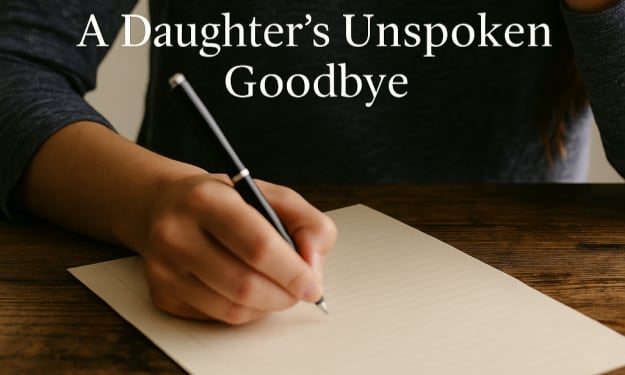
The Letter I Never Sent: A Daughter’s Unspoken Goodbye
Chapter 1: The Quiet Phone Calls It started with short phone calls. My mom’s voice, once so full of energy, sounded tired. She told me not to worry, that she just had the flu. But deep down, I felt something was wrong. I lived in a different city for college, and every time I offered to come home, she insisted I stay and focus on my studies.
By Waqar Khanabout a year ago in Viva
Is Beauty Realistic? – How Different Cultures Rate Beauty
Learn about the most important standards of beauty throughout history and across cultures. However, we can say that beauty standards vary according to the era. There are also some factors and requirements that greatly influence people's concepts regarding the ability to determine the characteristics of beauty and ugliness. Among the most important and prominent beauty requirements that have become common recently are long, soft hair, a well-proportioned body, and perfect teeth.
By Uchenna Cosmas Nwokafor about a year ago in Viva
become a better person. Content Warning.
Become a Better Person I chose this title not because I'm wise, but because that's what I'm trying to do right now: become the best version of myself-even though the road... well, it's winding and there are many traps.
By Rehany Rettya Putryabout a year ago in Viva