fact or fiction
Is it fact or merely fiction? Fact or Fiction explores the myths and beliefs we hold about women's health issues, sexism, gender roles, and the female experience.
Applying Piaget to Women Reinventing themselves
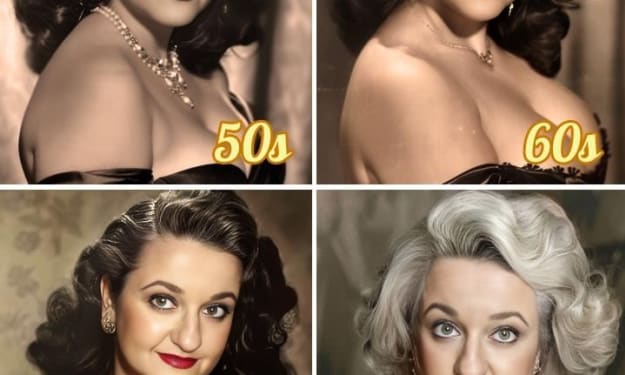
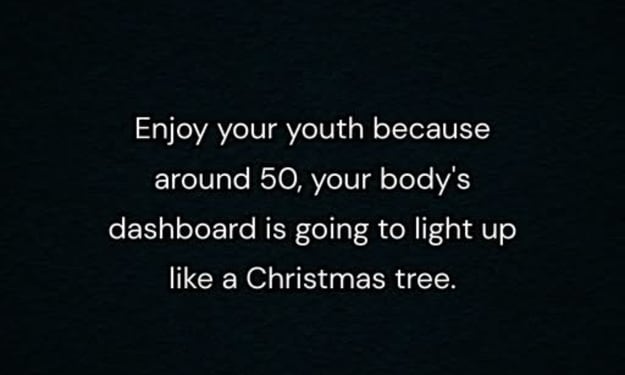
Have you ever heard of your favorite star (actress, singer, or something else) talk about how they got to a point in their lives where they had to "reinvent themselves"? I read articles (starstruck long ago) about some of my idols mentioning that phase or stage of their lives. I think it's very Piaget in thought or psychological consideration. Stages. Certain time periods of our lives. The childhood is different from the teenage years. The young adult life is different from the new mom and dad years. The empty nest or divorce years are different from the married grandma and grandpa years... Etcetera. For me personally, the past eight years have been challenging me in the harshest aspects of aging to "reinvent myself" --- and let me tell you --- for a stubborn 50-something woman like me who finds change uncomfortable, this "stage" or "phase" of my life and aging process has been utter drudgery.
By Shanon Angermeyer Norman11 months ago in Viva
Finding your groove in the 50s
How come we don't have a show on television called 50-somethings? There are plenty of shows with the kiddies as stars, or the teens as stars, or the 20 and 30-somethings as stars. They even have movies and shows for the silver haired folks in their 60s and up club. What about the 50-somethings? Where's our movie or show? When I was younger I had all kinds of guidance. The Breakfast Club helped me through high school. Sex in the City helped me through my 20s. Comic books and movies helped me through the 30s and 40s. Now what? Whose representing the 50-somethings journey and pathways? I feel like I have no guidance. In a way, I like that. I'm too old to be listening to a drill sergeant or condescended to as if I haven't been around the block. Yet, there's still a piece of me that is uneasy and insecure about navigating on this new territory commonly called "over the hill" or "after the change". Big changes, big accomplishments, yet not much art or literature for guidance or reference as if the 50-somethings are in unfamiliar living situations. I trust my own instincts and judgements most of the time, but I do feel a discomfort of not having more movies and books to use as a reference for this phase/chapter of my aging experience.
By Shanon Angermeyer Norman11 months ago in Viva
Grumpy Old Lady Angry at the Economy
I'm frustrated as hell today. Grumpy and snarky. I didn't have to fight the cat to get to the coffee machine, but I couldn't find a pair of pants quick enough, and when I organized the coffee station yesterday I forgot where the filters were. By the time I sat down with my coffee I was already grumpy. The other day my ex-husband/current roommate stood at the coffee station (that cost $400 and I'm making monthly payments on) as if he owned it (because he's a bully who is three times bigger than me and he knows niether of us want to go to jail) and forced me to ask him if I could get myself a cup of coffee (because he was in my f'n way) so I did while I shot him daggers from my eyes and poured the hot coffee into my cup when I really wanted to smash the glass pot against his skull. Whoever said I'm not a good actress, lied. He gets his jollies off by demeaning me with that passive-aggressive behavior. Does it in regards to the toilet also which is why I sometimes have to leak or poo in my own personal bucket toilet.
By Shanon Angermeyer Norman12 months ago in Viva
Eldery people visit profound places
I found this meme today scrolling on Facebook. It was the most profound one I read and decided to write a poem and an article featuring this. Where do you think the elderly or the poor hang out? Some roach infested ghetto apartment or a sparkling clean dazzling condo overlooking the ocean? Both? Some elite gated nursing home featured on Lifestyles of the Rich and Famous or some decaying old building with overworked and underpaid nurses calling it an Assisted Living Facility? A tent in the backyard where Granny fights the dog or the cat to call it "her" tent? A car that's over 20 years old and needs a new transmission and has no air conditioning or heater, but still lets Grandpa take a nap in the Walmart parking lot? Some old dusty hall where they gave the old homeless bum a free pack so he could play Bingo and try his luck? Yeah, I'm sure you can find the elderly at all of the above, but I think the meme is directly referring to places where the elderly have been much more than those younger folks. Typically, young people (child age to say around 30 somethings) are not typically hanging out at the hospital, the prison, or the cemetary unless they are employed there.
By Shanon Angermeyer Norman12 months ago in Viva
Body Image in Aging
As I mentioned in my previous article, my focus is on the topic of aging especially regarding women so I'm thinking about old ladies which is what I consider myself since I am "over the hill" (over 50 years of age). Though wise men will say that we ought not compare ourselves to others as it is a source of emotional havoc, I notice that sitting in front of a television or computer screen in a female aging body is a source of loneliness and restlessness. Though I may be wise like those men or other notable wise women in the famous stories, I see daily that comparisons are often made (intentionally or not) almost as if it is impossible to get through the day without doing so. Scroll on Facebook because you're bored and see a joke about sagging breasts. Lots of laughs but would it be funny without comparison? If we didn't have plastic boobs or 15 year old boobs to look at, would the saggy drooping old lady boobs be funny? I'll try not to compare us to animals, but when I get in a serious mood I tend to compare human behavior to the animals and the animals seem to be more civilized. Maybe I shouldn't have said that. Maybe that was as cruel as laughing at your grandmother's breasts. Did you laugh at the porn stars breasts the same way? Oh right, it isn't wise to compare. What? The laughs or the breasts?
By Shanon Angermeyer Norman12 months ago in Viva
Using Viva for My Magazine Ideas
"What it means to be a woman. Viva explores the lives of women, from the workplace to home, family, adventure, ambition, and more." That is the description provided by Vocal for the "Viva" community. I haven't submitted much (if any) to this community although I am a woman who does much "work" at home often thinking about family, adventure, ambitions, and other things. I noticed that in numbers (statistical reports of members and articles) this community is on the low side. So I've decided to FOCUS on this community and narrow my subject matter in my articles to fit this community. I was ambitious enough to want to start an online magazine and call it "Over the Hill" or "Poor People" or "Lonely Old Ladies" but I think this community is sufficient for my writing desires on these subjects.
By Shanon Angermeyer Norman12 months ago in Viva
The Unseen Viva
M Mehran Sana had always been the kind of student who hid at the back of the classroom, scribbling notes furiously, afraid to raise her hand. She excelled in written exams but dreaded speaking. Words, when written, obeyed her. Words, when spoken, betrayed her. So when the announcement came that her degree would end with a viva voce, she felt her stomach drop. An oral examination—standing alone before a panel, answering questions in real time—was her greatest nightmare. --- The Night Before The night before her viva, Sana barely slept. She stared at her thesis spread across the desk, highlighted and dog-eared. She whispered definitions under her breath, rehearsed explanations in the mirror, but every time she imagined facing the professors, her voice cracked. At 3 a.m., she closed her notes and whispered, “If I fail, at least I’ll know I tried.” But deep down, she wondered if trying would ever be enough. --- Walking In The next morning, the corridor outside the examination room buzzed with nervous energy. Her classmates paced, flipping through last-minute notes. Sana sat silently, her palms damp, her heart hammering. When her name was called, she felt the world tilt. She stood, legs trembling, and walked into the room. Three professors sat behind a long table, her thesis placed in the center like evidence in a trial. “Good morning, Miss Sana,” one said, adjusting his glasses. “Shall we begin?” --- The First Question The first question was simple enough: “What motivated you to pursue this research?” Sana’s lips trembled as she spoke. “I wanted to understand how small changes in community education programs could… could transform literacy rates.” Her voice wavered, but the words came. The professors nodded. Encouraged, she exhaled slowly, gripping the edge of the chair. Then came the harder ones. --- Cracks in the Armor “Can you explain why you chose this methodology?” She stumbled, trying to recall her notes. Her throat tightened. The silence in the room grew heavier. Another professor leaned forward. “What limitations do you see in your findings?” Her mind went blank. For a horrifying moment, she thought she might faint. She wanted to disappear into the floor, to run from the room and never return. But then, she remembered something her grandmother used to tell her: “When you can’t find courage, borrow your honesty.” So she took a breath and said, “The biggest limitation was me. I was nervous about whether my methods were strong enough. But I learned from those mistakes and corrected them as I went.” The panel didn’t frown. In fact, one professor smiled. --- The Turning Point As the questions continued, something shifted. The more Sana spoke honestly, the steadier her voice became. She stopped trying to be perfect and started explaining like she would to a friend. When they asked about the future scope of her work, she lit up. She spoke passionately about how her findings could help design better literacy programs for rural schools. She forgot her fear. She forgot herself. She spoke only about the work she loved. By the end, her voice was no longer trembling—it was alive. --- The Verdict “Thank you, Miss Sana,” the chair said at last. “Please wait outside while we discuss.” The corridor was suffocating. Every second stretched like an hour. She clasped her hands tightly, whispering prayers. Finally, the door opened. One professor stepped out, smiling warmly. “Congratulations. You’ve passed.” Sana blinked, stunned. Her chest filled with a rush of relief so powerful that tears sprang to her eyes. For the first time, she realized she hadn’t just passed an exam—she had passed a barrier inside herself. --- Beyond the Viva That day, Sana learned the viva was not simply a test of knowledge. It was a test of presence, of courage, of owning your voice even when it shakes. And she realized something else, too: life itself is full of vivas. Job interviews. First dates. Difficult conversations. Every moment we’re called to speak our truth is its own oral examination. The questions may change, but the challenge is the same—to stand tall, to be honest, and to let our voice carry who we really are. --- Final Thought The viva is more than an academic ritual. It is a rite of passage that strips away rehearsed answers and demands authenticity. Sana walked in terrified, but she walked out transformed—not because she knew everything, but because she finally believed in herself. And maybe that’s the real lesson of every viva: the answers matter, but the voice matters more.
By Muhammad Mehranabout a year ago in Viva
The Viva That Changed Everything
M Mehran he exam hall smelled of polished wood, nervous sweat, and the faint trace of chalk dust. For weeks, Ayesha Khan had buried herself in textbooks, notes, and past papers, yet now, sitting in the stiff wooden chair, she felt the familiar grip of panic squeezing her chest. Today was the day of her final viva, the oral exam that could determine whether she graduated at the top of her class or stumbled into mediocrity. Ayesha wasn’t just nervous—she was terrified. Oral exams were different. Written tests could be revised, errors erased. A viva demanded presence, confidence, and instant answers. No hiding behind paper, no correcting mistakes silently. Every word, every pause, every nervous glance mattered. As she waited, she watched the others. Some sat with calm smiles, flipping through their notes as if they owned the room. Others tapped pens nervously, whispered reassurances to themselves. Ayesha drew a deep breath, trying to calm the storm inside. She reminded herself: knowledge was one thing; confidence was another. Today, she had to master both. When her name was called, her legs trembled as she stepped forward. The examiners, three professors known for their stern reputations, nodded politely but gave no indication of warmth. The first question hit like a sudden gust of wind: “Explain the significance of your thesis in the context of current research.” Ayesha’s mind raced. She had memorized definitions, formulas, case studies—but putting it all together, articulating it clearly under scrutiny, was another matter. She swallowed hard, forced herself to speak: “My research examines the impact of renewable energy adoption in urban environments, highlighting both economic and environmental benefits. In the context of current studies, it bridges the gap between theoretical models and practical implementation strategies, offering actionable insights for policymakers.” Silence followed. Then, the second examiner leaned forward. “Can you justify your methodology? Why did you choose these specific parameters?” Ayesha felt the sweat on her palms. She repeated the rehearsed explanation, but halfway through, the words stumbled. She faltered, and for a moment, panic threatened to overtake her. She wanted to apologize, to start over—but then she remembered something her mentor had told her: “A viva is not about perfection. It’s about clarity and honesty. If you don’t know, explain your reasoning.” Taking a steadying breath, she adjusted her tone. “While these parameters may seem limited, they were selected to isolate variables that could most accurately reflect urban energy consumption. I considered alternatives, but constraints in data availability guided this choice. Here, I discuss potential limitations and how future research could address them…” She paused, scanning the faces of the professors. Something shifted. Instead of stern judgment, she saw curiosity. The questions became less about trapping her and more about discussion. Slowly, she realized the viva wasn’t an enemy—it was a conversation, an opportunity to share what she had learned. As the exam continued, Ayesha found her rhythm. When a particularly tricky question on statistical modeling arose, she paused, smiled faintly, and walked the examiners through her reasoning, step by step. She admitted where assumptions were made, where results might vary. By the end, the room felt less like a battlefield and more like a workshop, each question a tool to refine her ideas rather than a weapon to expose flaws. When the viva finally concluded, the examiners nodded, scribbled a few notes, and dismissed her with a polite, “Thank you.” She stepped out into the hallway, heart still racing, palms still damp—but a smile was slowly spreading across her face. She had survived. More than that, she had learned something invaluable: the viva was never just a test of knowledge—it was a test of courage, composure, and the ability to communicate under pressure. Weeks later, when the results were announced, Ayesha saw her name at the top of the list. She had not only passed; she had excelled. But even beyond the grades, the viva had changed something in her. She no longer feared speaking up in class, presenting ideas, or defending her research. She had faced the ultimate challenge of her academic journey and emerged stronger, more confident, and ready for the next stage of her life. The experience taught her a universal lesson: life, much like a viva, is unpredictable and demanding. It will ask questions we aren’t always prepared for. It will test our patience, our knowledge, and our resolve. But courage doesn’t mean having all the answers—it means facing uncertainty, reasoning clearly, and trusting in one’s preparation and judgment. And so, the viva, a moment that had once seemed terrifying, became a turning point. Ayesha walked away not just with a grade, but with a story of resilience, a story that reminded her—and everyone who hears it—that true success is as much about composure under pressure as it is about what you know. For anyone sitting in a chair, waiting for their name to be called, the lesson is clear: breathe, think, and speak with honesty. Because the viva, like life itself, rewards those who face it bravely.
By Muhammad Mehranabout a year ago in Viva
The Day of the Viva
M Mehran Arham had always been a good student, but the word viva carried a special kind of fear for him. Written exams, he could handle. Multiple choice? Essays? No problem. But facing a professor across a table, answering questions with nothing but his mind and voice—there was something about it that turned his confidence into quicksand. The night before his final-year viva, he didn’t sleep. He sat at his desk, flipping through notes and highlighting lines that blurred together. Every fact seemed to slip through his memory like water through cupped hands. At three in the morning, he closed his books and whispered to himself: “You either know it, or you don’t. Just survive tomorrow.” --- The Waiting Room The next day, he joined his classmates outside the examination hall. The room buzzed with nervous laughter and whispered recitations. Some students paced back and forth, mumbling definitions. Others sat silently, staring into space as though rehearsing answers in their heads. Arham tried to look calm, but his leg wouldn’t stop shaking. His best friend nudged him. “Relax,” she whispered. “They’re not here to destroy us.” But that wasn’t true. Professors loved the viva because it revealed who had merely memorized and who had truly understood. For students, it felt like stepping into an arena with no shield. One by one, names were called. Students went in, some emerging pale and shaken, others smiling in relief. Arham’s turn crept closer, and with it, the pounding of his heart. --- Facing the Panel Finally, the examiner called: “Arham.” He stood, smoothed his shirt, and walked into the room. Three professors sat behind a table, notebooks open, expressions unreadable. The atmosphere was heavy, the silence stretching just long enough to unnerve him. “Good morning,” he said, his voice thinner than he wanted. “Good morning,” replied the head examiner. She adjusted her glasses and looked straight at him. “Let’s begin.” The first question was easy, almost too easy. Arham answered quickly, his rehearsed lines flowing. He felt a spark of hope—maybe this wouldn’t be so bad. Then came the second question. A twist. Something buried deep in the syllabus that he had skimmed once, weeks ago. His throat went dry. He tried to recall the exact wording from his notes, but the memory slipped. He stammered, piecing together fragments. The professors exchanged glances. “Think carefully,” the examiner said. Arham’s palms sweated. He forced himself to take a breath. Instead of panicking, he spoke honestly: “I don’t remember the exact definition, but here’s how I understand the concept…” He explained it in his own words, connecting it to real-life examples. To his surprise, the examiner nodded. “Better,” she said. “Go on.” --- The Turning Point As the viva continued, Arham realized something important: this wasn’t a firing squad. It was a conversation. The professors weren’t trying to fail him—they wanted to see if he could think. The more he shifted from memorized answers to genuine reasoning, the calmer he became. He leaned into his explanations, using his hands to gesture, his voice steadying. When they challenged him, he pushed back with logic. When he didn’t know something, he admitted it and tried to analyze anyway. Minutes stretched into half an hour. At the end, the head examiner smiled faintly. “Thank you, Arham. That will be all.” He walked out, his knees weak, but this time it wasn’t from fear. It was from relief. --- Aftermath In the hallway, his classmates swarmed him. “What did they ask? Were they strict? Did you answer everything?” Arham shrugged. “They weren’t easy, but… it wasn’t as terrifying as I thought.” Later that week, when the results were posted, he had passed. Not with the highest marks, but with enough to feel proud. --- The Lesson of the Viva Looking back, Arham realized the viva had taught him more than any textbook. It wasn’t about definitions or memorized paragraphs—it was about confidence, adaptability, and honesty. Life itself, he thought, is one long viva. We’re constantly questioned—by circumstances, by challenges, by other people. Rarely do we get to prepare our answers in advance. More often, we’re thrown into situations where we must think on our feet, admit what we don’t know, and reason our way through. The viva had stripped away his crutches and forced him to trust his own mind. And that, he realized, was the real test. --- Closing Thoughts The fear of the viva never disappears completely. Even years later, when Arham sat in job interviews or gave presentations at work, he felt a flicker of that same nervousness. But now, instead of freezing, he remembered that day in the exam hall—the moment he stopped performing and started thinking. And every time he faced a new challenge, he reminded himself: Life keeps asking questions. Your job is not to know everything—it’s to answer with courage.
By Muhammad Mehranabout a year ago in Viva