art
All about women in the art world; famous female artists and subjects, and artwork with a feminist perspective.
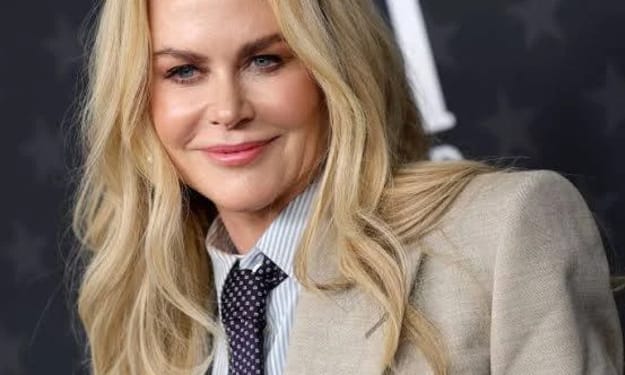
Nicole Kidman: The Shining Star of Hollywood
Nicole Kidman: The Shining Star of Hollywood *Nicole Kidman's Early Life* Nicole Kidman was born on June 20, 1967, in Honolulu, Hawaii, USA. Her mother, Janet Marie, was a nursing instructor, and her father, Anthony David Kidman, was a clinical psychologist and biochemist. Nicole grew up in a middle-class family and moved to Sydney, Australia with her family when she was four years old. *Nicole Kidman's Education* Nicole attended North Sydney Girls' High School and then enrolled in the Australian Theatre for Young People. She began her acting career at a young age, appearing in several commercials and short films. *The Beginning of Nicole Kidman's Acting Career* Nicole Kidman started her acting career in the 1980s, appearing in films such as "Bush Christmas" and "BMX Bandits". However, she didn't land a leading role until 1989 in the film "Dead Calm", which she starred in alongside Sam Neill.
By America today about a year ago in Viva
The Viva That Changed Everything
M Mehran he exam hall smelled of polished wood, nervous sweat, and the faint trace of chalk dust. For weeks, Ayesha Khan had buried herself in textbooks, notes, and past papers, yet now, sitting in the stiff wooden chair, she felt the familiar grip of panic squeezing her chest. Today was the day of her final viva, the oral exam that could determine whether she graduated at the top of her class or stumbled into mediocrity. Ayesha wasn’t just nervous—she was terrified. Oral exams were different. Written tests could be revised, errors erased. A viva demanded presence, confidence, and instant answers. No hiding behind paper, no correcting mistakes silently. Every word, every pause, every nervous glance mattered. As she waited, she watched the others. Some sat with calm smiles, flipping through their notes as if they owned the room. Others tapped pens nervously, whispered reassurances to themselves. Ayesha drew a deep breath, trying to calm the storm inside. She reminded herself: knowledge was one thing; confidence was another. Today, she had to master both. When her name was called, her legs trembled as she stepped forward. The examiners, three professors known for their stern reputations, nodded politely but gave no indication of warmth. The first question hit like a sudden gust of wind: “Explain the significance of your thesis in the context of current research.” Ayesha’s mind raced. She had memorized definitions, formulas, case studies—but putting it all together, articulating it clearly under scrutiny, was another matter. She swallowed hard, forced herself to speak: “My research examines the impact of renewable energy adoption in urban environments, highlighting both economic and environmental benefits. In the context of current studies, it bridges the gap between theoretical models and practical implementation strategies, offering actionable insights for policymakers.” Silence followed. Then, the second examiner leaned forward. “Can you justify your methodology? Why did you choose these specific parameters?” Ayesha felt the sweat on her palms. She repeated the rehearsed explanation, but halfway through, the words stumbled. She faltered, and for a moment, panic threatened to overtake her. She wanted to apologize, to start over—but then she remembered something her mentor had told her: “A viva is not about perfection. It’s about clarity and honesty. If you don’t know, explain your reasoning.” Taking a steadying breath, she adjusted her tone. “While these parameters may seem limited, they were selected to isolate variables that could most accurately reflect urban energy consumption. I considered alternatives, but constraints in data availability guided this choice. Here, I discuss potential limitations and how future research could address them…” She paused, scanning the faces of the professors. Something shifted. Instead of stern judgment, she saw curiosity. The questions became less about trapping her and more about discussion. Slowly, she realized the viva wasn’t an enemy—it was a conversation, an opportunity to share what she had learned. As the exam continued, Ayesha found her rhythm. When a particularly tricky question on statistical modeling arose, she paused, smiled faintly, and walked the examiners through her reasoning, step by step. She admitted where assumptions were made, where results might vary. By the end, the room felt less like a battlefield and more like a workshop, each question a tool to refine her ideas rather than a weapon to expose flaws. When the viva finally concluded, the examiners nodded, scribbled a few notes, and dismissed her with a polite, “Thank you.” She stepped out into the hallway, heart still racing, palms still damp—but a smile was slowly spreading across her face. She had survived. More than that, she had learned something invaluable: the viva was never just a test of knowledge—it was a test of courage, composure, and the ability to communicate under pressure. Weeks later, when the results were announced, Ayesha saw her name at the top of the list. She had not only passed; she had excelled. But even beyond the grades, the viva had changed something in her. She no longer feared speaking up in class, presenting ideas, or defending her research. She had faced the ultimate challenge of her academic journey and emerged stronger, more confident, and ready for the next stage of her life. The experience taught her a universal lesson: life, much like a viva, is unpredictable and demanding. It will ask questions we aren’t always prepared for. It will test our patience, our knowledge, and our resolve. But courage doesn’t mean having all the answers—it means facing uncertainty, reasoning clearly, and trusting in one’s preparation and judgment. And so, the viva, a moment that had once seemed terrifying, became a turning point. Ayesha walked away not just with a grade, but with a story of resilience, a story that reminded her—and everyone who hears it—that true success is as much about composure under pressure as it is about what you know. For anyone sitting in a chair, waiting for their name to be called, the lesson is clear: breathe, think, and speak with honesty. Because the viva, like life itself, rewards those who face it bravely.
By Muhammad Mehranabout a year ago in Viva
The Day of the Viva
M Mehran Arham had always been a good student, but the word viva carried a special kind of fear for him. Written exams, he could handle. Multiple choice? Essays? No problem. But facing a professor across a table, answering questions with nothing but his mind and voice—there was something about it that turned his confidence into quicksand. The night before his final-year viva, he didn’t sleep. He sat at his desk, flipping through notes and highlighting lines that blurred together. Every fact seemed to slip through his memory like water through cupped hands. At three in the morning, he closed his books and whispered to himself: “You either know it, or you don’t. Just survive tomorrow.” --- The Waiting Room The next day, he joined his classmates outside the examination hall. The room buzzed with nervous laughter and whispered recitations. Some students paced back and forth, mumbling definitions. Others sat silently, staring into space as though rehearsing answers in their heads. Arham tried to look calm, but his leg wouldn’t stop shaking. His best friend nudged him. “Relax,” she whispered. “They’re not here to destroy us.” But that wasn’t true. Professors loved the viva because it revealed who had merely memorized and who had truly understood. For students, it felt like stepping into an arena with no shield. One by one, names were called. Students went in, some emerging pale and shaken, others smiling in relief. Arham’s turn crept closer, and with it, the pounding of his heart. --- Facing the Panel Finally, the examiner called: “Arham.” He stood, smoothed his shirt, and walked into the room. Three professors sat behind a table, notebooks open, expressions unreadable. The atmosphere was heavy, the silence stretching just long enough to unnerve him. “Good morning,” he said, his voice thinner than he wanted. “Good morning,” replied the head examiner. She adjusted her glasses and looked straight at him. “Let’s begin.” The first question was easy, almost too easy. Arham answered quickly, his rehearsed lines flowing. He felt a spark of hope—maybe this wouldn’t be so bad. Then came the second question. A twist. Something buried deep in the syllabus that he had skimmed once, weeks ago. His throat went dry. He tried to recall the exact wording from his notes, but the memory slipped. He stammered, piecing together fragments. The professors exchanged glances. “Think carefully,” the examiner said. Arham’s palms sweated. He forced himself to take a breath. Instead of panicking, he spoke honestly: “I don’t remember the exact definition, but here’s how I understand the concept…” He explained it in his own words, connecting it to real-life examples. To his surprise, the examiner nodded. “Better,” she said. “Go on.” --- The Turning Point As the viva continued, Arham realized something important: this wasn’t a firing squad. It was a conversation. The professors weren’t trying to fail him—they wanted to see if he could think. The more he shifted from memorized answers to genuine reasoning, the calmer he became. He leaned into his explanations, using his hands to gesture, his voice steadying. When they challenged him, he pushed back with logic. When he didn’t know something, he admitted it and tried to analyze anyway. Minutes stretched into half an hour. At the end, the head examiner smiled faintly. “Thank you, Arham. That will be all.” He walked out, his knees weak, but this time it wasn’t from fear. It was from relief. --- Aftermath In the hallway, his classmates swarmed him. “What did they ask? Were they strict? Did you answer everything?” Arham shrugged. “They weren’t easy, but… it wasn’t as terrifying as I thought.” Later that week, when the results were posted, he had passed. Not with the highest marks, but with enough to feel proud. --- The Lesson of the Viva Looking back, Arham realized the viva had taught him more than any textbook. It wasn’t about definitions or memorized paragraphs—it was about confidence, adaptability, and honesty. Life itself, he thought, is one long viva. We’re constantly questioned—by circumstances, by challenges, by other people. Rarely do we get to prepare our answers in advance. More often, we’re thrown into situations where we must think on our feet, admit what we don’t know, and reason our way through. The viva had stripped away his crutches and forced him to trust his own mind. And that, he realized, was the real test. --- Closing Thoughts The fear of the viva never disappears completely. Even years later, when Arham sat in job interviews or gave presentations at work, he felt a flicker of that same nervousness. But now, instead of freezing, he remembered that day in the exam hall—the moment he stopped performing and started thinking. And every time he faced a new challenge, he reminded himself: Life keeps asking questions. Your job is not to know everything—it’s to answer with courage.
By Muhammad Mehranabout a year ago in Viva
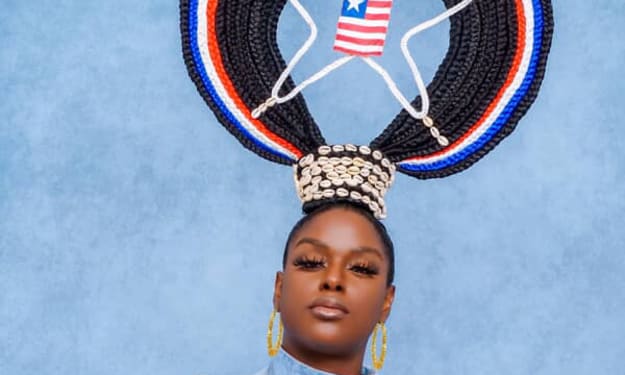
Braids, Pride & Power: How Joetta Dugbo’s Independence Day Hairstyle Went Viral and Honored Liberia’s Legacy
In the world of creative expression, few can braid culture, art, and identity into a single vision the way Joetta Dugbo , known widely as Queen Jo, can. A self-taught hairstylist, fashion design graduate, body art visionary, and rising podcaster, Queen Jo wears many crowns. But this past July 26, she added another jewel to her collection with a bold and symbolic hairstyle that went viral across social media in celebration of Liberia’s Independence Day.
By NWO SPARROWabout a year ago in Viva
5 African Superstitions I Grew Up Believing — And What They Really Mean
Growing up in an African household means you don’t just inherit your family name—you inherit their beliefs, taboos, myths, and stories. Some of them are heartwarming. Others are downright terrifying. But one thing is for sure: they shape the way you see the world.
By Abdushakur Mrishoabout a year ago in Viva
Let's Burlesque Podcast
Burlesque is an art form that has been around for nearly 200 years. Although its popularity has wavered in recent generations, it still thrives throughout the U.S. One person actively working with reviving Burlesque is podcaster, burlesque dancer, Instructor, Cosmetologist, and Trichologist Megan Bay.
By Frank Racioppiabout a year ago in Viva
Is Beauty Realistic? – How Different Cultures Rate Beauty
Learn about the most important standards of beauty throughout history and across cultures. However, we can say that beauty standards vary according to the era. There are also some factors and requirements that greatly influence people's concepts regarding the ability to determine the characteristics of beauty and ugliness. Among the most important and prominent beauty requirements that have become common recently are long, soft hair, a well-proportioned body, and perfect teeth.
By Uchenna Cosmas Nwokafor about a year ago in Viva