
He Was a God in College. The NBA Buried Him on the Bench.
Tyler Hansbrough broke every record at North Carolina. Then he met the one thing work cannot fix: the tenths of a second.
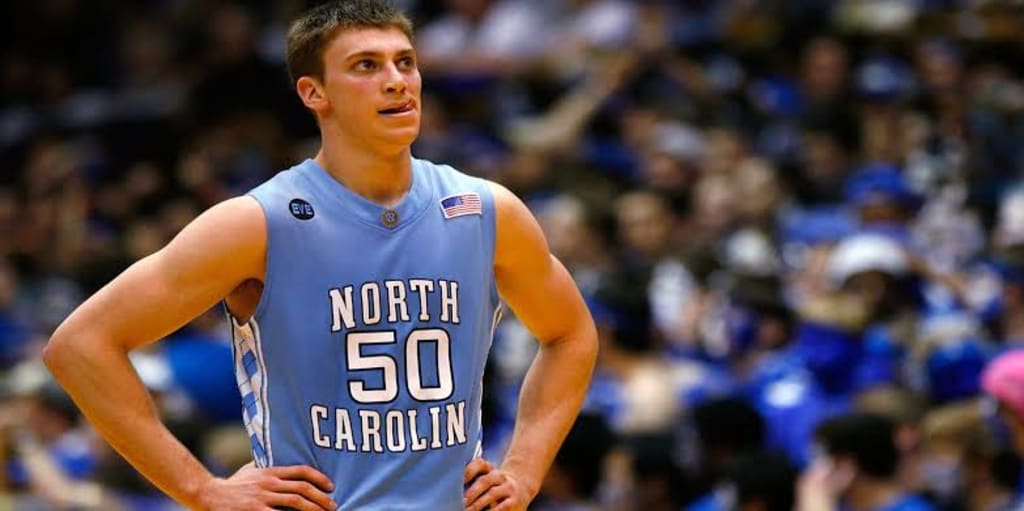
Tyler Hansbrough was a god at North Carolina.
The record book bent around him. He arrived as a McDonald’s All-American, a Jordan Brand Classic MVP, a player who had already broken the Nike camp scoring record. As a freshman, he started, led the team in scoring, and broke the ACC freshman single-game scoring record. As a junior, he broke the ACC junior total points record and North Carolina’s career free throws made record. As a senior, he broke North Carolina’s career scoring record and the NCAA career free throws made record. He was the first ACC freshman ever to make first-team All-ACC. He was the only player in NCAA history to be a consensus first-team All-American four times. He was National Player of the Year. He won the John Wooden Award.
Then the NBA happened.
Seven seasons. Three teams. Fifty starts. 6.7 points, 4.2 rebounds in the regular season. In the playoffs, 4.4 and 3.1. Not a good role player. A fringe piece. A body at the end of the bench.
He was not lazy. Frank Vogel, who coached him in Indiana, said, “No one in this league works harder than this kid.”
The problem was the tenths.
The Tenths
Hansbrough was 6'9", around 250 pounds, with a 6'11.5" wingspan. Dennis Rodman was 6'7" with a 7'2" wingspan. The second jump mattered more than the six centimeters of arm. That gap separated a seven-year fringe player from a seven-time rebounding champion.
Every 0.1-second improvement in repeated-jump ability can raise rebound success by as much as 19 percent. Hansbrough lacked those tenths. In college, he could outwork and outmuscle everyone. In the NBA, the ball was already gone before he could get back up. Those tenths separate amateur from professional. They separate a role player from a star. They cannot be trained. The nerve fires when it fires. The tendon snaps back when it snaps back. You are born with it or you are not.
He killed college basketball because he matured early. He was a finished stone while the others were rough jade. For four years, he was the most polished player on the floor. When the jade was cut and polished, he faded.
Rodman and Hanamichi
Rodman’s secret was the repeated tap. He trained to touch the rim fifty times in thirty seconds. Try it. Once. Do not make it a habit. It will grind your knees and ankles to powder unless your vastus lateralis, gastrocnemius, and hamstrings were built thick and tough from birth.
In Slam Dunk, Takehiko Inoue drew Hanamichi Sakuragi’s thighs and calves with care. Hanamichi was tall for his age, strong beyond his peers, and he could jump again and again, grab the ball, land, and sprint the other way. His handle was raw. His shot was a prayer. His body was a professional instrument. Technique can be learned. Talent cannot.
Shaq
Shaquille O’Neal was a stack of gifts. 7'1", 325 pounds, bench press around 435 pounds. Height, mass, strength. His running vertical was 35 to 36 inches, barely above the NBA average of 34. Put it together with a 0.18-second second jump and a reported 11.2-second 100 meters. A center’s body with a guard’s bounce and speed. Big men are not supposed to move like that. He did. Add unusual agility and a high basketball IQ. He sat in the paint and made the game unplayable.
The NBA introduced defensive three seconds in 2001–02. The rule was written for the problem he represented, though not for him alone. If the opponent cannot push you out of the paint, the rule will.
If your opponent jumps higher and hangs longer, your up-and-under is decoration. Hansbrough was stuck there. His college post game, his pump fake, his strength, his motor, none of it had room. The NBA is a flying league. He played on the ground.
Kyrie
Kyrie Irving is 6'2", with a 6'4" wingspan. His speed and vertical are good, not freakish. His strength is measurable: a 160-kilogram deadlift, 13 reps at 85 kilograms on the bench. With his flexibility, he can drive into a defender, absorb contact, and finish with balance. His body is not top-tier by NBA standards. He and his team knew it. Before the draft, he skipped the dynamic athletic testing.
He is elite because basketball has a ball.
Running fast means nothing if the ball hits your foot. The game is human plus ball. Kyrie’s handle is historical. The ball is exposed for only 0.25 seconds when he dribbles. A human blink takes about 0.3 seconds. NBA players count in tenths. His gift is neural: touch, coordination, rhythm, core strength, air balance. It is harder to see than a vertical jump. It is just as rare. It cannot be trained into existence either.
The Table
Hard talent sets the ceiling. Skill, IQ, fit, era, and health decide how close you get. Effort gets you to the table. Talent decides which table. Fit decides how long you eat.
Hansbrough was the version answer in college. In the NBA, he was a version mismatch. He did not stop being a god. The sky changed. In college, he spread his wings and covered the sun. In the NBA, he looked up and watched men fly over him.
The record book in Chapel Hill still has his name. The NBA record book has fifty starts, 6.7 points, 4.2 rebounds. He played seven seasons. Then he was gone.
About the Creator
Jin
Writer of reamstories
https://reamstories.com/jin
Enjoyed the story? Support the Creator.
Subscribe for free to receive all their stories in your feed. You could also become a paid subscriber, letting them know you appreciate their work.
Comments
There are no comments for this story
Be the first to respond and start the conversation.