
Warren Buffett Just Split the Throne—and Left $365 Billion Sitting in Treasuries
At 96, he handed the chairman’s gavel to his son, gave Greg Abel the wheel, and left behind a balance sheet that says more than any farewell letter.
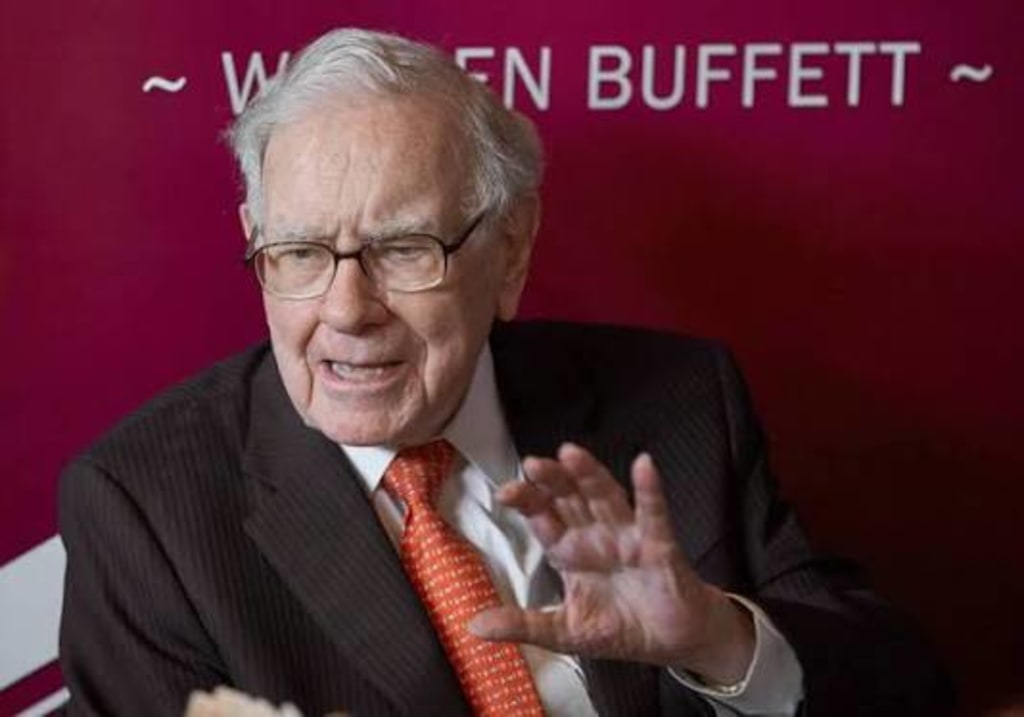
96-Year-Old Buffett Hands Over the Chairman Role: $365.5 Billion in Cash, Howard as Gatekeeper, Abel's First Net Buying
On September 18, 2026, Warren Buffett announced in a letter to shareholders that he was stepping down as chairman of Berkshire Hathaway. He became chairman emeritus and remains on the board. His eldest son, Howard Buffett, succeeded him as chairman. Greg Abel remains chief executive officer.
The letter was only one page. Buffett wrote: "Father Time always wins. But he has been very generous to me." He did not use the word "retirement."
Howard Guards the Gate, Abel Runs the Ship
Howard Buffett joined Berkshire's board in 1993, 33 years ago. Buffett reminded shareholders that this was longer than his own apprenticeship before he took over the company at 34. Howard will be non-executive chairman, unpaid, and not involved in day-to-day operations. His job is to represent shareholders in guarding the company's culture and, at critical moments, to say no to management.
Abel took over as CEO on January 1. He is responsible for day-to-day operations and investments. Buffett's assessment of Abel in the letter was: "From the beginning, my expectations for him were extremely high, and he has exceeded them. He has been making important decisions for some time, and I have not had to think twice about any of them."
The arrangement splits the chairman and CEO roles. The chairman guards the gate; the CEO runs the business. Buffett owns about 30% of Berkshire's stock. With Howard on the board, the culture and the family stake keep a seat at the table.
$365.5 Billion in Cash, More Than Its Stock Portfolio
As of the end of June 2026, Berkshire's cash and short-term U.S. Treasuries totaled about $365.5 billion. Only about $41 billion of that was cash itself. Nearly 90%—about $325 billion—was short-term U.S. Treasuries. That money generates about $12 billion in interest each year.
That figure exceeded the market value of all of Berkshire's stock holdings. At the end of June, the equity portfolio was worth about $365 billion. The money Buffett kept ready to deploy was more than the money already in the stock market.
In Buffett's investing career, cash reserves exceeding stock holdings happened four times: 1969, 1987, 1999, and 2007. Each time, a major market decline followed.
But this time the comparison is not direct. After the Fed resumed rate hikes, short-term U.S. Treasury yields stayed above 4%. The S&P 500's equity risk premium has fallen to about 2.1%, more than 100 basis points below its historical average. The extra compensation stocks offer over the risk-free rate has been squeezed very thin. Buffett chose to hold Treasuries and collect interest.
Berkshire almost completely avoided intermediate- and long-term bonds. At the end of the second quarter, its bond position was only about $17 billion, about 2% of the investment portfolio, with most maturing within a year. Most insurance peers, because they held large amounts of intermediate- and long-term bonds, faced billions of dollars in unrealized losses as rates rose. Berkshire's short-term Treasury allocation avoided the decline in bond prices and directly benefited from rising rates.
Abel's First Net Buying
After Abel took over, Berkshire shifted from net seller back to net buyer. In the second quarter of 2026, Berkshire bought $23.5 billion in stocks and sold $3.7 billion. It was the first net buying in more than three years. In the first half, it bought $39.4 billion and sold $27.8 billion, for net buying of about $11.6 billion. In the same period last year, it bought $7.1 billion.
Several of Abel's moves:
A private investment of about $10 billion in Alphabet, pushing it into the top five holdings. Abel said in an interview that Alphabet's AI ambitions were the core reason for the investment.
Adding to homebuilders and Coca-Cola.
Continuing to reduce Bank of America.
Buying back about $4.53 billion of company stock in the second quarter, versus $234 million in the first quarter. Abel pledged to use his entire after-tax annual salary to buy more company stock.
Visiting Japan, signaling an intention to increase stakes in Japan's five major trading houses and positioning six companies, including Tokio Marine Holdings, as business partners.
These moves show Abel balancing "continuing to hold cash will drag on returns" against "spending heavily could draw accusations of squandering the family fortune." He chose to spread capital across AI infrastructure, physical industries, and buybacks, rather than waiting for a once-in-a-century opportunity.
Market Reaction: The Buffett Premium Fades
After the news of Buffett stepping down as chairman, Berkshire's stock fell less than 1% that day.
Since Buffett announced in May 2025 that he would step down as CEO, Berkshire's stock has continued to weaken. Over the past year, it has fallen more than 20%. In 2026 so far, it is up about 1.3%, while the S&P 500 is up about 11.6%. UBS analysts noted that Buffett's departure "has to some extent become a catalyst for some Berkshire shareholders to sell, especially at the valuation level."
Wall Street has spent two years repricing the "Buffett premium." The company no longer enjoys extra valuation because a stock market god is at the helm. In the future, it will rely more on the investment performance of Abel's team to prove itself.
Restraint Is Harder Than Frequent Action
A narrative circulates in the market: every time Buffett piles up a massive amount of cash, a major correction tends to follow. The 2000 dot-com bubble, the 2008 financial crisis, and the 2020 pandemic are all similar cases.
Reading this departure simply as "the stock god predicting a crash" is to mistake a changed situation for an unchanged one. This time, besides an expensive market, another factor is layered on: Buffett wants to leave ammunition for his successor. He chose not to make large-scale capital allocations before stepping down, handing the cash to Abel as a kind of inheritance. Abel's net buying after taking office confirms that this cash is capital waiting to be deployed. The idea that it is a bearish declaration does not hold.
For most investors, what can be learned is not what Buffett specifically bought or sold. Before every investment, he first looks at what the risk-free rate offers, then decides whether to take on the risk of stocks. When short-term Treasuries offer more than 4% risk-free, while the equity risk premium is compressed to historic lows, the opportunity cost of waiting is very low, and the cost of a mistake in acting is very high.
Buffett left Abel a company. What he left the market is an example of restraint in an era of high interest rates. He remains on the board. His roughly 30% stake in Berkshire is unchanged. Abel's entire salary is used to buy more company stock.
About the Creator
Jin
Writer of reamstories
https://reamstories.com/jin
Enjoyed the story? Support the Creator.
Subscribe for free to receive all their stories in your feed. You could also become a paid subscriber, letting them know you appreciate their work.
Comments
There are no comments for this story
Be the first to respond and start the conversation.