
She Said She Would Expose Her Former Boss on August 26. She Was Found Dead in the Mojave on August 24.
Hsin-Ju Chuang turned down $0, fired her lawyer, and promised to release evidence against Hack VC. Two days before her deadline, police found her car on Interstate 15.
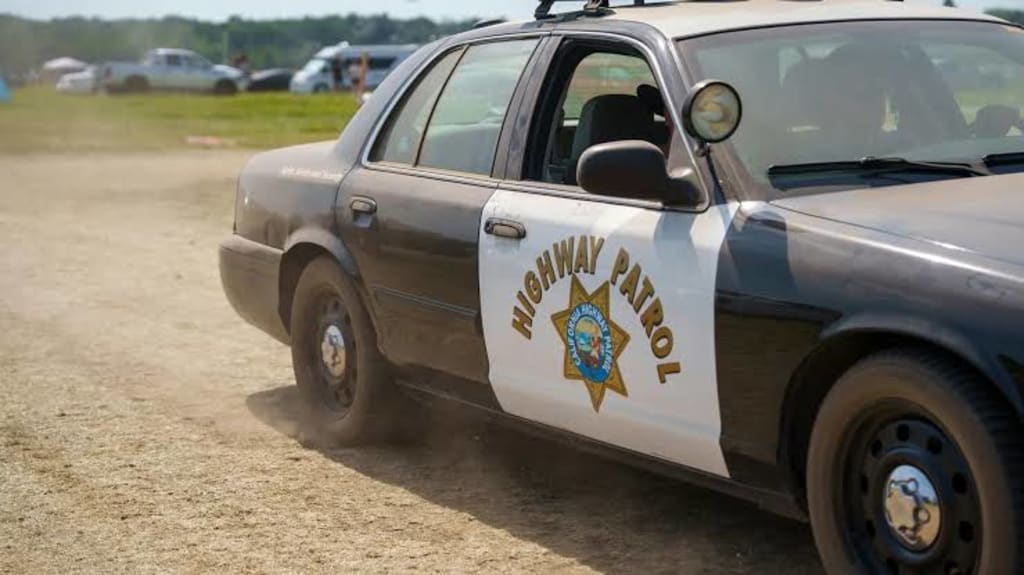
At 9:47 p.m. on August 24, California Highway Patrol officers found a car on the southbound side of Interstate 15 in the Mojave Desert. Inside was Hsin-Ju Chuang, 37. She was pronounced dead at the scene. Daytime temperatures there can approach 42°C. At night the desert cools, and the roadside has no shade.
The day before, August 23, Chuang posted a long statement online. She refused a settlement from her former employer, Hack VC, because it included a confidentiality clause. She said she would take $0. She fired her lawyer. She promised to release on August 26 all the evidence she had from her time at the company.
August 26 never came.
On September 25, San Bernardino County authorities released the autopsy result: suicide. The California Highway Patrol said its investigation was still continuing.
Three dates sit together: August 23, when she announced she would disclose; August 24, when she died in the desert; September 25, when the official finding was made public. An autopsy can answer how she died. It cannot answer why, or who should answer for the pressure that surrounded her.
Chuang was not at the bottom of the workplace ladder. Public records show she founded Dystopia Labs, a blockchain education group, and led growth at Stellar and Solana. In 2021 she joined Hack VC, an early-stage crypto and Web3 venture firm, as an investment partner. In 2025 she became a partner and head of platform.
That is a top-tier position in any industry. It is also why her account carries weight. In her final post, she described a firm that manages hundreds of millions of dollars and sits near the center of crypto power. She said it required six-day weeks and 13 to 14 hour days, about 78 to 84 hours a week. She said that while she had thyroid disease and severe insomnia, the company threatened her with industry blacklisting and pushed her to keep working. She said that after she left, it mishandled the continuation of her health insurance. She wrote that these experiences led her to attempt suicide.
Those are her words. Whether they are true, and whether they broke any law, requires evidence, investigation, and a legal process.
Hack VC gave a short response. It said it had a major disagreement with her understanding of events, cared about her health, and would not discuss details out of respect for privacy. The statement later disappeared from social media. The company said the online discussion had turned hostile and it did not want its statement to bring more negative attention to her.
On September 23, Hack VC co-founder Alexander Pack posted that the firm was shocked and saddened by her death. He said the company had not been in direct contact with her for more than 10 months and knew nothing about the circumstances.
The responses are careful. They also leave a timeline that should be recorded plainly.
August 23: she refused the confidentiality agreement and said she would release evidence on August 26.
August 24: she died in the desert.
September 25: the official finding was suicide.
There is no evidence for the online claim that she was killed to silence her. Treating suspicion as fact is irresponsible and can harm the search for what actually happened. But a confidentiality agreement, a disclosure date, and a death within 48 hours will keep drawing scrutiny. That is not a conspiracy theory. It is what the dates do.
What does 78 to 84 hours a week mean? The World Health Organization and the International Labour Organization published a joint study in Environment International in 2021. Compared with 35 to 40 hours a week, working more than 55 hours a week is linked to a 35% higher risk of stroke and a 17% higher risk of dying from ischemic heart disease. In 2016, about 745,000 people worldwide died from stroke and heart disease caused by long working hours. That was a 29% increase since 2000. Heart disease deaths rose 42%. The study called long working hours the occupational risk factor with the heaviest burden.
The schedule she described is one and a half times the warning line.
Crypto markets never close. A common saying in the industry goes: one day in crypto is a year in the human world. In wealth stories, that sounds like opportunity. In labor terms, it is a curse. The market does not stop, so people are expected not to stop. Prices move at night, so people stay awake at night. Charts have no closing bell. Twitter Spaces have no weekend. Financing, listings, airdrops, liquidations, blowups, pumps, and dumps all demand attention at any hour.
A body under that schedule breaks down before the will does. Insomnia, endocrine problems, immune problems, anxiety, and depression are not proof of weakness. They are warnings. Chuang mentioned thyroid disease and severe insomnia. Those are medical traces of a high-pressure system.
Her death is the second recent death of an ethnic Chinese person in crypto to draw attention. On August 7, 40-year-old crypto investor Harry Chun Tak Yeh fell from the 30th floor of Jade Park, a luxury apartment building in Asunción, Paraguay. He was born in Hong Kong. He entered crypto in 2013 when Bitcoin was around $60, founded Quantum Fintech Group, and claimed to manage more than $2 billion. The figure was never independently audited.
The scene raised questions. He was found naked, his body covered with a black plastic bag. The 30th-floor apartment door was open, and the interior was messy. Police also examined a 27th-floor apartment linked to him. Prosecutors in Paraguay are still investigating accident, suicide, and homicide as possibilities.
The longer list is worse. In 2018, QuadrigaCX founder Gerald Cotten died of illness in India. He was the only person with the private keys to the exchange's cold wallets, and about $190 million in user assets were frozen. In 2019, Biteyi founder Hui Yi died; the market widely linked his death to huge leveraged trading losses. In 2021, John McAfee died in a Spanish prison. The official conclusion was suicide. In 2022, within about a month, MakerDAO co-founder Nikolai Mushegian drowned in Puerto Rico after posting that he had been threatened; Amber Group co-founder Tiantian Kullander died in his sleep at 30; and Libertex founder Vyacheslav Taran died when his helicopter crashed in clear weather. In 2025, Thodex founder Faruk Fatih Özer died in a Turkish prison; Russian crypto businessman Novak and his wife were killed in the UAE and left in the desert; Ukrainian trader Galich was shot in his car hours after a market crash wiped him out.
Add Harry Chun Tak Yeh and Hsin-Ju Chuang in 2026, and public reports list 14 unnatural deaths among well-known crypto figures.
The causes differ. Most official conclusions are clear. They do not prove one killer or one plot. They do show an industry that keeps producing these outcomes.
Two mechanisms hold that pattern in place.
One is high pressure. Crypto trades 24/7. Fortunes can explode or vanish in minutes. A project can raise money, market itself, list, and collapse faster than a traditional company can hold a single planning meeting. A person can become a paper millionaire in months, or lose everything in hours. That speed creates myths and anxiety.
In traditional work, leaving the office means leaving the work. In crypto, the phone is the exchange, Twitter is the newsroom, and Telegram and Discord are the office. While you sleep, Asia trades. When you wake, the US moves. On weekends, projects airdrop, exchanges list tokens, and whales dump. The industry calls this being always online. It sounds like commitment. It is really labor without boundaries. Without boundaries, there is no recovery. Without recovery, judgment weakens. Weak judgment makes fear and greed easier to follow.
If Chuang's account of 78 to 84 hours is accurate, that was not a personal choice. It was an organizational demand. When a company makes that pace normal, individual health stops being a cost it must manage. It becomes a variable it can sacrifice.
The other mechanism is silence. Confidentiality clauses are not automatically wrong in a settlement. They can be a voluntary peace, protecting trade secrets, privacy, and reputation. In a power imbalance, they often become a different transaction. The company pays. What it buys is not only the dispute but the story. People who sign take the money and stay quiet. People who refuse face legal letters, blacklisting threats, and the long drain of litigation. Most people do the math and choose silence. Problems get sealed away one payment at a time. The public never sees what is underneath.
Chuang chose a third path. She took $0, fired her lawyer, and set a date to disclose. She gave up every economic benefit to keep the right to speak. That choice shows the price of truth in her world. It was higher than most people can pay.
That is why her death is hard to accept. She knew the price of silence. She knew the cost of speaking. She chose the hardest route and died two days before the date she set.
Under US law, a confidentiality clause in a settlement usually cannot stop someone from reporting to law enforcement. It also cannot stop legally protected whistleblowing. The exact effect depends on the wording, the governing law, the subject, and whether the matter involves securities fraud, labor violations, discrimination, or retaliation.
Legal permission is not the same as practical safety. A crypto worker who accuses a former employer faces more than legal papers. Industry contacts can disappear. Future fundraising can stall. Projects may avoid the person. Exchanges may grow cold. Media relationships can become complicated. Crypto is small, fast, and reputation-sensitive. One comment that someone is difficult to work with can cool a career.
Litigation is also a drain. Time, money, energy, and mental endurance are all thresholds. Even if the law is on your side, you can be worn down before you are proven right.
Chuang fired her lawyer, gave up compensation, and planned to disclose alone. She gave up legal representation and an economic buffer to face a venture firm managing hundreds of millions of dollars. She may have been ready to bear all of it. She did not live to see the day.
Crypto sells myths. Buy Bitcoin at $60. Start with $250,000. Manage $2 billion. Those numbers pull in each new generation. They make the traditional ladder look slow and the crypto elevator look direct. They make people believe that if they are early enough, fast enough, and bold enough, they can reach financial freedom before 30.
The same industry burns through the people who build it. It wears down health. It turns trust, loyalty, and friendship into tradable assets. It punishes the courage to speak. It sometimes leaves people dead.
Chuang's death should not be reduced to two easy stories. One says the official finding is suicide, so there is nothing more to say. The other says it must have been murder, so every coincidence is a clue. Both are too simple. The first ignores institutional pressure. The second ignores evidence.
What should be remembered is this: a 37-year-old woman who had reached the top of crypto publicly refused a confidentiality agreement, gave up $0, fired her lawyer, and set August 26 to release evidence. She died in the Mojave Desert on August 24. The official autopsy finding is suicide. The investigation continues.
The working hours, threats, health insurance handling, and blacklisting she described need an independent investigation. Hack VC's response needs public scrutiny, including whether a third party should review it. The boundary between US settlement agreements and whistleblower protection needs legal analysis. The crypto industry's high-pressure labor, mental health crisis, and power imbalance need institutional answers.
August 26 passed. The evidence she planned to release has not appeared on the public timeline. The California Highway Patrol says the investigation is still continuing.
About the Creator
Jin
Writer of reamstories
https://reamstories.com/jin
Enjoyed the story? Support the Creator.
Subscribe for free to receive all their stories in your feed. You could also become a paid subscriber, letting them know you appreciate their work.
Comments
There are no comments for this story
Be the first to respond and start the conversation.