
Palantir Technologies CEO Alex Karp on AI and the Future of Jobs
The global workforce may be reshaped if vocational training and practical skills are prioritized.
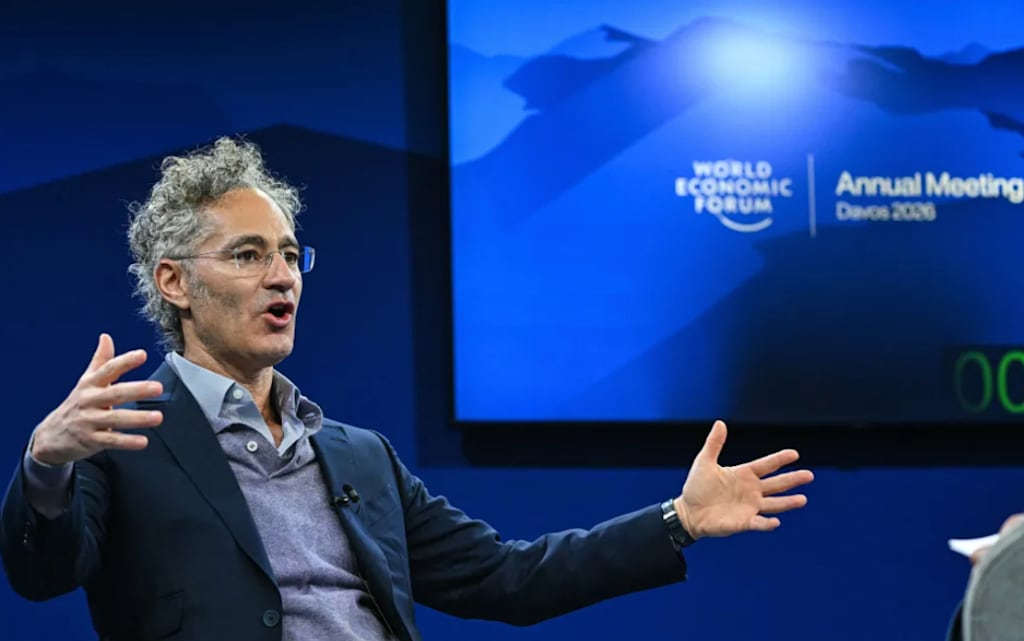
The rapid rise of artificial intelligence is reshaping not only industries but also long-standing assumptions about education, work, and economic value.mPalantir Technologies CEO Alex Karp is at the center of this debate. His recent remarks sparked intense discussion about the future of jobs in a world driven by AI. Karp has been blunt when he has spoken at global forums: white-collar jobs, especially those in the humanities, will be significantly disrupted by AI. He warned that as AI systems take over many cognitive and analytical tasks, traditional academic paths, particularly degrees in fields like philosophy or literature, may become increasingly difficult to monetize.
Karp's argument is based on a larger shift that is already taking place. As AI systems grow more capable, they are increasingly able to perform tasks that were once considered uniquely human, including writing, analysis, and decision-making. This raises concerns regarding the superiority of specialized, practical skills to general knowledge in the long run. According to Karp, individuals with purely academic training may struggle unless they develop additional, marketable abilities.
In contrast, he sees a strong future for vocational and technical workers. Jobs that involve hands-on skills—such as manufacturing, engineering support, or infrastructure development—are less susceptible to automation in the near term. Karp has emphasized that there will still be “more than enough jobs” for those with vocational training, suggesting a potential rebalancing of the labor market toward skilled trades.
This point of view is in line with a growing body of research that shows that employers are giving more importance to specific skills than to degrees. Companies are looking for workers who can adapt quickly and make an immediate contribution rather than those who only have theoretical knowledge as industries change. In this context, vocational training and alternative education pathways—such as apprenticeships or technical certifications—are gaining renewed importance.
However, Karp's remarks touch on broader societal implications in addition to economics. He has suggested that the rise of AI could alter political and social dynamics as well as job markets. As white-collar roles become more vulnerable, traditionally educated professionals may lose some of their economic influence, while skilled tradespeople could gain greater prominence.
This viewpoint has received both praise and criticism. Some analysts agree that AI will disproportionately affect entry-level and knowledge-based jobs, potentially accelerating demand for practical skills. Others argue that the humanities still play a crucial role in fostering creativity, critical thinking, and ethical reasoning—qualities that AI cannot easily replicate.
Additionally, critics caution against viewing the future of work as a straightforward binary between academic skills that are "obsolete" and "useful" technical skills. Essays such as those published in The Humanist challenge the idea that vocational work should replace intellectual pursuits, warning that such thinking risks narrowing human potential and reducing education to purely economic outcomes. From this perspective, framing the future solely around productivity and efficiency could create a society that undervalues creativity, culture, and critical inquiry.
Moreover, some experts believe that AI could actually enhance the value of humanities skills rather than eliminate them. As machines take over routine tasks, human workers may become more important in roles that require empathy, storytelling, ethical judgment, and complex problem-solving. This suggests that the future workforce may need a hybrid skill set—combining technical expertise with human-centered thinking.
Karp himself acknowledges that the transition will not be smooth. Particularly for those whose skills become less relevant, the disruption caused by AI may result in significant social and economic upheaval. At the same time, he argues that embracing this shift is essential for long-term progress.
In the end, the debate reflects a deeper concern about the kind of society that AI will contribute to. Will it widen existing disparities between different types of workers, or will it create a more inclusive economy in which skills are valued more than credentials? As AI continues to evolve, the answers remain uncertain.
What is clear, however, is that the relationship between education and employment is being fundamentally redefined. Individuals and institutions alike will need to adjust to a world where the rules of work are rapidly changing, whether through vocational training, higher education, or a combination of the two. So, Karp's warning might be more of a call to reconsider how we prepare for the future than a prediction.
About the Creator
Enjoyed the story? Support the Creator.
Subscribe for free to receive all their stories in your feed.
Comments
There are no comments for this story
Be the first to respond and start the conversation.