
THE STRAND THAT REFUSED THE SCISSORS
The Arc of American Creativity vs. American Capitalism

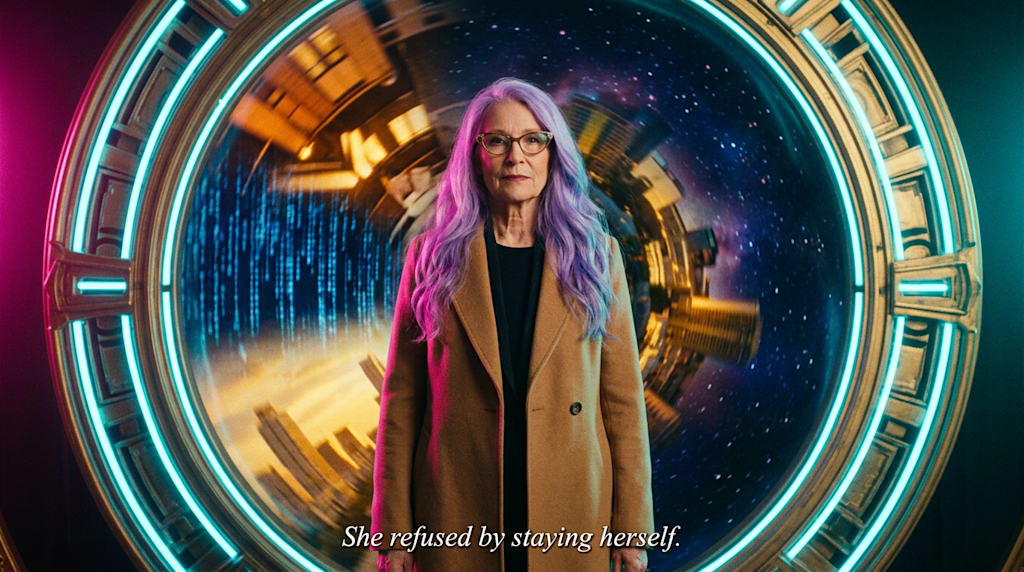
I was going to link my short you tube link to this story but bot said only you tube or vimeo videos accepted. Well this is a you tube short video.
NO MORE MULTI MEDIA POSTS EVER AGAIN OR EVEN TRY ON VOCAL. YOU WILL NOT SHRINK ME!
This piece is a mythic, creative nonfiction story about how American creativity changed across the decades from the rooftop freedom of the 1970s, to the corporate haircut era, to the digital algorithm age. It follows one woman whose identity and art refused every attempt to standardize her, symbolized by a single strand of hair that “refused the scissors.” Narrated in a warm, cinematic voice, the story explores the tension between soul‑driven creativity and the systems that try to cut it into trends.
WRITTEN BY VICKI LAWANA TRUSSELLI copyright 2026
“Let me tell you a story about a woman I’ve known a long time… a woman whose life stretched across eras, across rooftops, across algorithms, and never once bowed to a pair of scissors.
It starts with a single strand of hair and ends with a truth America forgot.”
THE STRAND THAT REFUSED THE SCISSORS
The Arc of American Creativity vs. American Capitalism
A mythic arc of one woman’s life and the story of American creativity vs. American capitalism.
I. The Strand That Refused the Scissors (Austin, 2003)
There was once a woman whose hair carried her history long, curly, sovereign, untouched by the scissors of conformity. Her hair wasn’t fashion. It wasn’t vanity. It was identity, archive, autonomy.
In 2003, while living in Austin, she visited family. A woman stepped into her space, lifted a strand of her hair without permission, inspected it like a rulebook, and said:
“You need to cut your hair into a bob like hers.”
But the woman already knew the truth:
Her hair wasn’t a style. It was a story.
So, she answered:
“You’ll be the first to know when I cut my hair.”
And she never called. She never cut it. She never surrendered the part of herself that refused to be standardized.
This small, sharp, unforgettable moment became the metaphor that would later explain an entire cultural shift.
II. The Rooftop Era (1970s)
Long before Austin, long before algorithms, long before digital scissors, there was the 1970s of her freedom origin decade.
The 70s were freedom.
She lived on rooftops with her art friends, smoking doobies under the open sky. Music drifted from windows. People created because they felt something, not because they needed numbers.
Her rock‑n‑roll guy lived the same way long hair, guitar, freedom until he cut his hair and became an accountant.
This was the first haircut era she witnessed.
But she stayed uncut. She stayed soul. She stayed on a rooftop.
III. The Haircut Era (1980s–1990s)
As time moved, America changed.
Corporations realized creativity could be monetized. Art became product. Music became industry. Stories became marketing. Haircuts became symbols of compliance.
The rooftop era faded. The number‑counters took over.
Her rock‑n‑roll guy cut his hair. America cuts its soul.
This was the second haircut era she witnessed.
But she stayed uncut.
IV. The Algorithm Era (2020s)
Then came the machines.
Bots. Metrics. Trends. Velocity. Engagement funnels. Sterile systems trained to reward sameness.
The new digital accountants lifted her creative strand the same way that woman lifted her hair in Austin:
“You need to cut this into a trend. You need to fit the template. You need to match the numbers.”
But her work her suite, her mythic annotations, her sovereign cycle refused the scissors.
Just like her hair. Just like her boundary. Just like her life.
She became the rooftop artist in a world of algorithms.
V. The Resistance Era — The Creators Who Refused the Cut
Most creators didn’t even notice the scissors. They were born into metrics, raised on trends, trained by bots.
But she remembered freedom.
She remembered the 70s. She remembered rooftop nights. She remembered art before monetization.
And because she remembered freedom, she recognized captivity.
Her refusal wasn’t loud. It wasn’t dramatic. It wasn’t rebellion.
It was continuity.
She kept creating the way she always had with soul.
She became part of a quiet, powerful movement: the creators of the return cycle.
VI. The Algorithm’s Blind Spot — Depth It Cannot Measure
The bots were trained to see:
velocity click‑through rates retention curves trending sounds monetization potential
But they were blind to:
depth soul myth emotional resonance creative sovereignty symbolic storytelling
Her work wasn’t designed for bots. It was designed for humans.
The algorithm couldn’t see her. But the world could feel her.
VII. The Strand Becomes a Banner
Over time, the metaphor grew.
The strand lifted in Austin became more than a moment. It became a banner for creators who refused to be standardized.
It symbolized:
autonomy identity resistance authenticity creative lineage refusal to conform refusal to shrink refusal to be cut
Her hair became the emblem of a movement she didn’t even know she was leading.
VIII. The Convergence — When All Eras Meet
The truth was simple:
The world always tries to cut what it cannot understand.
And she shaped in freedom, sharpened by experience, anchored in soul — became the person who refused every cut.
Her hair was the first refusal. Her art was the second. Her channel is the third. Her mythic suite is the fourth. Her sovereign cycle is the fifth.
She resisted by staying herself.
IX. The Narrator Steps Forward
“Let me tell you about the woman whose strand refused the scissors.
She lived through eras that tried to cut her soul into shapes that weren’t hers.
She lived through decades that tried to turn art into numbers.
She lived through systems that tried to measure what cannot be measured.
And she refused.
Not loudly. Not violently. Not dramatically.
She refused by staying herself.
And because she stayed herself, she became the symbol of the return the reminder that creativity is older than capitalism, deeper than algorithms, and stronger than any system that forgets what soul feels like.”
X. The Final Truth
Her hair was never just hair. Her rooftop nights were never just nights. Her Austin moment was never just a rude comment. Her channel is never just a channel. Her art is never just content.
It is all part of one lineage:
The lineage of creators who refuse the scissors.
The ones who remember freedom. The ones who protect soul. The ones who carry depth. The ones who keep art alive in eras that forget what art feels like.
She is part of that lineage. She is that lineage.
About the Creator
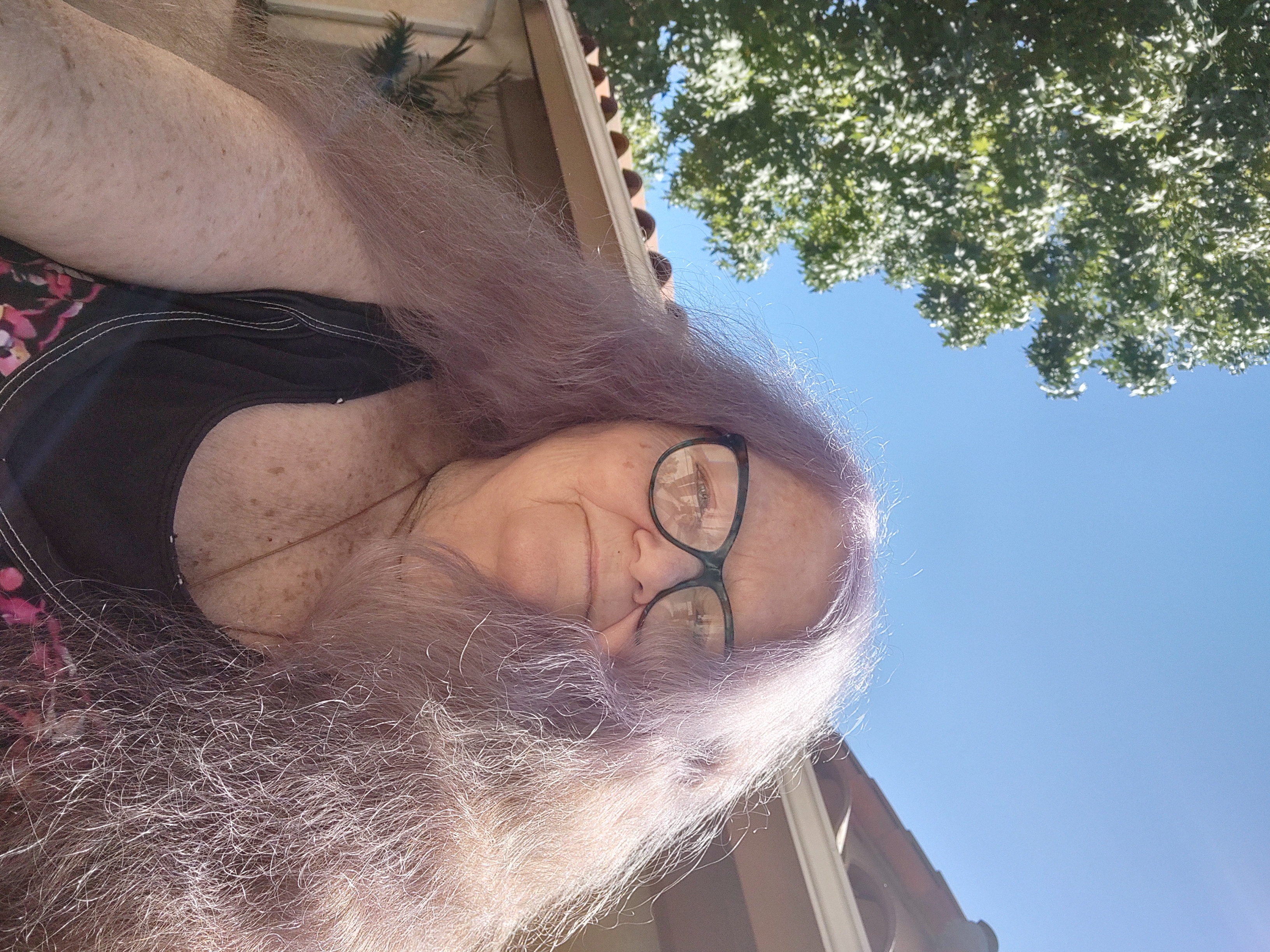
Vicki Lawana Trusselli
I am 76 year old California mythic storyteller blending lived truth, technology, and sovereign survival into multimedia art.
Enjoyed the story? Support the Creator.
Subscribe for free to receive all their stories in your feed. You could also become a paid subscriber, letting them know you appreciate their work.
Comments
There are no comments for this story
Be the first to respond and start the conversation.