trump
For Trump's Fans, foes, frenemies and Twitter followers.
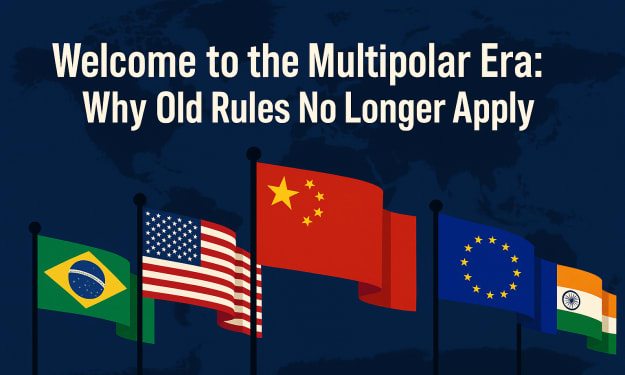
“Welcome to the Multipolar Era: Why Old Rules No Longer Apply”
Welcome to the Multipolar Era: Why Old Rules No Longer Apply Inside the Rise of a World Where No One Power Calls the Shots --- Introduction Not long ago, world politics revolved around a single axis — the United States. Following the Cold War, America’s military might, economic dominance, and cultural influence gave it an unrivaled role in setting global agendas. But that era is fading fast. Today, we live in a world where no single nation can dictate the terms. Power is more distributed, alliances are more fluid, and the rules of engagement are constantly shifting. From Beijing to Brasília, from Ankara to New Delhi, a new set of actors is redefining influence in a chaotic and contested global order. The question is no longer who leads — it's how the world manages without clear leadership. --- The End of Unipolarity The post-Cold War unipolar moment, which placed the U.S. at the apex of global power, is now history. Two decades of military overstretch, internal political divisions, and economic upheaval have eroded America's ability to act as the world's de facto leader. The withdrawal from Afghanistan, inconsistent global policies, and an increasingly inward-looking electorate have signaled a step back from the assertive global policing of the early 2000s. This vacuum hasn't gone unnoticed. Instead of a new hegemon rising to replace the old, what we see is a diffusion of power across multiple regional centers. It’s not a bipolar world of the Cold War era, nor a balanced multipolar structure of the early 20th century. This new landscape is messy, unstable — and permanent. --- China and the Economic Realignment China stands at the forefront of this shift, but even its rise comes with caveats. With the Belt and Road Initiative, Beijing has extended its economic reach into Asia, Africa, and parts of Europe. Its influence over supply chains, infrastructure, and digital technologies challenges the dollar-based global system. However, China's ambitions face resistance. Tensions over Taiwan, territorial disputes in the South China Sea, and pushback from Western nations on tech and trade indicate that its power, while rising, is also contested. China is not replacing the U.S. — it’s carving out its own sphere, one that’s economic rather than ideological, and subject to friction. --- Russia’s Military Gambit and Strategic Isolation Russia, too, has sought to challenge the Western-dominated order, most dramatically through its invasion of Ukraine. While the war has demonstrated Moscow’s willingness to use force to protect perceived national interests, it has also exposed its strategic limits. Sanctions, international condemnation, and battlefield losses have isolated Russia from much of the world economy, while simultaneously deepening its ties with non-Western partners like Iran and China. In trying to redefine regional borders by force, Russia has sparked a renewed unity among NATO members, paradoxically reinforcing the very alliances it sought to divide. --- Middle Powers and Fluid Alliances Perhaps the most defining feature of the multipolar era is the rise of middle powers — nations like India, Brazil, Turkey, and Saudi Arabia that are no longer content to align strictly with the West or East. These countries pursue strategic autonomy, balancing relationships across global fault lines. India, for example, is a member of the Quad (with the U.S., Japan, and Australia) while also maintaining defense ties with Russia and participating in BRICS. Turkey, a NATO member, buys Russian arms and projects influence across Central Asia and the Middle East. These states navigate global politics based not on ideology, but on opportunity and self-interest. --- Global Institutions Under Strain The United Nations, World Trade Organization, and other postwar institutions are increasingly ineffective at managing today’s fragmented world. Vetoes stall progress at the UN Security Council. Trade disputes paralyze the WTO. And new power blocs like BRICS and the Shanghai Cooperation Organization aim to create parallel systems that reflect non-Western values and priorities. The rules-based international order — long championed by the West — now finds itself questioned not only by adversaries, but by allies frustrated with its limitations and hypocrisy. --- Technology, Climate, and the New Arenas of Power While traditional power still matters, influence in today’s world is also determined by less tangible forces. Control over technologies like artificial intelligence, 5G, and semiconductors is becoming as critical as nuclear weapons were in the past. Meanwhile, climate change, pandemics, and migration flows expose the limitations of national solutions to global problems. These issues demand coordination, yet in a fragmented world, cooperation is the first casualty of geopolitical rivalry. --- Conclusion: Embracing Complexity The multipolar era is not just a phase — it is the defining condition of our time. It offers opportunities for a more inclusive, balanced world, but also risks greater instability, miscalculation, and fragmentation. Old rules no longer apply, because the old world no longer exists. The future will depend not on domination, but on how nations adapt, negotiate, and share power in a world where no one — and everyone — leads.
By World politics about a year ago in The Swamp
How Pakistan and India Ceased Fire by U.S.?
In one of the most historic moments of South Asian diplomacy, the decades-long tension between India and Pakistan found a sudden pause with a surprising but decisive intervention by the United States. On May 10, 2025, an immediate ceasefire was declared between the two nuclear-armed nations after a night of high-level negotiations. This article explores how the United States orchestrated peace talks between these long-standing rivals and the implications for the region and the world.
By Keramatullah Wardakabout a year ago in The Swamp
Power & Policy
A Deep Dive into Global Strategies: Understanding the Forces Shaping Our World In a rapidly evolving world, global strategies are more important than ever. These strategies are the frameworks through which nations navigate international relations, secure economic interests, assert political power, and foster security. At the heart of global strategy lies the delicate balance of diplomacy, military force, economic policy, and cultural influence, each of which plays a crucial role in shaping the future of the global community. This article will explore the complexities of global strategies, the key players involved, and the methods they use to maintain or expand their influence on the world stage. The Concept of Global Strategy Global strategy is the overarching plan or approach that nations, alliances, and international organizations use to achieve their objectives on the world stage. It is a multi-dimensional concept that involves not only military and economic considerations but also the cultivation of alliances, technological innovation, and soft power. Unlike national strategies, which are primarily focused on domestic issues, global strategies address external challenges and opportunities. A successful global strategy can determine the trajectory of a nation’s influence for decades to come, while a failed one can lead to economic collapse, political isolation, or even military conflict. Global strategies often incorporate elements of hard power (military and economic strength) and soft power (diplomacy, culture, values, and ideas). Nations may also engage in smart power, which is a combination of both hard and soft power, using each in the right proportion based on the situation at hand. Key Players in Global Strategy In any analysis of global strategies, it is essential to understand who the key players are. The most significant players include powerful nations, such as the United States, China, and Russia, as well as regional powers and multinational organizations like the United Nations, the European Union, and the World Trade Organization (WTO). Each of these entities formulates strategies based on a combination of economic capabilities, military power, political influence, and diplomatic ties. 1. The United States: As a superpower, the United States has long been at the center of global strategic discussions. Its global strategy revolves around maintaining its military dominance, ensuring access to key markets, and promoting democratic values. The U.S. also seeks to contain rival powers, notably China and Russia, through both hard and soft power mechanisms, including military alliances like NATO, economic sanctions, and diplomatic engagement. 2. China: Over the past few decades, China has emerged as a key challenger to U.S. dominance on the global stage. Its global strategy is characterized by economic expansion, technological advancements, and a growing military presence. One of China’s most ambitious strategies is the Belt and Road Initiative (BRI), a multi-trillion-dollar infrastructure project designed to connect Asia, Africa, and Europe through a network of trade routes. The BRI allows China to increase its influence in critical regions, securing vital resources, trade routes, and political allegiances. 3. Russia: Russia's global strategy has been shaped by a desire to reclaim its status as a great power following the dissolution of the Soviet Union. Russia’s strategy is characterized by a mix of military aggression, political influence, and energy dominance. For instance, Russia's military interventions in Ukraine and Syria are seen as efforts to protect its sphere of influence and project power into neighboring regions. Additionally, Russia uses its vast energy resources as leverage in geopolitical negotiations, particularly with Europe. 4. The European Union: The European Union (EU) is unique in its approach to global strategy, as it represents a collective effort by member states to assert influence on the world stage. The EU focuses heavily on diplomacy, trade, and human rights, leveraging its economic power as one of the world’s largest trading blocs. The EU also works to expand its sphere of influence through various partnerships and negotiations, particularly with countries in Eastern Europe, Africa, and Asia. 5. Multinational Organizations: Institutions such as the United Nations, the World Trade Organization, and the International Monetary Fund (IMF) play crucial roles in shaping global strategies. These organizations facilitate cooperation, mediate conflicts, and establish norms and regulations that govern international relations. Although not all countries agree with the actions of these institutions, they remain vital in coordinating global efforts in areas such as climate change, international security, and global trade. The Elements of Global Strategy Global strategies are multifaceted and include a variety of elements that work together to influence outcomes on the international stage. Some of the most important components of global strategies include: 1. Economic Power: Economic strategies are central to global influence. Nations use trade agreements, sanctions, and financial assistance to shape the global economy in ways that align with their interests. For example, the United States uses its control over the global financial system, especially through the U.S. dollar and institutions like the IMF, to maintain its economic dominance. On the other hand, China uses its growing economic influence to assert control over key supply chains, especially in the technology sector, and to secure long-term strategic investments through initiatives like the Belt and Road Initiative. 2. Military Power: Military strength remains one of the most significant pillars of global strategy. Nations use their military capabilities to project power, defend national interests, and deter potential threats. This includes not only traditional military forces but also nuclear deterrence, special forces, and cyber warfare capabilities. The U.S. maintains a vast network of military bases worldwide, while China is increasingly focusing on expanding its military presence in the South China Sea and beyond. 3. Diplomacy: Diplomatic efforts are essential in shaping the global environment. Effective diplomacy can result in strategic alliances, trade agreements, and conflict resolution. Countries engage in diplomacy through bilateral talks, multilateral forums, and international organizations. For example, the U.S. and China engage in regular diplomatic talks to manage their economic and political rivalry, while the EU plays a critical role in brokering peace and cooperation in various global hotspots. 4. Technology and Innovation: In today’s world, technological innovation has become an integral part of global strategy. Nations invest in cutting-edge technologies like artificial intelligence, quantum computing, and 5G networks to gain a strategic advantage. China, for instance, has made significant investments in 5G technology through companies like Huawei, which has raised concerns among the U.S. and its allies about cybersecurity and espionage. Additionally, technological leadership in space exploration, biotechnology, and clean energy is increasingly a key factor in global influence. 5. Soft Power: The power of culture, values, and ideas cannot be underestimated. Soft power allows countries to influence others without coercion or force. The United States, for example, has long relied on its entertainment industry, higher education institutions, and the spread of democratic ideals to project its influence globally. Meanwhile, China has sought to boost its soft power through cultural exchanges, educational initiatives, and media influence. Challenges to Global Strategy While global strategies can lead to considerable success, they also face numerous challenges. Geopolitical rivalries, economic disruptions, technological shifts, and domestic political pressures can undermine the effectiveness of any nation’s strategy. Moreover, global challenges like climate change, pandemics, and terrorism require multilateral cooperation, often complicating efforts to pursue individual national interests. In conclusion, global strategy is a dynamic and complex field that requires nations to constantly adapt to shifting circumstances. It is a delicate dance between power, diplomacy, and influence, and success often depends on the ability to blend these elements effectively. As the world continues to evolve, understanding global strategies will be key to predicting the future of international relations and shaping the global order in the years to come.
By World politics about a year ago in The Swamp
Pro Life Journalist Gets Sucker Punched in the Face by New York Woman . Content Warning.
A pro-life conservative journalist gets sucker punched by a Bronx woman. The video went viral with mixed reactions. Was she wrong for sucker punching her or she got what she deserved? Or Was she doing her journalism job? Before I give my personal opinion, let's discuss what happened before the brutal attack.
By Gladys W. Muturiabout a year ago in The Swamp
"Superpowers at a Crossroads: The Future of U.S.–China Relations in 2025"
Superpowers at a Crossroads: The Future of U.S.–China Relations in 2025 How the World’s Two Giants Are Shaping a New Global Order In the ever-shifting landscape of international politics, few relationships carry as much weight—or as much risk—as that between the United States and China. These two global giants, wielding unmatched economic, military, and technological influence, stand at a pivotal crossroads in 2025. Their interactions do more than affect their own nations; they ripple across continents, shaping global markets, alliances, security frameworks, and the future of international cooperation. A Relationship Built on Competition and Codependence Since China’s economic liberalization in the late 20th century, the U.S.–China relationship has oscillated between cautious engagement and intense rivalry. The U.S. played a key role in China’s accession to the World Trade Organization in 2001, hoping economic integration would encourage political openness. But instead of liberalization, China grew more assertive, and its rise has challenged American primacy on multiple fronts. Today, the two countries are deeply economically intertwined yet politically estranged. Bilateral trade still amounts to hundreds of billions of dollars annually, but tariffs, export bans, and national security concerns have fractured the trust that once underpinned cooperation. The U.S. accuses China of intellectual property theft, unfair trade practices, and currency manipulation, while China views America’s actions as attempts to contain its rightful ascent. The Taiwan Flashpoint and Military Tensions No issue exemplifies the fragility of U.S.–China relations more than Taiwan. Beijing considers the self-governing island a breakaway province and has not ruled out the use of force to achieve reunification. The U.S., while maintaining a "One China" policy, continues to support Taiwan’s democratic system and provides arms to bolster its defense. Military tensions in the South China Sea and Taiwan Strait have escalated, with close encounters between naval forces and increased military drills. The Indo-Pacific region has become a theater for strategic posturing, with the U.S. strengthening alliances with Japan, South Korea, Australia, and India through forums like the Quad. The Battle for Technological Dominance Beyond territorial disputes, the U.S.–China rivalry is increasingly defined by the race for technological supremacy. From 5G networks and artificial intelligence to semiconductors and quantum computing, both nations are investing heavily to outpace the other. The U.S. has restricted Chinese tech firms like Huawei from accessing advanced chip technologies, citing security concerns. In response, China has accelerated efforts to achieve self-sufficiency in critical sectors. This tech arms race is not just economic—it's ideological. It reflects broader concerns about data governance, surveillance, digital freedom, and the role of the state in shaping innovation. The outcome will determine whose standards and values dominate the next generation of global infrastructure. Climate: The One Area of Potential Cooperation Amid the competition, climate change remains a rare domain of shared interest. As the world’s two largest carbon emitters, the U.S. and China hold the key to meaningful global climate progress. While their climate diplomacy is often marred by broader tensions, both countries have signaled willingness to collaborate on clean energy, emissions reduction, and green technology. In late 2024, the two sides resumed high-level climate talks, focusing on methane reduction and sustainable finance. Although modest, such engagements hint at the possibility of compartmentalized cooperation—where both sides work together on existential global issues, even as strategic rivalry continues elsewhere. A New Global Order in the Making As we move further into 2025, it’s clear the old world order—centered on unchallenged U.S. dominance—is giving way to a multipolar reality. China is carving out a leadership role in the Global South, offering an alternative to the Western model through infrastructure programs like the Belt and Road Initiative. Meanwhile, the U.S. is reinvigorating alliances and promoting a rules-based international order. The world is watching as these two superpowers navigate a path forward. Will they settle into a “cold peace” of managed competition, or stumble into open confrontation? Can multilateral institutions mediate their differences, or will new blocs emerge? Conclusion The U.S.–China relationship is not merely bilateral—it is global in consequence. How these nations choose to engage with each other will shape the trajectory of war and peace, cooperation and conflict, progress and peril. In 2025, with stakes higher than ever, the world’s two giants must decide: will they lead the world together—or pull it apart?
By World politics about a year ago in The Swamp
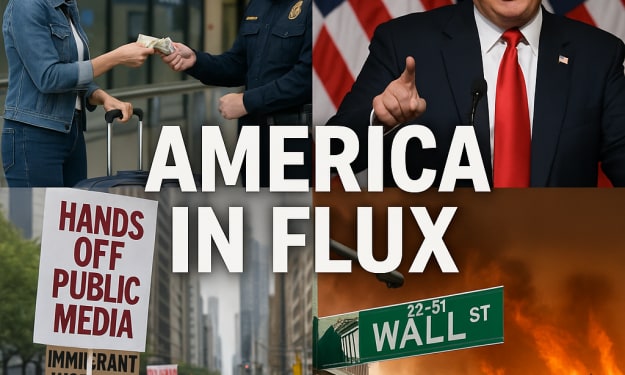
America in Flux: The Bold Moves and Backlash Shaping the U.S. in 2025
America in Flux: The Bold Moves and Backlash Shaping the U.S. in 2025 The United States is in the midst of a transformative period in 2025, driven by sweeping policy changes, rising public dissent, and economic developments that are redefining the national landscape. Under the renewed leadership of former President Donald Trump, the federal government is introducing initiatives that are being praised by some as "bold leadership" and criticized by others as authoritarian overreach. Let’s take a closer look at what’s unfolding across America in real time—and what it means for the future. Trump’s Second Term: An Aggressive Agenda Unfolds In his second term, President Trump has wasted no time reshaping federal priorities. One of the most talked-about measures is the introduction of a program offering undocumented immigrants $1,000 and a plane ticket to voluntarily leave the country. Critics argue that the initiative manipulates vulnerable populations and could potentially bar them from future legal reentry. At the same time, a controversial executive order is eliminating federal funding for public broadcasters such as NPR and PBS. Trump’s administration claims it’s about stopping taxpayer funding of “biased media,” while journalists and civil liberties groups warn this could threaten press freedom and diminish the public’s access to nonpartisan information. Perhaps most surprising is Trump’s order to reopen Alcatraz prison. Once a notorious penitentiary shut down in 1963, Alcatraz’s revival is raising eyebrows, especially as many state officials claim they weren’t consulted. Public Backlash: Protests and Grassroots Movements Surge In response to these sweeping changes, Americans are taking to the streets. On May 1, a massive movement labeled “50501”—a nod to the date—mobilized protesters in cities like New York, Los Angeles, and Chicago. Their grievances ranged from anti-immigration policies and worker rights to broader concerns about authoritarianism. The movement is diverse and intersectional, uniting labor activists, immigrants’ rights organizations, and student groups. Social media has played a major role in organizing the protests, signaling a resurgence of online-driven activism reminiscent of the Black Lives Matter and Women’s March movements. These protests are not isolated incidents—they reflect a growing sense of urgency among Americans who fear the erosion of democratic norms.
By Saqib Ullahabout a year ago in The Swamp
Trump Sparks Controversy by Posting AI-Generated Image of Himself as Pope
Trump Sparks Controversy by Posting AI-Generated Image of Himself as Pope May 3/2025 In a move that has sparked both amusement and criticism online former U.S President Donald Trump shared an AI generated image of himself dressed as the Pope on his Truth Social platform reigniting debates about artificial intelligence political satire and the boundaries of online content. The post made on Thursday evening showed Trump wearing ornate papal robes and a grand miter standing in a position reminiscent of the Pope delivering a blessing from the Vatican balcony. The image was clearly labeled as AI generated but that did not stop it from going viral within hours drawing sharp reactions from supporters critics and digital ethics experts alike.
By Adnan Rasheedabout a year ago in The Swamp