trump
For Trump's Fans, foes, frenemies and Twitter followers.
Hundreds Join Trump at ‘Exclusive’ Dinner, With Dreams of Crypto Fortunes in Mind Inside the most controversial crypto-political gala of the year
Former President Donald Trump, a man whose name has long been synonymous with political upheaval and media frenzy, took a bold new step into the world of digital finance by hosting an ultra-exclusive dinner at his Trump National Golf Club in Virginia. The catch? Entry wasn’t bought with political connections alone—it required a substantial investment in his very own meme coin: $TRUMP. Roughly 220 guests secured their seats at the table, not by conventional donation, but by holding significant amounts of $TRUMP cryptocurrency, a digital token launched by Trump’s allies just weeks earlier. According to blockchain data, the average portfolio among attendees exceeded $1.7 million in value. For some, this was an opportunity to mix with political royalty. For others, it was a calculated investment in the most unpredictable commodity of all: Trump himself. The Birth of a Coin and the Rise of a Cult Investment $TRUMP launched amid a flurry of speculation, hype, and inevitable satire. Initially brushed off as another flash-in-the-pan memecoin, it quickly gained traction among Trump’s base—and speculators hoping to cash in on the growing nexus between politics and digital assets. Its value surged, then fluctuated wildly, echoing the nature of its namesake’s political career. Yet, the real fireworks came not from the coin’s performance but from what came next: an invitation-only gala for the coin’s most loyal whales. The dinner, promoted discreetly through Trump-aligned channels, promised access, influence, and the ultimate prize—face time with the man himself. Guests, Glamour, and Golden Promises Inside the grand ballroom, guests included a strange mix of blockchain entrepreneurs, MAGA influencers, and at least one former professional athlete. Notable among them was Justin Sun, the embattled founder of the TRON blockchain, who reportedly purchased over $40 million in $TRUMP coins. His presence sparked concern due to his legal controversies abroad and his strategic ties to crypto markets in Asia. Even more curious was the appearance of former NBA star Lamar Odom—perhaps symbolic of the blurred lines between fame, finance, and politics in Trump’s ever-expanding orbit. Each attendee received a personalized NFT minted on the Ethereum blockchain, featuring a golden-hued animation of Trump in a superhero stance with slogans like “Make Crypto Great Again.” These tokens are already fetching outrageous bids on digital auction sites. Ethical Red Flags and the Smell of “Pay-to-Play” As expected, the event has ignited fierce backlash. Ethics watchdogs and legal experts have raised serious concerns about the blending of Trump’s business ambitions with his political persona. Critics allege that the event was effectively a pay-for-access scheme—an unregulated, blockchain-powered version of the political slush fund. Senator Elizabeth Warren, a long-time advocate for tighter crypto regulation, condemned the dinner, stating, “This is not about innovation. It’s about laundering political influence through a coin.” Foreign influence remains another hot-button issue. Blockchain analysis suggests that several top holders of $TRUMP are foreign nationals, including individuals based in Dubai, Singapore, and Eastern Europe. While not illegal under current law, the optics—particularly for a former (and possibly future) commander-in-chief—are troubling. The Trump Defense: Freedom, Finance, and Futurism In his keynote address, Trump dismissed the criticism. “This isn’t about politics,” he said to a roaring ovation. “This is about freedom. It’s about building your own destiny without government interference. And it’s about making America rich again—starting with you.” To supporters, this rhetoric rang true. Trump positioned $TRUMP as a financial tool to decentralize power, giving “the people” a stake in what he called “a movement, not just a currency.” Detractors, however, see it as something darker: a monetized cult of personality sold under the guise of innovation. Where Do We Go From Here? What happens when political power becomes tokenized—literally? Trump’s foray into cryptocurrency raises a host of uncomfortable questions about campaign finance, conflict of interest, and national security. There is currently no clear legal precedent for what happens when a politician launches a token and directly profits from its success. Moreover, this event may pave the way for other political figures to follow suit, creating a future where influence is bought not with votes or policies, but with digital tokens and exclusive invites. Whether $TRUMP will endure as a serious financial instrument or crash like so many meme coins before it remains to be seen. But for now, it has created a new model—one where politics, wealth, and technology are no longer just connected. They’re indistinguishable.
By Kaleem Ullahabout a year ago in The Swamp
What’s at Risk If Iran-US Nuclear Talks Collapse?
A Tense Balance in the Middle East The Iran–United States nuclear talks have long been a centerpiece of global diplomacy, drawing attention from world powers, economists, and security analysts alike. After years of negotiation, setbacks, and shifting political landscapes, the current stage of the Iran-US nuclear dialogue stands at a critical juncture. With mutual distrust growing, and global tensions rising from Ukraine to the South China Sea, the breakdown of these talks could carry far-reaching consequences for regional peace, global oil markets, and nuclear non-proliferation efforts.
By Keramatullah Wardakabout a year ago in The Swamp
🇺🇸 U.S. Foreign Policy Under Trump: A Global Ripple Effect
U.S. Foreign Policy Under Trump: A Global Ripple Effect The return of Donald Trump to the U.S. presidency in 2025 has once again placed American foreign policy under the global spotlight, sparking significant shifts with wide-reaching consequences. Trump's approach to international relations, marked by nationalism, skepticism towards multilateral institutions, and a transactional mindset, has created waves that resonate far beyond American borders. These ripple effects are shaping global geopolitics, alliances, and international governance, with implications felt in global health, diplomacy, human rights, and security. The Retreat from Global Institutions One of the most defining features of Trump’s foreign policy has been the United States’ retreat from several key international organizations and agreements. This trend, initiated during his first presidency, has continued and intensified. Most notably, the U.S. officially withdrew from the World Health Organization (WHO) shortly after Trump's return, citing concerns over transparency and governance issues allegedly linked to China’s influence. The withdrawal has left a leadership void in global health governance. China, seizing the opportunity, pledged to contribute $500 million over five years to the WHO, becoming its largest donor. This financial commitment is part of a broader Chinese strategy to expand its global influence, positioning itself as a champion of multilateralism in health while the U.S. pursues a more isolationist stance. The U.S. absence in the WHO is particularly consequential amid ongoing concerns about pandemic preparedness and response, undermining global coordination at a critical time. Pandemic Preparedness Without the U.S. In 2025, the WHO adopted a landmark pandemic treaty aimed at enhancing international cooperation to prevent and respond to future global health crises. The treaty’s adoption was a rare moment of unity among most member states, but notably, the U.S. did not participate. This decision highlights Washington's growing skepticism towards multilateral commitments and raises serious questions about the effectiveness of global health initiatives without American engagement. The treaty aims to strengthen data sharing, ensure equitable access to vaccines and medical supplies, and establish rapid response mechanisms. Yet, without U.S. participation, the treaty risks losing critical resources, expertise, and diplomatic weight. This absence could embolden other countries to deprioritize global health collaboration, ultimately weakening the world’s collective ability to manage pandemics effectively. Shifts in Global Security and Alliances Trump’s "America First" approach has significantly impacted U.S. security alliances and global power dynamics. His administration’s skepticism toward NATO and traditional partnerships has strained relations with European allies, who now question America's reliability as a security partner. The focus has shifted towards bilateral deals and transactional relationships rather than long-term collective defense commitments. This recalibration has opened space for rival powers like China and Russia to deepen their strategic partnerships with countries disillusioned by U.S. policies. In Asia, China’s Belt and Road Initiative continues to expand, offering infrastructure investments and economic incentives that contrast sharply with Washington’s more conditional approach. In Eastern Europe and Central Asia, Russia capitalizes on the perceived U.S. disengagement to assert its influence through military and political means. Moreover, Trump's tough stance on immigration and trade has led to new tensions with neighboring countries, especially Mexico and Canada. While renegotiations of trade deals have taken place, the underlying protectionist and nationalist policies continue to challenge North American economic integration. Impact on Human Rights and Global Health Programs Another significant ripple effect of Trump’s foreign policy is its impact on global health and human rights initiatives. The administration’s rollback of international AIDS relief programs, particularly those addressing HIV/AIDS in Africa, has resulted in the closure of critical clinics and reduced funding for vulnerable populations. These policy shifts have emboldened far-right and anti-LGBTQ+ movements worldwide, contributing to a global rise in repression against marginalized communities. Countries in Africa and other regions have witnessed a resurgence of discriminatory laws and crackdowns on LGBTQ+ individuals, often justified by conservative values and bolstered by the decline in U.S.-led human rights advocacy. The weakening of U.S. leadership in these areas has also undermined decades of progress in fighting infectious diseases globally. With the U.S. redirecting resources towards domestic priorities and reducing foreign aid, international health organizations face growing funding gaps, limiting their ability to combat pandemics and other health crises. Economic Nationalism and Trade Wars Economic nationalism under Trump's administration has manifested in increased tariffs, renegotiation of trade agreements, and a general skepticism towards globalization. These policies have caused disruptions in global supply chains, increased costs for businesses and consumers, and heightened tensions with major trading partners. Trade conflicts with China remain particularly pronounced, with tariffs imposed on a wide range of goods fueling retaliatory measures. While some sectors in the U.S. have benefited from protectionist policies, others—such as agriculture and manufacturing—have suffered from reduced export opportunities and increased production costs. The unpredictable nature of U.S. trade policy under Trump has also deterred foreign investment and complicated multinational corporate strategies, as businesses struggle to adapt to shifting regulations and tariffs. These dynamics contribute to global economic uncertainty and volatility. Domestic Politics and International Perception Trump's foreign policy approach is deeply intertwined with his domestic political agenda. Emphasizing nationalism and sovereignty resonates with a significant portion of the American electorate but alienates many allies and international partners. The administration’s rhetoric often casts global cooperation as a threat to American interests, reinforcing isolationist tendencies. Internationally, this has damaged America's image as a global leader and reliable partner. Allies express frustration and uncertainty, while adversaries exploit divisions within the U.S. political landscape. The erosion of U.S. soft power diminishes its ability to influence global norms and outcomes through diplomacy. Conclusion The global ripple effects of U.S. foreign policy under Donald Trump are profound and multifaceted. From the retreat from international institutions like the WHO to the reshaping of alliances and the rollback of global health programs, the consequences are felt across continents and sectors. As the world adjusts to a more transactional and inward-looking United States, other powers are seizing the opportunity to assert themselves on the global stage. The long-term impact of these shifts remains uncertain, but what is clear is that Trump’s foreign policy has fundamentally altered the landscape of international relations in the 2020s, with reverberations likely to shape global politics for years to come.
By World politics about a year ago in The Swamp
Trump’s 'White Refuge' Gamble: Inside Ramaphosa’s High-Stakes US Visit & the Afrikaner Exodus—Why Elon Musk’s Whispers Could Reshape Global Politics. AI-Generated.
Introduction: A Diplomatic Minefield South African President Cyril Ramaphosa’s arrival in Washington this week is no ordinary state visit. It’s a geopolitical chess match where the stakes include trade wars, apartheid legacies, and a surreal refugee crisis involving white Afrikaners—all while Elon Musk looms as Trump’s shadow advisor. With memories of Trump’s humiliation of Ukraine’s Zelensky fresh in mind, Ramaphosa walks into a White House primed for confrontation. But this time, the drama is laced with irony: Trump is resettling white South Africans as “refugees” while slashing aid to Black-majority nations. Here’s the untold story behind the headlines.
By David Snamabout a year ago in The Swamp
"Diplomatic Turbulence: Qatar Gifts Jet to Trump Amid Global Tensions"
In a move that has shocked Washington and raised fresh questions about international influence in U.S. politics, Qatar has reportedly gifted a private jet to former President Donald J. Trump. While details surrounding the aircraft’s value, origin, and intended use remain sparse, the gesture has already sparked bipartisan concern over what it might signify for American foreign policy — past, present, and future. The jet, said to be a state-of-the-art long-range aircraft, allegedly came as a token of appreciation for Trump’s role in fostering strong U.S.-Qatar relations during his time in office. Critics, however, are calling it an audacious example of "jet diplomacy" — a term coined to describe high-value gifts or privileges offered by foreign governments to powerful individuals in exchange for favorable treatment or long-term leverage. A Gift or a Political Statement? Qatar, a small but wealthy Gulf state with outsized geopolitical influence, has long sought to maintain close ties with American administrations. Under Trump, relations were notably strong despite initial tensions during the 2017 Gulf crisis, when Saudi Arabia, the UAE, and others severed ties with Qatar. The Trump administration’s eventual support for a resolution — and its refusal to condemn Qatar outright — was seen by some as a diplomatic win for Doha. Fast forward to 2025, and this new gesture is prompting speculation about what Qatar hopes to gain. With Trump actively campaigning for a return to the White House and dominating Republican primary polls, the timing of the gift could be interpreted as a strategic bet on the future. “This isn’t just a lavish thank-you note,” said Dr. Karen Holt, a professor of international relations at Georgetown University. “It’s a calculated move designed to stay in the good graces of someone who could potentially wield power again.” Legal and Ethical Implications The legality of the gift is already under scrutiny. While private citizens — even former presidents — are not bound by the same gift restrictions as sitting officials, the sheer scale and political timing of the gesture have ethics watchdogs sounding alarms. “There is no universe in which this gift is simply symbolic,” said Jacob Klein, director of the nonpartisan Center for Political Integrity. “This is a multimillion-dollar asset being handed to a political figure with clear aspirations to regain power. The American public deserves to know what’s behind it.” Congressional Democrats are already calling for an investigation into whether the gift violates the Foreign Agents Registration Act (FARA) or any other statutes governing foreign influence. Meanwhile, several Republicans have remained quiet, wary of alienating Trump's voter base ahead of a contentious primary season. Qatar’s Diplomatic Playbook Qatar has a history of strategic generosity. From investments in Western real estate to hosting international events like the 2022 FIFA World Cup, the Gulf state has used soft power to expand its global reach. This jet, experts say, may be part of a broader effort to entrench relationships with influential figures in the West. In recent years, Qatar has also positioned itself as a diplomatic mediator, hosting talks between the U.S. and the Taliban and playing a role in hostage negotiations in Gaza. Maintaining access to decision-makers in Washington — whether current or prospective — is central to its diplomatic calculus. Trump’s Response and the Political Fallout As of this writing, Trump’s team has neither confirmed nor denied receipt of the aircraft, offering only a vague statement: “President Trump has always appreciated the strong and respectful relationship between the United States and Qatar.” That noncommittal tone has not stopped his critics from seizing on the story. President Joe Biden’s re-election campaign quickly released a statement denouncing the gift as “a flagrant symbol of foreign interference and elite privilege,” accusing Trump of putting personal gain above American interests. Still, among Trump’s base, the controversy appears to have little impact. If anything, it reinforces his outsider status — someone powerful enough to attract attention from world leaders, and controversial enough to provoke media outrage. What Comes Next? The Federal Election Commission (FEC) and the Department of Justice could become involved if evidence emerges that the jet was offered in exchange for political favors or if it’s being used to support Trump’s 2024 campaign. Foreign gifts used to advance political activity would raise serious legal red flags. Meanwhile, Qatar has remained tight-lipped, issuing only a short statement through its U.S. embassy: “The State of Qatar values its longstanding friendship with the United States and has always engaged in diplomacy through mutual respect and cooperation.” Whether the gesture was legal, ethical, or politically wise remains an open question. What’s certain is that this high-flying gift has reignited debates about global influence, foreign money, and the thin line between diplomacy and favoritism. As Trump’s political ambitions continue to dominate the headlines, and as Qatar navigates its role on the world stage, this unusual gift has become more than a diplomatic curiosity — it’s a symbol of the complex, often murky world of international power politics.
By Kaleem Ullahabout a year ago in The Swamp
The Hair Dance in Qatar: What Does It Mean?
In a world of social media virality, political symbolism, and cultural ambiguity, one short video clip can stir up global curiosity, criticism, or even laughter. This is exactly what happened when a video from Qatar went viral online—showing a high-profile Qatari politician performing what many have labeled a “hair dance” in honor of Donald Trump. As the camera zooms in on his animated head movements and hair shaking, viewers are left baffled. What is this act? A gesture of hospitality? A satire? Or something else altogether?
By Keramatullah Wardakabout a year ago in The Swamp
"Trump’s Gulf Odyssey: Power, Politics, and the Pursuit of Legacy"
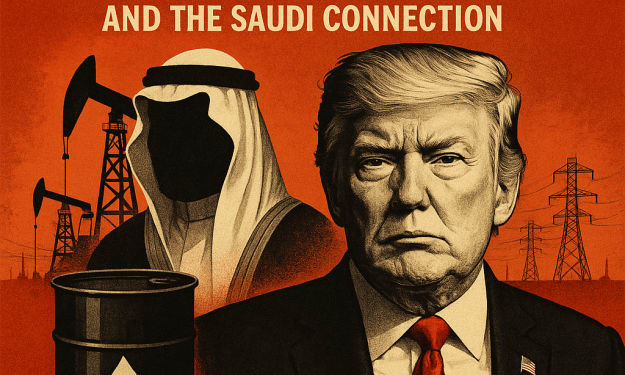
Introduction: A Return to the Global Stage In May 2025, former U.S. President Donald J. Trump embarked on a high-profile tour of the Middle East, visiting Saudi Arabia, Qatar, and the United Arab Emirates. This journey was not merely a series of diplomatic meetings; it was a meticulously orchestrated endeavor blending statecraft, economic ambition, and personal legacy. Chapter 1: Riyadh—The Desert Welcome Arrival and Ceremonial Grandeur On May 13, Air Force One touched down at King Khalid International Airport in Riyadh. Trump was greeted with an opulent ceremony: a lavender carpet laid out, traditional music echoing through the air, and a camel procession leading the way. The Saudi royal family spared no expense, signaling the importance of this visit . Strategic Agreements and Historic Meetings In Riyadh, Trump and Crown Prince Mohammed bin Salman signed a "strategic economic partnership" agreement encompassing energy, defense, and other sectors. Notably, this included a $142 billion arms deal and broader investments totaling $600 billion. Additionally, Trump held a historic meeting with Syrian President Ahmed al-Sharaa—the first such encounter in 25 years—announcing intentions to lift longstanding U.S. sanctions on Syria following the fall of Bashar Assad’s regime . Chapter 2: Doha—Deals and Diplomacy Economic Engagements On May 14, Trump arrived in Doha, Qatar. The visit was marked by significant economic engagements, including Qatar Airways signing an agreement to purchase as many as 210 planes from Boeing—the largest order in the company's history. The United States announced over $243.5 billion in deals with Qatar, covering defense agreements and infrastructure projects . Cultural Exchange and Symbolism Beyond the economic aspects, the visit included cultural exchanges. Trump attended a state dinner at Lusail Palace and participated in a ceremony passing the hosting duties of the FIFA World Cup to the United States. These events underscored the strengthening ties between the two nations. Chapter 3: Abu Dhabi—Technology and Recognition Advancements in Artificial Intelligence On May 15, Trump arrived in Abu Dhabi, United Arab Emirates. The visit focused on technological collaboration, with the UAE committing to invest $1.4 trillion in the U.S. artificial intelligence sector over the next decade. This partnership aimed to enhance the UAE's access to U.S. AI and semiconductor technologies, positioning the nation as a leader in the global AI sector . Honors and Cultural Visits During his stay, Trump was awarded the Order of Zayed, the UAE's highest civil decoration. He also toured the Sheikh Zayed Grand Mosque and visited an interfaith center, reflecting a commitment to cultural and religious understanding. Chapter 4: Emotional Undercurrents and Personal Reflections Private Encounters Amidst the grandeur, there were moments of personal significance. In Dubai, Trump met privately with an American businesswoman who had lost her husband in the Afghanistan war. The encounter was solemn, with Trump expressing condolences and reflecting on the human cost of conflict. Legacy and Personal Ambition Throughout the tour, Trump was acutely aware of his legacy. The scale of the deals and the warmth of the receptions were seen as validations of his approach to foreign policy. In interviews, he emphasized the success of the trip, noting the unprecedented nature of the agreements and the strengthening of U.S. relations in the region . Conclusion: A Complex Tapestry Trump's 2025 Middle East tour was a multifaceted endeavor, blending diplomacy, economic ambition, and personal legacy. The agreements signed and the relationships reinforced have the potential to shape regional dynamics for years to come. While the tour was met with both praise and criticism, it undeniably marked a significant chapter in the ongoing narrative of U.S. engagement in the Middle East. Call to Action: What are your thoughts on the impact of Trump's Middle East tour? Do you believe these engagements will lead to lasting change? Share your perspectives in the comments below.
By Shabir Ahmadabout a year ago in The Swamp