trade
How will free-trade fare under the Trump administration? Trade thoughts and opinion about negotiations, embargo, what works and what doesn't..
"U.S. Faces Economic and Educational Upheaval Amid Trade Wars and Political Shifts in 2025"
The United States finds itself at a pivotal crossroads in April 2025, grappling with major shifts across its economic, political, and educational landscapes. A combination of protectionist trade policies, mounting pressure on elite academic institutions, and a rapidly transforming energy grid is shaping a new and uncertain era for the nation. U.S. Economy Struggles Under Pressure From Aggressive Tariff Policies The American economy is exhibiting signs of distress as a result of intensified tariff measures under the Trump administration’s trade policy. Designed to reduce reliance on foreign imports and strengthen domestic manufacturing, these tariffs have instead led to a cascade of challenges across multiple sectors. According to a new Reuters poll, economists have raised the probability of a recession in the next 12 months to 45%, the highest level since the end of 2023. GDP growth projections for 2025 have also been revised downward—from an anticipated 2.2% to a modest 1.4%. Inflation continues to hover above the Federal Reserve’s 2% target, with few signs of abatement in the near future. Federal Reserve Chair Jerome Powell voiced concern in a recent briefing, warning that continued trade restrictions could further derail the Fed’s policy goals and deepen uncertainty in both consumer and investor markets. He emphasized that while short-term job growth in manufacturing may look promising on the surface, the long-term cost to American businesses and consumers could be steep. Freight Industry Suffers in Prolonged Recession Nowhere is the impact of economic strain more evident than in the freight and logistics industry. Trucking giant J.B. Hunt reported an 8% year-over-year drop in operating income, reflecting sluggish demand, overcapacity, and rising fuel costs. Analysts describe the current state of the trucking industry as a full-blown freight recession. Excess capacity created during the pandemic, combined with weak consumer spending and global trade fragmentation, has created a storm from which recovery could take more than a decade. Freight companies are cutting jobs, reducing fleet sizes, and pausing major investments. Supply chain disruptions caused by international tensions have further complicated logistics operations, especially as companies scramble to reorient their sourcing strategies away from China.
By Saqib Ullah2 years ago in The Swamp
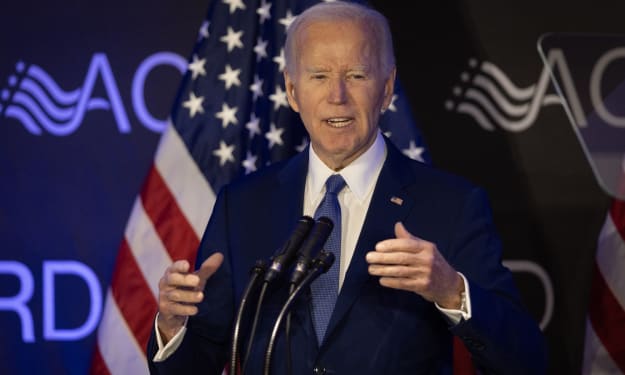
Biden Slams Trump Over Social Security Cuts What It Means for Retirees in 2025
Biden Slams Trump Over Social Security Cuts What It Means for Retirees in 2025 Former President Biden raises alarm over Trump’s proposed Social Security changes warning of major risks for seniors and working class Americans in 2025.
By Adnan Rasheed2 years ago in The Swamp
SNL's Viral 'White Lotus' Trump Spoof Fans Call It the Funniest Sketch of 2025.
SNL's Viral 'White Lotus' Trump Spoof Fans Call It the Funniest Sketch of 2025 SNL imagines Trump and his family as chaotic guests at a 'White Lotus' style resort leaving viewers laughing and critics praising its sharp political satire.
By Adnan Rasheed2 years ago in The Swamp
Is the New Tariff War Between the U.S. and China a Threat to Global Stability? . AI-Generated.
Introduction In today’s highly connected world, global trade influences the lives of nearly everyone, from top-level policymakers to everyday consumers. One of the hottest topics in global economics is the ongoing tariff war between the United States and China. As of 2025, a fresh wave of tariffs has stirred concerns about rising prices, economic uncertainty, and potential disruptions in the global supply chain. But is this just another chapter in a long-standing rivalry—or does it signal a larger threat to global stability?
By Sohel Zain2 years ago in The Swamp
Tariff War
A tariff war, also known as a trade war, is a situation in which countries impose tariffs (taxes or duties) on each other's goods and services in an effort to protect their own economies or to retaliate against perceived unfair trade practices. The idea behind tariffs is to make imported goods more expensive, thereby encouraging consumers to buy domestic products. While tariffs can serve as a protective measure for local industries, they can also create tensions between trading partners and lead to a series of retaliatory actions that escalate into a full-blown tariff war. This article explores the nature of tariff wars, their causes, effects, and notable examples in recent history.
By Yeasin Arafat2 years ago in The Swamp
The Gristle – Issue 3
EXCLUSIVE: BBC Whistleblower Confirms Corporation's Government Bias LONDON — A BBC insider has told The Gristle that Senior News Editors rate stories with a colour-coded 'Threat Level Matrix' based on the likely level of government embarassment.
By Addison Alder2 years ago in The Swamp
Global Market Rally in Danger? Key Warning Signs Investors Can't Ignore in 2025.
Global Market Rally in Danger? Key Warning Signs Investors Can't Ignore in 2025. The global markets have shown signs of optimism in recent weeks buoyed by a relief rally that followed months of uncertainty and volatility. However beneath the surface of this newfound optimism lie growing concerns that the rally may not be as sustainable as it appears. As traders and investors try to hold onto gains warning signs are beginning to emerge across multiple markets suggesting that this rebound may be more fragile than initially believed.
By Adnan Rasheed2 years ago in The Swamp
Trump Trade Tariffs 2025: China and EU Announce Retaliation in Ongoing Global Trade War.
Trump Trade Tariffs 2025: China and EU Announce Retaliation in Ongoing Global Trade War. In a dramatic escalation of global trade tensions both China and the European Union have vowed to retaliate after the United States under former President Donald Trump’s trade policies imposed a fresh wave of tariffs on foreign goods. The move described by many analysts as a protectionist maneuver has reignited fears of a global trade war potentially shaking the foundations of international commerce. The new tariffs which primarily target steel aluminum automotive parts and certain consumer goods from China and the EU officially took effect this week. The Trump administration justified the tariffs on grounds of national security and the need to protect American manufacturing jobs. Officials claimed that foreign competitors had been unfairly undercutting U.S. industries through subsidies and dumping practices. We are no longer going to allow our industries to be destroyed by unfair trade practices Trump had stated during a rally. These tariffs are about restoring fairness and bringing jobs back to America. China responded almost immediately by announcing its own set of tariffs on American goods targeting products such as soybeans pork aircraft and various manufactured items. The Chinese Ministry of Commerce labeled the U.S tariffs as unilateral and protectionist stating that they seriously violate World Trade Organization rules and disrupt global trade order. Spokesperson emphasized the country’s commitment to defending its economic interests. China does not want a trade war but we are not afraid of one. If the U.S. continues to escalate we will respond accordingly. This tit for tat move threatens to harm American farmers particularly in the Midwest who rely heavily on exports to China. Many agricultural groups have expressed concern over the potential loss of billions in revenue. The European Union also joined the retaliation efforts unveiling its own countermeasures. The EU imposed tariffs on a wide range of American goods including motorcycles whiskey orange juice and denim. European leaders accused the U.S. of violating global trade norms and warned that the tariffs could damage long standing transatlantic relationships. EU Trade Commissioner commented This is not the Europe we want. Protectionism is not the answer. We must uphold the rules-based international trade system and avoid a spiral of retaliatory measures.
By Adnan Rasheed2 years ago in The Swamp
Trump's 2025 Reciprocal Tariffs Explained: Full List of Affected Countries and Economic Impact.
Trump's 2025 Reciprocal Tariffs Explained: Full List of Affected Countries and Economic Impact. In a bold move that is reshaping global trade dynamics former President Donald Trump’s administration has implemented a new round of reciprocal tariffs on imports from around the world. The policy officially taking effect on April 9, 2025 is being described by Trump as a measure to combat what he calls decades of unfair trade practices by foreign nations. The concept of reciprocal tariffs is grounded in the principle of mirroring the trade barriers of other nations. In essence if a country imposes higher tariffs on American goods the U.S will now respond with an equivalent or even greater tariff on imports from that country. Trump argues that this approach ensures fairness and protects American industry from exploitation. We’ve allowed countries to take advantage of us for too long Trump said during a rally in Florida last week. If they tax our products, we’re going to tax theirs. It’s time to fight back.
By Adnan Rasheed2 years ago in The Swamp
Trump Warns of 50% Tariffs on China: Trade War Tensions Rise in 2025.
Trump Warns of 50% Tariffs on China: Trade War Tensions Rise in 2025. In a bold and provocative statement former U.S. President Donald Trump has threatened to impose a massive 50% tariff on Chinese goods if Beijing does not drop its own retaliatory tariffs. The warning has sent shockwaves through global markets and reignited fears of a renewed trade war between the world’s two largest economies.
By Adnan Rasheed2 years ago in The Swamp