trade
How will free-trade fare under the Trump administration? Trade thoughts and opinion about negotiations, embargo, what works and what doesn't..
INTP KARL MARX (Das Kapital, Volume One: The Production Process of Capital)
CHAPTER 1 THE PRODUCT I. The Two Factors of the Product: Use-Value and Worth (Substance and Size of Value) In societies where the capitalist mode of production dominates, wealth appears as a "tremendous accumulation of commodities"; the single commodity is its basic unit. Therefore, our examination starts by analyzing the commodity.
By ANTICHRIST SUPERSTARabout a year ago in The Swamp
A Timeline of Tensions Between India and Pakistan Over Kashmir
A Timeline of Tensions Between India and Pakistan Over Kashmir The Kashmir conflict is one of the most protracted and volatile territorial disputes in the world rooted in the partition of British India in 1947. India and Pakistan both nuclear armed neighbors have fought multiple wars and engaged in recurring skirmishes over this contested region. This article outlines a detailed timeline of the tensions between the two nations over Kashmir.
By Adnan Rasheedabout a year ago in The Swamp
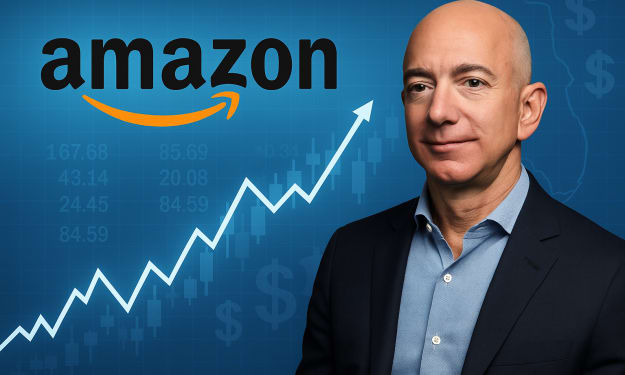
Jeff Bezos Plans to Sell \$5 Billion Worth of Amazon Stock: What It Means for Investors and the Future of Amazon
Jeff Bezos, the founder and executive chairman of Amazon, has once again made headlines—this time not for a rocket launch or a major acquisition, but for a massive stock sale plan. In a new filing disclosed with the U.S. Securities and Exchange Commission, Bezos revealed his intention to sell up to 25 million shares of Amazon stock, estimated to be worth around \$4.75 billion. This stock divestment is scheduled to take place over the course of the next year as part of a pre-arranged trading plan. This development marks yet another significant chapter in Bezos’s post-CEO financial strategy. Earlier in 2024, he offloaded Amazon shares worth approximately \$8.5 billion, bringing his total stock sales for the year to a staggering \$13.4 billion. These transactions reflect not only his ongoing shift in financial priorities but also signal potential moves for both Amazon and his other ventures. The Scope of Bezos’s Stock Sale Bezos's latest sale is part of a 10b5-1 trading plan, which allows insiders of publicly traded corporations to set up a predetermined plan to sell stocks. This type of plan is designed to avoid any allegations of insider trading since the trades are scheduled in advance, irrespective of non-public information. His plan was reportedly initiated in March 2024 and will continue until May 2026. Despite the eye-popping figure attached to the sale, Bezos will still maintain a substantial position in Amazon. After completing the upcoming divestment, he will retain approximately 912 million shares, which equates to about 8.8% ownership in the e-commerce giant. This means that even as he sells off billions in stock, he continues to wield considerable influence over Amazon’s direction and governance. Amazon’s Strong Market Performance Encourages Stock Sales The timing of Bezos’s planned sale appears to be strategic, aligning with a period of impressive financial performance by Amazon. The company recently reported first-quarter net income of \$10.4 billion—an indicator of robust operational success. In addition, Amazon’s stock price has surged by 30% in 2024, reaching \$189.26 at the latest trading session. Investors have been buoyed by Amazon’s aggressive push into artificial intelligence and cloud computing, two sectors that are driving major innovation and market growth. As the company’s stock climbs, it provides an ideal opportunity for Bezos to liquidate portions of his holdings at maximum value. This move isn't just about timing the market—it’s about capitalizing on strong investor sentiment and a bullish outlook for Amazon’s future. What Bezos Plans to Do With the Billions Jeff Bezos has long channeled his Amazon earnings into other ambitious projects, and this new wave of stock sales is expected to continue that trend. One of the primary beneficiaries is Blue Origin, Bezos’s private aerospace company. With annual operating costs exceeding \$2 billion, Blue Origin represents one of the most expensive and visionary projects under his stewardship. The funds from the Amazon stock sales will help fuel the company’s development of space tourism, lunar landers, and potentially interplanetary missions. In addition to his space ventures, Bezos has also been active in philanthropy. According to recent reports, he donated \$60 million in Amazon stock to an unnamed nonprofit. While the specific recipient has not been revealed, this donation aligns with Bezos’s increasing focus on charitable giving in recent years. He has previously committed billions to causes like climate change through the Bezos Earth Fund and social equity programs. The Tax Angle: Why Bezos Moved to Florida One of the most intriguing aspects of this development is the potential tax advantage Bezos gains from his 2023 relocation from Seattle to Miami. Washington state introduced a 7% capital gains tax in 2022, which would have applied to Bezos’s massive stock sales had he remained a resident there. Florida, by contrast, has no state income tax or capital gains tax, making it a far more favorable jurisdiction for high-net-worth individuals looking to optimize their financial strategies. By moving to Florida before executing this series of stock sales, Bezos potentially saves hundreds of millions in state taxes. While legal and within his rights, this move has drawn criticism from some observers who argue it reflects the growing trend of tax avoidance among billionaires. Nevertheless, it illustrates the complex financial considerations at play when billionaires manage and redistribute their wealth. What This Means for Amazon Investors For Amazon shareholders and potential investors, Bezos’s stock sale plan can be interpreted in multiple ways. On one hand, some might view it as a routine rebalancing of assets or a diversification move typical of long-term executives. On the other, a massive selloff by the company’s founder could raise questions about Amazon’s long-term growth prospects—though this concern is tempered by the company’s strong recent performance and Bezos’s continued large stake. It’s also important to recognize that insider sales are common among executives who accumulate vast amounts of stock as part of their compensation. With Amazon stock appreciating sharply in 2024, this might simply be an ideal time for Bezos to convert shares into liquid assets. Final Thoughts: A Billionaire Balancing Act Jeff Bezos continues to walk a unique line between business mogul, visionary space entrepreneur, and modern philanthropist. His latest Amazon stock sale, while financially massive, is just another strategic move in a long series of decisions that balance personal goals with public impact. For everyday investors, the key takeaway isn’t to panic about Bezos selling shares—but rather to observe how he manages his capital, bets on future technologies, and structures his wealth for long-term impact. Amazon remains a dominant player in the global tech and retail sectors, and Bezos’s partial divestment is unlikely to change that anytime soon. As Bezos steers billions toward space travel, philanthropy, and tax-optimized living, one thing is clear: the story of Amazon—and its founder—is far from over. Jeff Bezos
By Tech Horizonsabout a year ago in The Swamp
Philippine Forces Land on Contested South China Sea Feature
Philippine Forces Land on Contested South China Sea Feature In a bold move that has reignited tensions in the region Philippine forces landed on a contested feature in the South China Sea earlier this week asserting Manila’s claim to the disputed waters amid increasing Chinese activity. The operation confirmed by Philippine defense officials marks a significant escalation in the longstanding maritime dispute and underscores the country's determination to defend its territorial rights.
By Adnan Rasheedabout a year ago in The Swamp
Pakistan vs India: Latest Tensions, History, and Future Relations
Pakistan vs India: Rising Tensions, Historic Rivalry, and the Road Ahead The phrase Pakistan vs India often conjures images of cricket matches, diplomatic talks, and military tensions. However, recent developments have reignited the intense rivalry between these two South Asian neighbors, grabbing global attention. With historic grievances and new flashpoints emerging, the world watches closely as Pakistan and India navigate another phase of strained relations.
By Madi Speaksabout a year ago in The Swamp
"The Global Economic Fallout from Trump's Aggressive Tariffs: What You Need to Know". AI-Generated.
Introduction: The Unprecedented Tariffs Shaking the World Economy In April 2025, U.S. President Donald Trump shocked global markets with the announcement of sweeping tariffs on imported goods. The move, which has been described as the most aggressive trade policy in recent decades, is having far-reaching consequences for the global economy. The tariffs are not only straining international relations but also putting significant pressure on the already volatile financial markets. As countries across the world respond, the true economic cost of Trump’s tariff policy is becoming increasingly clear. The Economic Impact: How Global Trade is Affected by Trump's Tariffs President Trump’s new tariffs, which include a 10% levy on nearly all imported goods, have disrupted the flow of international trade. According to the U.S. Trade Representative, the tariffs are designed to address what Trump calls "unfair trade practices" by nations such as China, Mexico, and the European Union. However, the tariffs have caused a ripple effect, raising costs for manufacturers, exporters, and consumers alike. Economists predict that the global economy could slow as a result, with estimates suggesting that global GDP growth may fall to just 2.8% in 2025, down from an earlier forecast of 3.3%. The tariffs are particularly damaging to supply chains that rely on the free movement of goods across borders. Industries such as electronics, automotive manufacturing, and agriculture are especially vulnerable, as the increased cost of imported raw materials leads to higher production costs. This, in turn, could result in price hikes for consumers, leading to inflation in multiple regions. Market Volatility and Recession Fears: What Investors Are Facing The economic uncertainty surrounding Trump’s tariffs has also triggered significant volatility in global stock markets. The S&P 500 has suffered its worst start since 1993, with a sharp 13% drop in early 2025. Gold prices, seen as a safe haven during times of economic instability, have surged to record highs, as investors seek refuge from the unpredictability of the stock market. Analysts are increasingly worried that the ongoing trade war could push the U.S. economy into a recession. With U.S. corporate profits declining and business confidence faltering, the likelihood of a downturn has grown. The International Monetary Fund (IMF) has raised the probability of a U.S. recession to nearly 40%, a concerning forecast for investors, businesses, and policymakers alike. International Reactions: How Other Nations Are Responding The U.S. tariffs have drawn sharp criticism from the international community. Countries such as China, Canada, and the European Union have already retaliated with their own tariffs on American goods, creating a tense and unpredictable global trade environment. In particular, China has imposed retaliatory tariffs on U.S. agricultural products, such as soybeans and pork, which have caused significant harm to U.S. farmers. In addition to retaliatory tariffs, many countries are exploring alternative trade agreements to mitigate the damage caused by Trump’s policies. For example, the European Union is actively seeking new trade partners in Asia and Africa, while countries in Latin America have begun discussing the formation of regional trade blocs to counterbalance the effects of the U.S. tariffs. This shift in global trade dynamics has the potential to reshape economic alliances and further isolate the U.S. on the world stage.
By Saqib Ullah2 years ago in The Swamp
Pentagon Scandal 2025: Hegseth's Leaked Yemen War Plans Exposed via Signal App
Pentagon Scandal 2025: Hegseth's Leaked Yemen War Plans Exposed via Signal App "Shocking Leaks Reveal U.S. Defense Secretary Pete Hegseth Shared Classified Military Plans with Unauthorized Contacts via Encrypted Messaging"
By Adnan Rasheed2 years ago in The Swamp
Why Everyone Is Suddenly So Interested in the US Bond Markets
A few years ago, when you mentioned the bond market at a dinner party, you probably got a few blank stares before someone moved on to stocks, real estate, or Bitcoin, which were easier to understand. However, fast forward to the present day, and the bond market in the United States has suddenly become the topic of conversation. People are spending a lot of time researching yields, treasury auctions, and the dreaded "inverted yield curve"—from financial analysts on YouTube to everyday conversations on Reddit. But the sudden interest: why?
By Nuhan Habib2 years ago in The Swamp