review
Reviews of the political world and its leaders that run the gamut from hot-button issues to laws, from films to press-coverage.
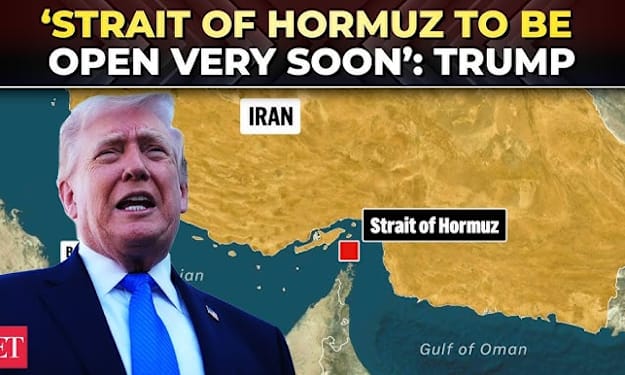
The United States Wants Control Over the Strait of Hormuz
The United States Wants Control Over the Strait of Hormuz The Strait of Hormuz has become the center of one of the most dangerous geopolitical confrontations in recent history. As tensions between the United States and Iran escalate, Washington’s desire to ensure control—or at least secure access—to this narrow waterway reflects far more than a regional dispute. It is about global energy security, military strategy, and economic stability.
By shaoor afridi7 months ago in The Swamp
The United States Is Telling Iran Not to Make a Nuclear Bomb
The issue of Iran’s nuclear program has become one of the most serious and sensitive topics in global politics today. At the center of this tension is a clear and simple demand from the United States: Iran must not develop a nuclear bomb. While the message may sound straightforward, the reality behind it is complex and deeply rooted in years of conflict, mistrust, and strategic rivalry.
By shaoor afridi7 months ago in The Swamp
How Great Leaders Inspire Action
I used to think great leaders were just louder than everyone else. The kind of people who walk into a room and somehow own it without trying. The ones who always seem to have the right words, the perfect timing, the confidence that doesn’t crack. For a long time, I assumed that’s what made people follow them—that presence, that certainty.
By John Smith7 months ago in The Swamp
“What Security Steps Did the US President Take in Pakistan?”
When the President of the United States arrived in Islamabad for high-stakes negotiations with Iran, the visit was not just a diplomatic mission—it was a massive security operation. Given the nature of the talks and the global attention surrounding them, extraordinary measures were taken to ensure the safety of the President, his delegation, and the process itself.
By shaoor afridi7 months ago in The Swamp
Temporary Ceasefire Reached After Iran-US Talks in Islamabad
In a significant yet cautious step toward de-escalation, Iran and the United States have entered into a temporary ceasefire following heightened tensions and weeks of conflict in the Middle East. The agreement, facilitated through diplomatic efforts led by Pakistan, has paved the way for high-level negotiations in Islamabad—offering a moment in an otherwise volatile geopolitical landscape.
By shaoor afridi7 months ago in The Swamp
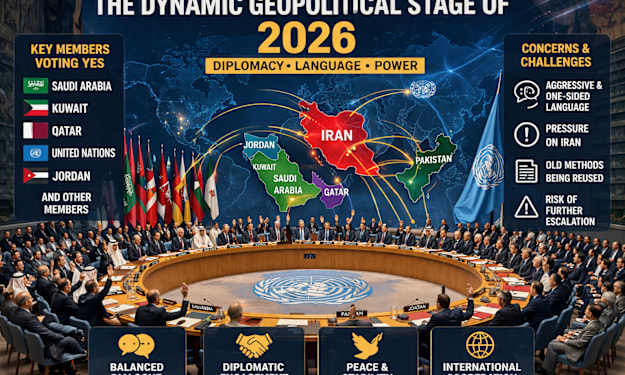
The Dynamic Geopolitical Stage of 2026: Diplomacy, Language, and Power
The year 2026 marks a deeply dynamic and sensitive phase in global geopolitics, where conflicts are no longer shaped solely by military actions or economic sanctions, but increasingly by diplomacy, narratives, and the strategic use of language. At the center of this evolving landscape stands the United Nations, which continues to function as the primary global platform for debate, negotiation, and the passing of resolutions. However, the role of the UN in 2026 is not without controversy, as questions arise about the fairness, tone, and implications of the decisions being made within its chambers.
By Ibrahim Shah 7 months ago in The Swamp
How Iran Reacted After Donald Trump’s Ultimatum
When Donald Trump issued a sharp ultimatum to Iran—warning of massive destruction if U.S. demands were not met—the response from Tehran was neither simple nor predictable. Instead, Iran adopted a dual strategy, combining strong resistance with cautious diplomatic engagement.
By shaoor afridi7 months ago in The Swamp
The "Benefits Cliff"
The System Is Not Cash, It Is Replacement For a family of five in Salem, Oregon, the low-income support system is not built primarily on direct cash transfers. It is built on a small number of high-impact programs that function as after-tax purchasing power, replacing major expenses rather than adding to pre-tax income. This distinction matters because it changes how the system must be evaluated. Income is taxed before it becomes usable, while benefits replace costs that would otherwise require after-tax dollars. That means these programs effectively operate as a parallel income structure, but one that is locked into specific categories such as food, housing, childcare, and healthcare rather than flexible cash.
By Peter Thwing - Host of the FST Podcast7 months ago in The Swamp
A New War Between Pakistan and India May Start Very Soon
The relationship between Pakistan and India has long been marked by tension, conflict, and fragile peace. As two neighboring nuclear-armed nations with a complex history, even the slightest escalation between them draws global concern. In recent times, rising political disagreements, border tensions, and strong national sentiments have once again sparked fears that a new war could begin very soon.
By shaoor afridi7 months ago in The Swamp