politics
Politics does not dictate our collective cultural mindset as much as it simply reflects it; We've got to look in the mirror sometimes, and we've got one.
When the Lights Go Out in New Brunswick. AI-Generated.
In New Brunswick, power outages have become less of an exception and more of an expectation. Each time strong winds blow, freezing rain falls, or heavy snow settles on power lines, thousands of residents brace themselves for darkness. Phones are charged in advance, flashlights are pulled from drawers, and generators hum in driveways across the province. For many, this routine has become frustratingly familiar.
By Ayesha Lashari9 months ago in The Swamp
Who Is Claudio Neves Valente? What We Know About the Brown University Shooting Suspect
The name Claudio Neves Valente has surfaced in national headlines following a tragic and unsettling incident connected to Brown University. As authorities released updates, public attention quickly turned toward understanding who Valente was, what happened, and how the investigation unfolded. This article summarizes confirmed information only, based on official statements and credible reporting, while avoiding speculation.
By KAMRAN AHMAD9 months ago in The Swamp
🇺🇸 Patriot Games: What Trump’s Announcement Really Means
The phrase “Patriot Games” has recently surged across social media and political headlines after former U.S. President Donald Trump referenced it during public remarks and campaign-related discussions. Almost immediately, comparisons to The Hunger Games emerged online, leaving many people confused and asking: Are the Patriot Games real? Is this an actual event? Or is it just political language?
By KAMRAN AHMAD9 months ago in The Swamp
Greg Biffle, NASCAR Legacy, and the Plane Crash Rumors Explained
Former NASCAR driver Greg Biffle has been trending across news and social media platforms following widespread discussion about a plane crash in North Carolina, sparking confusion, speculation, and concern among racing fans. With headlines mentioning a Cessna 550 Citation business jet, NASCAR figures, and the Statesville Regional Airport, many have asked the same urgent questions: Was Greg Biffle involved? Was he on the plane? Is Greg Biffle alive?
By KAMRAN AHMAD9 months ago in The Swamp
The Bank of England: Guardian of Britain’s Financial Stability. AI-Generated.
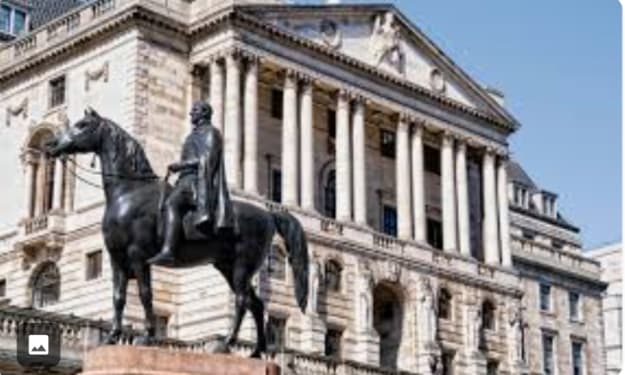
The Bank of England stands as one of the most influential financial institutions in the world, quietly guiding the United Kingdom’s economy through centuries of change, crisis, and innovation. Founded in 1694, it is the second-oldest central bank still in operation, and its role has evolved far beyond its original purpose of managing government debt. Today, the Bank of England sits at the heart of Britain’s financial system, responsible for maintaining monetary stability, safeguarding the banking sector, and supporting sustainable economic growth.
By Ayesha Lashari9 months ago in The Swamp
Trump Delivers Attacks and Deflects Blame for Americans’ Economic Worries. AI-Generated.
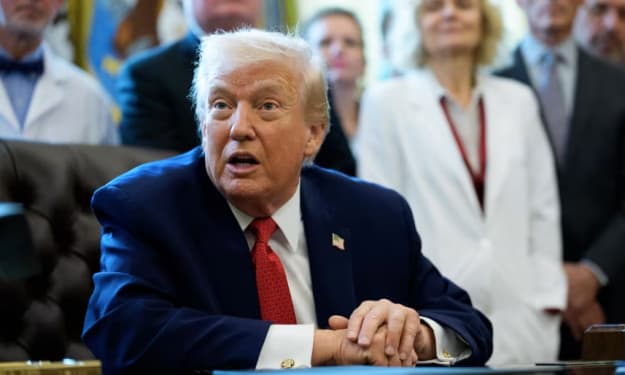
As Americans continue to grapple with the high cost of living, former President Donald Trump has returned to a familiar political strategy: aggressive attacks on opponents paired with a sustained effort to deflect blame for economic anxiety. In speeches, interviews, and social media posts, Trump has framed rising prices, housing stress, and job uncertainty as the direct result of his rivals’ leadership, while positioning himself as the only figure capable of restoring economic stability. The message is designed to resonate with voters who feel squeezed by grocery bills, rent, and interest rates. Trump’s rhetoric leans heavily on a contrast narrative—casting his own presidency as a time of prosperity and his successors as architects of decline. This approach has become a central pillar of his political comeback strategy, reflecting both his communication style and his understanding of voter psychology during periods of economic stress. A Familiar Playbook of Attacks Trump’s attacks are rarely subtle. He routinely accuses current leaders of “destroying” the economy, using blunt language to link inflation, debt, and market uncertainty to what he describes as incompetence or ideological extremism. Political opponents, particularly Democrats, are portrayed as disconnected elites whose policies allegedly punish working families and small businesses. This confrontational tone aligns with what many commentators describe as “vocal media” tactics—loud, direct, emotionally charged messaging designed to dominate headlines and social feeds. By escalating criticism, Trump ensures constant media attention, even when the substance of his claims is disputed. Supporters often interpret this style as authenticity, while critics argue it oversimplifies complex economic realities. Deflecting Responsibility Through Reframing Central to Trump’s economic messaging is deflection. Rather than acknowledging broader global forces—such as supply chain disruptions, geopolitical conflict, or post-pandemic recovery—he reframes economic challenges as the inevitable outcome of policy choices made after he left office. Inflation, in this telling, is not cyclical or international but political and personal. Trump frequently points to low unemployment and market growth during his term, arguing that these indicators prove his economic competence. By selectively highlighting favorable data from the past, he creates a narrative of lost prosperity, implying that current hardship is reversible if leadership changes. This reframing allows him to avoid direct accountability for longer-term structural issues while offering a clear villain for voter frustration. Speaking to Economic Anxiety Economic worry is not abstract for many Americans. Surveys consistently show concerns about affordability, wages, and financial security ranking among top issues. Trump’s messaging taps into this unease by using everyday examples—gas prices, grocery costs, mortgage rates—to make his argument feel immediate and personal. The effectiveness of this approach lies less in detailed policy explanation and more in emotional resonance. Trump rarely delves into technical economic frameworks; instead, he emphasizes impact. The language is designed to validate frustration, reinforcing the idea that voters’ struggles are real, unjust, and caused by identifiable actors. Media Amplification and Polarization The media environment plays a critical role in amplifying Trump’s economic attacks. Cable news debates, viral clips, and online commentary often focus on the most provocative statements, sometimes overshadowing nuanced economic analysis. This dynamic benefits Trump, whose political brand thrives on attention and controversy. However, it also deepens polarization. Supporters view his attacks as truth-telling, while opponents see them as misleading or divisive. The result is a fragmented public discourse where economic facts are filtered through partisan interpretation, making consensus increasingly difficult. Critics Push Back Economists and political critics argue that Trump’s deflection strategy ignores the complexity of economic cycles. They note that inflation and growth are influenced by global markets, central bank decisions, and long-term trends that extend beyond any single administration. From this perspective, blaming current leaders exclusively oversimplifies reality and risks misleading voters. Some also point out that Trump’s own policies—such as trade tariffs or tax changes—had mixed economic effects, benefiting certain sectors while straining others. These critiques, however, often struggle to gain the same traction as Trump’s more emotionally charged messaging. Why the Strategy Persists Despite criticism, Trump’s approach persists because it aligns with political incentives. In times of economic stress, voters often seek clear explanations and decisive leadership. By offering both a culprit and a promised solution, Trump fills that psychological demand. Moreover, his ability to dominate the media conversation ensures that economic debate frequently centers on his framing. Even rebuttals reinforce his presence, keeping his narrative in circulation. Conclusion Trump’s attacks and blame-shifting around Americans’ economic worries reflect a calculated strategy rooted in vocal, confrontational media politics. By channeling frustration, reframing responsibility, and maintaining relentless visibility, he positions himself as both critic-in-chief and would-be economic savior. Whether this approach convinces a broad electorate remains uncertain, but its influence on the national conversation about the economy is undeniable.
By Jameel Jamali9 months ago in The Swamp
Netanyahu: Exploiting Bondi Beach Attack?. Content Warning.
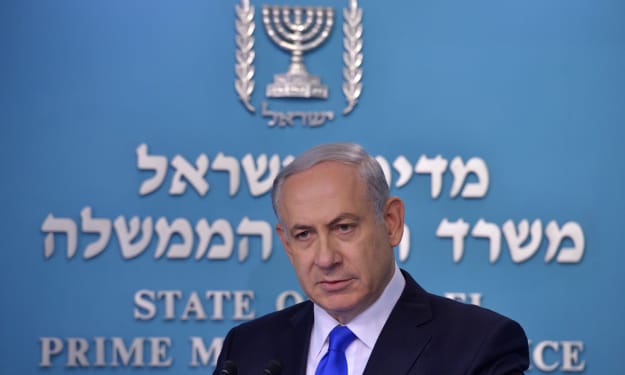
Let me be clear here, the attack on Bondi Beach by two Muslim killers with telescopic rifles on a Hannukkah or Festival of Lights gathering on Bondi Beach was evil. Jewish Australians had gathered on the famous beach to celebrate this religious festival, as is the right of every faith to celebrate its festivals. A father and son team with alleged links to the Islamic State took potshots as Jews dove for cover. A brave Muslim man, a former Syrian policeman, wrestled a gun off one of the attackers, the Father in this case. The attackers were a father and son team. Although some suspect a third man may have been involved. The Muslim man Ahmed al Ahmed is now in the hospital recovering from bullet wounds to his hand and arm.
By Nicholas Bishop9 months ago in The Swamp
House Democrats Release Epstein Estate Photos Featuring Trump, Clinton, Andrew and Other High-Profile Figures. AI-Generated.
House Democrats have unveiled a selection of photos from the estate of the late convicted sex offender Jeffrey Epstein, thrusting renewed attention on the social web that once surrounded one of the most controversial figures of the last decade. The images — released by members of the House Oversight Committee — include portraits of President Donald Trump, former President Bill Clinton and former Prince Andrew alongside Epstein.
By Aadil shanawar9 months ago in The Swamp
Gen-Z Revolutions Have Spread to Europe. The Continent Isn't Ready
As 2026 looms just over the horizon, it feels oddly appropriate that one of the most consequential political stories of the year has returned for an encore. The global wave of Gen Z–driven protests—already responsible for shaking governments in parts of Africa and Asia—has now firmly arrived in Europe. And it didn’t knock politely.
By Lawrence Lease9 months ago in The Swamp
US Sanctions Six More Ships After Seizing Oil Tanker Off Venezuela. AI-Generated.
The United States has significantly intensified its pressure campaign on Venezuela’s government, sanctioning six additional oil tankers and their operators just a day after seizing a sanctioned oil tanker off the Venezuelan coast. The sweeping actions mark a dramatic escalation in U.S. attempts to choke off financial resources flowing to the administration of President Nicolás Maduro and allied networks alleged to aid sanctioned states like Iran and militant groups.
By Zahid Hussain9 months ago in The Swamp
Indiana Republicans Defy Trump in Stunning Rejection of Redistricting Map. AI-Generated.
For months, Indiana has been at the center of a political drama that almost felt scripted for prime-time television. Former President Donald Trump had his eyes set on the Hoosier State, pushing hard for a new congressional map that would have strengthened Republican control and squeezed out the last remaining Democratic districts.
By Zahid Hussain9 months ago in The Swamp