politics
Politics does not dictate our collective cultural mindset as much as it simply reflects it; We've got to look in the mirror sometimes, and we've got one.
The Man the Matrix Made
In the initial basis of understanding contemporary political performance, one must confront a peculiar paradox: the figure who most loudly proclaims to have escaped "the Matrix" may represent its most sophisticated product. Andrew Tate, the self-proclaimed escape artist from systemic control, operates as a near-perfect embodiment of what quantum metapolitics produces when masculine anxiety meets algorithmic capitalism. The means in which he has constructed his public persona reveals not liberation from control systems, but rather their most complete expression—a man who believes he has transcended the spectacle whilst functioning as its most enthusiastic reproduction engine.
By Abigail Goldwater (Guldvatten)9 months ago in The Swamp
Trump Says He’s Pardoned Tina Peters — But Colorado Says “Not So Fast”. AI-Generated.
Every few months, the political world gets a story that feels like it was pulled straight from a legal drama. This week’s episode stars former President Donald Trump, a Colorado elections clerk, and a pardon that… well… isn’t actually a pardon.
By Aadil shanawar9 months ago in The Swamp
From Iran to China to Venezuela – How the Seized Tanker Hid Its True Location. AI-Generated.
The tanker at the center of the U.S. seizure reportedly followed a covert maritime path that stretched from Iran to China and eventually to Venezuela—an evasive route designed to mask its true origin and activity. According to maritime analysts, the vessel relied on a series of sophisticated tactics increasingly used by ships attempting to circumvent international sanctions. These maneuvers have become common across networks linking Tehran, Beijing, and Caracas, all of which face varying degrees of U.S. economic pressure.
By Aadil shanawar9 months ago in The Swamp
US Seizes Oil Tanker off Venezuela as Caracas Denounces ‘Act of Piracy’. AI-Generated.
US Seizes Oil Tanker off Venezuela as Caracas Condemns ‘Act of Piracy’ In a dramatic escalation of tensions between Washington and Caracas, United States authorities have seized an oil tanker operating off the coast of Venezuela, prompting fierce condemnation from the Venezuelan government. Describing the action as an “unacceptable act of piracy,” Caracas has accused the U.S. of violating international law and undermining regional stability. The incident has rapidly grown into a diplomatic flashpoint, highlighting the deep geopolitical rifts that continue to shape the Western Hemisphere. The tanker, reportedly carrying a large shipment of Venezuelan crude, was intercepted under allegations of breaching U.S. sanctions. Washington maintains that the vessel was operating in defiance of restrictions designed to curtail Venezuela’s oil exports, which remain a central pillar of the government’s revenue. According to U.S. officials, the seizure was part of an ongoing effort to enforce sanctions targeting entities they claim are helping the Venezuelan leadership circumvent economic pressure. Venezuelan authorities, however, have rejected these accusations as baseless and politically motivated. In a strongly worded statement, government spokespeople argued that the United States is unlawfully asserting extraterritorial authority by seizing a vessel in international waters. They contend that the shipment was entirely legitimate and that Washington is using sanctions as a pretext to tighten its grip on the country’s economic lifeline. The incident comes at a time when Venezuela is struggling to rebuild its oil industry, long battered by years of mismanagement, declining production, and international isolation. Despite these challenges, Caracas has been working to deepen energy partnerships with non-Western allies, particularly in Asia and the Middle East. The seizure threatens to complicate those efforts by injecting new uncertainty into the already fraught logistics of transporting Venezuelan crude. Analysts note that this latest confrontation is emblematic of a broader struggle between the two nations—one that blends political ideology, economic interests, and strategic competition. For the United States, sanctions remain a key tool in pressing for political changes within Venezuela, including demands for new elections and the release of political prisoners. For Caracas, the measures represent an existential threat, viewed as part of a long-standing campaign to undermine national sovereignty and destabilize the government. International reaction to the tanker seizure has been mixed. Some U.S. allies have quietly expressed support for enforcing sanctions, arguing that Venezuela has repeatedly tried to obscure or mislabel shipments to evade restrictions. Others, particularly in Latin America, have warned that aggressive enforcement measures risk inflaming regional tensions and could set dangerous precedents for maritime conduct. Humanitarian organizations, meanwhile, worry that such actions may further constrict Venezuela’s economic space, worsening shortages of basic goods and increasing hardship for ordinary citizens. The Venezuelan government has vowed to pursue diplomatic and legal avenues to challenge the U.S. action. Officials have indicated that they may bring the case before international maritime courts, while simultaneously calling for global support against what they describe as Washington’s “unilateral coercive measures.” The Foreign Ministry has emphasized that the seizure not only harms Venezuela’s economy but also undermines principles of free navigation and fair trade. For its part, the United States appears resolute. Authorities insist that sanctions will remain firmly in place until Venezuela demonstrates concrete steps toward political reform. They argue that allowing sanctioned oil shipments to move freely would weaken international pressure and embolden a government they accuse of corruption and repression. Washington has also signaled that additional enforcement actions could follow, targeting both vessels and companies believed to be aiding Venezuela’s export efforts. The episode highlights a strategic reality that neither side seems willing to acknowledge publicly: despite years of sanctions and diplomatic hostility, the United States and Venezuela remain deeply intertwined through geography and regional dynamics. Any escalation at sea risks creating ripple effects far beyond the two nations’ borders, particularly in Caribbean shipping lanes that are vital for global commerce. As events continue to unfold, observers warn that both Washington and Caracas must tread carefully. A miscalculation—particularly in maritime operations—could provoke a broader confrontation neither side truly desires. Yet, with political stakes high and mutual distrust entrenched, a swift resolution appears unlikely. For now, the seized tanker sits at the center of a widening geopolitical storm. Whether it becomes a turning point in U.S.-Venezuelan relations or simply another chapter in a long history of tensions will depend on how both governments choose to proceed in the coming weeks. What remains clear, however, is that the struggle over Venezuela’s oil—its most prized and contentious asset—is far from over.
By Aadil shanawar9 months ago in The Swamp
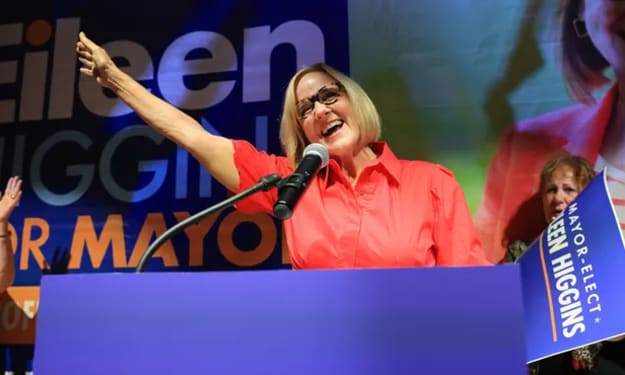
Eileen Higgins and the New Direction of Miami’s Mayoral Race
Miami’s political landscape shifted dramatically as voters turned out for one of the most closely watched mayoral elections in recent years. With national attention fixed on South Florida, Eileen Higgins, a well-known county commissioner and longtime community advocate, emerged as a central figure in the Miami mayoral race. Her influence, messaging, and policy priorities played an undeniable role in shaping how residents viewed the future of the city.
By KAMRAN AHMAD9 months ago in The Swamp
The Federal Reserve’s December 2026 Meeting: What Americans Should Expect Next
The Federal Reserve’s December 2025 meeting is one of the most closely watched events of the year. With Americans facing rising uncertainty, shifting inflation, and a cooling job market, this meeting is carrying more weight than usual. The main question on everyone’s mind is whether the Fed will cut interest rates again—and if this cut will be the last one for a while. The answers could shape borrowing, spending, and saving habits across the country as we move into 2026.
By Waqar Khan9 months ago in The Swamp
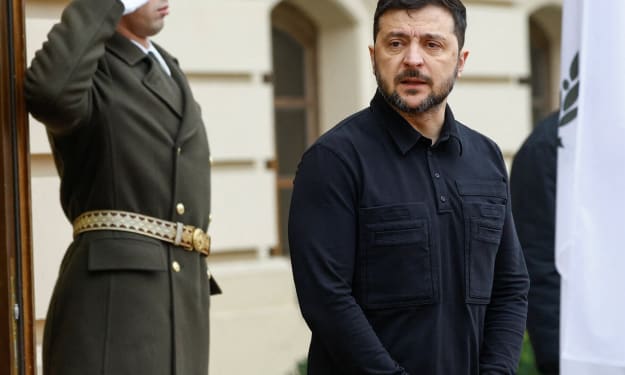
Zelensky to Meet With European Leaders as Peace Talks Drag On. AI-Generated.
After nearly three years of unrelenting war, countless civilian casualties, and waves of missile strikes that have reshaped the map of Eastern Europe, President Volodymyr Zelensky is once again stepping onto the global stage — this time in London. His mission? To meet with the leaders of Britain, France, and Germany in a renewed push to break the deadlock in ongoing peace negotiations with Russia. For many watching the conflict unfold, this meeting feels different. It’s not just another diplomatic photo-op or symbolic show of solidarity. Instead, it comes at a moment when the stakes could not be higher. Peace talks, pushed heavily by the United States and European Union, have dragged on with frustration mounting on all sides. Russia continues its aggressive offensive, Ukraine continues to resist, and ordinary civilians continue paying the highest price. Now, Europe — once again — finds itself at the center of a geopolitical crisis with global implications. Why London? Why Now? Zelensky’s meeting in London isn’t random. Britain has been one of Ukraine’s strongest allies since the early days of the war, offering military aid, training programs, and political backing even when international support wavered. Holding the summit there sends a clear message: Europe must not only remain united — it must take the lead. The U.S. has recently stepped back from being the primary driver of negotiations, instead urging Europe to step forward with a long-term, stable peace framework. This shift places extra pressure on European powers to not only support Ukraine’s defense but also shape its future. In many ways, the London meeting is Europe’s moment of truth. A Gathering of Power Players The summit brings together a trio of leaders whose countries hold tremendous influence within the EU: UK Prime Minister Keir Starmer French President Emmanuel Macron German Chancellor Friedrich Merz Combined, these three nations represent the backbone of European funding, military capability, and political clout. Their decisions will ripple through the continent for decades. For Zelensky, this is an opportunity — perhaps one of the last — to secure binding promises of support before any peace agreement takes final shape. What’s Really on the Table? Despite the hopeful headlines, peace talks remain incredibly fragile. Both sides are dug in, and Russia has shown little intention of backing away from its territorial ambitions. Still, several key points are expected to dominate the conversation in London: 1. Long-Term Security Guarantees Ukraine isn’t just looking for short-term aid. It needs durable security agreements — guarantees that Europe will stand by its side long after the ink dries on any peace deal. This includes air defense systems, weapons supplies, and coordinated military support. 2. Financial Commitments Rebuilding Ukraine won’t be cheap. Billions have already been spent, and billions more will be needed. Zelensky’s goal is to secure long-term funding mechanisms that can survive future elections or shifting political winds. 3. A Unified European Peace Strategy One of Ukraine’s biggest fears is a fragmented peace plan — different countries making different promises with different intentions. London may finally offer a single European voice, one strong enough to bring stability to the negotiating table. 4. Pressure on Russia Europe’s ability to influence Russia is limited, but not nonexistent. Coordinated sanctions, diplomatic isolation, and carefully calibrated military support could create new leverage. Europe knows this — and knows time is running out. The Risks No One Wants to Talk About Even as the leaders gather in polished halls and secure conference rooms, the risks remain enormous. Russia continues targeting Ukrainian energy plants, rail lines, and civilian centers, making the humanitarian situation dire. Each new attack threatens to derail negotiations, inflame public anger, and undermine diplomatic efforts. There is also a political risk: leaders in London must balance their own citizens’ concerns about the cost of war, rising inflation, and fears of escalation. A tired public is harder to rally, and politicians know it. Meanwhile, any peace agreement that appears to reward Russian aggression — especially one involving territorial concessions — could fracture public support in Europe and provoke backlash within Ukraine itself. A Moment That Could Shape a Generation As Zelensky steps into London, he carries with him the weight of a nation hoping for relief, stability, and — above all — a just peace. Across Europe, millions watch carefully. Will this meeting finally move the needle? Will it spark the momentum needed to end the conflict? Or will it become just another chapter in a long, painful stalemate? No one can say for sure. But one thing is clear: what happens in London could determine the next decade of European security and Ukraine’s future as an independent state. Peace may still feel distant, but moments like these — when leaders gather, when ideas collide, when unity is tested — are where the foundations of the future are laid. And today, those foundations are being built in London.
By Ayesha Lashari9 months ago in The Swamp
Tokyo’s Bold Taiwan Bet
Friday, the 7th of November, was supposed to be routine business inside the Japanese Diet. Lawmakers expected a day packed with procedural questions, quiet policy disagreements, and the kind of legislative tedium that rarely makes front-page news. Instead, a single exchange detonated into an international incident that now sits at the center of East Asia’s escalating tensions. It began when Katsuya Okada of the Constitutional Democratic Party asked Prime Minister Sanae Takaichi a straightforward question. Her response, however, was anything but straightforward: she declared that a Chinese attack on Taiwan could pose an existential threat to Japan — one that would compel Japanese intervention on Taiwan’s behalf.
By Lawrence Lease9 months ago in The Swamp
Is Al-Sharaa’s Syria A Success?
Electricity isn’t something most of us think about. We flip a switch, the lights come on, and that’s that. But in Syria—where infrastructure has spent more than a decade in ruins—48 hours of uninterrupted electricity can feel like a revelation.
By Lawrence Lease9 months ago in The Swamp
Charlie Kirk The Rise Controversy and Influence Behind Americas Viral Conservative Voice
American politics has always moved fast, but sometimes a personality appears that rises far more quickly than the usual pace. In recent years, Charlie Kirk has become one of those names that suddenly enter the national conversation and refuse to leave it. Whether people agree with him or strongly oppose him, one fact is undeniable. Charlie Kirk has become one of the most talked about and most searched conservative figures in the United States. Charlie Kirk began building his identity at a very young age. At a time when most students are focused on shaping their academic future, he stepped directly into the world of political conversation. He started by speaking to college students and then expanded his message to a nationwide audience. Today his voice is heard everywhere from university debates to large media discussions. One of the biggest reasons behind his popularity is the confidence with which he presents his ideas. He talks about issues that interest young Americans such as free speech, capitalism, government power, immigration and cultural shifts. Charlie Kirk has a specific style that appeals to many. He speaks directly, uses simple language, and delivers his thoughts without hesitation. This straightforward approach has helped him build a strong following among young conservatives. At the same time, this exact style has also made him a target of criticism from those who believe his opinions are extreme or overly confrontational. Social media has played a major role in the rise of Charlie Kirk. He is active on almost every major platform and shares his views daily. His posts travel fast and often go viral. This constant digital activity has helped him reach millions, making him one of the most recognizable voices in modern conservative politics. For many young people, his short and passionate responses create an excitement that draws them in. That is why his name repeatedly spikes in search trends whenever he posts something that catches public attention. With growing popularity, controversy has also followed. Many people strongly disagree with his political and cultural viewpoints. Some critics label him as divisive while his supporters argue that he is a strong defender of free expression. According to Kirk himself, he simply states what he believes to be true and does not shy away from pressure or fear. This boldness is a major reason why many followers admire him. They see him as someone who speaks openly without being influenced by political correctness. Another factor that keeps Charlie Kirk in the spotlight is his speaking tours across the United States. He frequently visits universities and public venues where he engages directly with students. His events usually include open question and answer sessions which make the discussions energetic and sometimes heated. People with opposing views also attend these events which leads to intense exchanges. These moments often circulate online, causing people to search his name again to see what the latest debate was about. Apart from his voice and presence in discussions, Charlie Kirk is also recognized for his organizational abilities. He is associated with a large platform that focuses on increasing political awareness among young people. Through this network he has built a strong reach across the country. This influence operates beyond traditional media and creates a community that stays connected to his viewpoints and messaging. The rise in searches related to Charlie Kirk is not only because of political events but also because he has become a part of a larger cultural debate. The United States is experiencing increasing political and social division. In such an environment, any strong and loud voice quickly gains attention. Charlie Kirk is one of those personalities who steps into topics that people are already emotionally involved in and then presents them with a new angle. This is why he does not trend for just a day or a week, but maintains a consistent presence in national political conversation. Whether someone views him as the future face of the conservative movement or sees him as a controversial figure, his influence is real. He has successfully positioned himself as a major voice for a new generation of conservatives. Even those who disagree with him acknowledge that he has built a significant role in shaping modern political discussions. Charlie Kirk’s rise shows how social media, youth engagement and bold communication can turn a relatively unknown individual into a national figure. His journey reflects the changing nature of American political discourse where strong personalities often overshadow traditional institutions. And as long as cultural debates continue to intensify, figures like Charlie Kirk will keep appearing at the top of search trends.
By Abid Ali Khan9 months ago in The Swamp
When Power Targets the Vulnerable
“I exploit you, still you love me I tell you, one and one makes three.” - Living Colour My first inclination that a Trump presidency had the potential to descend into a cult of personality occurred a few months after he descended his golden escalator to announce his candidacy. I had criticized the mocking of Serge Kovaleski, a reporter with the New York Times, by imitating his physical disability. Even though the act was caught on tape for the whole world to see, I was attacked by a Facebook friend for spreading “fake news.” As we went back and forth, she insisted that there was nothing out of the ordinary about the candidate’s flailing arms and broken speech; these were things Trump did all the time and had nothing to do with the reporter’s congenital condition.
By Carl J. Petersen9 months ago in The Swamp