politicians
Reviews of the politicians kissing babies and running governments around the world; applaud and criticize the decisions they make and their implications.
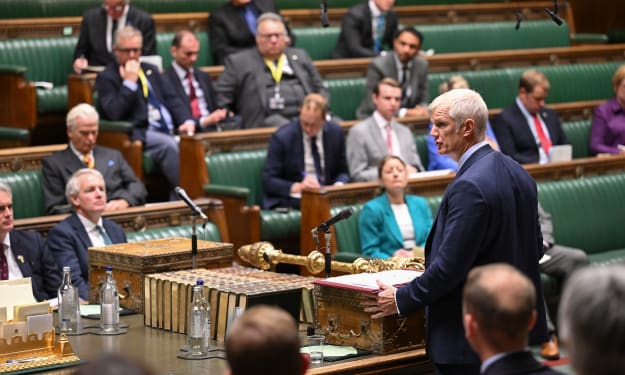
Labour Minister: We Are Back to The Future.
I have often thought that Russia being bogged down in Ukraine making incremental gains against a stubborn Ukraine defence is similar to when Japan was bogged down in China before the Second World War fighting the Chinese Nationalist forces for little gain. Yes, the Japanese like Russia now made some gains in captured territory. But at a huge cost to both sides like Russia and Ukraine now. In that respect history is repeating itself where another country invades and expects a victory to be in the enemy capital very soon, much like how US forces captured Baghdad in 2003. However, for Japan in China then and for Russia in Ukraine now that didn't/hasn't happened. Both Japan in China then and Russia in Ukraine now ended up in a slog fest with total victory out of sight.
By Nicholas Bishop9 months ago in The Swamp
Surgeon General Nominee Casey Means Grilled on Vaccines and Pesticides During Senate Hearing . AI-Generated.
The confirmation hearing of Casey Means sparks national debate over science, public health policy, and the future direction of U.S. healthcare leadership The nomination of Casey Means for U.S. Surgeon General has ignited intense scrutiny following a contentious Senate hearing focused on her views regarding vaccines, pesticides, and chronic disease. Lawmakers pressed Means on her public statements, scientific positions, and qualifications, highlighting deep divisions over the role of public health leadership in an era shaped by misinformation, environmental concerns, and declining trust in institutions. As the nominee faced questions from members of the United States Senate, the hearing became more than a routine confirmation process. It evolved into a broader national conversation about science, safety, and how public officials should communicate with the American people during health crises. --- The Role of the Surgeon General The U.S. Surgeon General serves as the nation’s leading public health spokesperson, responsible for providing Americans with clear, science-based guidance on critical health issues. The position has historically played a key role in addressing public health emergencies, from tobacco use and HIV/AIDS to COVID-19 and mental health challenges. Means’ nomination comes at a time when public confidence in health authorities has been strained. The next Surgeon General will face the difficult task of restoring trust while navigating politically sensitive topics such as vaccines, environmental health, and chronic disease prevention. During the hearing, senators emphasized the importance of ensuring that the nominee would rely on established scientific evidence when communicating with the public. --- Vaccine Views Take Center Stage One of the most closely watched aspects of the hearing involved Means’ statements on vaccines. Vaccination remains one of the most effective tools for preventing infectious diseases, and federal agencies such as the Centers for Disease Control and Prevention and the Food and Drug Administration continue to emphasize their safety and effectiveness. Several senators questioned Means about her past comments discussing vaccine safety, transparency, and pharmaceutical industry influence. Critics expressed concern that her statements could undermine public confidence in vaccines, while supporters argued that asking questions about safety and transparency is part of scientific inquiry. Means responded by affirming that vaccines play an important role in public health. She emphasized that her goal as Surgeon General would be to ensure transparency, rebuild public trust, and improve communication between health institutions and the public. She stated that restoring confidence requires acknowledging concerns openly while also clearly presenting scientific evidence. --- Concerns About Pesticides and Environmental Health In addition to vaccines, Means faced detailed questions about her views on pesticides and environmental toxins. She has previously spoken about the potential impact of environmental exposures on chronic disease, a topic that has gained increasing attention in public health discussions. Some lawmakers supported her focus on environmental factors, pointing to growing research suggesting that pollution and chemical exposure may contribute to conditions such as obesity, diabetes, and cancer. Others, however, questioned whether her statements might overstate risks or create unnecessary alarm among the public. Means explained that addressing chronic illness requires a comprehensive approach that includes examining environmental influences alongside diet, lifestyle, and access to healthcare. Her responses highlighted a broader shift in public health thinking, which increasingly recognizes the complex relationship between environmental factors and long-term health outcomes. --- A Nation Facing a Chronic Disease Crisis The hearing also touched on the rising rates of chronic disease in the United States. Conditions such as heart disease, diabetes, and obesity continue to affect millions of Americans, placing enormous strain on the healthcare system. Means emphasized prevention as a central priority. She argued that improving nutrition, reducing environmental risks, and promoting healthier lifestyles could help address the root causes of disease rather than simply treating symptoms. This prevention-focused approach aligns with growing efforts within the medical community to shift healthcare from reactive treatment to proactive wellness. Many public health experts agree that addressing chronic disease will require coordinated action across multiple sectors, including healthcare, agriculture, environmental regulation, and education. --- Political Divisions Reflect Broader Public Debate The intensity of the hearing reflects larger political and cultural divisions surrounding science and public health in the United States. Some senators expressed strong support for Means, praising her willingness to challenge established systems and bring fresh perspectives to public health leadership. They argued that Americans want greater transparency and accountability from health institutions. Others raised concerns about whether her past statements could weaken confidence in proven medical interventions, particularly vaccines. The hearing illustrated how public health has become deeply intertwined with politics, making the Surgeon General’s role more complex than ever before. --- The Importance of Public Trust At the heart of the debate lies a fundamental question: how can public health leaders rebuild trust in an era of widespread skepticism? Trust is essential for effective public health action. When people trust health authorities, they are more likely to follow medical guidance, receive vaccinations, and adopt healthier behaviors. Means acknowledged this challenge during the hearing, emphasizing that listening to public concerns and communicating honestly would be key priorities if confirmed. She stressed that public health leadership must be rooted in both scientific evidence and empathy. --- What Happens Next The Senate will ultimately vote on whether to confirm Means as Surgeon General. The decision will shape the direction of federal public health messaging and priorities in the coming years. If confirmed, she would assume responsibility for guiding the nation through ongoing health challenges, including chronic disease, mental health issues, and future public health emergencies. Her leadership could influence how health information is communicated, how prevention strategies are implemented, and how Americans view the institutions designed to protect their well-being. --- A Defining Moment for Public Health Leadership The confirmation hearing of Casey Means represents a pivotal moment in American public health. It highlights the growing importance of transparency, scientific integrity, and effective communication in restoring public confidence. Regardless of the outcome, the debate surrounding her nomination underscores a broader reality: public health leadership today requires navigating complex scientific, political, and social challenges. The next Surgeon General will not only shape health policy but also help determine how Americans understand and respond to the most critical health issues of their time.
By Jameel Jamali9 months ago in The Swamp
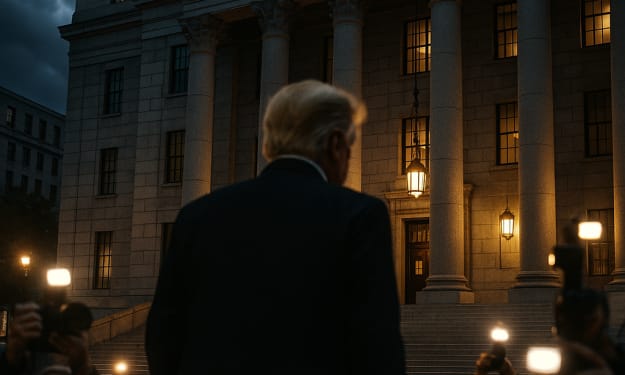
Trump Touts Third Term.
Trump must be one of the most boastful men on Earth. In his dreams, he probably sees himself as Superman, not unlike that Spitting Image puppet of Ronald Reagan in the 80s, a Genesis video "Land of Confusion" where Reagan rides a Triceratops putting everything right. In the video, Reagan is dressed as Superman and a cowboy. He wakes up next to his wife Nancy and realises it was all an illusional dream. Strange irony, really, as Trump has a picture of Ronald Reagan in the Oval Office. And we know while Trump doesn't literally think he is Reagan come again (although that wouldn't surprise me!), he is certainly an admirer of Reagan.
By Nicholas Bishop9 months ago in The Swamp
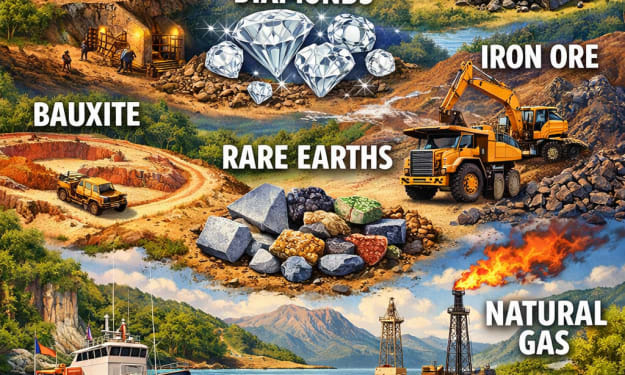
What resources does Venezuela have — apart from the world’s most oil?
Largest known oil reserves Venezuela has the world’s largest proven oil reserves, estimated at 303 billion barrels as of 2023, more than five times the amount the United States has, which is 55.25 billion barrels.
By Ibrahim Shah 9 months ago in The Swamp
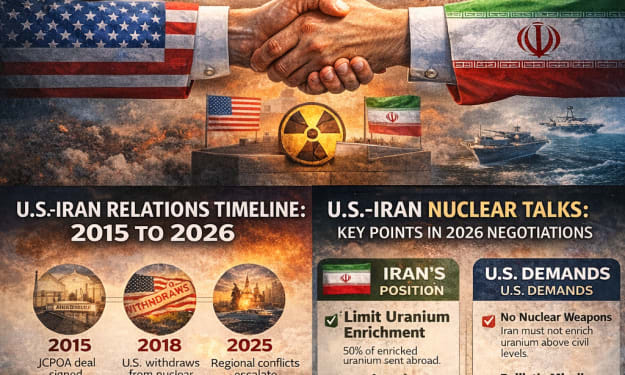
U.S.–Iran Relations in 2026: Nuclear Negotiations, Tensions, and a World on Edge
The Context: A Long History of Tension Relations between the United States and Iran have been fraught since the 1979 Islamic Revolution, when the U.S.-backed shah was overthrown and American diplomats were held hostage for 444 days. Decades of mistrust followed, marked by sanctions, proxy conflicts, and sharply diverging regional priorities.
By shahkar jalal9 months ago in The Swamp
When Words Become Diplomacy: France Summons the U.S. Ambassador. AI-Generated.
In February 2026, a tragic event in France quickly turned into an international issue. What began as a violent street clash in the city of Lyon led to the death of a young political activist. Within days, the situation escalated beyond France’s borders, creating diplomatic tension between France and the United States.
By dua fatima9 months ago in The Swamp
Iran Wants Deal Apparently!!!
Protests have flared up again over the weekend in Iran. As the university term started, students gathered on campuses to protest the regime and show their support for it. This time, these protests are not as great as the ones in January. Some thought the clerical regime could be swept away as the Shah's regime was in 1979, which led to the rise of the Ayatollahs.
By Nicholas Bishop9 months ago in The Swamp
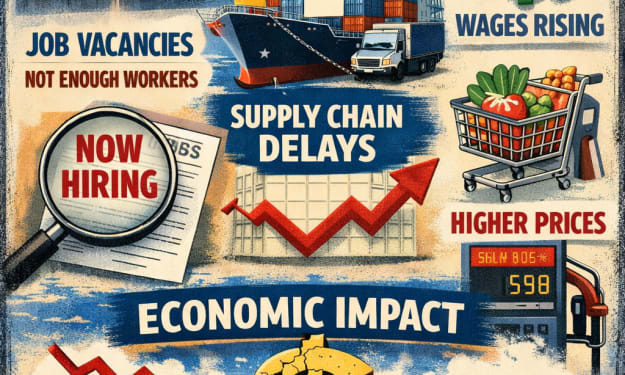
America’s labor Shortages Impact On Economy
The U.S. economy in 2026 is navigating a peculiar set of crosscurrents. On one hand, job growth has slowed, yet labor markets in key sectors remain stubbornly tight. On the other, a policy of intensified immigration enforcement 2026 is underway, aiming to significantly reduce the nation’s undocumented population. This creates a direct collision between immigration policy and economic necessity, forcing a difficult national conversation about trade-offs that are often overshadowed by political rhetoric.
By Ibrahim Shah 9 months ago in The Swamp
New World Order In 2026
The phrase “New World Order” has long stirred curiosity, debate, and sometimes fear. For some, it represents a hopeful vision of global cooperation in an increasingly interconnected world. For others, it signals concerns about centralized power, loss of national sovereignty, or hidden political agendas. In reality, the concept is complex and has evolved over time, shaped by historical events, geopolitical shifts, economic systems, and technological revolutions.
By Ibrahim Shah 9 months ago in The Swamp