humanity
Humanity topics include pieces on the real lives of politicians, legislators, activists, women in politics and the everyday voter.
"A New Dawn for the Catholic Church: The Historic Rise of Pope Leo XIV". AI-Generated.
In an unprecedented moment that has captured the attention of millions around the world, the Catholic Church has elected its first American pontiff—Pope Leo XIV. The announcement was made on May 9, 2025, as white smoke billowed from the Sistine Chapel chimney, signaling the conclusion of the papal conclave and the beginning of a new chapter for the global Catholic community.
By Mahmud Labibabout a year ago in The Swamp
Reckoning With the Real Cost of the India-Pakistan Conflict
In a week dominated by headlines of airstrikes, ceasefire violations, and swelling nationalism, one truth remains buried beneath the noise: Kashmir continues to bleed — and most of us continue to either look away or cheer from the sidelines.
By Muhammad Hamza Shahabout a year ago in The Swamp
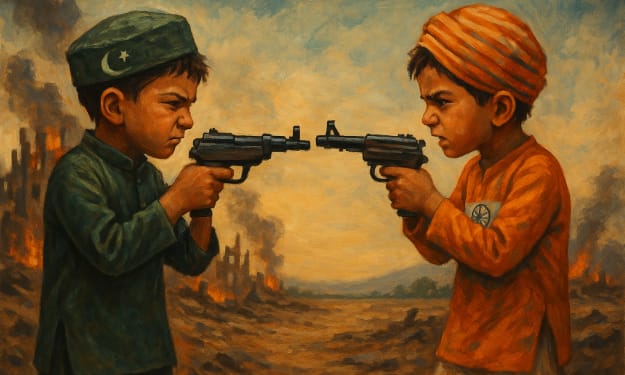
War Between Brothers: A Call for Peace in South Asia
The world watched in horror as tensions between Pakistan and India erupted once again into a full-blown conflict in these recent days. What began as a border skirmish soon escalated into one of the most destructive confrontations in recent South Asian history. While the international media flooded timelines with statistics and breaking updates, the real cost of this war—human lives, fractured communities, economic collapse, and regional instability—remains far more than what any headline can convey.
By Zakir Ullahabout a year ago in The Swamp
The Reality Behind the Pahalgam Attack: Unraveling the Security and Sovereignty Crisis in India
The recent attack in Pahalgam, Jammu and Kashmir, has once again exposed deep vulnerabilities in India’s internal security framework. Known for its natural beauty and spiritual significance, Pahalgam has become an unfortunate symbol of the broader tensions simmering in the Kashmir Valley. The attack not only resulted in tragic loss of life but also triggered national anxiety, raising fresh questions about India’s security preparedness, political direction, and regional stability. The Attack and Its Immediate Fallout Initial reports indicate that the attack targeted security personnel and possibly civilian pilgrims. Pahalgam, which lies along the Amarnath Yatra route, has historically been a sensitive area during pilgrimage season. Despite heavy security deployment, the assailants managed to strike, highlighting lapses in surveillance and intelligence. In response, authorities initiated widespread security operations and placed the region on high alert. The attack sent shockwaves across the nation. Public outcry and political criticism followed, with opposition leaders questioning the government’s handling of Kashmir and demanding accountability. Gaps in Security Preparedness One of the most concerning aspects of the Pahalgam attack is the clear failure in anticipating and preventing such an incident. Despite years of counter-insurgency operations, India continues to face challenges in detecting threats before they materialize. The ability of militants to coordinate and execute attacks in highly monitored zones indicates gaps in local intelligence, coordination between agencies, and community engagement. Moreover, the over-reliance on militarized responses often alienates local populations, making it harder to build trust and gain actionable information from communities that are crucial to long-term peace efforts. Regional and Geopolitical Undercurrents India’s challenges in Kashmir are not purely domestic. Pakistan’s alleged support for insurgent groups operating in the region remains a core concern. Cross-border infiltration, proxy warfare, and the spread of radical ideologies are all factors that contribute to persistent instability. Beyond Pakistan, developments in Afghanistan post-2021 and growing Chinese interests in Ladakh have added complexity. With China actively asserting its presence in nearby regions and maintaining its territorial claims, India faces a dual-front strategic threat. These geopolitical pressures complicate India’s internal security calculations in Kashmir and demand a more nuanced, multidimensional response. Public Sentiment and National Unity Events like the Pahalgam attack deeply affect public sentiment across India. While there is often a surge of patriotism and support for security forces, there is also frustration over repeated lapses and political inaction. Many Indians feel a growing disconnect between the government’s strong national security rhetoric and the ground reality in conflict-prone regions. In Jammu and Kashmir itself, such incidents disrupt efforts at normalization, development, and integration. People who hope for peace and progress find themselves caught between militant threats and state crackdowns, often with limited access to justice or political representation. A Blow to India’s Sovereignty? Attacks like the one in Pahalgam go beyond immediate violence—they strike at the very notion of sovereignty and state control. For a country seeking global leadership and regional dominance, repeated security failures in a part of its own territory weaken its strategic credibility. Sovereignty isn’t just about geography—it’s about the state’s ability to ensure peace, justice, and development within its borders. On that front, India has work to do. The Path Forward: Beyond Military Response India must rethink its Kashmir policy in a comprehensive way. While a strong security apparatus is vital, it must be complemented by long-term social, economic, and political strategies. This includes: Improved intelligence sharing across agencies and regions. Increased community engagement, especially with youth, to counter radicalization. Infrastructure development that includes local voices and addresses real needs. Rebuilding trust through justice, dialogue, and transparent governance. International diplomacy to isolate hostile elements and apply pressure on state sponsors of terrorism. India’s leadership must show not just strength, but also wisdom and compassion. --- Conclusion The Pahalgam attack is a harsh reminder that the road to peace in Jammu and Kashmir remains difficult and dangerous. Yet, it also offers an opportunity—a moment to pause, reflect, and reset. Security alone cannot win this battle. Only a combination of vigilance, vision, and values can bring lasting stability to the region and uphold the promise of a united, sovereign India.
By Shah saab ITabout a year ago in The Swamp
The Ultimate Wavy Hair care Routine for Healthy, Gorgeous Locks
Wavy hair is a gorgeous in-between texture that's both the smoothness of straight hair and the volume of curls. Yet, getting the proper Wavy Hair Care Routine is tricky. With the proper strategy, you can maximize your waves, tame frizz, and keep your hair healthy and shiny on a daily basis. No matter whether your waves are loose and beachy or dense and bouncy, this guide will assist you in loving and caring for them like a pro.
By ravi tailorabout a year ago in The Swamp
India-Pakistan Tensions and the Truth Behind 'Operation Sindoor': Facts, Rumors, and Global Reactions. Content Warning. AI-Generated.
Introduction: A History of Tensions Rekindled The relationship between India and Pakistan has always been delicate, shaped by decades of political conflict, military standoffs, and regional rivalries. In recent weeks, tensions have quietly escalated again, driven not only by real-world military movements but also by viral narratives online — most notably around a term that has suddenly surged across social media: “Operation Sindoor.” While neither government has issued official confirmation of any such operation, the phrase has taken on a life of its own, triggering speculation, anxiety, and even celebration depending on which side of the border you stand on. But in a time when misinformation can travel faster than facts, what’s really happening — and what should we be careful about believing? What Is ‘Operation Sindoor’? Fact vs Fiction The term “Operation Sindoor” first surfaced in viral posts claiming that the Indian military had launched a covert or large-scale offensive action across the Line of Control (LoC) in response to alleged threats or incidents from Pakistan. The details in these posts are vague, conflicting, and largely unverified. Some claim it's a retaliatory strike. Others say it’s a planned military maneuver. A few even describe it as a fictional narrative created for social media impact. As of now, no official Indian defense source has confirmed an operation by this name. In fact, several defense journalists and analysts have stated that “Operation Sindoor” does not exist in any official capacity and appears to be a viral name fueled by patriotic sentiment and online speculation. This highlights a key problem in the current digital era: viral rumors often overshadow verified facts, especially in high-stakes geopolitical contexts. Border Situation: What’s Actually Happening? Though there is no evidence of an operation named “Sindoor,” there have been legitimate concerns regarding increased military activity along the LoC and reports of cross-border ceasefire violations. Indian security forces have reportedly increased surveillance and patrolling in certain sensitive zones. Pakistani media, on the other hand, has accused India of “aggressive posturing,” though no large-scale mobilization has been confirmed. Recent intelligence-based operations in India’s Jammu & Kashmir region have also added to the atmosphere of tension, though these are largely counter-terror operations within Indian territory, not cross-border strikes. Thus, while there’s certainly heightened activity, there is no confirmed large-scale military engagement between the two nations — at least for now. Public and Media Reaction in India and Pakistan In India, the term "Operation Sindoor" has been widely shared by social media users, some celebrating it as a symbol of strength or retribution. Patriotism-driven influencers and some news outlets have helped amplify the buzz, with hashtags like #OperationSindoor and #Revenge trending intermittently. In contrast, Pakistani social media has responded with a mix of defiance, denial, and mockery, with some labeling the operation a “Bollywood-style fantasy.” However, concern is growing among the public about whether this online chatter may provoke real-world consequences. Mainstream media in both countries have remained relatively cautious, with most established news outlets avoiding coverage of “Operation Sindoor” as a legitimate story, instead focusing on actual ground developments like diplomatic statements and border updates. Social Media vs Ground Reality: A Dangerous Gap The rise of “Operation Sindoor” is a prime example of how social media can blur the lines between imagination and information. Once a phrase trends with enough frequency and emotional power, it begins to take root in public perception — regardless of whether it's true. This is particularly risky in a region where: Historical tensions run deep National pride is emotionally charged Media trust is uneven When posts glorifying an unconfirmed operation go viral, they fuel expectations, pressure governments, and increase the risk of real escalation. Fake news can unintentionally force real responses — and that’s a dangerous game. This is why experts continuously emphasize the need for responsible content sharing, especially during high-tension periods. International Reaction and Diplomatic Watchfulness So far, global powers like the United States, United Nations, and China have not issued any formal statements regarding current India-Pakistan tensions — a sign that no formal conflict has yet broken out. However, quiet diplomatic watchfulness is likely ongoing. The UN Military Observer Group in India and Pakistan (UNMOGIP) continues to monitor the Line of Control, and foreign embassies in both countries are likely maintaining high alert. Should any military operation become official or escalate into wider conflict, the international community would be expected to intervene diplomatically to prevent a deeper crisis. A Call for Caution and Peace Perhaps the biggest takeaway from the “Operation Sindoor” narrative is the urgent need for media literacy, especially in South Asia. With rising tensions, it’s easy for emotions to overpower judgment — and for false narratives to shape public discourse. India and Pakistan, as two nuclear-capable neighbors with a complex history, cannot afford informational escalations. Leaders, journalists, influencers, and everyday citizens all have a role to play in maintaining peace — or at least preventing the spread of rumors that could spark unnecessary conflict. For now, the best path forward is transparency, diplomacy, and public awareness. Peace may not always make headlines, but it's the quieter, harder, and ultimately more valuable choice. Conclusion: Stay Informed, Not Inflamed While the term “Operation Sindoor” has captured imagination and ignited debate, its roots appear more in emotion and speculation than in verified fact. There is no confirmed military operation by that name as of this writing — but the conditions that allow such stories to thrive are very real: distrust, historical wounds, and viral media. As responsible readers and global citizens, it’s important to verify before you share, question what you read, and remember that national strength doesn’t only come from firepower — it also comes from wisdom, restraint, and truth. India Pakistan Relations Operation Sindoor South Asia News Military Tensions 2025 Social Media Misinformation India Pakistan Conflict Border News Global Politics Peace and Diplomacy Breaking News India Disclaimer: This article is intended for informational purposes only. It is based on publicly available news reports, verified data, and observed online trends as of the time of writing. The mention of “Operation Sindoor” refers to a widely circulated but unverified term that has not been officially acknowledged by any government or military authority. Readers are advised to approach all social media claims with caution and prioritize credible sources. Content Warning: This piece discusses topics such as military tension, geopolitical conflict, and cross-border narratives that may be sensitive to some readers. The intent is not to provoke or offend but to promote factual awareness and peaceful discourse. Reader discretion is advised. Thanks for reading!
By Tanushree Dasabout a year ago in The Swamp
What I Would Do If I Became President
Here is a bit of a rant of what I would do if I had the power, which of course I don't. I would add a new constitutional amendment stating clearing we have freedom from religion since a lot of religious folks claim it is not in the constitution when you cannot have freedom of religion without freedom from religion. All religions and lack thereof will be respected. No political office can ask about religious affiliation or lack thereof.
By Ferrari Kingabout a year ago in The Swamp
Pro Life Journalist Gets Sucker Punched in the Face by New York Woman . Content Warning.
A pro-life conservative journalist gets sucker punched by a Bronx woman. The video went viral with mixed reactions. Was she wrong for sucker punching her or she got what she deserved? Or Was she doing her journalism job? Before I give my personal opinion, let's discuss what happened before the brutal attack.
By Gladys W. Muturiabout a year ago in The Swamp
The Canada Disability Benefit Is Failing the People Who Need It Most
We've been waiting for 2 years to see a poverty reduction program come to life for Canadians struggling with disabilities. The Canada Disability Benefit (CDB) was intended to be the historic step that would help to reduce and eventually end disability poverty from coast to coast. It's taken years of consultations, advocacy, and legislative debate; when the benefit finally passed into law in 2023, and was included in the 2024 federal budget, we thought we had finally seen a victory on the horizon.
By Autumn Stewabout a year ago in The Swamp
The Ultimate Manifesto of Absurd Revolution
Part I: The Stage is Set, the Play is Mad Act I: The Absurdity Overture Reality, as we've been sold it, is a limited-run stage production directed by a committee of gibbering baboons. The set design is... ambitious. Picture this: gated communities sprouting like gleaming, chrome-plated fungi next to favelas cobbled together from desperation and discarded dreams. A smiling cartoon dog, perpetually sipping coffee, while the ozone layer develops a comb-over and the polar bears start taking bets on which of us goes extinct first.
By Abigail Goldwater (Guldvatten)about a year ago in The Swamp
Israeli Proposal to Take Control of Gaza Strip Raises Global Concerns and Deepens Regional Tensions
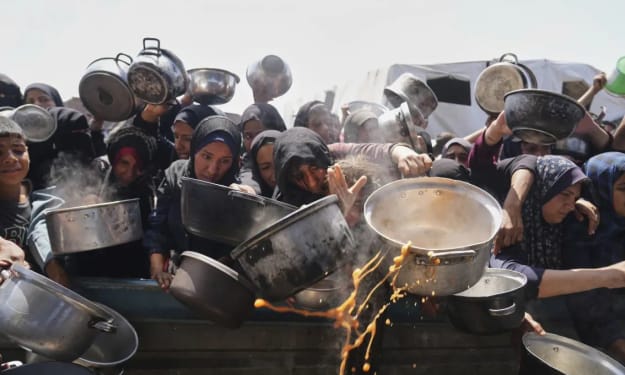
The more recent proposal by the Israeli government to take long-term control of the Gaza Strip has sparked global outrage and rekindled discussions about the ongoing Israeli-Palestinian conflict. This controversial plan, which emerged in the aftermath of intensified military operations in Gaza, is viewed by many international observers, human rights organizations, and governments as a potential escalation that could severely destabilize the region and derail any remaining hopes for a two-state solution. Background of the Gaza Conflict The Gaza Strip, a narrow piece of land bordering Israel, Egypt, and the Mediterranean Sea, has been a central flashpoint in the Israeli-Palestinian conflict for decades. Following Israel’s withdrawal from Gaza in 2005, the region fell under the control of Hamas, an Islamist political and militant group considered a terrorist organization by Israel, the United States, and the European Union. The region has gone through several cycles of violence since then, including several full-scale wars, thousands of civilian deaths, and a humanitarian crisis that has been exacerbated by an Israeli-Egyptian blockade. Gaza’s two million residents live under dire conditions, with limited access to clean water, electricity, and medical supplies, exacerbated by years of conflict and siege. The Israeli proposal: Security justification for control In early 2025, following a protracted and deadly military campaign in Gaza, Israeli Prime Minister Benjamin Netanyahu’s administration floated a plan suggesting that Israel may need to establish a long-term military and administrative presence in Gaza “to ensure security and prevent future terrorist threats.” Officials in Israel say that the move is needed to take down Hamas' infrastructure and stop more attacks on Israeli soil. Netanyahu and Defense Minister Yoav Gallant have made it clear that "ironclad security guarantees" are needed before "uncontrolled" Gaza after the war can be handed over to the Palestinian Authority. The proposal includes ideas such as the deployment of Israeli forces across the Gaza Strip, control of border crossings, and potentially, the establishment of a buffer zone inside Gaza. Legal Implications and Reactions on a Global Scale The proposal has been met with immediate and fierce criticism from across the world. The Arab League, the European Union, the United Nations, and a number of humanitarian organizations have voiced their deep concern, describing it as a dangerous precedent and a violation of international law. UN Secretary-General António Guterres stated, “Any attempt to reoccupy Gaza would constitute a serious breach of international law and further jeopardize the prospects of peace in the Middle East.” Many legal experts contend that Israel's plan would be de facto annexation because it violates the Geneva Conventions, which forbid the permanent occupation of war-acquired territory. Israel's traditional ally, the United States, has also voiced reservations. Secretary of State Antony Blinken warned that a reoccupation of Gaza would be "counterproductive" and "not aligned with long-term peace goals," despite the fact that the Biden administration has supported Israel's right to self-defense. Calls for unity and condemnation from the Palestinian response The Israeli proposal was strongly condemned by the West Bank-based Palestinian Authority (PA). President Mahmoud Abbas denounced the idea as “a return to colonialism” and called for international intervention to prevent what he termed a "war crime in the making." Despite Hamas's decline as a result of the ongoing Israeli offensive, it pledged to continue its resistance. Spokesman Hazem Qassem stated, “Any Israeli attempt to take control of Gaza will be met with unwavering resistance from our people. Israel does not use Gaza as a pawn in its political games. Across Palestinian territories and the wider Arab world, there have been mass protests against the Israeli plan. The governments of Ramallah, Cairo, Amman, and Beirut have been urged to take diplomatic and economic action against Israel by demonstrators there. Humanitarian Crisis Deepens Meanwhile, the humanitarian situation in Gaza continues to deteriorate. According to the United Nations Relief and Works Agency (UNRWA), more than 60% of Gaza’s population is displaced, and essential services are on the brink of collapse. Hospitals are overwhelmed, food and water shortages are critical, and the blockade continues to restrict the flow of aid. Aid organizations are concerned that Israel will further restrict humanitarian access and exacerbate civilian suffering if it implements its control plan. Jan Egeland, Secretary-General of the Norwegian Refugee Council, warned, “If Gaza becomes an occupied territory again, humanitarian operations will face even greater hurdles, and the civilian population will pay the price.” Contribution to the Peace Process The Israeli proposal threatens to dismantle decades of international efforts to achieve a two-state solution. Now more than ever, the Palestinian vision of an independent state that would include the West Bank and Gaza as well as East Jerusalem as its capital is in doubt. The plan, according to a lot of experts, may encourage Israeli far-right groups that have long called for permanent Palestinian control. Dr. Hanan Ashrawi, a Palestinian politician and peace negotiator, commented, “This is a blatant attempt to kill the two-state solution and replace it with an apartheid regime of permanent occupation and subjugation.” Security Concerns and Implications for the Region The proposal has also raised alarm bells in neighboring Arab countries. Egypt, which shares a border with Gaza and has played a crucial mediating role in past ceasefires, warned that any Israeli move to control Gaza would “threaten regional stability and provoke widespread unrest.” Jordan, Qatar, and Turkey also voiced strong opposition. The Arab League convened an emergency session in Cairo, urging unified action against what it called “Israeli expansionism.” Security analysts predict that such a move could provoke a wider regional conflict, drawing in Iran-backed militias in Lebanon, Syria, and Iraq, and possibly leading to escalations with Hezbollah on Israel’s northern front. Israeli Opposition Voices The proposal has its detractors within Israel. A growing number of Israeli citizens, former military officials, and left-leaning political parties have spoken out against the idea of reoccupying Gaza. Ehud Barak, a former prime minister, stated, "It is a strategic trap to reenter and control Gaza." It will drain our resources, cost countless lives, and damage Israel’s standing in the world.” Protests have also erupted in Tel Aviv and Haifa, with demonstrators calling for a diplomatic resolution and renewed negotiations with the Palestinians rather than military dominance. Conclusion The international community has been shaken by Israel's proposal to take control of the Gaza Strip. It could be a turning point in the Israeli-Palestinian conflict that will change the Middle East's political landscape for years to come. While Israel cites security concerns as its primary motivation, the general consensus appears to be that such a plan would exacerbate the humanitarian crisis, violate international law, and stifle the already bleak hope of a peaceful resolution. The world is keeping a close eye on the situation, hoping that diplomacy and not force will prevail in this long-suffering nation.
By Keyas Khanabout a year ago in The Swamp