agriculture
Tackling food waste, research and global debates about agricultural sustainability and how to feed our population while still saving some for later.
Pahalgam Terror Attack 2025: Hindu Tourists Killed in Kashmir, Global Reactions and Full Report. Content Warning. AI-Generated.
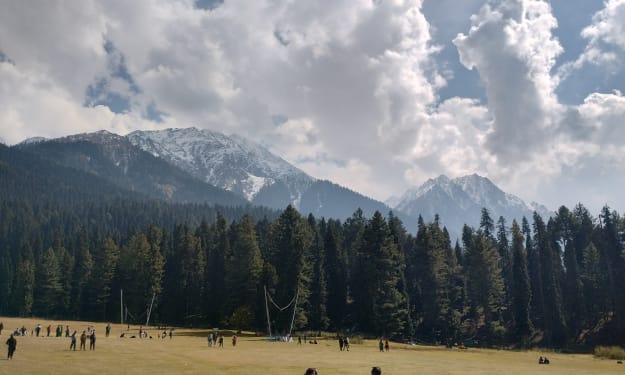
On April 22, 2025, a brutal terrorist attack in Pahalgam, Jammu and Kashmir sent shockwaves across India and the international community. Armed militants opened fire on a group of tourists at Baisaran Valley, deliberately targeting individuals based on their Hindu identity. The attack, which left 26 civilians dead and over 20 injured, is being called one of the deadliest attacks in Kashmir in recent years. The massacre not only exposed the fragile security situation in the region but also reignited global conversations around religious terrorism, Islamic extremism, and cross-border militancy. What Happened in Pahalgam on April 22, 2025? According to survivor testimonies and local authorities, a group of armed terrorists infiltrated the tourist-heavy zone of Baisaran Valley, posing as guides or local pony handlers. They then asked tourists their names and religion. Those who identified as Hindu were separated and shot at close range. Some were reportedly asked to recite the Islamic kalima to verify their faith. This form of religiously motivated violence is a chilling reminder of earlier sectarian atrocities in South Asia. Among those killed was an entire Hindu family from Maharashtra. Shockingly, a local Muslim man, Seyyed Adil Hussain Shah, lost his life trying to protect the tourists. His bravery has since become a symbol of interfaith solidarity in a time of hate.
By Tanushree Dasabout a year ago in The Swamp
Israeli Proposal to Take Control of Gaza Strip Raises Global Concerns and Deepens Regional Tensions
The more recent proposal by the Israeli government to take long-term control of the Gaza Strip has sparked global outrage and rekindled discussions about the ongoing Israeli-Palestinian conflict. This controversial plan, which emerged in the aftermath of intensified military operations in Gaza, is viewed by many international observers, human rights organizations, and governments as a potential escalation that could severely destabilize the region and derail any remaining hopes for a two-state solution. Background of the Gaza Conflict The Gaza Strip, a narrow piece of land bordering Israel, Egypt, and the Mediterranean Sea, has been a central flashpoint in the Israeli-Palestinian conflict for decades. Following Israel’s withdrawal from Gaza in 2005, the region fell under the control of Hamas, an Islamist political and militant group considered a terrorist organization by Israel, the United States, and the European Union. The region has gone through several cycles of violence since then, including several full-scale wars, thousands of civilian deaths, and a humanitarian crisis that has been exacerbated by an Israeli-Egyptian blockade. Gaza’s two million residents live under dire conditions, with limited access to clean water, electricity, and medical supplies, exacerbated by years of conflict and siege. The Israeli proposal: Security justification for control In early 2025, following a protracted and deadly military campaign in Gaza, Israeli Prime Minister Benjamin Netanyahu’s administration floated a plan suggesting that Israel may need to establish a long-term military and administrative presence in Gaza “to ensure security and prevent future terrorist threats.” Officials in Israel say that the move is needed to take down Hamas' infrastructure and stop more attacks on Israeli soil. Netanyahu and Defense Minister Yoav Gallant have made it clear that "ironclad security guarantees" are needed before "uncontrolled" Gaza after the war can be handed over to the Palestinian Authority. The proposal includes ideas such as the deployment of Israeli forces across the Gaza Strip, control of border crossings, and potentially, the establishment of a buffer zone inside Gaza. Legal Implications and Reactions on a Global Scale The proposal has been met with immediate and fierce criticism from across the world. The Arab League, the European Union, the United Nations, and a number of humanitarian organizations have voiced their deep concern, describing it as a dangerous precedent and a violation of international law. UN Secretary-General António Guterres stated, “Any attempt to reoccupy Gaza would constitute a serious breach of international law and further jeopardize the prospects of peace in the Middle East.” Many legal experts contend that Israel's plan would be de facto annexation because it violates the Geneva Conventions, which forbid the permanent occupation of war-acquired territory. Israel's traditional ally, the United States, has also voiced reservations. Secretary of State Antony Blinken warned that a reoccupation of Gaza would be "counterproductive" and "not aligned with long-term peace goals," despite the fact that the Biden administration has supported Israel's right to self-defense. Calls for unity and condemnation from the Palestinian response The Israeli proposal was strongly condemned by the West Bank-based Palestinian Authority (PA). President Mahmoud Abbas denounced the idea as “a return to colonialism” and called for international intervention to prevent what he termed a "war crime in the making." Despite Hamas's decline as a result of the ongoing Israeli offensive, it pledged to continue its resistance. Spokesman Hazem Qassem stated, “Any Israeli attempt to take control of Gaza will be met with unwavering resistance from our people. Israel does not use Gaza as a pawn in its political games. Across Palestinian territories and the wider Arab world, there have been mass protests against the Israeli plan. The governments of Ramallah, Cairo, Amman, and Beirut have been urged to take diplomatic and economic action against Israel by demonstrators there. Humanitarian Crisis Deepens Meanwhile, the humanitarian situation in Gaza continues to deteriorate. According to the United Nations Relief and Works Agency (UNRWA), more than 60% of Gaza’s population is displaced, and essential services are on the brink of collapse. Hospitals are overwhelmed, food and water shortages are critical, and the blockade continues to restrict the flow of aid. Aid organizations are concerned that Israel will further restrict humanitarian access and exacerbate civilian suffering if it implements its control plan. Jan Egeland, Secretary-General of the Norwegian Refugee Council, warned, “If Gaza becomes an occupied territory again, humanitarian operations will face even greater hurdles, and the civilian population will pay the price.” Contribution to the Peace Process The Israeli proposal threatens to dismantle decades of international efforts to achieve a two-state solution. Now more than ever, the Palestinian vision of an independent state that would include the West Bank and Gaza as well as East Jerusalem as its capital is in doubt. The plan, according to a lot of experts, may encourage Israeli far-right groups that have long called for permanent Palestinian control. Dr. Hanan Ashrawi, a Palestinian politician and peace negotiator, commented, “This is a blatant attempt to kill the two-state solution and replace it with an apartheid regime of permanent occupation and subjugation.” Security Concerns and Implications for the Region The proposal has also raised alarm bells in neighboring Arab countries. Egypt, which shares a border with Gaza and has played a crucial mediating role in past ceasefires, warned that any Israeli move to control Gaza would “threaten regional stability and provoke widespread unrest.” Jordan, Qatar, and Turkey also voiced strong opposition. The Arab League convened an emergency session in Cairo, urging unified action against what it called “Israeli expansionism.” Security analysts predict that such a move could provoke a wider regional conflict, drawing in Iran-backed militias in Lebanon, Syria, and Iraq, and possibly leading to escalations with Hezbollah on Israel’s northern front. Israeli Opposition Voices The proposal has its detractors within Israel. A growing number of Israeli citizens, former military officials, and left-leaning political parties have spoken out against the idea of reoccupying Gaza. Ehud Barak, a former prime minister, stated, "It is a strategic trap to reenter and control Gaza." It will drain our resources, cost countless lives, and damage Israel’s standing in the world.” Protests have also erupted in Tel Aviv and Haifa, with demonstrators calling for a diplomatic resolution and renewed negotiations with the Palestinians rather than military dominance. Conclusion The international community has been shaken by Israel's proposal to take control of the Gaza Strip. It could be a turning point in the Israeli-Palestinian conflict that will change the Middle East's political landscape for years to come. While Israel cites security concerns as its primary motivation, the general consensus appears to be that such a plan would exacerbate the humanitarian crisis, violate international law, and stifle the already bleak hope of a peaceful resolution. The world is keeping a close eye on the situation, hoping that diplomacy and not force will prevail in this long-suffering nation.
By Keyas Khanabout a year ago in The Swamp
Elon Musk Fires 6,000 Employees: The U.S Now Faces a Surge of Invasive Species
Elon Musk Fires 6,000 Employees: The U.S Now Faces a Surge of Invasive Species In an unexpected and controversial move entrepreneur Elon Musk known for leading companies like Tesla and SpaceX recently played a key role in the firing of 6,000 employees across various U.S federal departments. These layoffs were reportedly part of a government initiative to optimize operational efficiency spearheaded by Musk as a newly appointed advisor in a tech driven reform program. While the aim was to cut costs and increase automation the aftermath has triggered a surprising consequence a rapid surge in invasive species across the United States.
By Adnan Rasheedabout a year ago in The Swamp
A Timeline of Tensions Between India and Pakistan Over Kashmir
A Timeline of Tensions Between India and Pakistan Over Kashmir The Kashmir conflict is one of the most protracted and volatile territorial disputes in the world rooted in the partition of British India in 1947. India and Pakistan both nuclear armed neighbors have fought multiple wars and engaged in recurring skirmishes over this contested region. This article outlines a detailed timeline of the tensions between the two nations over Kashmir.
By Adnan Rasheedabout a year ago in The Swamp
Jeff Bezos Plans to Sell \$5 Billion Worth of Amazon Stock: What It Means for Investors and the Future of Amazon
Jeff Bezos, the founder and executive chairman of Amazon, has once again made headlines—this time not for a rocket launch or a major acquisition, but for a massive stock sale plan. In a new filing disclosed with the U.S. Securities and Exchange Commission, Bezos revealed his intention to sell up to 25 million shares of Amazon stock, estimated to be worth around \$4.75 billion. This stock divestment is scheduled to take place over the course of the next year as part of a pre-arranged trading plan. This development marks yet another significant chapter in Bezos’s post-CEO financial strategy. Earlier in 2024, he offloaded Amazon shares worth approximately \$8.5 billion, bringing his total stock sales for the year to a staggering \$13.4 billion. These transactions reflect not only his ongoing shift in financial priorities but also signal potential moves for both Amazon and his other ventures. The Scope of Bezos’s Stock Sale Bezos's latest sale is part of a 10b5-1 trading plan, which allows insiders of publicly traded corporations to set up a predetermined plan to sell stocks. This type of plan is designed to avoid any allegations of insider trading since the trades are scheduled in advance, irrespective of non-public information. His plan was reportedly initiated in March 2024 and will continue until May 2026. Despite the eye-popping figure attached to the sale, Bezos will still maintain a substantial position in Amazon. After completing the upcoming divestment, he will retain approximately 912 million shares, which equates to about 8.8% ownership in the e-commerce giant. This means that even as he sells off billions in stock, he continues to wield considerable influence over Amazon’s direction and governance. Amazon’s Strong Market Performance Encourages Stock Sales The timing of Bezos’s planned sale appears to be strategic, aligning with a period of impressive financial performance by Amazon. The company recently reported first-quarter net income of \$10.4 billion—an indicator of robust operational success. In addition, Amazon’s stock price has surged by 30% in 2024, reaching \$189.26 at the latest trading session. Investors have been buoyed by Amazon’s aggressive push into artificial intelligence and cloud computing, two sectors that are driving major innovation and market growth. As the company’s stock climbs, it provides an ideal opportunity for Bezos to liquidate portions of his holdings at maximum value. This move isn't just about timing the market—it’s about capitalizing on strong investor sentiment and a bullish outlook for Amazon’s future. What Bezos Plans to Do With the Billions Jeff Bezos has long channeled his Amazon earnings into other ambitious projects, and this new wave of stock sales is expected to continue that trend. One of the primary beneficiaries is Blue Origin, Bezos’s private aerospace company. With annual operating costs exceeding \$2 billion, Blue Origin represents one of the most expensive and visionary projects under his stewardship. The funds from the Amazon stock sales will help fuel the company’s development of space tourism, lunar landers, and potentially interplanetary missions. In addition to his space ventures, Bezos has also been active in philanthropy. According to recent reports, he donated \$60 million in Amazon stock to an unnamed nonprofit. While the specific recipient has not been revealed, this donation aligns with Bezos’s increasing focus on charitable giving in recent years. He has previously committed billions to causes like climate change through the Bezos Earth Fund and social equity programs. The Tax Angle: Why Bezos Moved to Florida One of the most intriguing aspects of this development is the potential tax advantage Bezos gains from his 2023 relocation from Seattle to Miami. Washington state introduced a 7% capital gains tax in 2022, which would have applied to Bezos’s massive stock sales had he remained a resident there. Florida, by contrast, has no state income tax or capital gains tax, making it a far more favorable jurisdiction for high-net-worth individuals looking to optimize their financial strategies. By moving to Florida before executing this series of stock sales, Bezos potentially saves hundreds of millions in state taxes. While legal and within his rights, this move has drawn criticism from some observers who argue it reflects the growing trend of tax avoidance among billionaires. Nevertheless, it illustrates the complex financial considerations at play when billionaires manage and redistribute their wealth. What This Means for Amazon Investors For Amazon shareholders and potential investors, Bezos’s stock sale plan can be interpreted in multiple ways. On one hand, some might view it as a routine rebalancing of assets or a diversification move typical of long-term executives. On the other, a massive selloff by the company’s founder could raise questions about Amazon’s long-term growth prospects—though this concern is tempered by the company’s strong recent performance and Bezos’s continued large stake. It’s also important to recognize that insider sales are common among executives who accumulate vast amounts of stock as part of their compensation. With Amazon stock appreciating sharply in 2024, this might simply be an ideal time for Bezos to convert shares into liquid assets. Final Thoughts: A Billionaire Balancing Act Jeff Bezos continues to walk a unique line between business mogul, visionary space entrepreneur, and modern philanthropist. His latest Amazon stock sale, while financially massive, is just another strategic move in a long series of decisions that balance personal goals with public impact. For everyday investors, the key takeaway isn’t to panic about Bezos selling shares—but rather to observe how he manages his capital, bets on future technologies, and structures his wealth for long-term impact. Amazon remains a dominant player in the global tech and retail sectors, and Bezos’s partial divestment is unlikely to change that anytime soon. As Bezos steers billions toward space travel, philanthropy, and tax-optimized living, one thing is clear: the story of Amazon—and its founder—is far from over. Jeff Bezos
By Tech Horizonsabout a year ago in The Swamp
Muskmelon Cultivation: Everything to Know for a Healthy Harvest
Muskmelon, known for its sweet and juicy taste, is one of the most loved summer fruits in India and goes by the name of "Kharbuja". It is rich in vitamins, water, and natural sugars, making it a perfect refreshment during hot weather. Muskmelon farming is healthy not just for people but also for farmers, as it is a good business if cultivated properly.
By Yatin Bhardwajabout a year ago in The Swamp
Egypt Launches $51 Million Revamp of Pyramids of Giza Amid Vendor Protests and Animal Welfare Concerns
Egypt Launches $51 Million Revamp of Pyramids of Giza Amid Vendor Protests and Animal Welfare Concerns Egypt has embarked on an ambitious $51 million project to revamp the Pyramids of Giza one of the world's most iconic and visited heritage sites. The massive overhaul aims to improve the visitor experience introduce sustainable tourism practices and modernize the surrounding area without compromising the historical and cultural value of the ancient wonder. However the initiative has also sparked significant protests from local vendors and animal rights concerns making the restoration effort a complex balancing act between modernization and tradition.
By Adnan Rasheedabout a year ago in The Swamp
How India’s Threat to Block Rivers Could Devastate Pakistan.. AI-Generated.
How India’s Threat to Block Rivers Could Devastate Pakistan. Tensions between India and Pakistan have long simmered due to historical, territorial, and political disputes. Among the most pressing and potentially devastating of these is the conflict over water — specifically, the rivers that flow from India into Pakistan under the Indus Waters Treaty (IWT). India's repeated threats to block or divert these rivers could have catastrophic consequences for Pakistan, a country that relies heavily on these waters for agriculture, energy, and human consumption.
By Adnan Rasheed2 years ago in The Swamp
Turkey Istanbul Earthquake Today April 23, 2025: 6.2 Magnitude Quake Injures Hundreds in Turkey
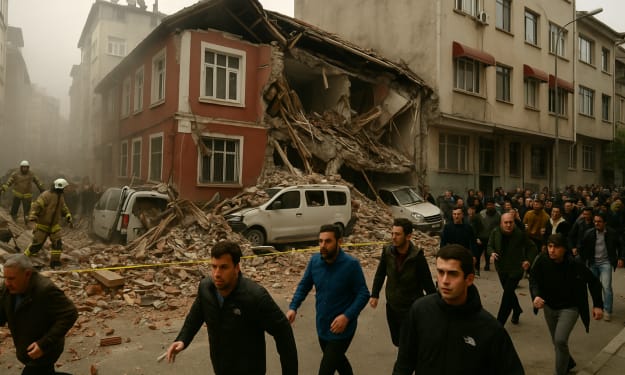
Turkey Istanbul Earthquake Today April 23, 2025: 6.2 Magnitude Quake Injures Hundreds in Turkey On April 23, 2025 a powerful earthquake with a magnitude of 6.2 struck near Istanbul Turkey sending shockwaves across the densely populated city and surrounding provinces. The epicenter was recorded in the Sea of Marmara approximately 40 kilometers southwest of central Istanbul along the highly active North Anatolian Fault Zone.
By Adnan Rasheed2 years ago in The Swamp
How to Start a Lemon Orchard
Lemon plant cultivation from seeds to full-grown plants is simple to cultivate indoors with sunlight, air movement, and watering. Loamy, sandy soil, which is well-drained and has a balanced pH, will serve to cultivate healthy lemons. Below are thoroughly tested and researched advice on creating a lemon tree from seeds indoors & outdoors.
By Rajendra_Singh2 years ago in The Swamp