agriculture
Tackling food waste, research and global debates about agricultural sustainability and how to feed our population while still saving some for later.
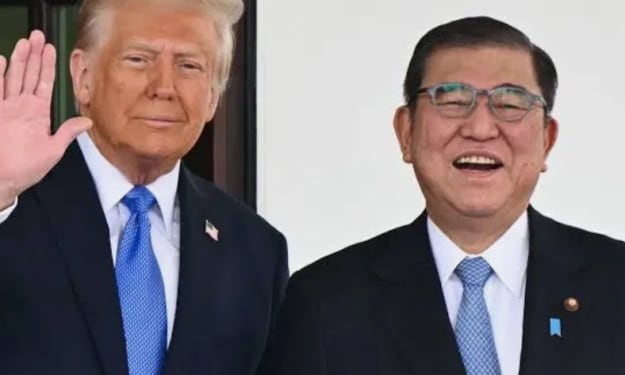
US-Japan trade deal gives Trump control over $550 billion in investments. It could be ‘vapor ware’ — and a model for other countries
**The US-Japan trade agreement grants Trump control over investments worth $550 billion. It Might Be "Vapor Ware" and Serve as an Example for Other Countries** Former President Donald Trump claimed in a high-profile announcement that a new US-Japan trade deal gave the United States leverage over 550 billion dollars in Japanese investment. The deal has been met with both enthusiasm and skepticism, with Trump hailing it as a landmark achievement for American manufacturing and job creation. Some have dubbed it potential "vapor ware" due to critics' claims that the numbers may be exaggerated, the agreements are non-binding, and the economic impact is speculative. Nonetheless, the way the deal is structured and presented may be used as a model for US trade negotiations in the future, especially if the administration is focused on optics and unilateral gain. At the heart of the agreement is a framework wherein Japan pledged to direct investment toward American industries — especially manufacturing, infrastructure, and emerging technologies. During his presidency, Trump put bilateral trade agreements ahead of multilateral ones and hailed the agreement as an example of nationalist economics. It is in line with his "America First" platform, which places an emphasis on bringing manufacturing jobs back to the United States and reducing reliance on supply chains from other countries. However, experts caution that the headline figure of \$550 billion is misleading. Before the agreement was signed, a significant portion of the pledged investment was already in the works. Financial analysts point out that Japanese companies like Toyota, SoftBank, and Mitsubishi have been present in the United States for a considerable amount of time. Trump can take credit for the trade deal because it simply brings together anticipated and existing investments under a new political banner. Furthermore, the agreement lacks specific enforcement mechanisms. It does not include tariff adjustments, guarantees of market access, or procedures for resolving disputes like traditional trade pacts do. Instead, it resembles a memorandum of understanding, which is advantageous from a political standpoint but has no legal force. Because of this, some economists have referred to it as "vapor ware," which refers to a policy that makes headlines but does not result in significant change. The deal's strategy reflects a larger trend in the way trade agreements are being used as political capital, despite the ambiguity. By framing the deal as a huge economic win — regardless of its actual substance — Trump leveraged it for domestic approval and international prestige. His administration argued that the mere announcement of the deal created a “confidence effect,” encouraging private-sector investment and lifting stock markets.
By GLOBAL NEWSabout a year ago in The Swamp
The Echo Chamber Effect: How Algorithms Are Rewriting Human Thought
In an age where swiping has become second nature and personalized feeds dictate much of our worldview, one question continues to haunt researchers, ethicists, and digital citizens alike: Are we really thinking for ourselves — or are algorithms doing it for us?
By Tousif Arafatabout a year ago in The Swamp
Afghanistan is on Fire! The World Left Astonished Yesterday
In a historic milestone for economic growth and national self-reliance, Afghanistan has taken a bold leap into the world of industrial production. Just two days ago, a grand inauguration ceremony marked the launch of one of the country’s largest vehicle and agricultural machinery production complexes. This massive factory, located in the Pul-e-Charkhi Industrial Zone near Kabul, has begun assembling dump trucks, passenger buses, Corolla-type vehicles, and a range of agricultural machines including fruit processing and packaging units.
By Keramatullah Wardakabout a year ago in The Swamp
Mike Tyson’s Knockout Case for Cannabis Reform
When most Americans think of Mike Tyson, they recall the heavyweight champ who dominated the boxing world with raw power and unfiltered honesty. But in 2025, Tyson’s biggest punches aren’t being thrown in the ring—they’re being delivered on the front lines of cannabis policy reform.
By Michael Phillipsabout a year ago in The Swamp
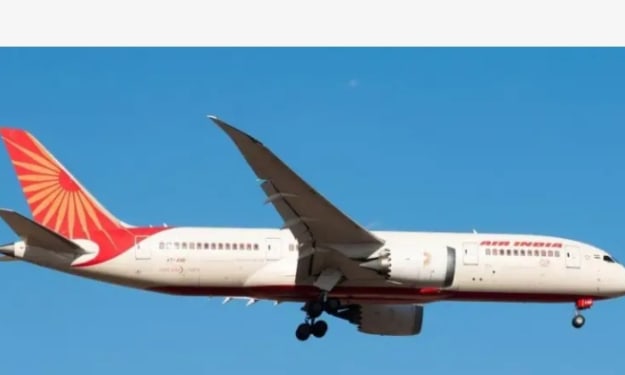
Air India Flight 171: The Mysterious Fuel Cutoff That Led to Disaster
1. A Catastrophe Minutes After Takeoff On June 12, 2025, Air India Flight 171—a Boeing 787‑8 Dreamliner—crash-landed into a residential hostel in Ahmedabad just 30 to 40 seconds after takeoff. The plane was en route from Ahmedabad to London Gatwick, carrying 230 passengers and 12 crew members. Of those aboard, 241 perished, and 19 were killed on the ground, with dozens more injured. Only one passenger survived, later identified as Vishwash Kumar Ramesh . The aircraft reached an altitude of just 625 feet, never climbing beyond 180 knots, before descending uncontrollably . In the chaos that followed, even experienced investigators struggled to identify what had so rapidly spiraled into tragedy. --- 2. Fuel Was Cut, Engines Shut Down The 15‑page preliminary report released by India’s Aircraft Accident Investigation Bureau (AAIB) offers the first insight: within seconds of takeoff, both fuel control switches—normally set to “RUN”—were found in the “CUTOFF” position on both engines, causing an immediate loss of thrust. Power was briefly restored when the switches were flipped back on, but the plane lacked sufficient altitude or time to recover . Investigators stressed that fuel contamination, bird strikes, or mechanical failure were ruled out. The report also confirmed one engine relit, while the other never regained full power . ---
By Ikram Ullahabout a year ago in The Swamp
"Under Watch"
Facial recognition technology was only seen in action films and airport security systems a few years ago. By 2025, you can find it in your neighborhood grocery store, on your corner, and even at work. Western democracies have long defended freedom and privacy, but a new age of surveillance, driven by AI, biometrics, and predictive analytics, has begun.
By Tousif Arafatabout a year ago in The Swamp
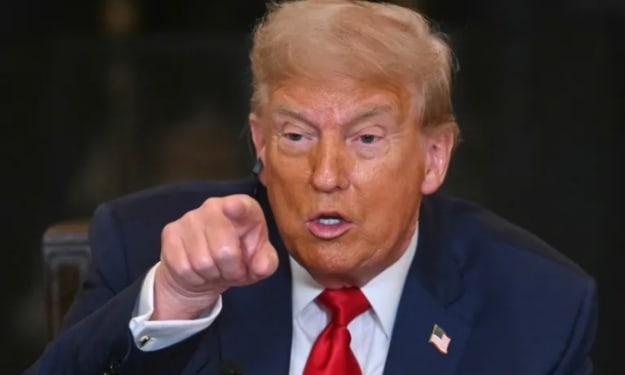
Trump's Frustration with Putin and the Uncertain Future of the Russia-Ukraine War
The ongoing war in Ukraine continues to test the diplomatic resolve of world leaders, with recent developments highlighting growing frustration in the United States. President Donald Trump, who once vowed to end the war in Ukraine within 24 hours of taking office, now faces mounting obstacles in his attempts to broker peace. Despite multiple rounds of negotiations and increasing diplomatic engagement, a ceasefire remains elusive as Russia intensifies its military campaign against Ukraine. In recent days, US Secretary of State Marco Rubio has met twice with Russian Foreign Minister Sergey Lavrov, underscoring Washington's persistent efforts to bring the conflict to a close. These talks, held on the sidelines of the ASEAN summit in Malaysia, lasted nearly an hour but yielded no immediate breakthroughs. Instead, they highlighted the widening gap between American aspirations for peace and Moscow’s hardened stance. Trump's public tone towards Russian President Vladimir Putin has also shifted. Previously criticized for his seemingly warm approach to the Kremlin, Trump has lately expressed disappointment over Putin's reluctance to show flexibility. “We get a lot of meaningless talk from Putin. He’s very nice, but in the end, it means nothing,” Trump remarked. This growing frustration has raised questions about whether Trump's stance on Russia is evolving into something more confrontational. Despite these comments, experts remain skeptical about any fundamental shift in Trump’s approach. Analysts argue that previous signs of a harder stance have failed to translate into significant policy changes. While some see an opportunity for a new direction in US foreign policy, others caution against premature conclusions. Trump's unpredictability remains a defining feature of his diplomacy, leaving allies and adversaries alike uncertain about what comes next. Meanwhile, the Biden-era military aid pipeline to Ukraine has continued under Trump’s leadership, albeit with some turbulence. Earlier this month, the Trump administration briefly paused arms shipments to Kyiv, only to resume them days later. Trump explained the reversal by emphasizing Ukraine's need to defend itself amidst Russia’s renewed offensives. However, in a significant change, Trump announced that future weapons would be sold to NATO, which would then transfer them to Ukraine. “We’re sending weapons to NATO, and NATO is paying for them, one hundred percent,” Trump clarified, describing the deal as part of an arrangement finalized during the NATO summit in The Hague. Despite these moves, Trump’s decision to continue arming Ukraine has sparked backlash from within his political base. Several prominent figures in the conservative movement expressed disappointment, questioning the wisdom of further entangling the United States in what they perceive as a costly and unwinnable conflict. For many in Trump’s MAGA (Make America Great Again) base, the Ukraine war represents a distraction from America’s domestic priorities. Alongside military support, Washington is weighing new economic measures to pressure Moscow. A bipartisan bill in Congress seeks to expand sanctions against Russia, targeting not only Russian industries but also countries that continue to purchase Russian oil, gas, and uranium. If passed, this would mark a major escalation in the West's efforts to isolate Russia economically. However, Russia's energy trade with China, India, and Turkey remains robust, limiting the global impact of Western sanctions. Despite imposing over 21,000 sanctions since the invasion began, the Russian economy has endured, buoyed by energy exports to Asia and limited European purchases of critical materials like uranium. Ukrainian President Volodymyr Zelenskyy continues to call on the West to tighten sanctions further, arguing that only sustained economic pressure can compel Moscow to negotiate peace in good faith. Trump has flirted with harsher economic measures, even threatening secondary tariffs on nations buying Russian oil. Yet, these threats have so far remained rhetorical. Whether Trump will ultimately back additional sanctions remains uncertain, given his past reluctance to impose meaningful costs on Russia. At the same time, the Trump administration has hinted at the possibility of disengagement. Secretary of State Rubio recently stated that the US could consider stepping back from the Ukraine conflict if diplomatic efforts fail to produce results. “It’s not our war. We have other priorities,” Rubio said, reflecting a sentiment that has gained traction in some corners of the US political landscape. Trump echoed these thoughts, albeit more cautiously, suggesting that the US remains committed to seeking a resolution but does not wish to remain entangled indefinitely. Nevertheless, the latest diplomatic meetings suggest the US is not abandoning peace efforts just yet. Rubio reported that during his discussions with Lavrov, new proposals for peace were exchanged. Although the specifics remain confidential, Rubio described them as a “different approach” that could open the door to renewed negotiations. Russia, for its part, also struck a cautiously optimistic tone, reaffirming its willingness to engage in dialogue and explore peaceful solutions. The path forward for the Russia-Ukraine war remains fraught with uncertainty. On one hand, intensified US-Russia diplomacy and continued arms supplies to Ukraine signal that Washington is not prepared to let Kyiv fall. On the other hand, growing domestic opposition, economic considerations, and diplomatic frustrations could push the US to recalibrate its involvement. For now, all eyes remain on Trump and Putin, whose complex relationship continues to shape the fate of a war that has already spanned more than three years. Whether through diplomacy, deterrence, or disengagement, the next chapter in the Russia-Ukraine conflict will be defined by the decisions made in Washington and Moscow in the weeks ahead.
By Ikram Ullahabout a year ago in The Swamp
Unfinished Dream
America. To some, it’s a symbol of freedom. To others, a land of contradictions. To many, it is still the place where dreams are born, shaped by struggle, and sometimes—if you’re lucky—come true. But today’s America is complex. It’s tired, divided, hopeful, hurting, and healing—often all at once. Beneath the flags and slogans, beneath the headlines and hashtags, lies a deeper truth: this country is still becoming. It’s an unfinished dream. And that’s exactly why it matters. --- The Promise We Were Told From a young age, Americans are taught about greatness—how their nation was born in revolution, shaped by democracy, and driven by the idea that anyone can rise. They hear about Abraham Lincoln and Martin Luther King Jr., about the Constitution, the American Dream, and the boundless frontier of freedom. Immigrants still cross oceans with this dream stitched into their hearts. But ask the single mother working two jobs. The student crushed under debt. The Black teen pulled over for no reason. The veteran battling homelessness and PTSD. They’ll tell you something different. They’ll say the dream is real—but not for everyone. --- A Nation of Contrasts America has always been a nation of contrasts: It invented the internet, yet millions still can’t afford basic Wi-Fi. It spends more on healthcare than any nation, yet everyday citizens die from preventable illness. It celebrates freedom, but too often fails to protect the most vulnerable. It boasts the wealthiest individuals in the world while others sleep in tents under highway bridges. And yet, for all its flaws, America remains a magnet for the world—not just for what it is, but for what it could be. --- Why Americans Hurt — And Still Hope America’s pain is not just about politics. It’s personal. It’s in the anxiety of aging parents who can’t afford insulin. It’s in the silence of classrooms scarred by lockdown drills. It’s in the tired eyes of teachers, nurses, and fast-food workers—overworked and underpaid. But hope remains. Fierce, rebellious, and stubborn. Because Americans don’t just endure. They fight. They protest. They vote. They organize. They rebuild. When one system fails, another is imagined. When one voice is silenced, a thousand more rise in its place. From #MeToo to Black Lives Matter, from union strikes to grassroots campaigns—America’s people continue to demand the country they were promised. --- The Real Strength of America It’s not Wall Street. It’s not Silicon Valley. It’s not even the military. It’s the people. The ones who raise their neighbors’ kids, share food with strangers, stand in line at food banks, teach in broken schools, clean up after hurricanes, and volunteer on weekends. The quiet heroes who live paycheck to paycheck and still donate $5 to someone else's GoFundMe. That is America. Not perfect. Not polished. But powerful. --- The Danger of Forgetting Who We Are Lately, America feels like it’s forgetting itself. Divided by media echo chambers, poisoned by political extremism, and exhausted from surviving, people are angry. And rightfully so. But if anger becomes the only language spoken, the nation’s soul will erode. The truth is—America’s greatness was never just about winning wars or creating billionaires. It was about the ability to imagine a better future—and the courage to build it together. We must remember that again. --- Reclaiming the Dream What if the American Dream wasn’t about owning more stuff, but about living with dignity? What if success meant not just climbing, but lifting others too? Reclaiming America means redefining what matters: A healthcare system that heals, not bankrupts. Schools that teach truth, not erase it. Jobs that offer stability, not just survival. A culture that values empathy as much as ambition. This is not naïve. It’s necessary. Because if America wants to be the light it claims to be, it has to illuminate the shadows within. --- What the World Still Sees Even now—despite everything—people across the globe still watch America. Still believe in it. Still cry at its elections and cheer its athletes and quote its movies. Why? Because America is more than its government. More than its headlines. It is an idea—a loud, messy, imperfect, beautiful idea. And ideas, once planted, are hard to kill. --- Final Thoughts: The Road Ahead No country is perfect. But few are brave enough to dream so boldly, fail so publicly, and rise so frequently. America’s story is not over. In fact, the most important chapters may still be unwritten. The real question is: who will write them? Will it be people driven by fear—or by hope? By hate—or by healing? By the ghosts of the past—or the builders of the future? This nation, for all its broken parts, still carries something the world needs: the audacity to believe that change is possible. So let’s make it true. Let’s finish the dream.
By Muhammad Usamaabout a year ago in The Swamp
Investors traded a record $6.6 trillion worth of stock in the first half of 2025
In the first half of 2025, "Global Stock Trading Hits Record $6.6 Trillion" Global stock markets witnessed an unprecedented surge in activity in the first half of 2025, as total trading volumes soared to a record \$6.6 trillion. This milestone, the highest half-year figure in history, reflects heightened investor engagement driven by a mix of economic optimism, technological advancements, and a new wave of retail participation reshaping the financial landscape.
By GLOBAL NEWSabout a year ago in The Swamp
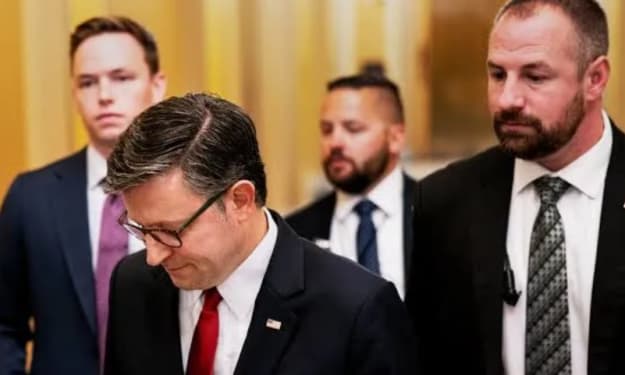
Johnson pushes to get House GOP holdouts to back tax bill
**Johnson Pushes to Get House GOP Holdouts to Back Tax Bill** House Speaker Mike Johnson is intensifying efforts to rally support among Republican holdouts in the House of Representatives as the GOP attempts to pass a significant tax package. The bill, which has been a priority for House Republicans, includes extensions of business tax breaks, increases in the child tax credit, and measures aimed at economic growth. However, internal party divisions have threatened its passage, with several conservative members withholding their support.
By GLOBAL NEWSabout a year ago in The Swamp