agriculture
Tackling food waste, research and global debates about agricultural sustainability and how to feed our population while still saving some for later.
World War 3 in 2025? Secret Predictions from Intelligence Experts
World War 3 in 2025? Secret Predictions from Intelligence Experts The wind of war doesn’t always begin with fire—it starts with whispers. Quiet leaks. Subtle shifts. Hidden alerts that most civilians never notice. But intelligence experts? They see the storm long before the clouds arrive. In shadowy corners of military rooms, encrypted emails, and confidential strategy documents, one chilling phrase has started to appear again and again: > “High probability of global military escalation by 2025.” No headlines. No speeches. Just quiet, rising fear. A War Waiting in the Wings In 2023 and 2024, global tensions accelerated at a pace not seen since the Cold War. Russia’s deepening war in Ukraine became more unpredictable. China’s naval movements near Taiwan turned from drills into provocations. Iran and Israel played a deadly game of silence and surprise, while the U.S. expanded its military footprint across Eastern Europe and the Pacific. But it was in late 2024 when a string of intelligence briefings shocked even seasoned analysts. A series of AI-generated war-game simulations—classified and run by NATO’s Strategic Forecasting Unit—predicted that under current conditions, a multi-front global conflict was "inevitable within 12–18 months." That brings us to mid-2025. We are inside that window now. The Hidden Warnings Leaked documents—first shared by an anonymous whistleblower on a dark web server—outlined a chilling forecast titled "WW3 Trajectory – Phase Zero." It wasn’t a declaration. It was a blueprint. The file, partially verified by cyber-researchers, predicted three initial "trigger zones" that could ignite a worldwide war: 1. Taiwan Strait Conflict 2. Nuclear Escalation in the Middle East 3. Russian Expansion Beyond Ukraine The document warned that if any two of these events occurred simultaneously, major powers would be forced to respond—creating a domino effect of alliances, retaliation, and global mobilization. Sound impossible? Look closer: In March 2025, China blockaded Taiwanese supply routes. In April, Iran tested a long-range missile, triggering Israeli airstrikes. And by May, Russian troops were spotted near Moldova’s border, in unmarked vehicles. Two out of three have already happened. Whispers from the CIA A former CIA analyst, whose voice was altered for anonymity in an exclusive podcast episode by The Grey Report, described internal agency chatter that chilled listeners: > “It’s no longer if. It’s how fast, how bad, and how deep the first 72 hours will go.” He claimed U.S. satellite intelligence had observed movement of tactical nuclear weapons in Belarus, and secret coordination between Russia and China using encrypted underwater cables—a level of secrecy not seen since before the invasion of Ukraine. He also stated that an internal briefing from Langley was titled “The Last Summer of Peace?” The Disappearing Diplomats Adding to the eerie quiet: the disappearance of diplomatic meetings. Back-channel talks that used to take place in Geneva and Vienna have dried up. U.S.–China calls are being postponed. Russian envoys have left several key European posts without explanation. According to British intelligence leaks, Russian diplomats in London were quietly moved back to Moscow under "national priority orders." Diplomats evacuate before the bombs fall. Civilian Clues and Public Denial Most of the public still scrolls through social media, unaware. Politicians avoid using the phrase "world war." Yet, the markets tremble. Oil prices hit a 10-year high. The global chip supply is tightening. And bunker builders in the U.S. and Europe have seen record sales since February 2025. One civilian signal stood out: the U.S. Department of Homeland Security quietly updated its official “Continuity of Government” plan—designed to keep the nation operating during nuclear war. It was uploaded without fanfare, buried in a Friday data dump. But cybersecurity sleuths noticed. Even more unsettling: private emails leaked from North American railway unions mention “quiet coordination with FEMA for emergency transport drills in Q3 2025.” Why prepare for mass rail mobilization if nothing is coming? The 48-Hour Theory One highly classified Pentagon scenario, known as “Black Silence,” models a surprise global war that unfolds in just 48 hours. It begins with: A cyberattack on U.S. early warning satellites Followed by a sudden Chinese invasion of Taiwan Then Russian missile launches into Poland or the Baltics Meanwhile, Iranian-backed militias begin assaults across Israel’s borders By the time world leaders respond, it’s already too late. Communications break down. Nuclear protocols activate. No time to react. Just automated retaliation. > In this simulation, over 1.2 billion lives are at risk within the first 14 days. A World on the Edge Are we already sleepwalking into this future? Military convoys now move at night. Drone surveillance over disputed territories has increased fivefold. Cyberattacks are happening daily—most never reach the news. Countries are hoarding gold, buying wheat reserves, and shifting toward closed economies. Yet the media focuses on elections, celebrity divorces, and sports scores. But behind closed doors, intelligence insiders say the clock is ticking—and midnight is closer than ever. Final Warning or False Alarm? Skeptics argue this could all be a high-stakes bluff. A global game of chicken meant to scare rivals into backing down. After all, war has been predicted before. The Cold War never exploded. The Cuban Missile Crisis ended without fire. But this time, there are more players, less communication, and deadlier technology. The question isn’t just “Will World War 3 happen?” It’s: “Has it already begun in silence?” Because not all wars start with a bang. Some start with a whisper. A signal missed. A leak ignored. A decision made in a locked room, far from cameras, far from mercy. --- If World War 3 starts tomorrow... would you even know today was your last day of peace?
By Ali Asad Ullahabout a year ago in The Swamp
What I Learned Growing Up in a Cult. Top Story - June 2025.
Earlier this week I was talking to a coworker about life. After a while, we somehow got on the subject of religion. I had to explain that I have an aversion to most organized forms of religion, having been raised in a church that at the time was very cult-like, and later after a split, the faction that stayed with the original leader went full cult. But that begs the question.
By Atomic Historianabout a year ago in The Swamp
Oil price jumps after US strikes Iran
"A Deep Dive into Global Energy Markets": "Oil Price Jumps After US Strikes Iran" In a move that has sent shockwaves through global markets, the price of crude oil spiked following a series of military strikes carried out by the United States against Iranian targets. The escalation of tensions between two of the world's most influential oil-producing nations has led to uncertainty in the energy sector, with far-reaching implications for both oil prices and the broader geopolitical landscape.
By GLOBAL NEWSabout a year ago in The Swamp
Bitcoin vs Open Interest Should traders be worried by THIS divergence
The price action of Bitcoin has recently been scrutinized, but savvy traders are also paying attention to something even more telling: a significant divergence between open interest in Bitcoin and its price. The derivatives market may be sending a cautious signal while the spot market maintains its optimism. Analysts are concerned about this divergence, which raises the question of whether traders should be concerned. Understanding what open interest actually entails is essential before delving into its ramifications. The total number of unresolved derivative contracts in the futures and options markets is referred to as open interest. It shows how much activity and participation there is in the market. An increase in open interest typically suggests that new money is flowing into the market, which can reinforce a trend. A decline could indicate that traders are closing positions, which could indicate indecisiveness or exhaustion of the trend. The price of Bitcoin has been either steady or showing signs of rising, hovering in bullish territory above key support levels in recent weeks. However, open interest in Bitcoin futures has not followed suit. In fact, in several instances, open interest has dropped or stagnated while prices climbed—a classic divergence.
By GLOBAL NEWSabout a year ago in The Swamp
Altcoin season could be near: Why June can see a 2021-style rally
**Altcoin Season Could Be Near: Why June Can See a 2021-Style Rally** Numerous analysts and investors are beginning to speculate that an altcoin season may be just around the corner as the cryptocurrency market continues to show signs of recovery. The month of June, historically a favorable period for crypto rallies, is shaping up to potentially mirror the explosive growth seen in 2021. The stage may be set for altcoins to take the lead as Bitcoin's strength and dominance plateau. ### What Is the Season for Altcoins? Altcoin season, or "alt season," refers to a period when alternative cryptocurrencies—those other than Bitcoin—outperform the leading digital asset. During this phase, investors rotate capital from Bitcoin into smaller market cap assets in pursuit of higher gains. This is a time when tokens like Ethereum, Solana, Cardano, and a number of smaller-cap projects saw huge returns in a short amount of time. Typically, altcoin seasons follow a strong Bitcoin rally as market participants look for the “next big thing.”
By GLOBAL NEWSabout a year ago in The Swamp
Senator in the Crossfire: The Alex Padilla Incident That Shook Washington
In the heart of downtown Los Angeles on June 12, 2025, a press conference led by Homeland Security Secretary Kristi Noem turned into a historic and shocking moment that has since rippled through the political landscape of America. Senator Alex Padilla, one of California's most prominent voices in the U.S. Senate, was forcibly removed, handcuffed, and briefly detained during the event, triggering bipartisan outrage and sparking a nationwide conversation about democracy, power, and protest.
By Saboor Brohi about a year ago in The Swamp
The Myth of Self-Sustainability: What I’m Growing to Cut My Grocery Costs
My main objective since moving onto the land has been to achieve self-sustainability. Yes, I bought into that lie, many do, and some of us realize the lie, and others don´t, as with many things in life.
By sara burdickabout a year ago in The Swamp
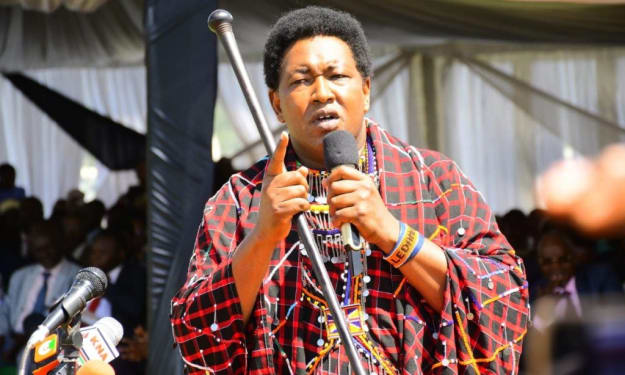
Ledama Olekina: Biography, Sister, Age, Net Worth & More
Ledama Olekina is a Kenyan politician and environmental activist whose journey from the plains of Maasai land to the halls of parliament has been nothing short of remarkable. Known for his passionate defense of indigenous rights and conservation efforts, Olekina has become a powerful voice for the Maasai community and Kenya’s natural heritage.
By Marveline Merababout a year ago in The Swamp
Trump’s 'White Refuge' Gamble: Inside Ramaphosa’s High-Stakes US Visit & the Afrikaner Exodus—Why Elon Musk’s Whispers Could Reshape Global Politics. AI-Generated.
Introduction: A Diplomatic Minefield South African President Cyril Ramaphosa’s arrival in Washington this week is no ordinary state visit. It’s a geopolitical chess match where the stakes include trade wars, apartheid legacies, and a surreal refugee crisis involving white Afrikaners—all while Elon Musk looms as Trump’s shadow advisor. With memories of Trump’s humiliation of Ukraine’s Zelensky fresh in mind, Ramaphosa walks into a White House primed for confrontation. But this time, the drama is laced with irony: Trump is resettling white South Africans as “refugees” while slashing aid to Black-majority nations. Here’s the untold story behind the headlines.
By David Snamabout a year ago in The Swamp
Maximizing Yield: Smart Techniques for Coriander Farming
Coriander, also known as dhaniya in India, is a popular herb used in almost every Indian kitchen. Farmers grow this herb for its green leaves and dried seeds, which are used in cooking and have various health benefits. To gain a high profit from its cultivation, you need to use modern farming techniques.
By Yatin Bhardwajabout a year ago in The Swamp
Best Vegetables for Maximum Yield in Organic Farming
Organic farming is a way of growing food using natural things like compost and crop rotation instead of chemical fertilizers and pesticides. Vegetables grown this way are more healthier, tastier, and better for the environment. However, there are some vegetables that grows better than others in organic farming. The reason being: resistance to pests, grown in different types of soil, and using nutrients.
By Rajendra_Singhabout a year ago in The Swamp