activism
Grassroots campaigns have proven instrumental in bringing about political, social or environmental change; you've got to start somewhere-might as well start here.
Maverick Aoko: Education, Biography, Age, Real Name, Net Worth & More
Maverick Aoko isn’t your typical online commentator. Loud, unfiltered, and unapologetically bold, she’s made a name for herself in Kenya’s digital and political spaces with her razor-sharp takes and fearless opinions.
By Marveline Merababout a year ago in The Swamp
Kasmuel McOure: Biography, Real Name, Tribe, Age, Parents & More
Kasmuel McOure has become one of the most talked-about young personalities in Kenya—known for his sharp wit, bold opinions, and viral presence both online and on stage. Whether he's trending for a skit, a sermon, or stirring up conversation on TikTok, Kasmuel continues to captivate audiences across the country.
By Marveline Merababout a year ago in The Swamp
Death of America
When thinking of the United States, many things come to mind such as a global bully which has overthrown several democracies to establish dictatorships such as in Panama, Chile, and Iran. A nation which uses “aid” and “peace keeping” as a way to actively interfered with almost every nation on the face of the earth. A greedy, insatiable consumer which devours around seventy percent of the world’s resources. A nation which has sent thousands to their death to protect rubber plantations in Vietnam or oil fields in the Middle East and killing far more in the process. An empire which several of my friends have expressed a desire for its collapse. That’s the empire, not the country. A land which has become like many others where the rich rule and the rest work. It has become a nation where citizens have been reduced to employees clinging to their paychecks. It has become a nation I believe most of our Founding Parents were attempting to escape.
By V. H. Eberleabout a year ago in The Swamp
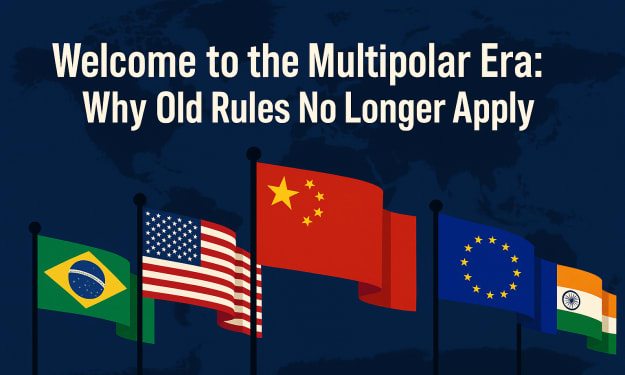
“Welcome to the Multipolar Era: Why Old Rules No Longer Apply”
Welcome to the Multipolar Era: Why Old Rules No Longer Apply Inside the Rise of a World Where No One Power Calls the Shots --- Introduction Not long ago, world politics revolved around a single axis — the United States. Following the Cold War, America’s military might, economic dominance, and cultural influence gave it an unrivaled role in setting global agendas. But that era is fading fast. Today, we live in a world where no single nation can dictate the terms. Power is more distributed, alliances are more fluid, and the rules of engagement are constantly shifting. From Beijing to Brasília, from Ankara to New Delhi, a new set of actors is redefining influence in a chaotic and contested global order. The question is no longer who leads — it's how the world manages without clear leadership. --- The End of Unipolarity The post-Cold War unipolar moment, which placed the U.S. at the apex of global power, is now history. Two decades of military overstretch, internal political divisions, and economic upheaval have eroded America's ability to act as the world's de facto leader. The withdrawal from Afghanistan, inconsistent global policies, and an increasingly inward-looking electorate have signaled a step back from the assertive global policing of the early 2000s. This vacuum hasn't gone unnoticed. Instead of a new hegemon rising to replace the old, what we see is a diffusion of power across multiple regional centers. It’s not a bipolar world of the Cold War era, nor a balanced multipolar structure of the early 20th century. This new landscape is messy, unstable — and permanent. --- China and the Economic Realignment China stands at the forefront of this shift, but even its rise comes with caveats. With the Belt and Road Initiative, Beijing has extended its economic reach into Asia, Africa, and parts of Europe. Its influence over supply chains, infrastructure, and digital technologies challenges the dollar-based global system. However, China's ambitions face resistance. Tensions over Taiwan, territorial disputes in the South China Sea, and pushback from Western nations on tech and trade indicate that its power, while rising, is also contested. China is not replacing the U.S. — it’s carving out its own sphere, one that’s economic rather than ideological, and subject to friction. --- Russia’s Military Gambit and Strategic Isolation Russia, too, has sought to challenge the Western-dominated order, most dramatically through its invasion of Ukraine. While the war has demonstrated Moscow’s willingness to use force to protect perceived national interests, it has also exposed its strategic limits. Sanctions, international condemnation, and battlefield losses have isolated Russia from much of the world economy, while simultaneously deepening its ties with non-Western partners like Iran and China. In trying to redefine regional borders by force, Russia has sparked a renewed unity among NATO members, paradoxically reinforcing the very alliances it sought to divide. --- Middle Powers and Fluid Alliances Perhaps the most defining feature of the multipolar era is the rise of middle powers — nations like India, Brazil, Turkey, and Saudi Arabia that are no longer content to align strictly with the West or East. These countries pursue strategic autonomy, balancing relationships across global fault lines. India, for example, is a member of the Quad (with the U.S., Japan, and Australia) while also maintaining defense ties with Russia and participating in BRICS. Turkey, a NATO member, buys Russian arms and projects influence across Central Asia and the Middle East. These states navigate global politics based not on ideology, but on opportunity and self-interest. --- Global Institutions Under Strain The United Nations, World Trade Organization, and other postwar institutions are increasingly ineffective at managing today’s fragmented world. Vetoes stall progress at the UN Security Council. Trade disputes paralyze the WTO. And new power blocs like BRICS and the Shanghai Cooperation Organization aim to create parallel systems that reflect non-Western values and priorities. The rules-based international order — long championed by the West — now finds itself questioned not only by adversaries, but by allies frustrated with its limitations and hypocrisy. --- Technology, Climate, and the New Arenas of Power While traditional power still matters, influence in today’s world is also determined by less tangible forces. Control over technologies like artificial intelligence, 5G, and semiconductors is becoming as critical as nuclear weapons were in the past. Meanwhile, climate change, pandemics, and migration flows expose the limitations of national solutions to global problems. These issues demand coordination, yet in a fragmented world, cooperation is the first casualty of geopolitical rivalry. --- Conclusion: Embracing Complexity The multipolar era is not just a phase — it is the defining condition of our time. It offers opportunities for a more inclusive, balanced world, but also risks greater instability, miscalculation, and fragmentation. Old rules no longer apply, because the old world no longer exists. The future will depend not on domination, but on how nations adapt, negotiate, and share power in a world where no one — and everyone — leads.
By World politics about a year ago in The Swamp
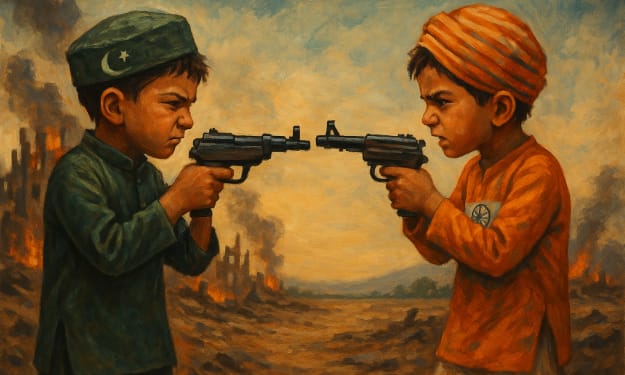
Reckoning With the Real Cost of the India-Pakistan Conflict
In a week dominated by headlines of airstrikes, ceasefire violations, and swelling nationalism, one truth remains buried beneath the noise: Kashmir continues to bleed — and most of us continue to either look away or cheer from the sidelines.
By Muhammad Hamza Shahabout a year ago in The Swamp
War Between Brothers: A Call for Peace in South Asia
The world watched in horror as tensions between Pakistan and India erupted once again into a full-blown conflict in these recent days. What began as a border skirmish soon escalated into one of the most destructive confrontations in recent South Asian history. While the international media flooded timelines with statistics and breaking updates, the real cost of this war—human lives, fractured communities, economic collapse, and regional instability—remains far more than what any headline can convey.
By Zakir Ullahabout a year ago in The Swamp
Power & Policy
A Deep Dive into Global Strategies: Understanding the Forces Shaping Our World In a rapidly evolving world, global strategies are more important than ever. These strategies are the frameworks through which nations navigate international relations, secure economic interests, assert political power, and foster security. At the heart of global strategy lies the delicate balance of diplomacy, military force, economic policy, and cultural influence, each of which plays a crucial role in shaping the future of the global community. This article will explore the complexities of global strategies, the key players involved, and the methods they use to maintain or expand their influence on the world stage. The Concept of Global Strategy Global strategy is the overarching plan or approach that nations, alliances, and international organizations use to achieve their objectives on the world stage. It is a multi-dimensional concept that involves not only military and economic considerations but also the cultivation of alliances, technological innovation, and soft power. Unlike national strategies, which are primarily focused on domestic issues, global strategies address external challenges and opportunities. A successful global strategy can determine the trajectory of a nation’s influence for decades to come, while a failed one can lead to economic collapse, political isolation, or even military conflict. Global strategies often incorporate elements of hard power (military and economic strength) and soft power (diplomacy, culture, values, and ideas). Nations may also engage in smart power, which is a combination of both hard and soft power, using each in the right proportion based on the situation at hand. Key Players in Global Strategy In any analysis of global strategies, it is essential to understand who the key players are. The most significant players include powerful nations, such as the United States, China, and Russia, as well as regional powers and multinational organizations like the United Nations, the European Union, and the World Trade Organization (WTO). Each of these entities formulates strategies based on a combination of economic capabilities, military power, political influence, and diplomatic ties. 1. The United States: As a superpower, the United States has long been at the center of global strategic discussions. Its global strategy revolves around maintaining its military dominance, ensuring access to key markets, and promoting democratic values. The U.S. also seeks to contain rival powers, notably China and Russia, through both hard and soft power mechanisms, including military alliances like NATO, economic sanctions, and diplomatic engagement. 2. China: Over the past few decades, China has emerged as a key challenger to U.S. dominance on the global stage. Its global strategy is characterized by economic expansion, technological advancements, and a growing military presence. One of China’s most ambitious strategies is the Belt and Road Initiative (BRI), a multi-trillion-dollar infrastructure project designed to connect Asia, Africa, and Europe through a network of trade routes. The BRI allows China to increase its influence in critical regions, securing vital resources, trade routes, and political allegiances. 3. Russia: Russia's global strategy has been shaped by a desire to reclaim its status as a great power following the dissolution of the Soviet Union. Russia’s strategy is characterized by a mix of military aggression, political influence, and energy dominance. For instance, Russia's military interventions in Ukraine and Syria are seen as efforts to protect its sphere of influence and project power into neighboring regions. Additionally, Russia uses its vast energy resources as leverage in geopolitical negotiations, particularly with Europe. 4. The European Union: The European Union (EU) is unique in its approach to global strategy, as it represents a collective effort by member states to assert influence on the world stage. The EU focuses heavily on diplomacy, trade, and human rights, leveraging its economic power as one of the world’s largest trading blocs. The EU also works to expand its sphere of influence through various partnerships and negotiations, particularly with countries in Eastern Europe, Africa, and Asia. 5. Multinational Organizations: Institutions such as the United Nations, the World Trade Organization, and the International Monetary Fund (IMF) play crucial roles in shaping global strategies. These organizations facilitate cooperation, mediate conflicts, and establish norms and regulations that govern international relations. Although not all countries agree with the actions of these institutions, they remain vital in coordinating global efforts in areas such as climate change, international security, and global trade. The Elements of Global Strategy Global strategies are multifaceted and include a variety of elements that work together to influence outcomes on the international stage. Some of the most important components of global strategies include: 1. Economic Power: Economic strategies are central to global influence. Nations use trade agreements, sanctions, and financial assistance to shape the global economy in ways that align with their interests. For example, the United States uses its control over the global financial system, especially through the U.S. dollar and institutions like the IMF, to maintain its economic dominance. On the other hand, China uses its growing economic influence to assert control over key supply chains, especially in the technology sector, and to secure long-term strategic investments through initiatives like the Belt and Road Initiative. 2. Military Power: Military strength remains one of the most significant pillars of global strategy. Nations use their military capabilities to project power, defend national interests, and deter potential threats. This includes not only traditional military forces but also nuclear deterrence, special forces, and cyber warfare capabilities. The U.S. maintains a vast network of military bases worldwide, while China is increasingly focusing on expanding its military presence in the South China Sea and beyond. 3. Diplomacy: Diplomatic efforts are essential in shaping the global environment. Effective diplomacy can result in strategic alliances, trade agreements, and conflict resolution. Countries engage in diplomacy through bilateral talks, multilateral forums, and international organizations. For example, the U.S. and China engage in regular diplomatic talks to manage their economic and political rivalry, while the EU plays a critical role in brokering peace and cooperation in various global hotspots. 4. Technology and Innovation: In today’s world, technological innovation has become an integral part of global strategy. Nations invest in cutting-edge technologies like artificial intelligence, quantum computing, and 5G networks to gain a strategic advantage. China, for instance, has made significant investments in 5G technology through companies like Huawei, which has raised concerns among the U.S. and its allies about cybersecurity and espionage. Additionally, technological leadership in space exploration, biotechnology, and clean energy is increasingly a key factor in global influence. 5. Soft Power: The power of culture, values, and ideas cannot be underestimated. Soft power allows countries to influence others without coercion or force. The United States, for example, has long relied on its entertainment industry, higher education institutions, and the spread of democratic ideals to project its influence globally. Meanwhile, China has sought to boost its soft power through cultural exchanges, educational initiatives, and media influence. Challenges to Global Strategy While global strategies can lead to considerable success, they also face numerous challenges. Geopolitical rivalries, economic disruptions, technological shifts, and domestic political pressures can undermine the effectiveness of any nation’s strategy. Moreover, global challenges like climate change, pandemics, and terrorism require multilateral cooperation, often complicating efforts to pursue individual national interests. In conclusion, global strategy is a dynamic and complex field that requires nations to constantly adapt to shifting circumstances. It is a delicate dance between power, diplomacy, and influence, and success often depends on the ability to blend these elements effectively. As the world continues to evolve, understanding global strategies will be key to predicting the future of international relations and shaping the global order in the years to come.
By World politics about a year ago in The Swamp
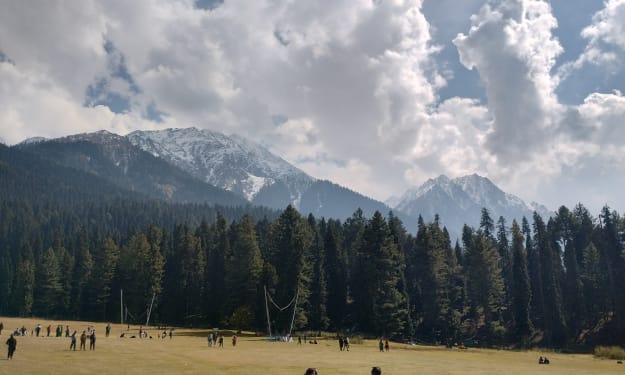
Pahalgam Terror Attack 2025: Hindu Tourists Killed in Kashmir, Global Reactions and Full Report. Content Warning. AI-Generated.
On April 22, 2025, a brutal terrorist attack in Pahalgam, Jammu and Kashmir sent shockwaves across India and the international community. Armed militants opened fire on a group of tourists at Baisaran Valley, deliberately targeting individuals based on their Hindu identity. The attack, which left 26 civilians dead and over 20 injured, is being called one of the deadliest attacks in Kashmir in recent years. The massacre not only exposed the fragile security situation in the region but also reignited global conversations around religious terrorism, Islamic extremism, and cross-border militancy. What Happened in Pahalgam on April 22, 2025? According to survivor testimonies and local authorities, a group of armed terrorists infiltrated the tourist-heavy zone of Baisaran Valley, posing as guides or local pony handlers. They then asked tourists their names and religion. Those who identified as Hindu were separated and shot at close range. Some were reportedly asked to recite the Islamic kalima to verify their faith. This form of religiously motivated violence is a chilling reminder of earlier sectarian atrocities in South Asia. Among those killed was an entire Hindu family from Maharashtra. Shockingly, a local Muslim man, Seyyed Adil Hussain Shah, lost his life trying to protect the tourists. His bravery has since become a symbol of interfaith solidarity in a time of hate.
By Tanushree Dasabout a year ago in The Swamp
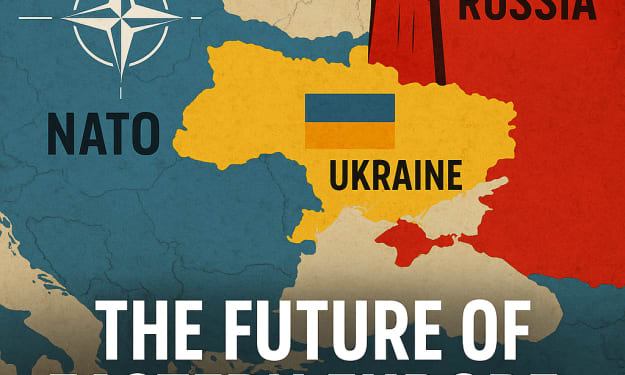
"The Ukraine-Russia War: A New Iron Curtain"
The Future of Eastern Europe: A Changing Geopolitical Landscape The war between Ukraine and Russia has redefined the political, military, and economic contours of Eastern Europe. What began in February 2022 as a full-scale invasion by Russia quickly escalated into the largest and most brutal conflict on European soil since World War II. Two years on, the war has not only devastated Ukrainian cities and lives but has also shaken the geopolitical foundation of the region. A Region Caught in Transformation Eastern Europe has long been a complex region, marked by a history of shifting borders, ideological divides, and contested national identities. Since the collapse of the Soviet Union in 1991, many Eastern European countries have transitioned from Soviet influence to democratic governance and closer ties with the West. NATO and EU enlargement have brought former Warsaw Pact nations like Poland, Romania, and the Baltic States into the Western fold, often provoking deep resentment and anxiety in Moscow. The current war has accelerated these geopolitical shifts. Countries once cautious of Russia are now vocal and decisive in their opposition. Finland and Sweden—historically neutral nations—have joined NATO or pursued membership as a direct response to Russia’s aggression. Eastern Europe is now on the front lines of a new Cold War-like standoff between Russia and the West. Ukraine’s Place in Europe Ukraine’s resistance has not only earned global admiration but also sparked an identity transformation within the country. Once divided between pro-Western and pro-Russian sentiments, the war has forged a more unified Ukrainian identity that is staunchly independent and increasingly aligned with European democratic values. Kyiv has officially applied for EU membership and received candidate status, symbolizing its firm orientation toward the West. If the war ends in Ukraine’s favor, a post-war reconstruction plan—backed by the West—could integrate Ukraine more deeply into the European Union’s political and economic systems. Such a development would be a decisive blow to Russia’s long-standing influence in the region. Russia’s Diminishing Influence Russia's invasion, intended to reassert its dominance, may ultimately isolate it further. Economic sanctions, diplomatic ostracism, and battlefield losses have eroded Russia’s global standing. In Eastern Europe, trust in Moscow has plummeted, and former allies like Hungary and Serbia are facing increasing pressure to distance themselves from the Kremlin. Moscow may attempt to compensate for its regional losses by deepening its relationships with non-Western powers such as China, Iran, and North Korea. However, even within these alliances, Russia is no longer the dominant power it once aspired to be. The Rise of Regional Powers Countries like Poland and Romania are emerging as key players in the region. Poland, for example, has significantly increased its defense spending, modernized its military, and taken in millions of Ukrainian refugees. It now serves as a logistical and political bridge between Ukraine and the broader Western world. The Baltic States—Latvia, Lithuania, and Estonia—have also taken a leading role in pushing for a strong NATO presence in the region. Their experience under Soviet occupation gives them a unique sense of urgency and clarity about the dangers of Russian expansionism. A Divided Europe? While unity among NATO and EU countries has been largely strong, the war has also exposed some divisions. Countries like Hungary continue to maintain a more conciliatory stance toward Moscow, driven by economic dependencies and political alliances. Such divergences will continue to test the cohesion of Europe in the years ahead. Moreover, the economic strain of prolonged conflict, including rising energy prices and defense spending, could challenge public support for continued aid to Ukraine. Eastern European leaders must balance national interests with the broader goal of maintaining regional stability. The Road Ahead The future of Eastern Europe depends heavily on the outcome of the war in Ukraine. A Ukrainian victory could solidify a Western-oriented bloc stretching from the Baltic to the Black Sea, deeply integrated into NATO and the EU. A frozen conflict or Russian success, however, could leave the region in a state of prolonged insecurity and division. What is certain is that Eastern Europe is undergoing a profound transformation. Borders may remain the same on maps, but the alliances, identities, and power structures of the region are being redrawn. As the war continues, so does the redefinition of what Eastern Europe stands for—and where it is headed.
By World politics about a year ago in The Swamp
What I Would Do If I Became President
Here is a bit of a rant of what I would do if I had the power, which of course I don't. I would add a new constitutional amendment stating clearing we have freedom from religion since a lot of religious folks claim it is not in the constitution when you cannot have freedom of religion without freedom from religion. All religions and lack thereof will be respected. No political office can ask about religious affiliation or lack thereof.
By Ferrari Kingabout a year ago in The Swamp
Pakistan and India on the Brink: A Modern-Day Conflict
Military Showdown: India vs. Pakistan in 2025 The year 2025 has brought the South Asian subcontinent to the brink of a full-scale war between India and Pakistan. A longstanding history of territorial disputes, political tensions, and military confrontations has once again flared into open hostilities. The current military showdown, which began with a skirmish along the Line of Control (LoC), has rapidly escalated into a modern-day conflict involving both conventional and unconventional warfare tactics. This article delves into the key elements of this military showdown, examining the capabilities, strategies, and potential consequences of this catastrophic clash between two nuclear-armed neighbors. The Escalation to War: A Tense Beginning The immediate trigger for the war was an intense confrontation on the LoC in Kashmir, a region that has remained a contentious battleground since the partition of British India in 1947. In late April 2025, a violent exchange between Indian and Pakistani forces along the LoC claimed the lives of several soldiers from both sides. Pakistan blamed India for an unprovoked attack on its military positions, while India accused Pakistan of sponsoring militant groups who were infiltrating its territory. This clash, though small in scale initially, soon spiraled out of control as both nations responded with retaliatory airstrikes, artillery bombardments, and a full mobilization of ground troops. The Military Capabilities: A Fierce Comparison Both India and Pakistan possess formidable military forces, each with its own strengths, and a comparison of their capabilities highlights the scale of the potential conflict. India’s Military Power: India, with one of the largest standing armies in the world, has a significant advantage in terms of manpower. With a population of over 1.4 billion, India maintains a military force of over 1.4 million active-duty personnel and more than 2 million reserve forces. India’s arsenal is dominated by advanced tanks, artillery, and infantry, supported by modern air and naval power. India’s Air Force, which is considered one of the most capable in Asia, boasts a fleet of fighter jets, including the Sukhoi Su-30MKI, Rafale, and indigenous Tejas aircraft. Furthermore, India possesses a significant array of ballistic missiles and precision-guided munitions. In terms of nuclear capability, India has an estimated 160 to 170 nuclear warheads. India’s nuclear strategy is centered around the doctrine of "No First Use," meaning that it has pledged not to use nuclear weapons unless first attacked by an adversary with nuclear weapons. Pakistan’s Military Strength: Pakistan’s military, though smaller than India’s in terms of sheer numbers, is no less formidable. Pakistan’s armed forces consist of approximately 650,000 active-duty personnel and around 550,000 reserves. The Pakistani military has invested heavily in asymmetric warfare tactics, focusing on maintaining a strategic edge through its use of irregular forces and specialized combat units. Pakistan’s military is also known for its adept use of terrain in the mountainous areas of Kashmir and the ability to launch rapid counterattacks. In terms of air power, Pakistan's Air Force operates a combination of F-16 Fighting Falcons, JF-17 Thunder, and Mirage fighters. Pakistan has also significantly upgraded its missile defense systems and is developing its own indigenous long-range ballistic missiles. The most concerning aspect of Pakistan’s military capabilities is its nuclear arsenal. With an estimated 170 to 180 nuclear warheads, Pakistan maintains a policy of "full-spectrum deterrence," which means it reserves the right to use nuclear weapons across a range of situations, including low-intensity conflict. The Role of Air Power and Cyber Warfare One of the most striking features of this modern military showdown has been the use of advanced airstrikes. Both nations have engaged in frequent bombing runs over disputed territories, targeting military bases, supply lines, and even civilian infrastructure. Indian fighter jets have conducted precision strikes on Pakistani border positions, while Pakistan has retaliated with aerial bombardments and has attempted to disrupt India’s air superiority with surface-to-air missile systems. In addition to traditional warfare, both India and Pakistan have engaged in a new form of battle: cyber warfare. Both countries have launched sophisticated cyberattacks on each other’s military and civilian infrastructure, targeting everything from communications systems to power grids. These cyber operations have created significant confusion and disruption, making it harder for both sides to coordinate military efforts effectively. The Risk of Escalation: Nuclear Concerns As the conflict intensifies, the possibility of nuclear escalation becomes a significant concern. Both nations have significant nuclear arsenals, and the threat of nuclear use, however unlikely, cannot be discounted. While both countries have made public statements reaffirming their commitment to nuclear deterrence and non-use policies, the rapidly deteriorating situation on the ground has raised alarm bells internationally. India’s nuclear doctrine of "No First Use" is designed to reassure its population and the world that it will only use nuclear weapons in retaliation to a nuclear attack. However, Pakistan’s nuclear policy is based on the concept of "full-spectrum deterrence," meaning it may use nuclear weapons in response to conventional attacks if it perceives an existential threat. In a situation where conventional forces are unable to resolve the conflict, either side might consider escalating to nuclear weapons, potentially triggering a catastrophic regional or even global crisis. Global Reactions and International Mediation The international community, including major powers like the United States, China, and Russia, has expressed deep concern over the escalation. The United Nations has called for an immediate ceasefire and has offered to mediate peace talks. However, the diplomatic channels between the two countries have remained closed, with both governments accusing each other of sabotaging peace efforts. China, a key ally of Pakistan, has cautiously called for restraint, while Russia has expressed support for India's right to defend its sovereignty. The United States, which maintains strategic partnerships with both India and Pakistan, has been vocal in urging both nations to return to the negotiating table before the situation spirals out of control. Conclusion: The Path Forward As the military confrontation between India and Pakistan continues to evolve, the world watches with bated breath. The stakes are higher than ever. With both nations possessing nuclear weapons and the potential for widespread destruction, the conflict could have far-reaching consequences, not just for South Asia but for global security. While there are ongoing efforts to de-escalate the conflict through diplomatic means, the path to peace remains uncertain. The world can only hope that the leaders of both nations will choose dialogue over destruction and work toward a lasting resolution to the crisis.
By World politics about a year ago in The Swamp