activism
Grassroots campaigns have proven instrumental in bringing about political, social or environmental change; you've got to start somewhere-might as well start here.
David Kiplagat: Education, Career, Party & More
David Kiplagat is a seasoned public servant and technocrat whose professional and political journey reflects a commitment to development and innovation. Representing Soy Constituency, Kiplagat has steadily risen through the ranks of academia, public service, and politics, underpinned by a solid educational background and years of experience in the ICT sector.
By Marveline Merababout a year ago in The Swamp
George Natembeya: Age, Biography, Education, Wife, Net Worth, Tribe & More
George Natembeya is a name that commands attention in Kenyan politics. Known for his no-nonsense leadership style and bold stance on governance, Natembeya has transitioned from a seasoned provincial administrator to the current Governor of Trans Nzoia County.
By Marveline Merababout a year ago in The Swamp
America vs. The World: Who’s Really in Charge?
America vs. The World: Who’s Really in Charge? For over a century, the United States has positioned itself as the world’s most influential political, economic, and military power. From its decisive role in two world wars to the establishment of international institutions like the United Nations and NATO, America has long claimed a seat at the head of the global table. But in a rapidly shifting geopolitical landscape — where emerging powers are challenging the old order, and global cooperation is fraying — the question arises: Is America still in charge, or is the balance of global power beginning to tilt? The Birth of American Hegemony America’s dominance in world politics wasn’t always guaranteed. Prior to World War I, it was largely isolationist. But by the end of World War II, the U.S. had not only played a crucial role in defeating fascism, it had also emerged with the most powerful economy and military on Earth. The Cold War that followed saw America competing with the Soviet Union for global influence — a battle it ultimately won, cementing its status as the world’s lone superpower in the 1990s. With the fall of the Berlin Wall and the dissolution of the USSR, the U.S. ushered in what some called a "unipolar moment" — a time when it dictated the rules of international engagement. From intervening in the Middle East to promoting free-market democracy around the globe, the U.S. was both admired and criticized for its role as the world's policeman. The Rise of Challengers However, the 21st century tells a more complicated story. Emerging powers like China, India, Russia, and even regional blocs such as the European Union have begun to assert themselves more forcefully on the global stage. China, in particular, has risen rapidly, becoming the world’s second-largest economy and challenging U.S. dominance in areas like trade, technology, and military strategy. Beijing’s Belt and Road Initiative, its growing naval presence in the South China Sea, and its investments in Africa and Latin America are all signs of a country playing the long game. While America has often used military strength and diplomatic alliances to exert influence, China’s strategy blends economic power with soft diplomacy — a sharp contrast to Washington’s more traditional approach. Meanwhile, Russia’s assertiveness under Vladimir Putin, especially its annexation of Crimea and involvement in Syria and Ukraine, has shown that global power is not monopolized. These moves, though widely condemned, highlight a multipolar world where power is more dispersed. America’s Changing Role Internally, the U.S. has faced its own challenges. Polarized politics, social unrest, economic inequality, and questions about the legitimacy of its democratic institutions have shaken global confidence. The chaotic withdrawal from Afghanistan in 2021 was symbolic of a broader retreat from traditional American foreign policy objectives. Moreover, under the "America First" doctrine, the U.S. began stepping back from its leadership roles in international institutions. Withdrawal from the Paris Climate Agreement, the Iran nuclear deal, and even confrontations with long-time allies in NATO have left many wondering whether America’s global leadership is waning — or simply evolving. However, it's worth noting that America still holds powerful cards. It maintains the most advanced military, the world’s reserve currency (the U.S. dollar), a network of global alliances, and a dominant cultural influence through media, tech, and education. From Hollywood to Silicon Valley, America’s soft power continues to shape the world’s imagination. Who’s Really in Charge? So, who’s really in charge? The answer is not as clear-cut as it once was. While the United States remains a central player, it no longer operates in a vacuum. Power today is more distributed, with regional powers asserting themselves and non-state actors (like multinational corporations and tech giants) playing an increasingly influential role. Global leadership now requires more cooperation than domination. Climate change, pandemics, cyber warfare, and economic interdependence are challenges that no single nation can solve alone — not even the United States. The world is increasingly interwoven, making unilateral action less effective and often counterproductive. A New Kind of Power Rather than asking whether America is still in charge, perhaps the better question is: What kind of leadership does the world need now? Traditional power — measured in military might or economic muscle — is no longer sufficient. The future belongs to nations that can foster trust, build coalitions, innovate, and inspire. America still has the potential to lead — but not by default. Its leadership must be earned through diplomacy, integrity, and a willingness to adapt to new global realities. The age of singular dominance may be over, but the age of smart, shared leadership is just beginning.
By World politics about a year ago in The Swamp
Martha Karua: Age, Husband, Net Worth, Education, Biography & More
Martha Karua is one of Kenya’s most respected and influential politicians, known for her unwavering commitment to justice, democracy, and human rights. With a career spanning decades as a lawyer, cabinet minister, and presidential candidate, Karua has carved out a unique legacy as a fearless advocate for the rule of law.
By Marveline Merababout a year ago in The Swamp
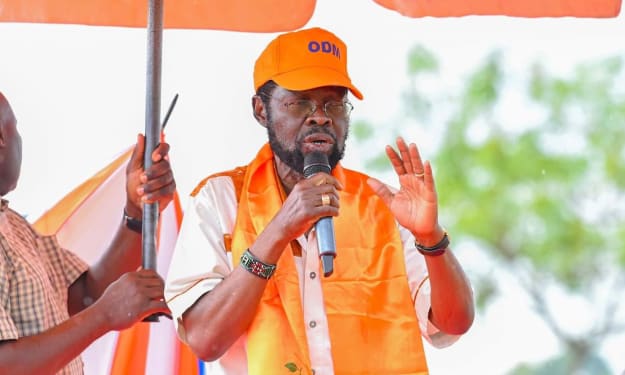
Anyang' Nyong'o: Age, Health, Education, Wife, Net Worth, Biography & More
Anyang’ Nyong’o has lived many lives. To some, he’s the sharp-minded professor who challenged the status quo in dusty university halls. To others, he’s the seasoned politician who’s steered through Kenya’s stormy political waters with quiet defiance.
By Marveline Merababout a year ago in The Swamp
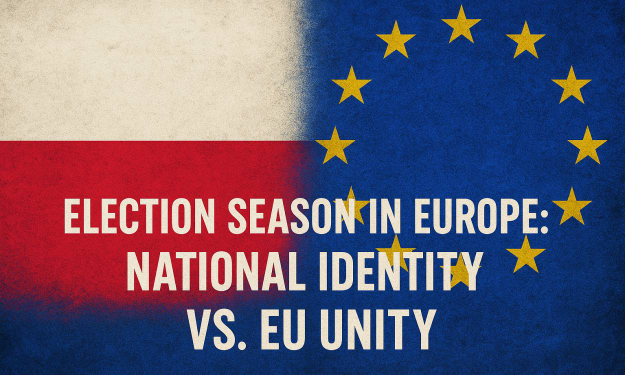
🇵🇱 European Elections and Rising Nationalism
Election Season in Europe: National Identity vs. EU Unity As spring 2025 turns to summer, voters from Warsaw to Lisbon—and from Bucharest to Dublin—are filing into gyms, town halls, and makeshift poll stations for the most consequential European election season in a decade. The headlines shout about populist surges, cyber-intrigue, and razor-thin polls, but the deeper story is an old question with new urgency: Can national identity comfortably coexist with the promise—and the constraints—of European Union unity? --- A Continent of Parallel Referendums Europe’s “super-cycle” of elections this year is unusually dense: Poland is choosing a president; Romania and Portugal hold general elections; Austria elects a new parliament just four weeks later; And in June, all 27 EU member states vote for the European Parliament. Traditionally, these contests unfold on separate timetables. In 2025, however, they overlap, allowing a single, trans-continental conversation to echo from capital to capital. And the common denominator is identity politics—how a nation sees itself versus how it fits inside a 450-million-person union. --- Poland: Between Civic Patriotism and Cultural Conservatism Polls put Warsaw’s liberal mayor Rafał Trzaskowski neck-and-neck with conservative historian Karol Nawrocki. Trzaskowski frames Poland as a “responsible European stakeholder,” promising to repair bruised relations with Brussels and to unlock €35 billion in frozen recovery funds. Nawrocki counters that Europe’s technocrats “do not understand Polish culture or sacrifice,” highlighting Catholic values, strict border controls, and wary views of Germany. The clash is not merely rhetorical; it could rewrite Poland’s constitution. Trzaskowski’s coalition wants to loosen one of the EU’s tightest abortion regimes and embed a stronger separation of church and state. Nawrocki vows to entrench an “unborn child protection” clause and elevate the Polish language’s constitutional status. Either path would become a test case for how far national constitutions can diverge from EU human-rights norms without triggering punitive measures from Brussels. --- Romania: Populism Learns to Speak Brussels If Poland exemplifies a tug-of-war between cosmopolitan and conservative definitions of nationhood, Romania’s far-right upstart George Simion demonstrates how nationalist rhetoric is evolving. Simion’s slogan “We Build Here” rails against perceived “colonial” investment by French banks and Austrian retailers, yet he also insists he would not take Romania out of the EU: “We respect the club—provided the club respects us.” Analysts call this “Euro-sovereigntism”—a strategy of leveraging EU rules to defend local industries while fending off deeper political integration. Simion demands the same agricultural subsidy formula that benefits French farmers and threatens to veto any new EU climate regulation that “kills Romanian coal.” In other words, the union becomes both scapegoat and shield, proving how malleable the project has become in the populist imagination. --- Portugal and Austria: The Centrist Counter-Punch Not every ballot is bending rightward. In Portugal, Socialist incumbent Marta Carvalho is favored to win a fresh mandate running on a straightforward pro-EU platform: robust green-energy investment financed by the EU Recovery Fund, plus a pledge to hit NATO’s 2 percent defense target. Her rally crowds chant “Europa, Europa,” illustrating how southern Europe’s memory of the euro-crisis still ties prosperity to Brussels. Austria, meanwhile, provides a textbook centrist comeback. Former chancellor Alexander Schallenberg rebuilt his battered People’s Party by adopting pragmatic migration quotas and clear support for EU enlargement in the western Balkans—policies that peel moderate voters away from the nationalist Freedom Party. Polls suggest a narrow People’s-Green coalition victory, hinting that disciplined centrism can still defeat identity-driven polarization. --- Digital Battlefields and Cyber Borders No modern European election escapes the digital arena. Poland’s intelligence service has traced thousands of social-media ads smearing Trzaskowski’s LGBTQ-rights stance to Russian-linked IP addresses. In Romania, deep-fake videos of Carvalho speaking broken Romanian—intended to mock elite Portuguese accents—were shared 1.8 million times on TikTok before being removed. Brussels has rolled out the Digital Services Act (DSA) requiring platforms to delete demonstrably false electoral content within 24 hours, but critics say enforcement lags. Tech-policy scholar Dr. Liisa Väyrynen notes, “The irony is that online disinformation travels along the same borderless network that once symbolized Europe’s unity.” The EU thus faces a paradox: protecting national elections may demand new cross-border regulations that feel, to some voters, like further encroachment. --- The Economics Underneath the Flags Beyond culture wars and meme warfare lies a concrete economic dilemma. The European Commission’s latest forecast projects GDP growth of 0.7 percent in 2025, sluggish by global standards. Energy costs remain volatile despite lower natural-gas prices, and defense spending has surged because of Russia’s 2024 offensive near Kharkiv. For many households, the EU’s single market still means cheaper flights and Erasmus scholarships; for small manufacturers in Łódź or Sibiu, it means German rivals outgunning them on scale. When Nawrocki decries “unequal competition,” or Simion demands “fair steel quotas,” they tap into legitimate discontent that Brussels often addresses with slow-moving funds rather than quick-fire narratives. --- What Unity Looks Like Now Is the European project fracturing? Not quite. Even the loudest nationalist leaders stop short of advocating a Brexit-style exit. The pragmatic calculus—access to €700 billion of recovery money, intelligence sharing against Russia, collective vaccine procurement—remains persuasive. Yet the union is morphing into a looser, more transactional federation. Political scientist Prof. Lucía Reyna describes the emerging model as “variable-geometry Europe”: countries cluster into mini-alliances—Nordic digital champions, Visegrád migration hawks, Mediterranean energy cooperatives—pursuing tailored integration levels. Elections in 2025 are accelerating this trend by rewarding politicians who master the dual language of sovereignty at home and savvy bargaining in Brussels. --- The Ballot-Box Forecast Will voter angst translate into sweeping constitutional upheavals? Poll-averages as of mid-May suggest a mixed verdict: The European Parliament could see the nationalist Identity & Democracy group rise from 84 to roughly 110 seats—significant, but still far from a majority in the 720-seat chamber. In national capitals, at least two of four high-profile races (Poland, Portugal, Austria, Romania) look likely to keep centrist or center-left governments in power. These numbers imply a pluralist parliament where coalitions will be messy but workable. For the EU, that means more debates on migration quotas, industrial-policy subsidies, and rule-of-law benchmarks—but no existential rupture. --- Conclusion: A Reluctant Renegotiation Europe’s 2025 election season underscores that national pride and European unity are not mutually exclusive, yet neither sits comfortably atop the other. Voters crave both the security of belonging to a powerful bloc and the reassurance that their unique languages, churches, and local industries will not be steamrolled by distant technocrats. The likely outcome is a continuous, sometimes exhausting renegotiation of competences: border policy here, fiscal transfers there, digital rules everywhere. As ballots are counted and coalitions formed, the takeaway is clear: Europe’s story is no longer a linear march toward “ever closer union,” but a mosaic of identities learning, argument by argument, how to share a roof without erasing the paint on each other’s front doors. In that sense, the contest between national identity and EU unity is not a battle to be won or lost in 2025; it is the defining conversation that will shape European democracy for decades to come.
By World politics about a year ago in The Swamp
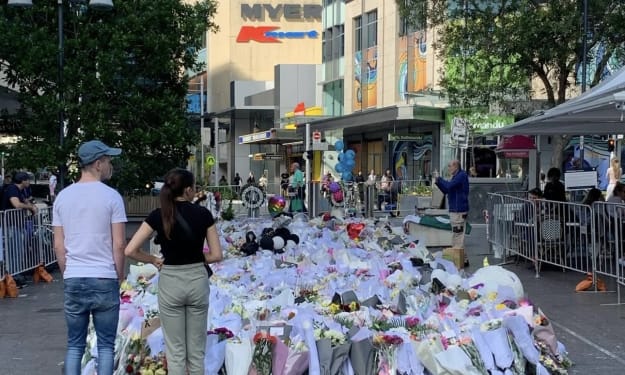
The Bondi Stabbings: how misogyny motivated a psychotic attack. Content Warning.
The Sydney Bondi Westfield shopping mall is one I know extremely well as I live ten minutes away. I would end up in there for an hour or two each week because my physiotherapist is nearby. Since my partner and I sustained life-changing injuries in a fatal tour bus crash, I would, after physio, as my partner had her treatment, walk slowly and cautiously around the mall. I suffer PTSD from the crash; so, crowds and crowded places, loud noise, are enough to cause a panic attack. Slowly, unknowingly, this shopping mall became a safe space for me. I would shuffle around, buy Pokémon cards, Squishmallows to rest my broken back on, and the occasional coffee and cookie combination. I made friends with a few of the store workers. The injuries from the crash left me socially isolated, I can’t do what I did before, I have chronic pain: the crash was life-changing. It is odd to say, but on reflection, the shopping mall became a haven for me; a place to get a little treat after painful physio sessions. On Saturday, 13 April 2024, when I heard the news of the murders, I had a devastating panic attack.
By Josh Clementsabout a year ago in The Swamp
Gladys Wanga: Husband, Age, Biography, Family, Education, Net Worth & More
Gladys Wanga has never been one to follow the crowd. A trailblazer from Homabay, she’s gone from grassroots activism to becoming one of Kenya’s most influential female leaders. Her journey is marked by courage, conviction, and a commitment to public service that’s earned her admiration far beyond her county borders. So who is the woman behind the title? Let’s take a closer look at her life — from her family and education to her rise in politics and the legacy she’s building.
By Marveline Merababout a year ago in The Swamp
Millie Odhiambo: Husband, Biography, Family, Age, Net Worth, Education & More
Not many politicians speak their minds quite like Millie Odhiambo. Known for her fearless stance on tough issues, she’s become a powerful voice in Kenyan politics. But beyond the public eye, there’s a story of resilience, family, and a deep commitment to justice that shapes who she is today. Let’s dive into her journey and what makes Millie tick.
By Marveline Merababout a year ago in The Swamp