activism
Grassroots campaigns have proven instrumental in bringing about political, social or environmental change; you've got to start somewhere-might as well start here.
Leaders & Liars: Who’s Running the World?
Leaders & Liars: Who’s Running the World? In a world saturated with political promises, manipulated narratives, and backroom deals, the question echoes louder than ever: Who’s really running the world? From democratically elected presidents to unelected corporate moguls, the line between leadership and manipulation continues to blur. Power, once believed to rest in the hands of the people, now seems increasingly concentrated in the hands of those who speak loudest — and lie best. The Illusion of Choice Modern democracies sell the promise of freedom and representation. Citizens cast their votes believing they are shaping the future. But what happens when the choices are filtered through layers of lobbying, misinformation, and media manipulation? Elections are no longer just about policy — they're about personality, public image, and, most crucially, who has the money to shape the narrative. In the United States, for example, billions are poured into election campaigns. Political action committees (PACs), many funded by anonymous donors, exert enormous influence over who gets airtime and how they are portrayed. It raises an uncomfortable truth: is leadership earned, or is it bought? When Lies Become Strategy Lying has always been a political tool, but in the digital age, it has become an art form. Leaders across the globe have mastered the ability to craft half-truths and weaponize misinformation. The rise of “fake news” isn't just a buzzword — it’s a tactic. When every truth has a counter-narrative and every fact can be spun, leaders can shape reality itself. Autocrats lie to maintain control, painting themselves as protectors while dismantling democracy. Democratically elected officials lie to cover scandals, manipulate statistics, or shift blame. Some lie so convincingly, even they begin to believe the falsehoods they spread. Global Power Isn’t Always Political While presidents and prime ministers dominate the headlines, the real levers of power are often pulled far from public view. Consider the influence of multinational corporations, whose revenue rivals the GDPs of entire nations. CEOs of tech giants and energy conglomerates wield immense influence over policy, regulation, and even geopolitics. Think about BlackRock, Amazon, or Alphabet (Google’s parent company). These are not governments — yet they shape everything from international markets to the global information ecosystem. In many cases, these companies have more control over your daily life than your elected leaders. And then there are shadowy institutions: the Bilderberg Group, the World Economic Forum, global banking interests — organizations accused of setting the global agenda behind closed doors. While some of these theories spiral into conspiracy, they often stem from a grain of truth: real power is frequently exercised where transparency is weakest. The Media as a Mirror — and a Weapon Media is supposed to act as a watchdog — holding power accountable, exposing corruption, and informing the public. But in today’s fragmented media landscape, outlets have become battlegrounds for ideological warfare. Ownership structures, political bias, and profit motives often skew coverage, leaving audiences in echo chambers rather than enlightening them. In autocratic regimes, the media is openly controlled by the state. In democratic societies, it's more insidious: selective coverage, misleading headlines, and infotainment distract from meaningful analysis. Leaders use media to amplify their narratives. Liars use it to silence dissent. The Rise of the Strongman Around the world, we are witnessing the resurgence of authoritarian-style leadership. From Vladimir Putin to Xi Jinping, from Erdoğan to Modi, strongmen leaders use nationalism, religious identity, and populist rhetoric to consolidate power. These leaders often position themselves as defenders of their people — while systematically eroding the institutions designed to keep them in check. In these systems, loyalty is rewarded over competence. Dissent is labeled as treason. And truth becomes whatever the leader says it is. What Can Be Done? If we are to reclaim leadership from liars, transparency must be the foundation. Institutions must be rebuilt to prioritize accountability. Campaign finance must be regulated to prevent the purchasing of political power. Education must teach critical thinking — so future generations can discern truth from spin. Citizens must also demand more from their leaders — and themselves. In a world of algorithm-driven newsfeeds and emotional clickbait, consuming information passively is dangerous. Democracy isn’t a spectator sport. It demands vigilance, skepticism, and action. Conclusion: Leadership in the Age of Illusion Leadership today often resembles a performance — a well-crafted image rather than a genuine mission. And in the global theater of politics, the best liars often rise the fastest. But behind the headlines, beyond the slogans, real leadership is still possible — the kind built on truth, integrity, and service. The question isn’t just who’s running the world — but why do we let them?
By World politics about a year ago in The Swamp
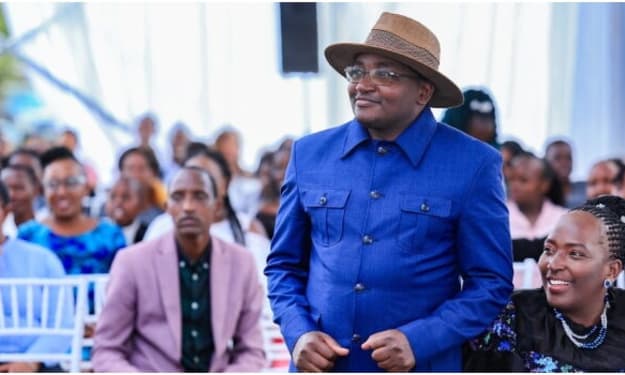
George Koimburi: Age, Wife, Biography, Career & More
George Koimburi is no stranger to controversy—or courage. The Juja Member of Parliament shot into national spotlight not just for his political grit, but for a harrowing moment that blurred the lines between power, danger, and devotion.
By Marveline Merababout a year ago in The Swamp
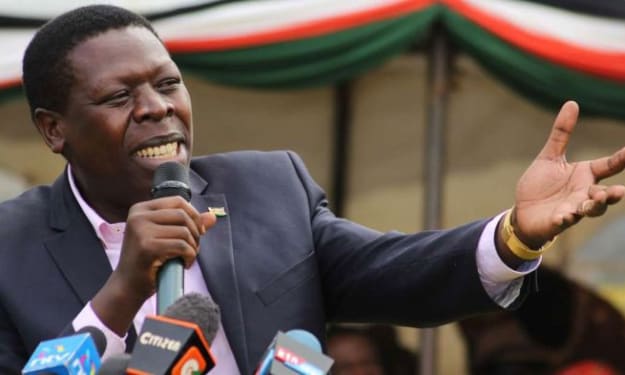
Eddy Oketch: Age, Education, Career & More
Eddy Oketch’s journey isn’t your typical rise to success. What started as a passion for academics took a surprising turn, leading him down a path filled with unexpected opportunities and challenges. Today, he stands out not just for his achievements but for the story behind them—a tale of resilience, adaptability, and the kind of grit that turns detours into defining moments.
By Marveline Merababout a year ago in The Swamp
The Rise in Political Toxicity: Democracy at a Breaking Point?
The Rise in Political Toxicity: Democracy at a Breaking Point? In an age defined by rapid communication and algorithm-driven discourse, the global political landscape is growing darker, sharper, and more divisive. What once were platforms for robust debate and thoughtful governance are now often battlegrounds of vitriol, misinformation, and calculated outrage. The rise in political toxicity—fueled by social media, populist rhetoric, and growing ideological extremism—is not just a symptom of modern politics; it is becoming the central feature. Across democracies old and new, from the chambers of Western parliaments to the streets of developing nations, toxic political culture is eroding trust, silencing moderate voices, and threatening the very foundations of civil society. A Global Phenomenon with Local Consequences Political toxicity is no longer confined to the fringe. A recent large-scale study that analyzed nearly 18 million social media posts from elected officials in 17 democracies revealed a disturbing trend: the language of politics is becoming increasingly hostile, combative, and emotionally charged. Radical-right parties and opposition groups are especially prone to using inflammatory rhetoric—often attacking institutions, marginalized communities, or democratic processes themselves. While each country faces unique circumstances, the pattern is clear. In the United States, bipartisan dialogue has become almost nonexistent, replaced by a toxic blend of partisan media, election denialism, and legislative gridlock. In India, political debate often spills into online harassment, sometimes targeting journalists, activists, or religious minorities. In Europe, rising far-right movements capitalize on fear and nationalism, frequently using scapegoating and conspiracy theories to galvanize support. The Role of Social Media: Amplifier or Arsonist? Social media has revolutionized how we communicate—but also how we polarize. Platforms like X (formerly Twitter), Facebook, and TikTok reward engagement, and engagement is most often driven by outrage. Politicians who use aggressive, divisive language are not punished; they’re promoted—by algorithms, by audiences, and by media coverage. A toxic tweet spreads farther than a measured one. This creates an incentive structure where moderates are drowned out and extremists dominate the conversation. The result? An environment where disinformation thrives, nuance dies, and citizens become increasingly disillusioned with the democratic process. Populism and the Politicization of Truth At the heart of rising political toxicity lies the rise of populist leaders who thrive on division. These figures often frame politics as a battle between “the people” and “the elite,” blurring facts, rejecting expertise, and fueling anti-institutional sentiment. In such narratives, political opponents are not just wrong—they are enemies of the state, traitors, or threats to the nation. This rhetoric doesn't just damage political discourse; it undermines institutions themselves. Courts are delegitimized, elections are called fraudulent without evidence, and the press is labeled “the enemy of the people.” When truth becomes negotiable, democracy becomes vulnerable. The Psychological Toll and Civic Consequences Political toxicity isn’t just a media issue—it’s a public health issue. Constant exposure to hostile rhetoric and polarizing debates leads to increased stress, anxiety, and political burnout. Studies show that young people, in particular, are disengaging from politics due to the hostility they witness online. The civic implications are just as troubling. Voter turnout declines when people feel their voice doesn’t matter or fear conflict. Trust in government erodes. Polarization becomes entrenched, making coalition-building and compromise virtually impossible. The cycle is self-perpetuating: toxic politics begets dysfunctional governance, which in turn fuels more frustration and toxicity. Can Democracy Detox? Despite the bleak landscape, hope is not lost. There are emerging efforts across the globe to reclaim civility and restore trust in democratic discourse. Civic education programs are being updated to teach digital literacy, empathy, and the importance of civil dialogue. Social media regulation is being debated more seriously than ever, with governments exploring ways to hold platforms accountable for toxic content amplification. Cross-party initiatives in countries like Germany, Canada, and New Zealand aim to build consensus on fundamental democratic values, even amid ideological differences. Moreover, a growing number of citizens are demanding change. Movements that promote fact-based journalism, constructive political engagement, and grassroots dialogue are slowly gaining traction. Conclusion: The Urgency of Now The rise in political toxicity is not just a passing trend—it’s a defining challenge of our time. If left unchecked, it threatens to corrode democracies from within, replacing reason with rage and compromise with contempt. But if recognized and confronted, it also offers an opportunity: to rebuild a political culture grounded in respect, evidence, and shared purpose. The choice is ours. We can allow toxicity to define our political future—or we can choose to detoxify, reconnect, and recommit to the ideals that make democracy worth defending.
By World politics about a year ago in The Swamp
How Britain Creates Mental Illness: Racial Inequity, Misdiagnosis and a System that Won’t Change
Note: These problems are not unique to the UK. Across Western nations, Black populations face similar issues. Society’s tendency to blame the victim has always made me indignant, especially the pathologization of ethnic minorities. In the early 2000s, I became aware of the high rates of severe mental illness among Black people in the UK, often framed as individual pathology. This prompted me to research the issue, leading to a 2008 article, Racializing Mental Illness.
By Clare Xanthosabout a year ago in The Swamp
Justin Muturi: Age, Biography, Wife, Net Worth, Education, Daughter & More
Justin Muturi is a prominent figure in Kenyan politics, widely recognized for his influential role as the former Speaker of the National Assembly. Beyond his political achievements, Muturi’s life story encompasses a rich blend of education, family, and personal milestones that have shaped his journey.
By Marveline Merababout a year ago in The Swamp
Western Media and the Double Standard in Portraying Black Men
In the digital age, media narratives significantly shape public perception. However, a persistent issue remains: the portrayal of Black men in Western media often reflects deep-seated biases and double standards. These portrayals not only influence societal attitudes but also have tangible effects on the lives of Black individuals.
By Mohammad Ashiqueabout a year ago in The Swamp
Eugene Wamalwa: Age, Wife, Biography, Net Worth, Father, Party & More
Eugene Wamalwa is a name that has echoed through Kenya’s political and legal corridors for years. From serving as Minister for Justice to holding key Cabinet positions, Wamalwa has built a reputation as a thoughtful leader and steady presence in government.
By Marveline Merababout a year ago in The Swamp
I Asked AI for a Political Solution—It Gave Me This. AI-Generated.
LN: After digging into the growing wave of voter disaffection (And my own) with both major political parties, I began outlining an article on the subject. On a whim, I asked ChatGPT to analyze the data I had collected and propose a possible solution. As someone who sits squarely in the political middle, I’ve long hoped for an alternative—one that avoids the dominance of the two major parties, sidesteps the noise of extremist fringes, and offers more promise than the fractured efforts of independents and libertarians. What it generated surprised me—not just because it made sense, but because it read like the start of something real. Something possible, but that cries out for younger vigorous voices to move it into the public view and breathe life into it. Only a few of the words below are mine. I could not help myself.
By Lanny Newvilleabout a year ago in The Swamp
🇺🇸 U.S. Foreign Policy Under Trump: A Global Ripple Effect
U.S. Foreign Policy Under Trump: A Global Ripple Effect The return of Donald Trump to the U.S. presidency in 2025 has once again placed American foreign policy under the global spotlight, sparking significant shifts with wide-reaching consequences. Trump's approach to international relations, marked by nationalism, skepticism towards multilateral institutions, and a transactional mindset, has created waves that resonate far beyond American borders. These ripple effects are shaping global geopolitics, alliances, and international governance, with implications felt in global health, diplomacy, human rights, and security. The Retreat from Global Institutions One of the most defining features of Trump’s foreign policy has been the United States’ retreat from several key international organizations and agreements. This trend, initiated during his first presidency, has continued and intensified. Most notably, the U.S. officially withdrew from the World Health Organization (WHO) shortly after Trump's return, citing concerns over transparency and governance issues allegedly linked to China’s influence. The withdrawal has left a leadership void in global health governance. China, seizing the opportunity, pledged to contribute $500 million over five years to the WHO, becoming its largest donor. This financial commitment is part of a broader Chinese strategy to expand its global influence, positioning itself as a champion of multilateralism in health while the U.S. pursues a more isolationist stance. The U.S. absence in the WHO is particularly consequential amid ongoing concerns about pandemic preparedness and response, undermining global coordination at a critical time. Pandemic Preparedness Without the U.S. In 2025, the WHO adopted a landmark pandemic treaty aimed at enhancing international cooperation to prevent and respond to future global health crises. The treaty’s adoption was a rare moment of unity among most member states, but notably, the U.S. did not participate. This decision highlights Washington's growing skepticism towards multilateral commitments and raises serious questions about the effectiveness of global health initiatives without American engagement. The treaty aims to strengthen data sharing, ensure equitable access to vaccines and medical supplies, and establish rapid response mechanisms. Yet, without U.S. participation, the treaty risks losing critical resources, expertise, and diplomatic weight. This absence could embolden other countries to deprioritize global health collaboration, ultimately weakening the world’s collective ability to manage pandemics effectively. Shifts in Global Security and Alliances Trump’s "America First" approach has significantly impacted U.S. security alliances and global power dynamics. His administration’s skepticism toward NATO and traditional partnerships has strained relations with European allies, who now question America's reliability as a security partner. The focus has shifted towards bilateral deals and transactional relationships rather than long-term collective defense commitments. This recalibration has opened space for rival powers like China and Russia to deepen their strategic partnerships with countries disillusioned by U.S. policies. In Asia, China’s Belt and Road Initiative continues to expand, offering infrastructure investments and economic incentives that contrast sharply with Washington’s more conditional approach. In Eastern Europe and Central Asia, Russia capitalizes on the perceived U.S. disengagement to assert its influence through military and political means. Moreover, Trump's tough stance on immigration and trade has led to new tensions with neighboring countries, especially Mexico and Canada. While renegotiations of trade deals have taken place, the underlying protectionist and nationalist policies continue to challenge North American economic integration. Impact on Human Rights and Global Health Programs Another significant ripple effect of Trump’s foreign policy is its impact on global health and human rights initiatives. The administration’s rollback of international AIDS relief programs, particularly those addressing HIV/AIDS in Africa, has resulted in the closure of critical clinics and reduced funding for vulnerable populations. These policy shifts have emboldened far-right and anti-LGBTQ+ movements worldwide, contributing to a global rise in repression against marginalized communities. Countries in Africa and other regions have witnessed a resurgence of discriminatory laws and crackdowns on LGBTQ+ individuals, often justified by conservative values and bolstered by the decline in U.S.-led human rights advocacy. The weakening of U.S. leadership in these areas has also undermined decades of progress in fighting infectious diseases globally. With the U.S. redirecting resources towards domestic priorities and reducing foreign aid, international health organizations face growing funding gaps, limiting their ability to combat pandemics and other health crises. Economic Nationalism and Trade Wars Economic nationalism under Trump's administration has manifested in increased tariffs, renegotiation of trade agreements, and a general skepticism towards globalization. These policies have caused disruptions in global supply chains, increased costs for businesses and consumers, and heightened tensions with major trading partners. Trade conflicts with China remain particularly pronounced, with tariffs imposed on a wide range of goods fueling retaliatory measures. While some sectors in the U.S. have benefited from protectionist policies, others—such as agriculture and manufacturing—have suffered from reduced export opportunities and increased production costs. The unpredictable nature of U.S. trade policy under Trump has also deterred foreign investment and complicated multinational corporate strategies, as businesses struggle to adapt to shifting regulations and tariffs. These dynamics contribute to global economic uncertainty and volatility. Domestic Politics and International Perception Trump's foreign policy approach is deeply intertwined with his domestic political agenda. Emphasizing nationalism and sovereignty resonates with a significant portion of the American electorate but alienates many allies and international partners. The administration’s rhetoric often casts global cooperation as a threat to American interests, reinforcing isolationist tendencies. Internationally, this has damaged America's image as a global leader and reliable partner. Allies express frustration and uncertainty, while adversaries exploit divisions within the U.S. political landscape. The erosion of U.S. soft power diminishes its ability to influence global norms and outcomes through diplomacy. Conclusion The global ripple effects of U.S. foreign policy under Donald Trump are profound and multifaceted. From the retreat from international institutions like the WHO to the reshaping of alliances and the rollback of global health programs, the consequences are felt across continents and sectors. As the world adjusts to a more transactional and inward-looking United States, other powers are seizing the opportunity to assert themselves on the global stage. The long-term impact of these shifts remains uncertain, but what is clear is that Trump’s foreign policy has fundamentally altered the landscape of international relations in the 2020s, with reverberations likely to shape global politics for years to come.
By World politics about a year ago in The Swamp
Borshch and Beyond
In the bustling heart of Kyiv, amid the eerie calm between sirens and uncertainty, something unexpected is simmering—not just in kitchens, but in the soul of a nation. Ukrainian cuisine, long overshadowed by Soviet influence and global culinary trends, is experiencing a powerful rebirth. And at the forefront of this cultural revival is Chef Yevhen Klopotenko, a man who is using food as both shield and sword in the battle for Ukrainian identity.
By MAROOF KHANabout a year ago in The Swamp