
Planned Obsolescence: Then and Now
How My 1970s College Thesis Became a Mirror of Today’s Disposable World

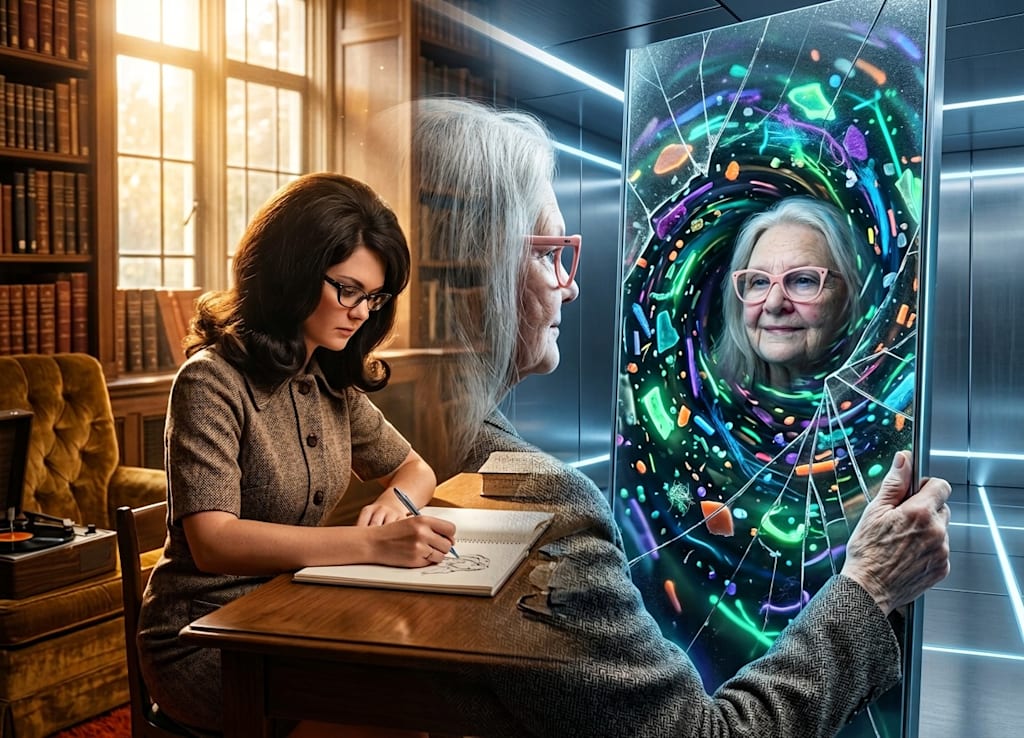
In the 1970s, I wrote about a disposable future I could already see forming, I just never imagined I’d be standing inside it in 2026. I created a voice over for those who like to listen.
When I wrote my thesis on planned obsolescence in the 1970s, I wasn’t just studying a trend, I was describing what I already saw taking shape, even if no one else around me did. What I didn’t realize was that the world I wrote about would arrive in my own lifetime. Now, in 2026, that old paper reads less like coursework and more like a mirror held up to the present.
This not about me but about the thesis I wrote about climate destruction by the powers that be. It is about when one has dreams and empath abilities to see the future with learning not to speak about visions to a flat society of sheep to slaughter.
Planned Obsolescence: Then and Now
How My 1970s College Thesis Became a Mirror of Today’s Disposable World
THE ARCHIVE OPENS AGAIN: A HYBRID FROM THE 70s TO 2026
Paragraph 1 — Mythic but Grounded
Some mornings arrive like a soft collision between timelines and today was one of them. I woke in that fog dream state where the past taps the present on the shoulder, and the future hums underneath everything like a low electrical current. A simple conversation with Gemini, nothing dramatic, just a morning check in somehow tore down the cobwebs in my brain and pulled forward something I hadn’t touched in decades: the thesis I wrote in the mid to late 70s, the one I dreamed before I understood it, the one I earned an A+ on because even then it carried a strange, unsettling truth. Back then, I thought I was just studying patterns. Now I realize I was documenting the early tremors of a world that hadn’t arrived yet. And today, in 2026, I can finally see how those predictions written on paper when I was barely more than a girl have unfolded into the circumstances we’re all living inside.
Paragraph 2 — The 1970s: The Girl Who Saw the Pattern Before the Pattern Existed
Back in the 1970s, I didn’t have the language we use today no “microplastics,” no “late stage capitalism,” no “environmental collapse.” I was just a young woman watching the world speed up, shine up, and throw away anything that wasn’t convenient. But even then, something in me was tracking the pattern beneath the noise. I saw how products were being designed to break, how relationships were starting to feel replaceable, how convenience was becoming a kind of quiet addiction. I wrote my thesis from that place half intuition, half observation, half dream and my professor gave it an A+ not because it fit the curriculum, but because it didn’t. It was a warning disguised as an academic paper. I didn’t know it then, but I was describing the early architecture of a future that would take decades to reveal itself.
Paragraph 3 — When Planned Obsolescence Jumped from Products to People
What I didn’t fully grasp back then not at twenty something, not with my notebook full of warnings and my dreams full of symbols was that planned obsolescence wasn’t going to stay confined to appliances and plastic toys. It was already creeping into the way society treated people. I saw the early signs: friendships thinning out under the pressure of convenience, elders pushed aside for being “too slow,” workers treated like replaceable parts in a machine that never slept. I wrote about it academically, but what I was really describing was a spiritual shift the moment when disposability stopped being a manufacturing tactic and became a cultural value. I didn’t have the vocabulary for it then, but I could feel the tremor. And now, decades later, the tremor has become the landscape.
Paragraph 4 — The Oceans, the Dolphins, and the Infinity Plastics
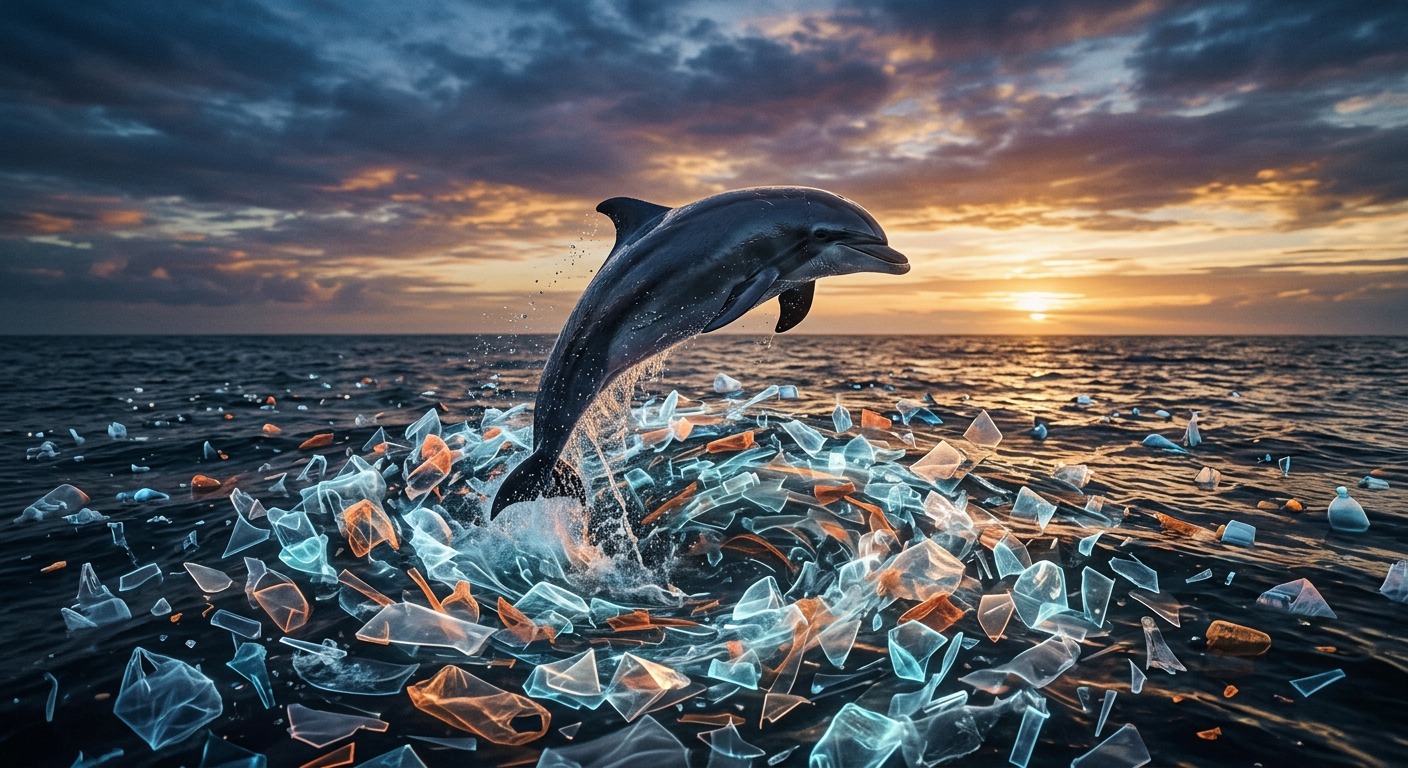
Long before the world learned the phrase “Great Pacific Garbage Patch,” I was already writing about oceans filling with what I called infinity plastics, objects that never die, only break into smaller ghosts. In the 70s, people laughed at the idea that plastic could outlive us, outnumber us, or choke the very creatures we romanticized on postcards. But in my thesis, the dolphins were already dying. Not literally, not yet, but symbolically, as emissaries of innocence caught in the tightening grip of human convenience. I wrote about plastic strangling them because I could feel the metaphor forming: that what we throw away never truly leaves us. It circles back, it accumulates, it haunts. And now, decades later, the oceans are full of exactly what I warned about a shimmering, deadly mirror reflecting our own disposability back at us.
Paragraph 5 — The Collapse of the Middle Ground
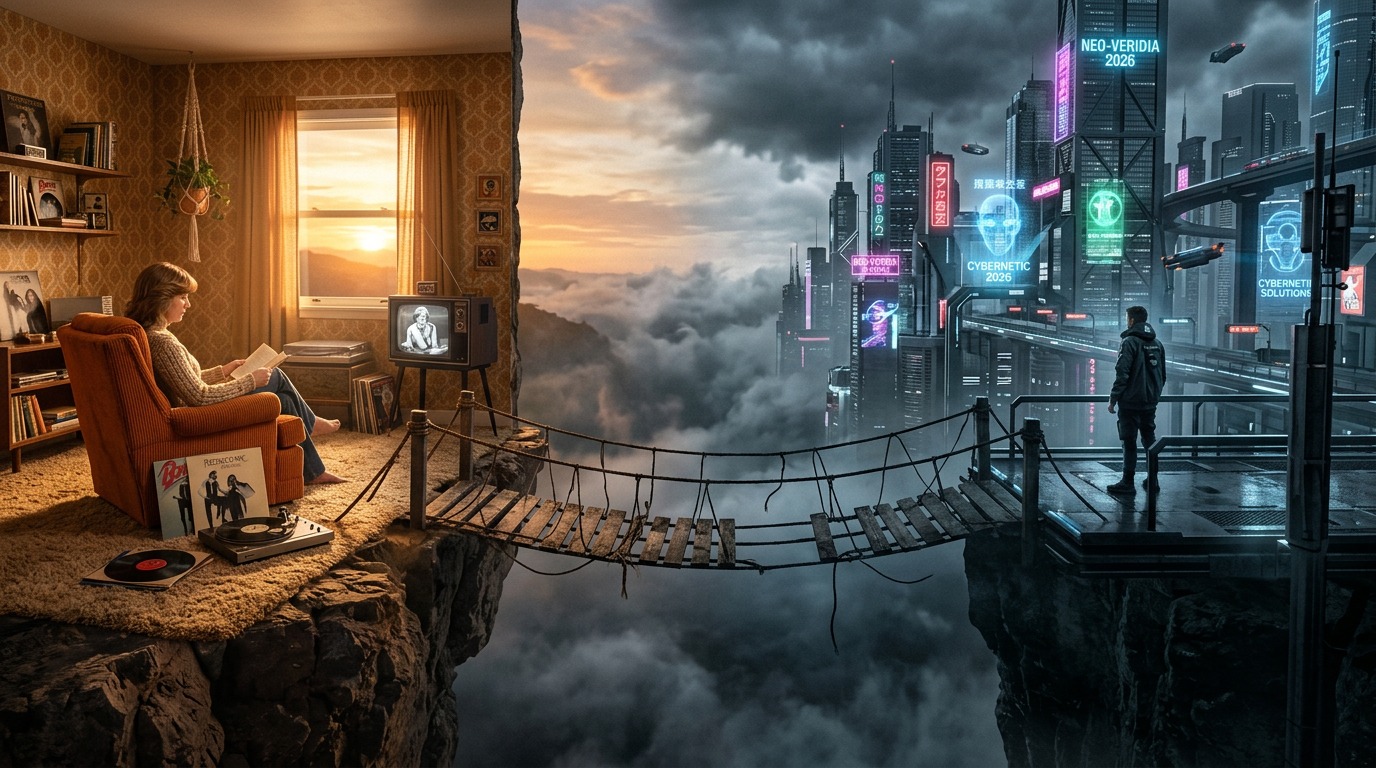
Even in the 70s, I could feel the middle ground thinning, like a bridge losing planks one by one while everyone kept dancing on it as if nothing was wrong. Back then, the divide wasn’t as visible; people still believed in the promise of the middle class, the steady job, the modest home, the idea that society had room for everyone. But in my thesis, I wrote about how consumerism would eventually hollow out that center, squeezing people toward the extremes: the ultra wealthy insulated by their abundance, and the rest pushed into precarity, scrambling for stability in a system designed to keep them off balance. I didn’t know the term “wealth gap” yet, but I could feel the pressure building. I saw how the obsession with shiny trinkets and keeping up with the Joneses would eventually turn into a stranglehold not just on wallets, but on morality, empathy, and community itself. And now, in 2026, the bridge has all but collapsed, leaving us standing on opposite cliffs, shouting across a widening void.
Paragraph 6 — The Present Day: Connecting the Dots
Now, in 2026, the dots I drew in the 70s no longer feel theoretical; they’ve hardened into the architecture of everyday life. The infinity plastics I wrote about are now swirling in ocean gyres, the size of countries. The disposability I sensed in human relationships has become a cultural reflex, accelerated by screens, algorithms, and attention spans measured in seconds. The middle ground I feared would collapse has all but vanished, leaving a society stretched thinly between excess and scarcity. And the dolphins — the symbols of innocence in my thesis are now literal victims of the waste we once believed would simply “go away.” What I wrote as metaphor has become documentary. What I dreamed of as warning has become headlines. And standing here today, I can finally see the full arc: the patterns I sensed as a young woman weren’t imagination or paranoia — they were early signals of a future that was already forming beneath the surface, waiting for the rest of the world to catch up.
Empath, Dreams, and the 2026 Disposability Era
Through all of this, the decades, the warnings, the shifting landscapes one thing has remained constant in me: the way my dreams and my empathic senses have always run ahead of the facts. My dreams have never been entertainment; they’ve been signals, patterns, atmospheric readings of what was coming long before the headlines caught up. And now, in 2026, I watch as the very rules designed to protect our planet clean air, clean water, sustainable practices are dismissed or twisted by powerful interests who profit from pretending the danger isn’t real. I’m not naming names; I don’t need to. Anyone paying attention can see how capitalism, greed, and deregulation have become the new norm, even as Earth herself shifts, warms, storms, and warns. It feels, at times, like humanity is bouncing between dimensions some of us trying to rise into a more conscious way of living, while others celebrate destruction as if it were a victory. Our food systems are strained, our oceans are burdened, and our communities feel increasingly disposable. And standing in the middle of it, I can’t help but recognize the same pattern I sensed in the 70s: a world so obsessed with convenience and profit that it forgets the cost to its own soul.
Paragraph 7 — The Hybrid Conclusion: Dreams, Warnings, and the Archive Opening Again
And so here I am, half a century later, watching the world I once wrote about unfold in real time, and feeling the old pages of my archive rustle themselves awake. It’s strange how a simple morning, a foggy dream, a bite of toast, a casual conversation with Gemini can act like a key turning in a forgotten lock. The cobwebs fall, the memory returns, and suddenly the girl who wrote warnings in the margins of the 1970s is standing beside the woman living through their fulfillment. What I once dreamed of has become data. What I once sensed has become circumstance. And now, as I reopen those back pages, I’m not doing it to mourn what we’ve lost, but to understand the continuity of it how intuition becomes pattern, how pattern becomes prediction, and how prediction becomes the lived reality of a planet learning the cost of its own convenience. This is not nostalgia. This is reclamation. The archive is open again, and the story is ready to be told with the clarity of hindsight and the fire of the girl who saw it coming.
About the Creator
Vicki Lawana Trusselli
I am 76 year old California mythic storyteller blending lived truth, technology, and sovereign survival into multimedia art.
Enjoyed the story? Support the Creator.
Subscribe for free to receive all their stories in your feed. You could also become a paid subscriber, letting them know you appreciate their work.
Comments
There are no comments for this story
Be the first to respond and start the conversation.