
Tigre Rosa and the Psychology of Modern Luxury Footwear: Meaning, Identity, and the Evolution of Heels
Luxury footwear redefined through symbolism, craftsmanship, and the evolving psychology of modern femininity.

Abstract
This article examines the emerging luxury footwear brand Tigre Rosa within the broader context of contemporary fashion psychology, consumer behavior, and shifting attitudes toward high heels. Drawing on brand information and industry trends, we explore how Tigre Rosa integrates symbolic design, craftsmanship, and concepts of feminine identity into its products. We argue that Tigre Rosa reflects a wider transition in luxury consumption—from status-driven purchasing to meaning-oriented engagement—while maintaining elements historically associated with high heels, such as perceived attractiveness and social signaling. The discussion highlights how modern consumers navigate the tension between comfort, identity, and cultural symbolism in footwear choices.
Introduction
For centuries, high heels have occupied a complex position in fashion—simultaneously associated with attractiveness, status, and gender identity, while also criticized for discomfort and impracticality. In recent years, however, the cultural dominance of high heels has softened. Comfort-driven trends, changing workplace norms, and evolving feminist perspectives have all contributed to a reassessment of their role in everyday fashion.
Within this shifting landscape, newer luxury brands are not abandoning heels altogether but are redefining their meaning. Tigre Rosa, a contemporary footwear label founded by Reema Al Khatib, provides a compelling case study of this transformation. Rather than positioning heels solely as objects of visual appeal, the brand incorporates symbolism, craftsmanship, and emotional narrative into its designs.
Origins and Brand Philosophy
Tigre Rosa—Italian for “Pink Tiger”—is built on the idea of duality: strength and softness, power and femininity. This conceptual framework informs both the visual identity and material construction of its footwear.
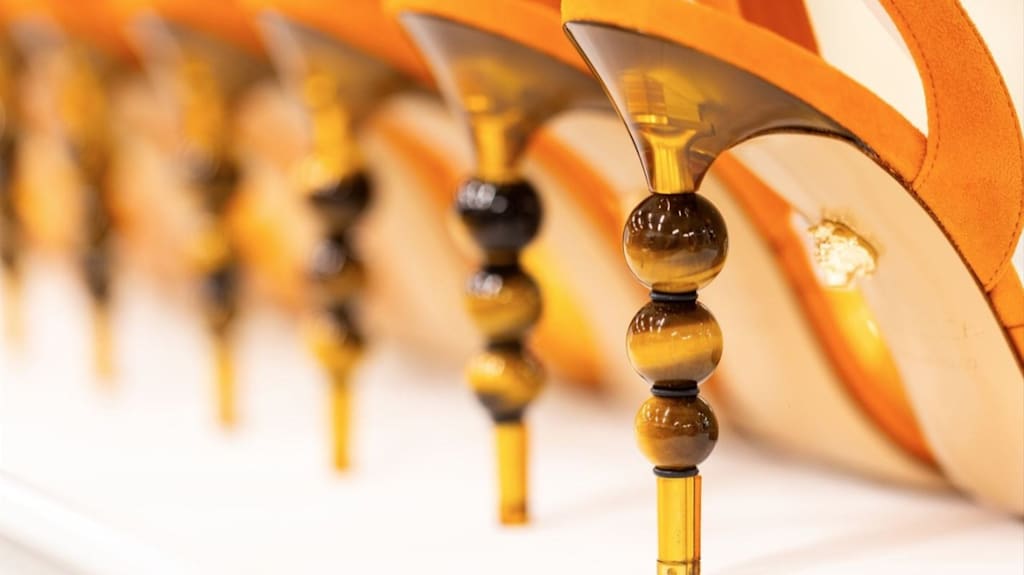
Each pair is handcrafted in Italy, aligning the brand with traditional luxury manufacturing standards. However, Tigre Rosa distinguishes itself through the integration of natural gemstones such as Tiger Eye and Clear Quartz, which are intended to symbolize qualities like confidence, clarity, and balance. These elements position the footwear not merely as decorative objects but as carriers of meaning.
This approach reflects a broader shift in luxury markets, where consumers increasingly seek products that resonate on a personal or symbolic level rather than functioning purely as status markers.
Heels, Attractiveness, and Symbolic Signaling
Historically, high heels have been linked to perceptions of attractiveness, femininity, and elevated social status. Research in evolutionary psychology suggests that heels alter posture and gait in ways that accentuate physical features associated with attractiveness, while also acting as costly signals—items that demonstrate the wearer’s ability to bear physical or financial costs.
Tigre Rosa operates within this established framework but modifies its emphasis. Instead of focusing exclusively on outward perception, the brand incorporates internalized symbolism. The addition of gemstones, for example, introduces a layer of meaning that shifts the focus from how the wearer is seen to how the wearer feels.
In this sense, Tigre Rosa aligns with a growing movement in fashion where self-perception and emotional experience are as significant as external validation.
The Transition from Status to Meaning
Luxury footwear has traditionally been associated with conspicuous consumption—high prices, recognizable branding, and visual distinction. However, contemporary consumers are increasingly drawn to subtler forms of value, including craftsmanship, storytelling, and authenticity.
Tigre Rosa reflects this transition by blending traditional indicators of luxury—Italian production, premium materials—with less tangible attributes such as symbolism and narrative identity. While heels have historically functioned as markers of social and economic status, Tigre Rosa reframes them as tools for personal expression.
This shift parallels broader industry trends in which consumers prioritize individuality over conformity and meaning over mere display.
Comfort, Wearability, and Modern Lifestyles
Another defining feature of current footwear trends is the prioritization of comfort. The widespread adoption of casual and hybrid work environments has reduced the necessity of wearing high heels on a daily basis, leading to a decline in their functional relevance.
Tigre Rosa does not reject this reality but instead adapts to it. Its designs aim to balance aesthetic appeal with wearability, acknowledging that modern consumers are less willing to sacrifice physical comfort for visual impact alone.
This reflects a broader recalibration within fashion, where heels are no longer expected as a default component of women’s attire but are instead chosen selectively, depending on context and personal preference.
Feminine Identity and Contemporary Fashion
The role of high heels in expressing femininity has also evolved. Once closely tied to traditional notions of desirability and the male gaze, heels are now being reinterpreted through the lens of autonomy and self-definition.
Tigre Rosa’s design philosophy aligns with this shift. By emphasizing symbolism, craftsmanship, and emotional resonance, the brand positions its footwear as an extension of the wearer’s identity rather than a response to external expectations.
This reflects the increasing influence of female-led perspectives in fashion, where design priorities often include comfort, authenticity, and multidimensional expressions of femininity.
Discussion
The emergence of Tigre Rosa highlights a broader transformation in how high heels are perceived and consumed. While the fundamental associations of heels—with attractiveness, status, and femininity—remain relevant, their meaning is being reshaped by cultural, social, and economic changes.
Rather than signaling status alone, modern luxury footwear increasingly communicates values, identity, and intention. Tigre Rosa exemplifies this shift by embedding symbolic elements into its designs, thereby expanding the function of heels beyond aesthetics.
At the same time, the brand’s continued reliance on traditional luxury markers suggests that the evolution of high heels is not a complete departure from the past, but rather a reinterpretation of it.
Conclusion
High heels are no longer the unquestioned centerpiece of women’s fashion, yet they continue to hold cultural and symbolic significance. Brands like Tigre Rosa illustrate how this significance is being redefined in response to contemporary values.
By combining craftsmanship with meaning and visual design with emotional resonance, Tigre Rosa reflects a new phase in luxury footwear—one in which identity, comfort, and symbolism coexist with tradition.
In this evolving landscape, heels are not disappearing. Instead, they are becoming more intentional.
About the Creator
Geraldine Malixi
Emerging fashion writer passionate about modern trends, streetwear, and contemporary styling. I explore evolving fashion through sustainability and global style movements, creating fresh, engaging, and insightful content.
Enjoyed the story? Support the Creator.
Subscribe for free to receive all their stories in your feed.
Comments
There are no comments for this story
Be the first to respond and start the conversation.