
Formal is Dead. Comfort is King.
How sneakers crushed a $9 billion industry – and why Chinese men are never going back.
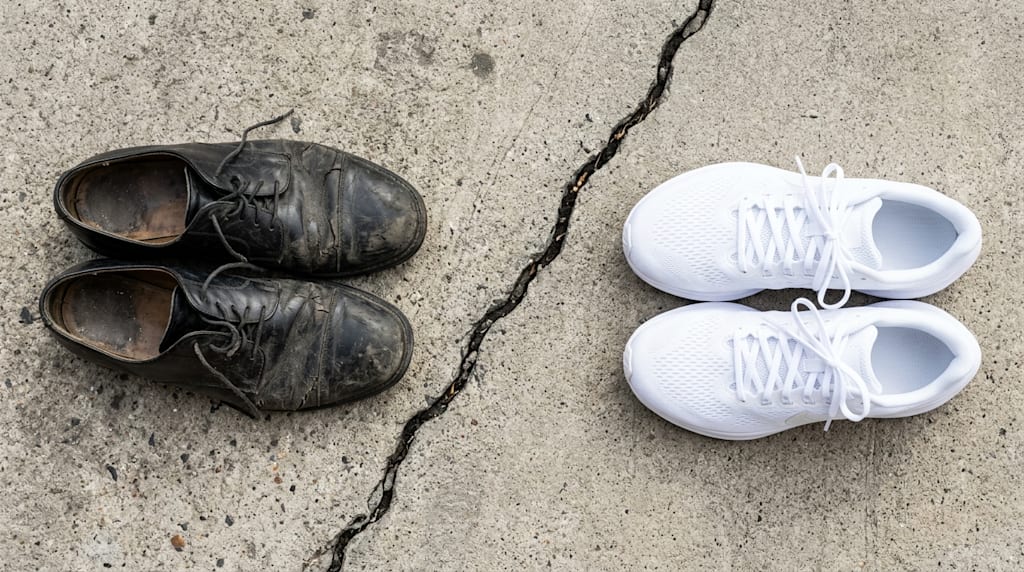
Chinese men never liked leather shoes. Their decades of purchases were a compliance test, not a preference. They endured blisters, stiff soles, and sweaty feet because the workplace demanded it. Now that the demand has faded, comfort wins.
Twenty years ago, a cheap polyester suit and polished (often synthetic) leather shoes were standard issue for young men from small towns heading to city job interviews. Foreign companies dazzled, Hong Kong business dramas ruled TV, and leather shoes signalled more than footwear – they signalled “civilised” professionalism. Banks, real estate firms, government offices, and trading houses made suits and leather shoes non‑negotiable. A fresh graduate earning a meagre salary still scraped together money for a pair of Aokang or Red Dragonfly. Without leather shoes, you could not even push open the interview‑room door. This was survival, not affection. Young strivers endured pain because they believed it was the price of appearing decent. That era prioritised pleasing others over pleasing oneself, and men’s ankles were the first sacrifice.
Formality has lost its paying audience. Two forces killed the dress‑shoe market.
First, workplace dress codes have unravelled. Steve Jobs took the tech stage in a black turtleneck and sneakers. Tencent’s Pony Ma and WeChat’s Zhang Xiaolong appeared in T‑shirts at major conferences. The “authority” of suits and leather shoes never recovered. Today’s power players wear hoodies (coders) or Arc’teryx jackets (investors). In ByteDance and Tencent offices, Crocs and Jordans are everyday wear. If you can close a billion‑yuan deal in slippers, leather becomes an unnecessary burden.
Second, commuting habits have changed. In the past, people walked or biked – leather shoes at least looked the part. Now, with widespread car ownership and dense subway networks, driving and taking the metro are the norm. The stiff sole of a dress shoe feels absurd next to the cushioned comfort of modern trainers. Men are pragmatic. When a clean sneaker works with suit trousers for a client meeting and still lets you sprint for a high‑speed train, leather’s only remaining selling point – “formality” – becomes a liability. Even weddings, once the ultimate stage for formal wear, now see grooms choosing white sneakers. For Gen Z, comfort and authenticity beat stiff propriety. When even life’s biggest milestone abandons leather, the game is over.
If shrinking demand is the external blow, then the collapse of China’s leather‑shoe giants is a decade‑long story of strategic laziness. Aokang, Red Dragonfly, and Fortune Bird built deep distribution networks and mastered mass production. But they made one critical error: they treated leather shoes as a permanent necessity rather than a consumer product needing constant iteration. They kept telling romantic stories about “Italian calfskin” and “Goodyear welting,” while ignoring their customers’ core pain point – comfort. Sportswear brands poured billions into R&D – carbon plates, supercritical foaming, knitted uppers. The leather‑shoe kings stuck with last‑century lasts, rock‑hard linings, and non‑breathable materials. They were making foot‑binders, not footwear. Their losses today are payback for years of product complacency. They tried to sell “elite identity” with nostalgic ads, but the modern man thinks: You call me an executive; I live like a workhorse. Workhorses do not need such stiff shoes. When substitutes dominate in comfort and versatility, even the pricing power of leather evaporates.
The deepest shift is in men’s consumer psychology. In the past, Chinese men lived under constant scrutiny – their clothes and shoes were judged by bosses, clients, and relatives. This generation has finally decided that life is hard enough without punishing their own feet. This wave of abandoning leather shoes is really a collective turn toward self‑pleasing consumption. Men no longer need torture devices to prove they are “successful.” They would rather show taste through expensive, comfortable, limited‑edition sneakers. Aokang sold identity approval; the new consumer wants self‑gratification. When the cost of “decency” far exceeds its returns, Chinese men – famously shrewd calculators – vote with their feet, literally.
Leather shoes are not dead, but old‑style leather shoes must die. It is a small miracle that Aokang has survived this long, but that miracle is merely the tail end of clearing old inventory. For the most solemn occasions – a funeral, a state banquet – a well‑polished Oxford still has a place. But the golden age when any leather shoe would sell is gone. In the future, if leather shoes cannot match the lightness of trainers, the breathability of sandals, or the convenience of slip‑ons, they will be relegated to shop windows – a tiny, withering niche of ritual consumption. Chinese men have not rejected leather entirely. They have rejected the absurd logic that earning respect requires physical pain. Now that they dare to be honest about what they want, winter for the old‑guard shoe kings is just beginning.
About the Creator
Jin
Writer of reamstories
https://reamstories.com/jin
Enjoyed the story? Support the Creator.
Subscribe for free to receive all their stories in your feed. You could also become a paid subscriber, letting them know you appreciate their work.
Comments
There are no comments for this story
Be the first to respond and start the conversation.